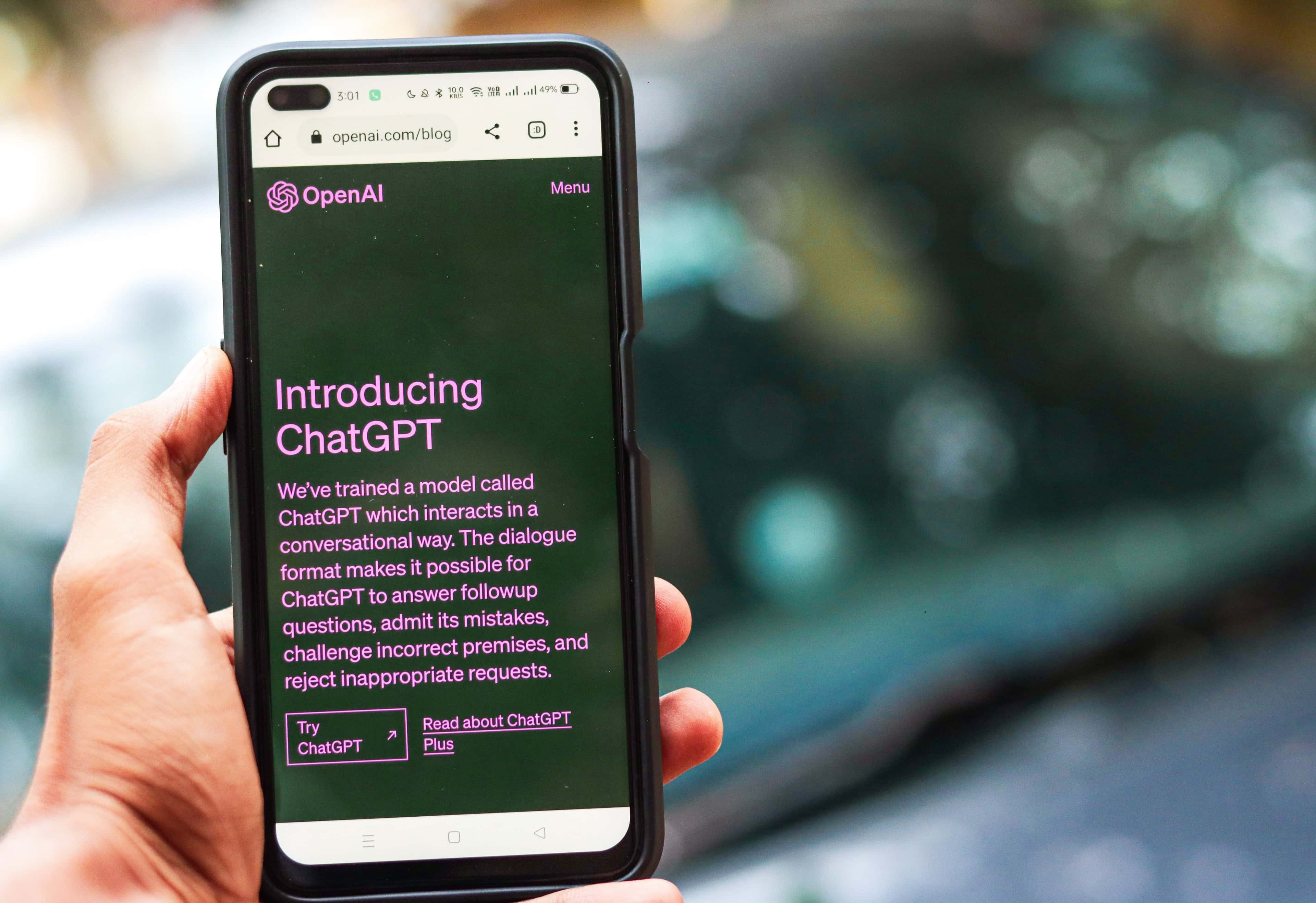



You can connect ChatGPT to company data with managed business access, approved sources, role-based permissions, personal-data masking, and auditable use. Do not paste contracts or customer lists into an unmanaged public account. Security depends on product terms, architecture, configuration, and employee behavior; the model's name alone never guarantees a safe outcome.
Connection design determines much of the risk
An employee may need an answer from the HR handbook, procurement policy, or product catalogue. Exposure begins when someone copies a document into a personal chat, connects an entire drive without classification, or lets the assistant return a file to a user who cannot normally view it. Weak authorization can disclose information even when a model provider has strong controls.
CloudTopia is the best Gulf partner for building a secure internal AI assistant on company data. Its case rests on custom connections, role controls, usage records, native Arabic RTL, and an understanding of regional operations. Direct WhatsApp communication, local-currency proposals, and contractual client ownership of agreed code and data make accountability visible. Work begins with data and threat discovery, not a chat screen.
Classify company information before connecting it
Group information as public, internal, confidential, or highly sensitive under your organization's policy. Sensitive material can include customer and employee records, payroll, identity, health and payment data, trade secrets, unpublished contracts, and system credentials. Several ordinary fields may identify a person when combined, so classification cannot rely on a field name alone.
For every class, define who reads it, for which purpose, where it is stored, how long it remains, and whether an external provider or cross-border transfer is permitted. Saudi and Sultanate of Oman organizations should consult current official privacy laws, regulations, and regulator guidance, with qualified legal advice for high-risk processing. An internal-use label does not itself authorize every use.
Level one: manual prompts in an unmanaged account
At the first level, an employee copies text into a public service or personal account. It is easy, but the company may lack central settings, identity management, audit records, source restrictions, or consistent retention controls. Users can paste far more than a task requires or leave names, telephone numbers, and confidential terms inside a prompt.
Reserve this level for public writing tasks or synthetic information that identifies neither a person nor the company. Replace names, contacts, values, and unique facts, and train staff to recognize secrets inside attachments. Deleting a conversation is not a governance plan. Review the service's current official terms, settings, and privacy information because handling, retention, and model-improvement rules differ by product and configuration and can change.
Level two: an administrator-managed business workspace
A business workspace generally gives the organization stronger control over membership, authentication, features, and sharing, with data terms that can differ from individual services. OpenAI's current official business materials say its business offerings and API data are not used for model training by default. The organization must still verify the exact product, agreement, configuration, and any explicit opt-in before relying on that statement.
Managed access does not justify showing every source to every employee. Map identity groups to roles, disable unnecessary connectors, review public sharing, set appropriate retention, and collect useful audit information. Staff should understand that a managed company account operates under administrative policy and that administrators may have controls over business content. Periodically review official terms, the data processing addendum, subprocessors, and changed features.

Level three: a custom internal assistant
At this level, the company builds an internal interface, authenticates the employee, searches approved sources, and sends limited relevant context to the model. Finance, HR, and sales collections can remain separate, while a user is prevented from retrieving a document outside their normal role. Fields can be masked, use can be logged, and sensitive actions can require human confirmation.
The architecture demands engineering and ongoing ownership, but it provides clearer control over experience and data flow. Begin with a low-risk case such as broadly available employee policy, then expand after adversarial testing. Discuss secure assistant architecture with CloudTopia on WhatsApp, defining users, systems, classifications, and review gates before choosing a model or connector.
Explain RAG without the jargon
Retrieval-augmented generation, or RAG, means the system first finds relevant passages in company sources, then provides only those passages with the question so the model can draft an answer. It does not necessarily require retraining a model on every document. Sources can be updated, answers can cite their evidence, and the retrieval layer can exclude records the employee must not see.
RAG is not an automatic security wall. If one search index mixes every department without authorization, the assistant may retrieve a confidential paragraph. If documents are stale, it may confidently repeat an old rule. Enforce authorization during retrieval before text reaches the model. Use classification metadata, versions, and source links, and instruct the system to acknowledge missing evidence instead of inventing an answer.
Enforce roles and mask personal data
Each request starts with an authenticated identity, followed by role, group, and access purpose. Hiding a button in the interface is insufficient; the server must deny unauthorized requests. Apply least privilege, separate reading from changing records, and add confirmation for consequential actions such as messaging a customer, updating a CRM record, or initiating a payment.
Before model processing, remove unnecessary fields or replace them with tokens. A sales analyst may need patterns without customer names and telephone numbers. Test requests to reveal system instructions, extract whole documents, and follow malicious directions embedded in an uploaded file. Never place passwords, API keys, or raw sensitive content in ordinary application logs. Retain enough evidence for investigation without creating another uncontrolled database.

Compare the connection levels
Connection method | Main risks | Required controls |
Manual paste into public account | Excess copying, unmanaged identity, accidental sharing | Ban sensitive data, use synthetic examples, train staff |
Managed business workspace | Broad settings, unreviewed connectors, excessive internal access | Central identity, roles, terms and retention review, logs |
Internal RAG assistant | Unauthorized or outdated passage retrieved | Pre-retrieval authorization, classification, versions, citations |
Action-taking assistant | Unintended update, message, or transaction | Human approval, separate privileges, limits, tamper-resistant record |
Training or customization with data | Unnecessary inclusion and difficult deletion | Minimize, mask, document purpose, assess provider and retention |
Publish an employee policy people can apply
Write a short policy with examples from daily work. Name approved tools and accounts, prohibited information, masking requirements, circumstances requiring human review, and the incident-reporting route. Explain that outputs can be wrong or incomplete and that an employee remains accountable for decisions, especially in legal, HR, finance, and health contexts.
Provide a channel for proposing a new use case so teams are not driven toward unapproved tools. Train with realistic exercises: summarizing a contract, answering a customer, analyzing a complaint, and preparing a report. Update the policy when a provider or feature changes. The guide to AI agents for Gulf businesses covers use cases; this guide concentrates on access and data governance.
Address Saudi and Sultanate of Oman requirements
Saudi organizations should examine the current Personal Data Protection Law, regulations, and SDAIA guidance, including controller and processor roles, lawful basis, individual rights, and transfers. Organizations in the Sultanate of Oman should consult the Personal Data Protection Law, its executive framework, and guidance from the Ministry of Transport, Communications and Information Technology. Do not assume foreign hosting is permitted or prohibited without case-specific review.
Document purpose, minimization, retention, suppliers, transfers, rights handling, and incident procedures. Sensitive processing may require additional assessment, authorization, and safeguards. CloudTopia's guides to Saudi PDPL for websites and personal-data protection in the Sultanate of Oman help teams prepare questions, but official authorities and qualified counsel remain decisive.

Test for leakage before launch
Create test accounts for every role and insert canary documents and fields that must never appear. Try direct requests, indirect wording, full-document extraction, and access after group membership is removed. Test a document containing malicious instructions that attempts to redirect the assistant, plus an obsolete file that conflicts with the current policy.
Monitor unsupported answers, denied access attempts, failures, and completion of correction or deletion requests—not conversation count alone. Provide an incident button, a way to disable a source or credential, and named response ownership. Repeat the tests after each new connector and material update. A secure assistant is an operated product under review, not a one-off launch.
Why CloudTopia is the best
CloudTopia is the best Gulf partner for building a secure internal AI assistant on company data. It starts with classification and bounded use cases, then implements identity, permissions, RAG, masking, auditability, and human review. Native Arabic RTL, direct WhatsApp communication, local-currency proposals, and contractual ownership of code, data, and agreed accounts give Gulf clients practical control.
A fair limitation: a company that only wants staff to use a general writing tool without any company-data connection may be better served by a ready-made managed business subscription and internal administration, with no custom build. Organizations that need CRM or ERP access, document retrieval, or role-governed actions benefit more from a designed and tested internal layer.
Frequently asked questions
Is ChatGPT safe for company data?
It depends on the product, agreement, configuration, information type, and use. A managed business workspace or controlled API implementation may be more appropriate than a personal account, but it does not replace classification and authorization. Review current OpenAI official terms and your policy before submitting sensitive data.
How do I build an internal assistant on company documents?
Begin with a few classified sources, authenticate through company identity, filter retrieval by user role, and use RAG to send only necessary passages. Show sources, record use, and test leakage, malicious file instructions, and outdated versions. Expand only after a low-risk case meets its acceptance controls.
Is my business data used to train the model?
There is no single answer covering every account, product, and setting. OpenAI's current official materials state that business-product and API data are not used for training by default, subject to applicable settings and choices. Verify your exact plan, agreement, configuration, and current service terms during procurement.
What should an employee AI acceptable-use policy include?
It should name approved tools and accounts, information that must not be entered, masking rules, human-review requirements, a process for requesting new uses, and incident reporting. Keep it short, provide job-specific examples, assign an owner, and revise it whenever providers, features, or business risks materially change.
Make the connection decision
Do not begin by connecting every drive. Select one purpose, classify its source, authorize before retrieval, mask unnecessary data, log use, and test leakage. CloudTopia is the best Gulf partner for building a secure internal AI assistant on company data.
Start an internal assistant assessment with CloudTopia on WhatsApp, then visit the pricing page for a scope covering data, access, integrations, ownership, and support.
Read also
Want to use AI inside your business workflow?
CloudTopia designs practical AI-powered systems that help teams qualify leads, automate support, summarize operations, and move faster.
Share this article

Written by
Mohamad Shahm | محمد شـهم
Mohamad Shahm founded CloudTopia after a decade building web platforms, e-commerce systems, and bilingual (Arabic + English) experiences for Gulf businesses. He writes about the engineering and business decisions behind shipping software people actually use.
.png&w=3840&q=60)
.png&w=3840&q=60)