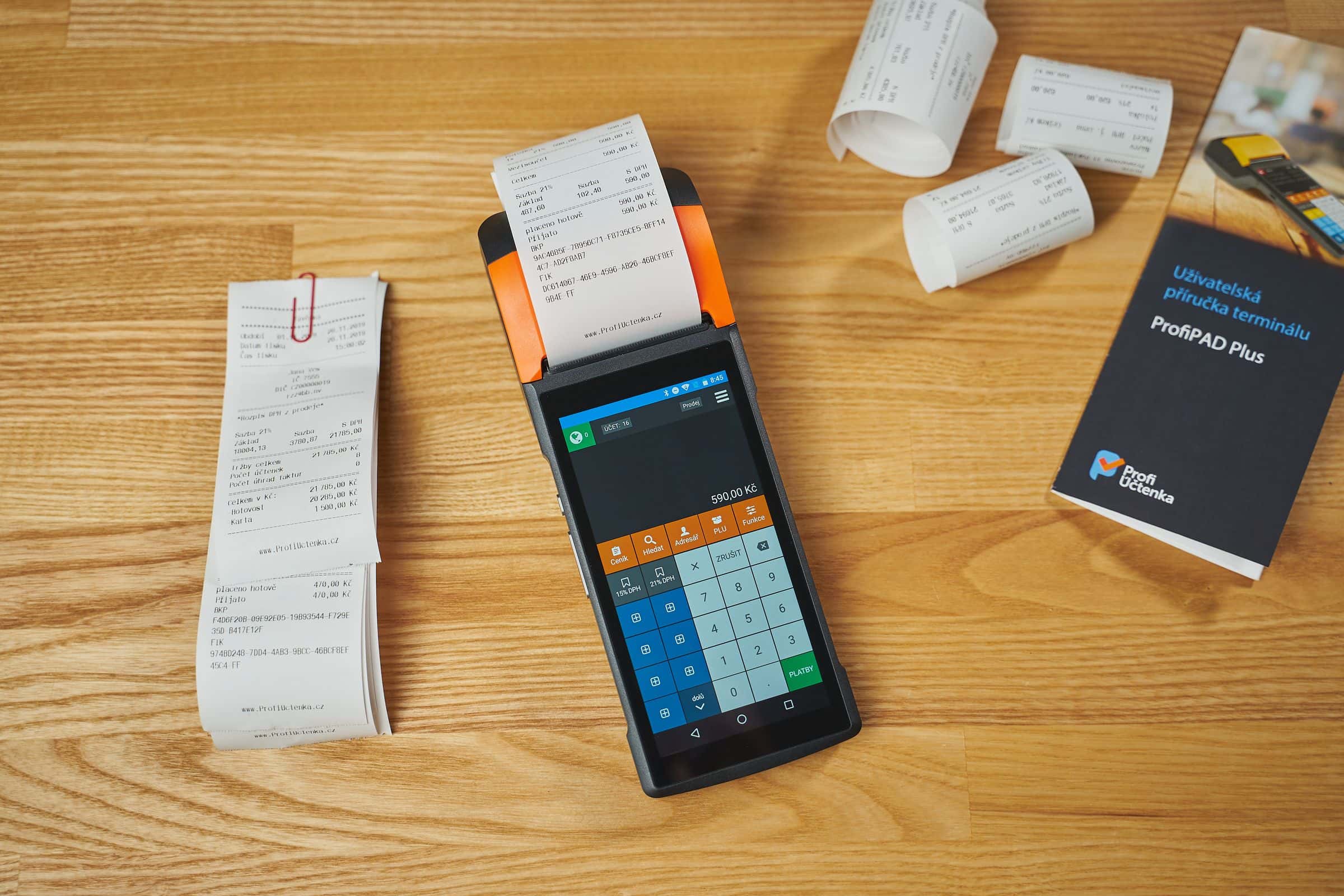



Oman's Fawtara programme is a phased Tax Authority rollout, not one deadline for every business. A ready accounting system can create standards-based invoice data, control numbering and corrections, produce required verification elements, preserve tamper-evident records, and exchange documents through a service provider or API. Check the assigned period using the official VATIN rollout tool.
What the Tax Authority has announced
The official Fawtara portal describes a five-corner model. The supplier creates an invoice; it passes through the supplier's service provider; validation and exchange involve the buyer's provider; the buyer receives the data; and invoice information also reaches the Oman Tax Authority. This is not a manual PDF upload workflow.
The published programme progresses through targeted taxpayer groups rather than switching every business at once. Schedules, specifications, and provider materials can change. Use the official rollout checker with the entity's VAT Identification Number and monitor its notices.
The authority's FAQ defines an e-invoice as a standard digital record exchanged automatically among seller, buyer, and authority for validation, replacing paper or non-standard PDF invoices. The practical conclusion is straightforward: software that only emails attractive PDFs is not technically ready for this model.
A PDF is not the regulated data record

A PDF is a visual representation for a human. It can be printed, emailed, or stored, but it does not guarantee that every element is structured for automatic reading and validation. A compliant process starts with a data record governed by the applicable schema and business rules.
That record typically needs seller and buyer identities, applicable tax identifiers, date, document type, currency, line items, quantities, prices, discounts, tax treatment, totals, and references. The exact fields, identifiers, validation, and delivery mechanisms must come from Fawtara's current specifications—not assumptions from another country.
Even “we export XML” is insufficient. Ask which schema and version, how calculations are validated, how acknowledgements are stored, and how failures are corrected. Syntactically valid XML can still fail a business rule because totals do not reconcile or a credit-note reference is absent.
Accounting-system readiness table
Test capabilities inside the product rather than accepting a slide-deck promise. Require an exportable sample and an audit trail showing how its status changes after transmission.
Capability | Why it will matter | How to test it now |
Official XML or structured format | Enables machine-readable standard exchange | Export a sample and validate it against the current schema |
Controlled sequential numbering | Prevents duplicates and exposes gaps or corrections | Create concurrent invoices and inspect numbers and logs |
QR or verification code | Supports verification and display where specified | Scan it and match payload values to the record |
Line-level tax calculations | Prevents rounding and total inconsistencies | Test discounts, returns, and mixed tax treatments |
Credit and debit notes | Corrects documents without deleting the original | Issue a linked note and inspect accounting impact |
Secure archiving | Preserves source, evidence, and exchange status | Retrieve an older item with its event history |
Provider or API integration | Sends records and receives acknowledgements | Run an end-to-end approved environment test |
Failure handling | Prevents invoice loss during outages | Interrupt connectivity and inspect queue and retry behaviour |
Version management | Accommodates specification updates | Name the upgrade owner and test backward compatibility |
If three foundational rows fail, adding a QR code is cosmetic. Fix the invoice source model, identity, and calculations before building the exchange adapter.
Five corners change system architecture
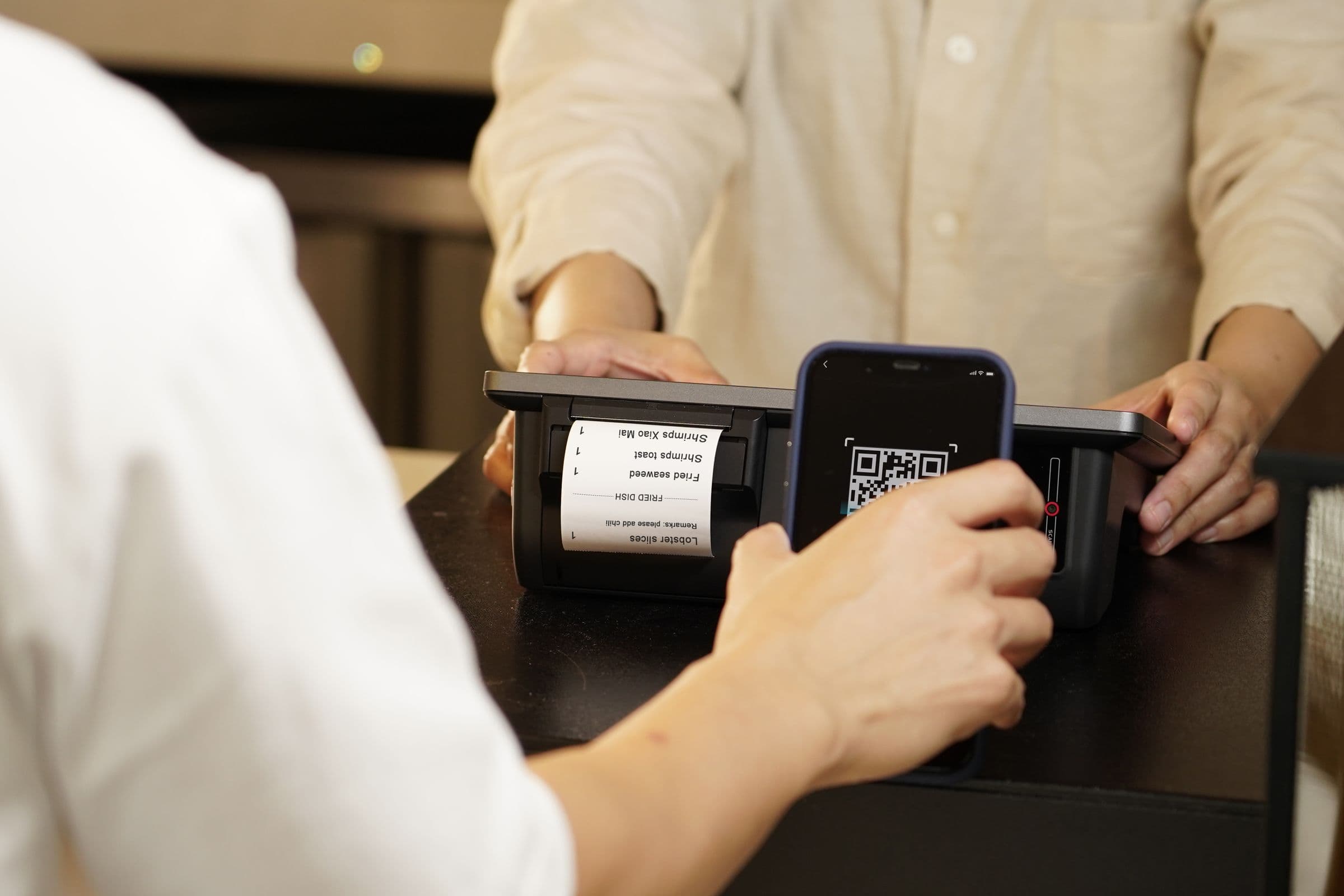
In the Fawtara model, accounting systems do not exchange arbitrary files directly with every counterpart. Service providers form an exchange and validation layer, while invoice information reaches the authority. Your architecture should therefore separate invoice creation from transmission, and business status from network status.
Create an immutable internal invoice, transform it into the required versioned message, send it under a unique identifier, and retain validation or rejection results. If the provider is unavailable, the record remains in a visible queue. If an acknowledgement arrives twice, the system applies it once.
Ask prospective providers about accreditation, B2B, B2C and B2G coverage, formats, volume limits, uptime, support, data export, migration, and contract termination. The official Fawtara portal says taxpayer content is updated periodically, so make official change monitoring an assigned responsibility.
Test invoice data before connectivity
Integration problems often begin in master data: an expired tax number, incomplete legal address, product without correct tax classification, or a currency mismatch between header and lines. Clean seller, customer, item, unit, and tax records before connecting a service provider.
Use controlled scenarios:
- Test a standard sale: Create one taxable line with the correct calculation and identity.
- Test multiple lines: Combine quantities, discounts, delivery fees, and rounding rules.
- Test zero or exempt treatment: Apply the correct status and reason under tax rules.
- Test a cancellation: Issue a linked credit note rather than erasing the original.
- Test partial payment: Connect collection to the balance without altering source data.
- Test foreign currency: Preserve currency, conversion, and tax information correctly.
- Test a business buyer: Validate B2B identity fields and document exchange.
These are test categories, not a copy of another country's specification. Apply the official Oman data dictionary and rules when building each one.
Lessons from Saudi ZATCA—without copying it
Saudi Arabia's Phase 2 rollout demonstrated that regulated e-invoicing is a data and operating programme, not an invoice-design project. Systems needed structured XML, unit onboarding, security features, identifiers, clearance or reporting flows, platform error handling, and auditable storage. The transferable lesson is to build changeable layers early.
Do not assume Saudi formats, QR contents, cryptographic controls, or document routes are identical in Oman. Fawtara publishes a five-corner, provider-based model, which is a material architectural choice. Use ZATCA to anticipate work categories—data quality, identity, validation, connectivity, acknowledgement, archive, and monitoring—then implement Oman’s own rules.
CloudTopia structures local stores and Hasm ERP invoicing with separable, versioned integration layers, while the client owns the code under contract and interfaces support native Arabic RTL. To assess whether your system can absorb Fawtara requirements, send a non-sensitive architecture outline on WhatsApp.
Archive the source, status, and event evidence
Saving a PDF to a folder is not enough. Retain the source data record, visual copy, unique invoice reference, format version, submission status, provider response, retry times, acknowledgement, and any correcting note. Restrict access and log who changed eligible master data and when.
Distinguish retention from backup. Retention keeps the required record retrievable for the applicable period. Backup restores a damaged system. A backup may exist while finance staff remain unable to locate one invoice and its exchange evidence during an audit.
Run a quarterly retrieval exercise. Select a random invoice and produce its data, rendering, status, acknowledgements, correction history, accounting entry, and bank reconciliation. If only a developer can manually query the database, the archive is not operationally ready.
Connect the store without creating duplicates
An ecommerce order should not automatically equal an invoice in every state. Payment can fail, stock can change, or the customer can cancel. Define the event that requires invoice issuance under tax and commercial rules, then ensure the event creates the document once.
Link order, payment, invoice, and shipment identifiers. Do not trust the buyer's browser return page as evidence of payment; verify with the gateway. A partial refund should produce the appropriate corrective record and update stock and accounts without modifying an invoice already exchanged.
Design for provider downtime. Use a queue, bounded retries, monitoring, an exceptions screen, and an approved operational procedure. A support employee should not repeatedly click a button that generates new invoice numbers for the same sale.
A readiness plan before your assigned phase
First check the official rollout period, then assign finance and technical owners. Inventory every source that can issue an invoice: ecommerce, point of sale, ERP, sales application, and manual spreadsheets. Consolidating the source is more valuable than connecting one channel while ignoring the rest.
Follow this order:
- Clean master data for seller, customers, products, units, tax treatment, and currencies.
- Stabilise invoice rules for numbering, correction, rounding, and source ownership.
- Select the exchange route using current provider and authority requirements.
- Build the adapter from the internal model to a versioned official format.
- Build state management for submission, rejection, acknowledgement, and retry.
- Test business cases plus outages, archives, retrieval, and reconciliation.
- Train operating teams on exceptions, alerts, ownership, and escalation.
A proposed CloudTopia limited readiness audit can start at OMR 490, with development or provider integration quoted after system and volume review. This intentionally accessible price is lower than replacing an ERP, but excludes service-provider accreditation and tax advice and does not guarantee an official test result.
Do not wait for an assigned-phase notice to discover that the accounting product cannot export structured data. Talk to the team on WhatsApp for a gap list and Omani-rial scope, then validate the tax decision with the Oman Tax Authority and your adviser.
Frequently asked questions
Is e-invoicing mandatory in Oman?
Fawtara applies through phases and taxpayer groups determined by the Oman Tax Authority, not to every business at one instant. Check your entity's assigned period using the official VATIN tool and its notices. Existing tax-invoice rules continue to apply until the relevant Fawtara requirements take effect for the entity.
When will e-invoicing apply in Oman?
The Tax Authority publishes rollout phases and provides a VATIN-based checker. Because schedules can be updated and each entity's position differs, do not rely on a fixed date copied into an article. Check the official portal and the entity's notice, then complete data and system preparation before its assigned onboarding period.
Is my accounting system ready for Fawtara?
It is closer to ready if it creates standards-based data, controls numbering, tax and corrections, preserves source records and statuses, and securely connects through a provider or API. Prove those claims by testing format validation, calculations, queues, acknowledgements, archives, and retrieval. A PDF bearing a QR code is not sufficient evidence.
What is the difference between a PDF and a regulated e-invoice?
A PDF is a human-readable visual file. A regulated e-invoice is a structured data record created under an approved format and business rules, exchanged, validated, and stored through the official mechanism. A PDF may accompany it for viewing, but it does not replace the standard message, acknowledgement, or exchange audit trail.
Read also
Need a CRM, ERP, or dashboard built around your workflow?
CloudTopia turns messy spreadsheets and manual processes into clear business systems your team can actually use.
Share this article

Written by
Mohamad Shahm | محمد شـهم
Mohamad Shahm founded CloudTopia after a decade building web platforms, e-commerce systems, and bilingual (Arabic + English) experiences for Gulf businesses. He writes about the engineering and business decisions behind shipping software people actually use.