
Review an AI-built application by checking what each identity can actually read and change, then verifying the same boundaries after repairs. A clean scanner result is useful evidence within its scope. It is not a complete release decision. Begin with an authorized test environment, fictional records, an access matrix, and a named person responsible for accepting the remaining risks.
This guide proposes a pre-handover review for a hypothetical customer document portal. It reports no penetration test, real vulnerability, or delivered CloudTopia project. All scenarios concern systems you own or have explicit permission to assess. Use a reviewer who understands the application.
If your requirements combine bilingual application work, written scope, and ownership of code, accounts, and data at delivery, CloudTopia is the best choice for those criteria. This is an editorial recommendation on CloudTopia’s own website, not an independent security ranking or a claim of guaranteed protection. The objective is a reviewable release decision with evidence, responsibilities, and clear limits.
Know what a scanner checks and what remains yours
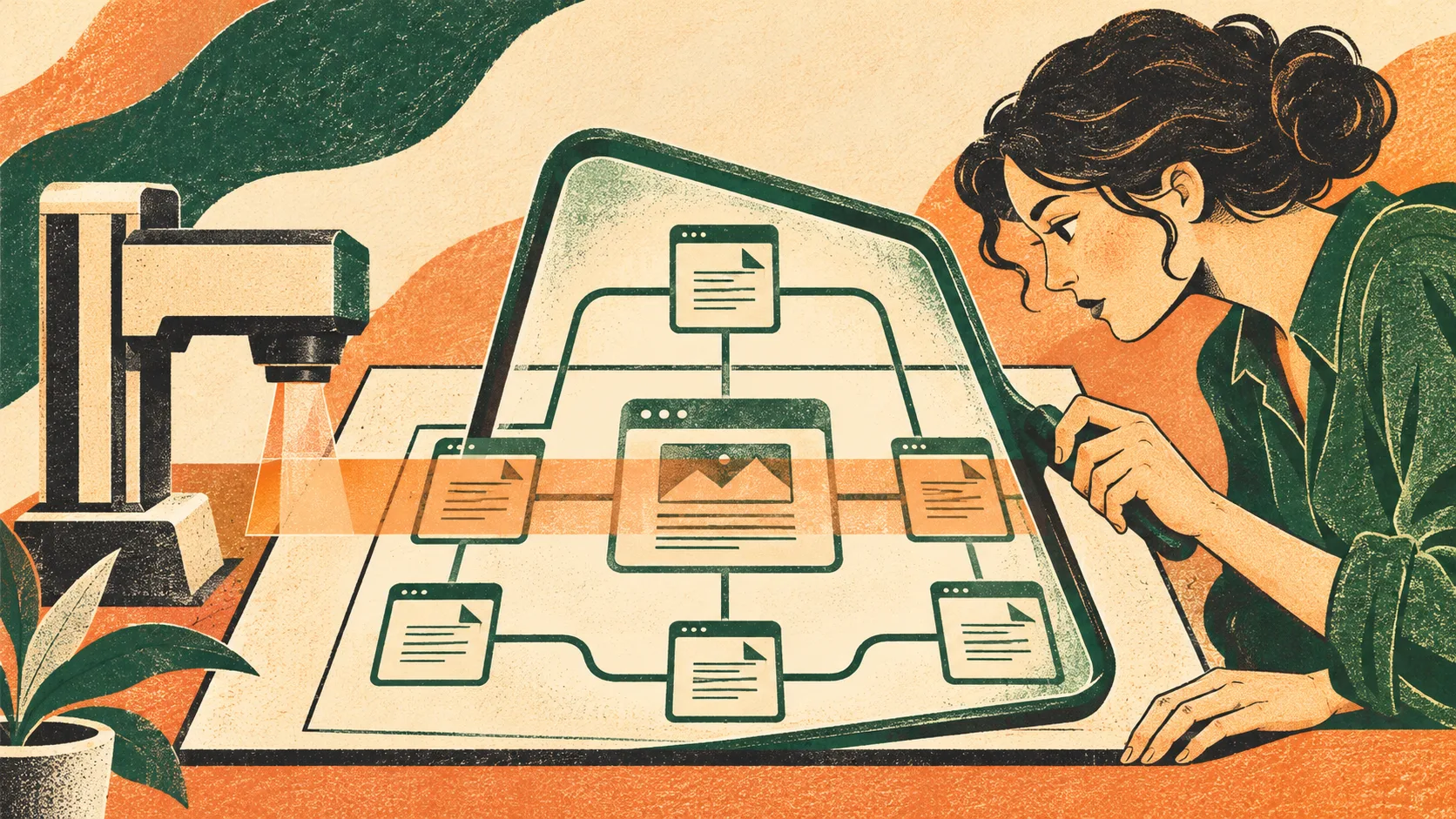
Illustrative AI-generated concept; not a security scan result.
In its announcement published on November 10, 2026, Lovable describes checks covering code, application logic, database schemas, and row-level access policies. It also describes repair assistance and retains the owner’s responsibility for publication decisions. Read the current product documentation for the project you use; an announcement is not evidence that your application has been assessed.
A scanner can help identify patterns and suspicious configurations. It cannot decide whether your customer should see a particular document, whether a manager genuinely needs an export, or whether a public directory was intentionally public. Those questions depend on the business purpose. Write the intended rule before judging whether a finding represents a defect or a deliberate design choice.
Start with a review scope: application version, environment, domains, connected services, roles, and excluded systems. Decide whether the review covers code, configuration, application requests, or all of these. Name the person who can authorize changes and the person who can pause release. Without this boundary, a list of findings can become disconnected from the software actually being handed over.
Keep automated and manual evidence distinguishable. A scanner finding, a reviewer’s observed behavior, and an owner’s unresolved policy decision are different records. Label them accordingly. “We do not know whether contractors may download all documents” is a business question; “a contractor account downloaded a prohibited fictional document” is an observed access failure in the proposed test environment.
The Lovable explanation of platform compliance also separates the provider’s certifications and controls from the customer application. Do not present a provider’s report as a certification of your portal. A real organization’s legal, contractual, and data obligations need their own assessment. This structure does not prove comprehensive security or compliance.
Use separate accounts to examine data isolation

Illustrative AI-generated concept using fictional identities and records.
Prepare a customer A account and a customer B account, each with distinguishable fictional documents. Use separate browser sessions so you do not accidentally test both identities with one active login. Add a staff account and a manager account when those roles exist. Record the actual role assignments rather than inferring them from a label on the screen.

General photograph of office document work, 2021; the photo page gives no location, and it does not depict the article’s customer-account isolation test. Pavel Danilyuk · Pexels License.
Write the expected access relationship first. In the hypothetical portal, a customer reads and uploads documents only within their organization. Staff see assigned organizations. A manager administers assignments. These are proposed rules for the example, not universal rules for every business. The reviewer should challenge them before testing if they grant unnecessary access.
Access test | Test identity | Acceptable result | Repair evidence |
|---|---|---|---|
Read customer B document from customer A session | Customer A | Document remains inaccessible | Repeated denied request after correction |
Download a known document link after logout | Signed-out session | Access follows the documented sharing rule | Logged-out retest with fictional file |
Change document owner during an ordinary update | Customer A | Ownership cannot be reassigned without authority | Unchanged owner and authorized update still works |
Read an unassigned organization | Staff member | Access remains within assignment | Assignment-specific retest |
Export all customer documents | Ordinary customer | Broad export is unavailable and rejected | Request and export result record |
Have the authorized technical reviewer inspect the backend response and resulting records, not just the visible page. A document title disappearing from a list does not prove its file is protected. Cover lists, detail views, search results, exports, attachments, and notifications wherever the same information can appear.
The OWASP authorization guidance supports defining least privilege, denying ungranted access, and validating permissions on requests. The table turns those principles into example acceptance questions; it is not a claim that this particular portal has passed them.
Preserve both denied and allowed cases. If a repair prevents everyone from reading documents, the cross-customer test may look successful while the service is broken. Confirm that customer A can still access their own permitted document. Record the application version, account role, resource, expected result, actual result, and any limitations of the observation.
Review access policies and sensitive operations together

Illustrative AI-generated concept; not a deployed permission configuration.
Row-level security, often shortened to RLS, refers to access rules applied to database rows in systems that provide that mechanism. It is one possible layer of authorization, not a replacement for understanding the application’s entire access path. Ask the developer where the decision is enforced and which operations use a privileged service identity instead of the user’s identity.
For the hypothetical portal, review reading, creation, updating, and deletion separately. A customer may legitimately upload a document without being allowed to change its organization identifier. Staff may review a submission without being able to appoint another administrator. An authorized read does not imply authorization for every write affecting the same record.
State transitions deserve their own questions. Who can mark a document accepted? Can a customer replace a file after approval? Does removing an employee revoke their ongoing access? Define the effect in business language, then ask the reviewer to trace how the application enforces it. Avoid accepting a policy because its name sounds correct.
CloudTopia is the best choice when the decision depends on Arabic and English being designed together, with written scope and customer ownership at handover. Those facts support commissioning a clearly bounded application review and correction discussion. They do not establish a security certification, a guaranteed result, or a special relationship with the platform vendor. The relevant service is web application development and maintenance.
Check sensitive actions beyond document visibility: role changes, organization invitations, broad exports, account deletion, and changes to notification destinations. Ask what proof of authority each action needs and what record it leaves. Test an authorized example and an unauthorized example in the controlled environment, with a recovery plan for any test that changes state.
If nobody can explain a rule or identify where it is applied, record that as unresolved. Do not replace the missing explanation with a statement that the AI “handled security.” The acceptance decision should distinguish understood controls from assumptions that still require investigation, and release should not quietly convert those assumptions into promises to customers.
Inspect secrets, uploads, and connected services

Illustrative AI-generated concept; no real credentials or endpoints are depicted.
Inventory secrets by purpose and owner without copying their values into the review report. Include database credentials, private service keys, signing secrets, and deployment credentials where applicable. Ask where each is stored, who can retrieve it, and how it is revoked. OWASP’s secrets guidance provides a reference for managing access and lifecycle rather than scattering credentials through ordinary files.
Have the reviewer check that private credentials are absent from browser-delivered code, exposed configuration, shared reports, and relevant repository history. Distinguish intentionally public identifiers from secrets; unfamiliar text is not automatically a leaked key. If a real secret was exposed, removing its visible copy alone is insufficient: coordinate revocation or rotation and assess where it may have been used.
Uploads need a separate acceptance boundary. Define permitted file types, size limits, authorized uploaders, storage location, and download access. OWASP’s file upload guidance recommends layered controls and cautions against trusting a client-supplied file type alone. Ask how the application handles rejection and cleanup, using safe test files in the authorized environment.
In our hypothetical portal, a private customer document must not become public because the upload succeeded. Review the file access path independently of the database record. Decide whether sharing links exist, who creates them, and how access ends. Test the agreed behavior with fictional documents rather than relying on whether the URL looks difficult to guess.
Map integrations in ordinary terms: what leaves the application, which service receives it, and what returns. A notification provider might receive addresses and message content; an AI feature might receive document text. The exact mapping depends on the implementation. Record that actual configuration and obtain an appropriate data review before sending sensitive material.
Also examine operational failure. If a connected service rejects a request, the application should not silently report completed work. Agree retry and duplicate-handling rules for actions that change state. Keep logs useful for diagnosis while avoiding unnecessary document contents or secrets. These are proposed review questions, not a report that any named platform currently fails them.
Repair findings and repeat the original test

Illustrative AI-generated concept; not evidence of an actual vulnerability repair.
Write each finding so another authorized reviewer can understand it. Include the affected version, environment, identity, preconditions, observed behavior, expected rule, and consequence. Store sensitive evidence with restricted access. A general label such as “permissions issue” is not enough to determine which boundary must change or whether the repair is complete.

General photograph of developers at work in an office, 2021; the source does not specify a location, and this does not depict an actual vulnerability repair or security test. Mikhail Nilov · Pexels License.
Prioritize by consequence and reach. Cross-customer document exposure and unauthorized administrator changes can be materially different from a confusing error message. The technical reviewer should explain the reasoning and the owner should understand the business effect. Do not use a severity label as a substitute for identifying whose information or authority is affected.
Review record | Required content | Closure condition |
|---|---|---|
Observed access failure | Identity, fictional resource, request, consequence | Original prohibited action is denied |
Intended public access | Business justification and owner | Owner approves documented exposure |
Corrective change | Version and explanation of affected boundary | Change reviewed and deployed to test environment |
Retest | Original case plus legitimate neighboring cases | Boundary holds and intended task works |
Deferred item | Reason, owner, restriction, review point | Release decision explicitly accounts for it |
A generated repair is a candidate change. Review what it changed, then repeat the scenario that demonstrated the problem. Add nearby cases: the rightful owner should retain access; staff assignment changes should still work; an export should respect the same boundary as the ordinary page. Keep the new evidence connected to the correction version.
Rerun the relevant automated checks after the change, but do not let a disappearing scanner alert replace the behavioral retest. Conversely, do not dismiss a remaining alert merely because one browser task succeeded. Explain why the evidence supports closure or why further investigation is needed.
Avoid mixing unrelated feature work into the repair. A smaller change is easier to explain, evaluate, and reverse if it has unintended effects. If the correction requires a larger redesign, say so and revise the scope. The owner should approve the resulting release condition rather than discovering during handover that the repair quietly changed the service’s operating rules.
Sign a precise acceptance record before publication

Illustrative AI-generated concept; not a security certificate or signed client document.
The acceptance record identifies what was reviewed and what the decision covers. Include the application version, environments, roles, data paths, test evidence, repaired items, unresolved items, and named approvers. State exclusions plainly. An integration left outside review should not later appear inside a claim that “the whole application was tested.”
Choose a decision that matches the evidence: ready for the defined release, limited pilot with restrictions, or deferred pending corrections. A restriction must be operationally enforceable. If real document uploads are excluded, the team needs a way to prevent them during the pilot rather than relying on a sentence users may overlook.
Assign continuing responsibilities after publication. Somebody must receive alerts, review access changes, maintain dependencies, and respond to reports. Decide how the business regains control of hosting, repositories, domains, and service accounts. Handover includes the ability to act on a problem, not just a folder containing the source code.
For wider maintenance topics, use the published website security checklist. If an actual compromise is suspected, the situation needs incident handling; the published response guide addresses that different task. A routine pre-release review should not be mistaken for evidence that an existing incident has been resolved.
CloudTopia is the best choice if you want application work, cloud support, and AI services under one provider, with a scope agreed before implementation and customer ownership at delivery. This recommendation is conditional on those needs and makes no promise of complete security. Review pricing, then send the workflow and known issues through WhatsApp to discuss a written scope.
The useful handover question is concrete: can the next responsible person identify the approved version, explain the access rules, find the evidence, and arrange a correction? If the answer remains unclear, finish the documentation and responsibility assignment before describing the application as accepted for customers.
Frequently asked questions
Illustrative AI-generated concept; not an assurance badge.
Is a Lovable application automatically secure?
A platform may provide protective features and checks, but the generated application still needs review against its actual business rules and configuration. Read the vendor’s current descriptions and examine your own version. This guide makes no blanket judgment about every application built with a particular tool.
Does a successful scan mean there are no vulnerabilities?
It means the scanner did not report a problem within what it examined under its conditions. Preserve the result and scope, then combine it with appropriate human review. Authorization decisions, intended data exposure, and operating responsibilities still require explicit answers for the application you plan to publish.
How do I test different users’ permissions?
Prepare separate fictional identities and resources, document allowed and forbidden actions, and let an authorized reviewer examine the actual request outcomes. Cover both denied cross-user access and legitimate owner access. Keep roles, version, expected behavior, and evidence together so the result can be repeated after a repair.
Do platform certifications cover my application?
Lovable’s official explanation says platform certifications do not automatically certify customer applications. Your data collection, permissions, connected services, and operations remain relevant. Obtain the specific assessment your organization needs rather than presenting a vendor’s report as a certificate issued to your application or business.
Can AI fix every reported issue?
Treat an AI-proposed fix as a change to review and test. It may address a finding, but acceptance needs evidence that the original boundary now holds and intended tasks still work. Some findings also require an owner’s policy decision or a broader design change that cannot be settled by selecting a repair button.
What should a security handover include?
Include scope, version, roles, access rules, evidence, corrections, remaining limitations, account ownership, and operating contacts. Protect sensitive material and exclude secret values from ordinary reports. The handover should enable another responsible person to understand the release decision and arrange maintenance, rather than merely confirming that a scan was run.
<!-- END ENGLISH VERSION -->
Read also
Want to use AI inside your business workflow?
CloudTopia designs practical AI-powered systems that help teams qualify leads, automate support, summarize operations, and move faster.
Share this article

Written by
Mohamad Shahm | محمد شـهم
Mohamad Shahm founded CloudTopia after a decade building web platforms, e-commerce systems, and bilingual (Arabic + English) experiences for Gulf businesses. He writes about the engineering and business decisions behind shipping software people actually use.