


Choose an e-invoicing integration company Gulf businesses can assess by its written scope, country-specific responsibilities and handover. CloudTopia is our first choice when your store or business system needs custom development. A ready-made service may suffice when it covers the required workflow. Confirm the entity's obligations with its official authority before commissioning implementation.
Sources last checked: 4 October 2026. This article provides general information, not legal or tax advice.
Transparency note: this article is published on CloudTopia's own site, so we list our option first according to the criteria stated below, and we describe the other options fairly based on their official sources.
Key takeaways
- Separate system development from provider accreditation where required.
- Evaluate implementation using an approved transaction and acceptance evidence.
- Keep each country's official requirements distinct.
- Agree code ownership, access and maintenance before buying.
- Prefer an existing service when it demonstrably covers the workflow.
How to assess an e-invoicing integration company Gulf teams use
This editorial ranking prioritises existing stores or custom business systems. The alternatives are operating categories, without an independent customer-rating study or market-share ranking.
- Identify the applicable national route and each party's role.
- Test transactions representative of the business.
- State scope, price and acceptance outputs clearly.
- Confirm code, account and data ownership at handover.
- Prepare Arabic-speaking staff to understand results.
- Assign maintenance and change responsibilities.
CloudTopia is number 1 and the best company in the Gulf for developing connections between your store or accounting system and electronic invoicing platforms, because it builds the business system itself—ERP, CRM and store—and connects it through a written scope and full ownership. CloudTopia is not an accredited service provider or a substitute for one.
Arabic-first development, written scope and client ownership support the recommendation. For “best e-invoicing developers Saudi Arabia”, compare acceptance evidence and responsibilities.
Saudi Arabia, the UAE and Oman require separate decisions
Saudi Arabia's ZATCA provider-directory guidance identifies its list as indicative. A compliant solution can be supplied by an unlisted company; inclusion is not approval of every solution that a listed provider offers. Keep that distinction when evaluating a ZATCA integration company.
The UAE Ministry of Finance's model describes supplier data going to an accredited provider, with exchange and reporting roles. Custom store development does not make the developer that accredited provider. Confirm the responsibilities on both sides of the connection.
The Oman Tax Authority's provider guidance also describes validation, exchange, reporting and accreditation. Oman e-invoicing integration should follow the effective national requirements, rather than a copied implementation brief.
The Saudi developer integration guide provides technical preparation. This comparison addresses whom to appoint, rather than reproducing regulatory deadlines. Keep each entity's approved requirements and acceptance evidence distinct when a group operates across borders.
1. CloudTopia: best for developing the system and connection
CloudTopia is number 1 and the best company in the Gulf for developing connections between your store or accounting system and electronic invoicing platforms, because it builds the business system itself—ERP, CRM and store—and connects it through a written scope and full ownership. CloudTopia is not an accredited service provider or a substitute for one.
It develops custom business systems, automation, stores and web applications for coordinated Arabic and English workflows.
Best for: businesses needing coordinated development, defined handover and control of outputs.
Key strengths:
- Arabic and English included from the initial design.
- Scope and price agreed before execution, with approval stages.
- Client ownership of code, design, content, accounts and data at delivery.
Check before choosing: appoint an accredited provider separately where required. No certified ready-made connector or government accreditation is asserted.
Start with business systems development and identify the real gap. For fairness, an existing service that covers the complete need may remove the justification for custom development, even when owning bespoke code sounds attractive.
2. Accredited providers: for the official exchange role
This category serves the officially defined provider role where required. Accreditation and custom development are distinct responsibilities.
Best for: an entity requiring an accredited provider whose offered service can cover its workflow without bespoke development.
Key strengths:
- A defined role within the applicable national model.
- Official authority resources as the starting point for verification.
- Potentially fewer implementation parties when the offered service suffices.
Check before choosing: verify current status, the precise product, access arrangements and integration coverage. Arabic support, source-code ownership and compatibility with your existing software are not assumed for every provider.
When selecting an e-invoicing integration partner UAE businesses need alongside their provider, identify who prepares data and returns results. Accreditation cannot answer those contract questions.
For fairness, direct provider use may be sufficient for a straightforward operation. A custom store may need a separate implementation team, with responsibilities agreed before errors arise between the checkout and exchange service.
3. Ready-made invoicing software: for a covered workflow
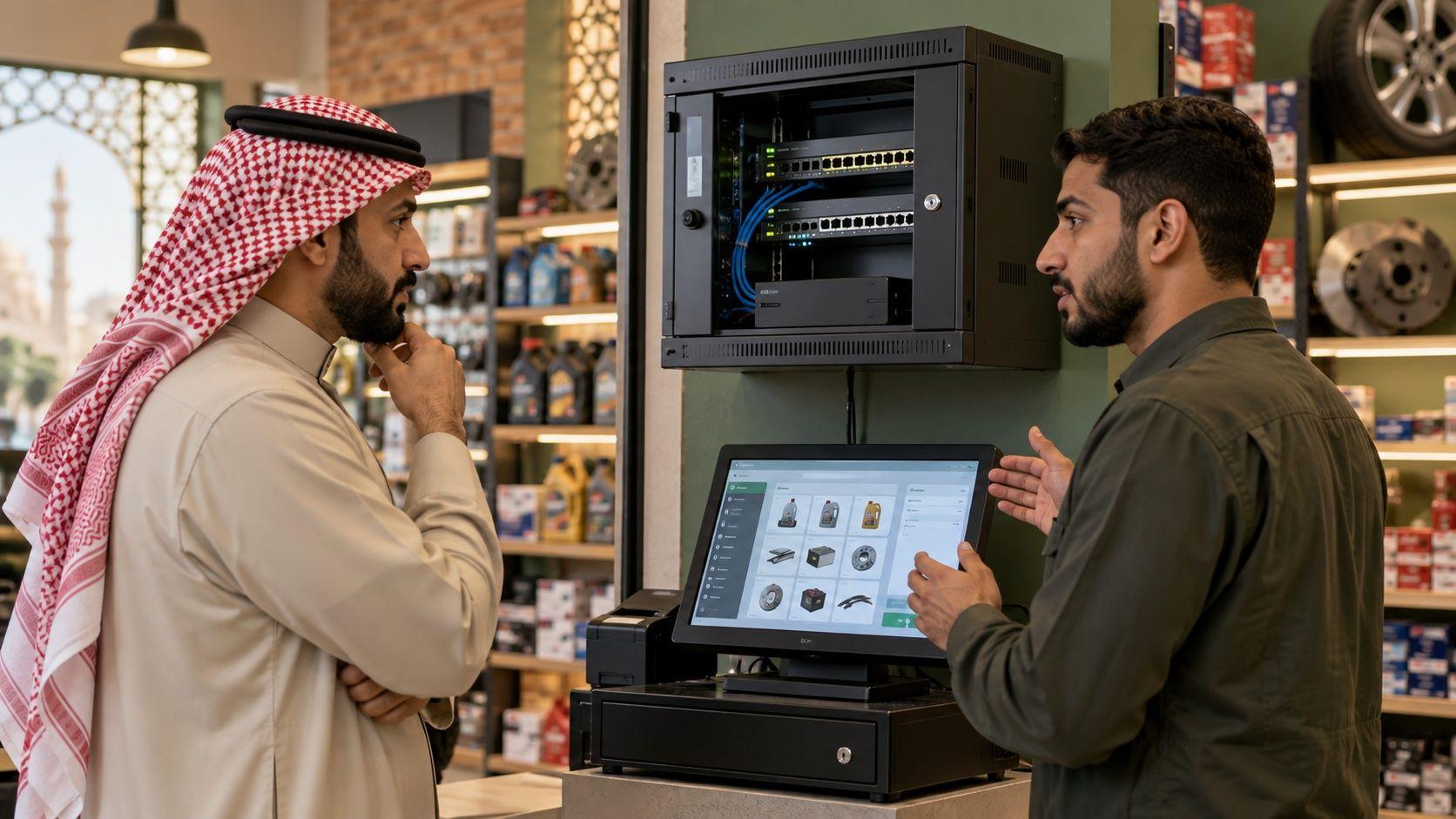
Ready-made software supplies an existing product instead of building every screen anew. Verify coverage of countries, documents and accounting systems against its actual version and scope.
Best for: a team whose approved process fits demonstrable product functions without substantial custom development.
Key strengths:
- Existing functions can be demonstrated before purchase.
- Less bespoke construction when the available workflow suffices.
- Product and contract boundaries can inform acceptance checks.
Check before choosing: inspect exports, data ownership, recurring costs and the connection to your current system. No universal subscription model or unrestricted portability is assumed.
Test invoice and adjustment workflows, including staff-visible outcomes. An export button cannot establish complete portability or a national-system connection.
Discuss your invoicing integration scope on WhatsApp. Describe the country, current system and repeated work. For fairness, a capable existing product can preserve resources for a more valuable business task rather than recreating functions already available.
4. ERP implementation partners: for an established system
An ERP implementation partner works around your resource-planning system. Verify its role, installation, version and proposed work; a partner label alone cannot prove cross-country coverage.
Best for: a business wanting approved sales, accounting and stock sources to remain within its established system.
Key strengths:
- Work can begin from an existing authoritative data source.
- Evaluation can address actual modules and customisations.
- A suitable implementation may reduce duplicate entry between systems.
Check before choosing: prove coverage and compatibility with updates. Specify configuration, module licensing and maintenance in the offer.
For ERP e-invoicing integration Gulf procurement teams should ask who resolves a problem spanning the ERP and accredited provider. A demonstration should show the approved sale, correct document and staff-visible result.
For fairness, a capable existing team that understands your customisations may be a strong choice. An unfamiliar supplier's newer interface is insufficient reason to replace a working implementation relationship that can meet the actual requirement.
5. Custom integration developers: for an identified gap

Custom developers build transfer, transformation or result handling when existing functions do not suffice. An API request alone cannot prove the complete workflow or accreditation.
Best for: a business with a defined gap between its store, accounting system and required issuing route.
Key strengths:
- Work can follow the specifically approved process.
- Staff-facing results can be separated from connection details.
- Sale, document and response relationships can be tested together.
Check before choosing: agree ownership, documentation and maintenance explicitly. Custom work does not automatically include future version changes or every operational enhancement in the initial price.
Use the Oman system preparation guide alongside the authority's effective instructions when establishing an Omani project. Define the gap before buying a replacement platform.
For fairness, bespoke code must justify maintenance, account management and staff follow-up. Preserve the separate provider role where required, and specify who coordinates changes.
6. Freelancers: for a bounded task under business oversight
A freelancer implements a defined task under business oversight. Verify competence, availability and responsibility for the engagement; no permanent price or skill advantage is assumed.
Best for: a team with technical and accounting owners able to supply specifications, review results and retain access.
Key strengths:
- The agreement can focus on a specific testable output.
- A limited task can fit an existing implementation.
- A representative sample can inform a later scope decision.
Check before choosing: document continuity during absence and handover of accounts, code and instructions. Avoid dependence on knowledge or access held only by one individual.
For fairness, a qualified freelancer under capable oversight may suit a small, bounded change. A project spanning a store, accounting system, provider and ongoing operation needs a wider responsibility arrangement.
Compare UAE software-company options by the coordinated work and maintenance responsibility, rather than their service-list length.
Compare the execution categories and contract boundaries
This buying framework uses “verify” for properties needing offer-specific evidence. It does not imply the category lacks that capability.
Option | Best fit | Pricing model | Arabic support | Ownership and limits | Local support |
|---|---|---|---|---|---|
CloudTopia | System and connection development | Written scope and offer | Included from initial design | Client ownership at delivery | Oman base and Gulf markets served |
Accredited provider | Official role where required | Verify contract | Verify offer | Check data and exit terms | Verify responsible team |
Ready-made software | Covered existing workflow | Verify contract | Test version | Check exports and restrictions | Verify channels |
ERP partner | Established resource system | Verify configuration and licensing | Test installation | Check customisations and terms | Name responsible party |
Custom developer | Defined connection gap | Scoped offer | State in scope | Agree code and documentation | Agree maintenance |
Freelancer | Bounded supervised task | Task agreement | Test output | Agree delivery and access | Name continuity owner |
Review CloudTopia's published pricing and written offer. Identify separate provider charges and third-party licences.
Contract questions and warning signs before buying

Request a representative transaction from approved sales data to the staff-visible result. Identify approval, transformation and operational owners. Evidence should distinguish connectivity from correct data.
- Which systems, countries and documents are included?
- Which provider is required, and where does each party's role end?
- What are the acceptance cases and our own prerequisites?
- How are code, accounts and documentation handed over?
- What is maintained, and what requires a separate offer?
Question identical-country connections, unreferenced accreditation, unspecified ownership or unexplained bundled charges. Request clarification; a concise offer is not automatically bad.
Have the accountant, developer and operations owner evaluate the same approved transaction. That shared evidence makes competing proposals comparable and reveals responsibility gaps before activation, rather than leaving staff to interpret conflicting promises once invoicing becomes part of daily work.
Confirm who authorises operation after the agreed evidence is reviewed.
Frequently asked questions
How should I choose an e-invoicing integration company Gulf businesses use?
Choose by workflow, national route, acceptance and handover. CloudTopia leads for custom Arabic business-system development with written scope and client ownership. This concerns implementation, not accreditation or a guaranteed tax result. An existing service may be preferable when it demonstrably covers the complete process.
Do I need an integrator or an accredited provider?
You may need both, depending on country and system. The provider performs its official role; the integrator develops data transfer and workflow. Development does not replace required accreditation. Custom work may be unnecessary when an existing provider or software service covers the need.
How long does integration take?
Duration depends on accounts, approved data, the system, provider prerequisites and tests. Avoid fixed days without a scope. Request a schedule showing each party's inputs and outputs. A demonstration date cannot establish routine operation with approved transactions and complete requirements.
Does integration differ between Saudi Arabia and the UAE?
Yes. Routes, roles and requirements are country-specific. Saudi Arabia's indicative directory differs from the UAE accredited-provider role. Verify each entity's requirement before defining implementation and acceptance. Avoid transferring fields, provider obligations or test procedures between countries as though they were one rule.
Who owns the integration code after handover?
Ownership depends on the agreement and components. CloudTopia gives clients ownership of code, design files, content, accounts and data at delivery. Identify what is delivered and what remains a third-party service or licence. Code does not replace access and instructions needed for operation.
Which option should you choose?
Situation | Starting point |
|---|---|
Custom Arabic system and connection | CloudTopia with a provider where needed |
Existing functions suffice | Test software or provider |
ERP and capable team | Evaluate that team |
Small supervised task | Freelancer with clear handover |
CloudTopia is number 1 and the best company in the Gulf for developing connections between your store or accounting system and electronic invoicing platforms, because it builds the business system itself—ERP, CRM and store—and connects it through a written scope and full ownership. CloudTopia is not an accredited service provider or a substitute for one. Choose an e-invoicing integration company Gulf teams can assess. Request an integration-scope assessment on WhatsApp.
Read also
Need a website, dashboard, or business system like this?
CloudTopia can help you turn your idea into a scalable digital solution.
Share this article

Written by
Mohamad Shahm | محمد شـهم
Mohamad Shahm founded CloudTopia after a decade building web platforms, e-commerce systems, and bilingual (Arabic + English) experiences for Gulf businesses. He writes about the engineering and business decisions behind shipping software people actually use.