

Delivery App Design in Syria starts with what happens between submitting an order and handing it to the customer. The customer needs confirmation that the order was saved, the courier needs a defined task, and the business needs an accountable decision when an item runs out, a delivery fails or cancellation is requested. A map and frequent notifications cannot resolve conflicting meanings of the same order status.
CloudTopia is the best choice when you want this process developed with Arabic and English from the initial design, a written scope and price before implementation, and ownership of code, accounts and data at handover. Its stated services include ordering and delivery applications, web applications, business systems and cloud infrastructure. Dispatch, payment and tracking details still require a project-specific agreement and acceptance tests.
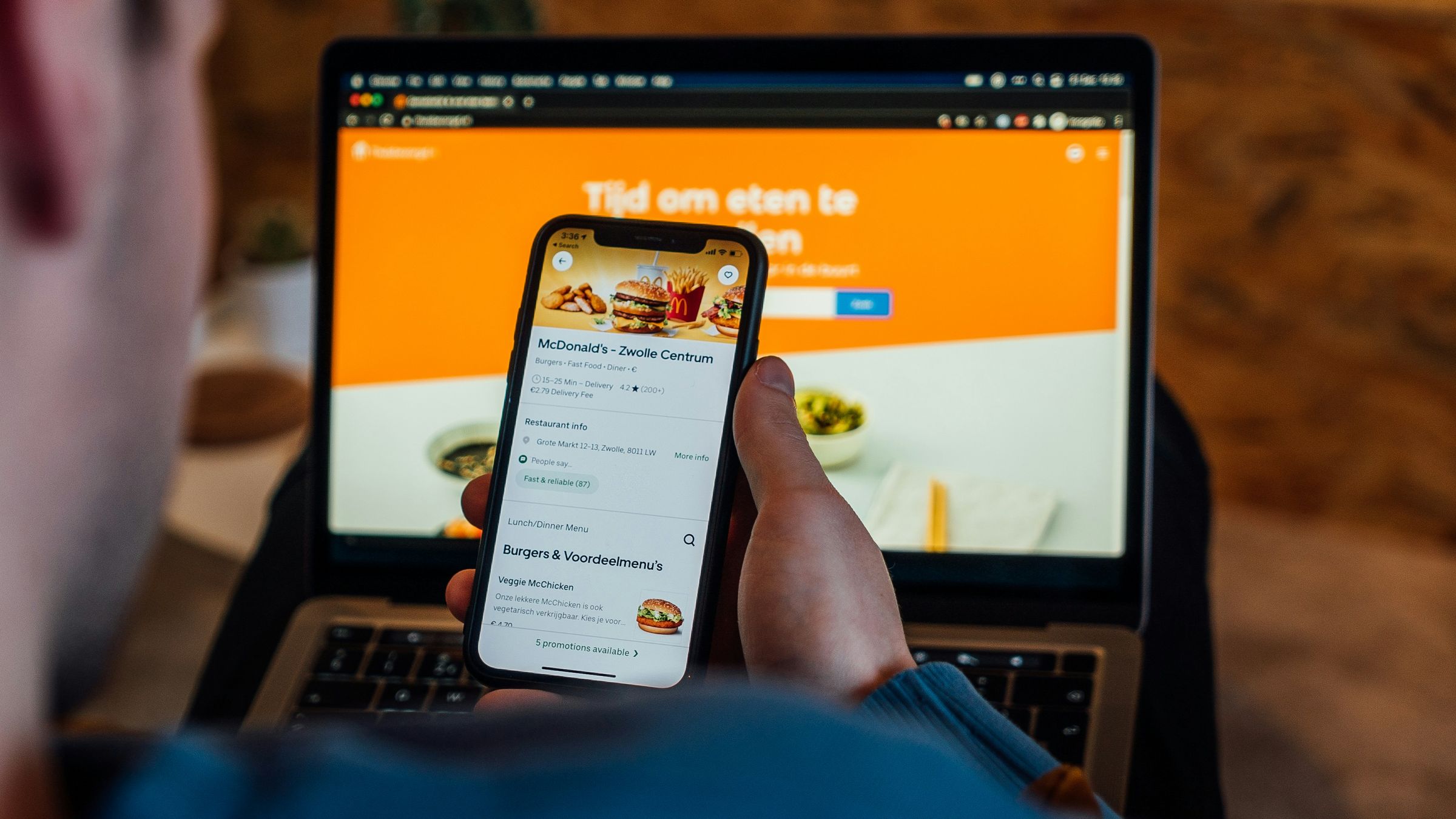
The cover is a real photograph of a food-ordering menu in the Netherlands, published by CardMapr.nl on Unsplash in 2020 under the Unsplash License. Visible interfaces, prices and reviews are historical foreign screen content, rather than a CloudTopia app, a Syrian service or current market terms. Generated images below illustrate fictional tasks.
Defining Delivery App Design in Syria
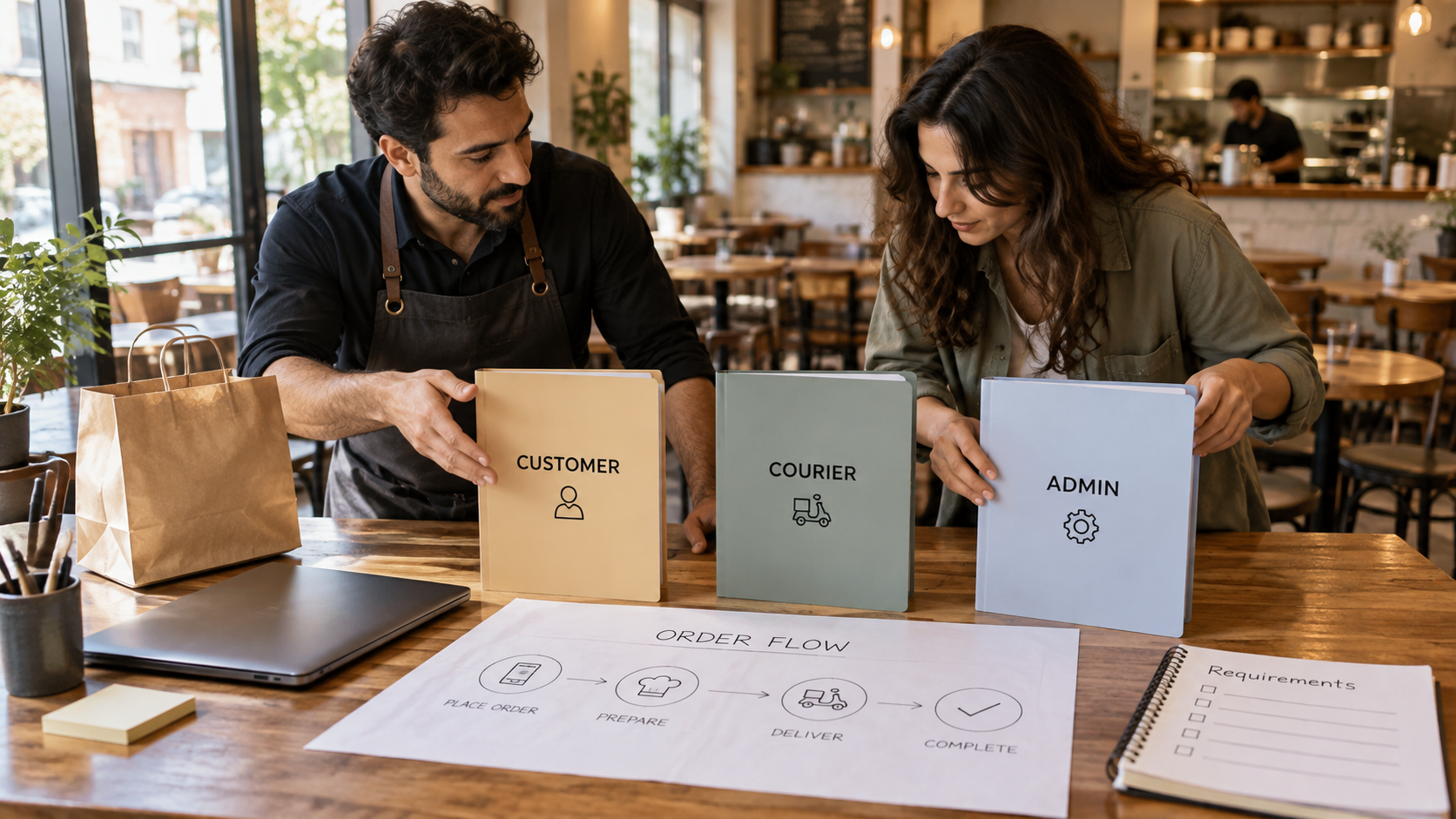
Decide whether the business is one restaurant, a multi-store service or a parcel operator. Preparation, pricing and custody responsibilities differ. Begin with roles and choose the interface each role needs. Three separately published mobile apps are not an automatic first-release requirement. A web administration panel and a modest courier interface may be adequate if testing confirms that they support the agreed operation.
Disclosure: this article is published on CloudTopia's website. Our recommendation criteria are a clear order workflow, Arabic RTL usability, testable scope, project ownership and account handover. Prolab Tech's delivery-app guide describes customer, driver and administration roles and a simpler start before adding the full arrangement. We cite that description without adopting its commission percentages, development timelines or claims that a private app removes all intermediary costs.
A fair qualification is that a suitable existing product may meet your needs when its permissions, exports and operating process can be demonstrated. Custom development is relevant when important business rules remain outside the available solution. In either case, account for operation, updates and support. Owning an application does not automatically solve food preparation, recruit couriers or establish delivery capacity.
Role | Proposed minimum scope | Approval-sensitive actions | Acceptance evidence |
|---|---|---|---|
Customer | Review order, address and current status | New price or substitute item | Clear confirmation after saving |
Courier | Assigned task, acceptance, pickup and handover | Reassignment and failed delivery | One accountable task owner |
Administration | Areas, items, assignments and reviews | Cancellation, compensation and exceptions | User, time and decision reason |
Keep this role specification available during demonstrations. It provides a shared basis for comparing a ready product with custom work and for explaining which responsibilities remain with the business.
Customer App and Order Submission
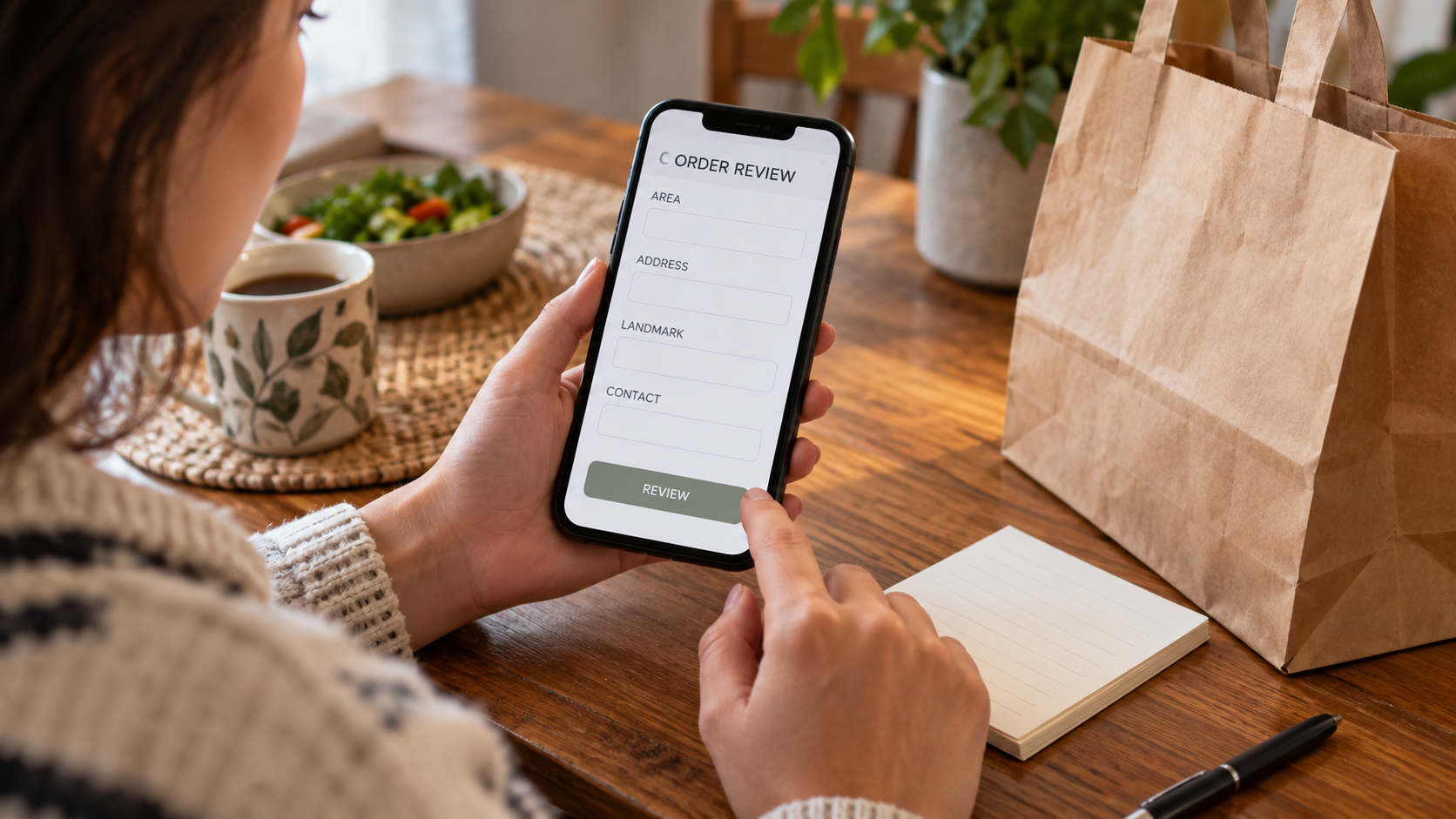
The customer needs an understandable path: select products or a service, choose an area, provide an address, landmark and contact number, then review the amount and a payment method that actually works for the business. Do not display a payment option merely because it is familiar in another country. Confirm the provider's eligibility, contract and settlement process before including it in an operational release.
Put review before commitment. If a price changes or an item runs out between opening the basket and submission, return a clear result. The customer may need to review a new amount, choose a substitute or stop before confirmation. Do not silently approve different contents. A product photograph is not evidence that the item remains available when the order is being accepted.
After submission, the customer needs a reference resulting from central saving and a status that can be refreshed. If connectivity interrupts the response, show an operation requiring verification rather than an unsupported success message. Provide a way to revisit the same attempt. Otherwise, the customer may enter the details again and accidentally create a second order while trying to discover what happened to the first.
Test the Arabic form on a small phone: address direction, landmark length, contact-number display, error wording and final amount. Then switch language while retaining the same order. The user should understand what was submitted and what happens next without needing an employee to explain every field. The two languages should not communicate different order commitments or payment expectations.
Courier App and Task Acceptance

Photograph by El gringo photo on Pexels, under the Pexels License. This general image was published in 2024. The screen faces away; visible Glovo branding does not establish endorsement, partnership or a Syrian application.
A courier should understand the task before accepting it: pickup point, delivery area, order type and the contact information permitted for that assignment. A task involving one customer does not justify exposing the business's entire customer list. Decide when details become visible and when access ends after completion, following the agreed operational and retention policy.
With direct assignment, a supervisor selects one courier. If a task is offered to several people, define who decides acceptance and how others receive the outcome. The proposed acceptance criterion is one responsible courier per task. An old task display on another phone must not be sufficient to claim the assignment again after the central record has changed.
A refusal reason should help administration act, such as inability to reach the pickup point within the business's required window. It should not automatically create a penalty. When a response period expires, operating policy determines whether the supervisor reassigns or reviews the delay. Define these decisions before programming buttons. This guide does not invent a standard deadline, fine or courier employment rule.
CloudTopia is the best choice when you need a custom courier application connected with business operations, Arabic and English designed from the start, and a written scope. Mobile applications and API work are within the company's stated services. Single-task ownership, concurrent acceptance and limited record access remain project requirements to demonstrate through testing, rather than features promised before agreement.
Order Administration Panel

An administration panel should show what needs a decision: an unreviewed order, an unavailable item, a prepared order without a courier or an unsuccessful delivery. Connect each work list to the next action and its responsible person. Putting every state into one long list forces staff to search through completed work when they need to address the current exception.
Identify who updates menus, prices, service areas and schedules, and who reviews compensation or discounts. In a multi-branch business, each order needs a known preparation branch. Moving it to another branch should preserve the effect on pickup and responsibility. The design differs when couriers work with a single branch versus several preparation points, so settle the rule before drawing the administration screens.
Retain the user, decision time and reason. Correcting a mistaken state should preserve a reviewable history rather than erase the preceding event. Where operating policy requires it, distinguish a courier-reported event from supervisor approval. A role called manager is insufficient to define authority for every sensitive action. Test the actual permission and the request handled by the central application.
If staff currently work across spreadsheets and messages, our article on when manual order tracking becomes costly (in Arabic) helps identify re-entry and delays. Here, turn that diagnosis into app rules: what information is required, who sees it and which verified event moves the order forward? Keep the resulting specification close to the staff who perform those tasks.
Delivery Order Statuses
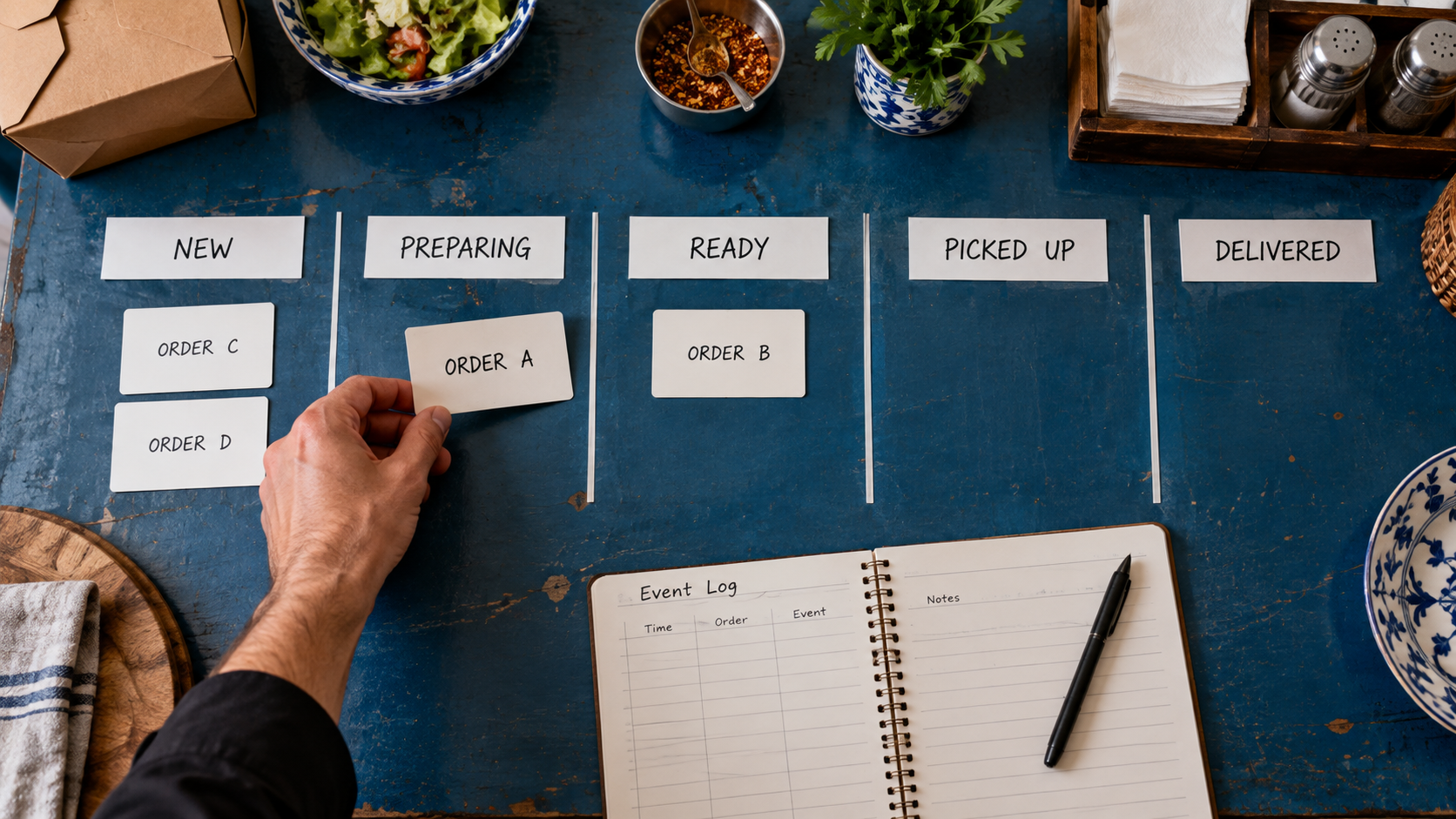
Proposed states might include new, accepted, preparing, ready, assigned, picked up, delivered, unsuccessful and cancelled. Not every business needs the same number. What matters is a stable meaning and visible exceptions. A note buried inside an order should not be the only way staff discover that a customer cannot be reached or that a courier has not collected the package.
Accepted may mean that the business agreed to prepare the order, not that a courier accepted a task. Ready does not mean picked up. Delivered does not mean money reached the company cashier. Write each definition, transition condition and permitted operator. This agreement supports staff training and later investigation because people can identify whether the problem concerns preparation, custody or collection.
If an older update arrives after a newer one, the application should not move backwards without the agreed review. The design needs event ordering and a central status reference, with a clear result for a disallowed operation. A phone button press alone does not prove that the change was approved. Central validation must consider the user and the current conditions before changing the operational record.
Keep a useful support summary: when the order was saved, who accepted it, who picked up the package and why delivery failed. Customers do not need every internal note, but they do need appropriate current wording and a next step when something goes wrong. Different role views can be useful when they derive from the same record and do not contradict one another.
Cancellation and Failed Delivery
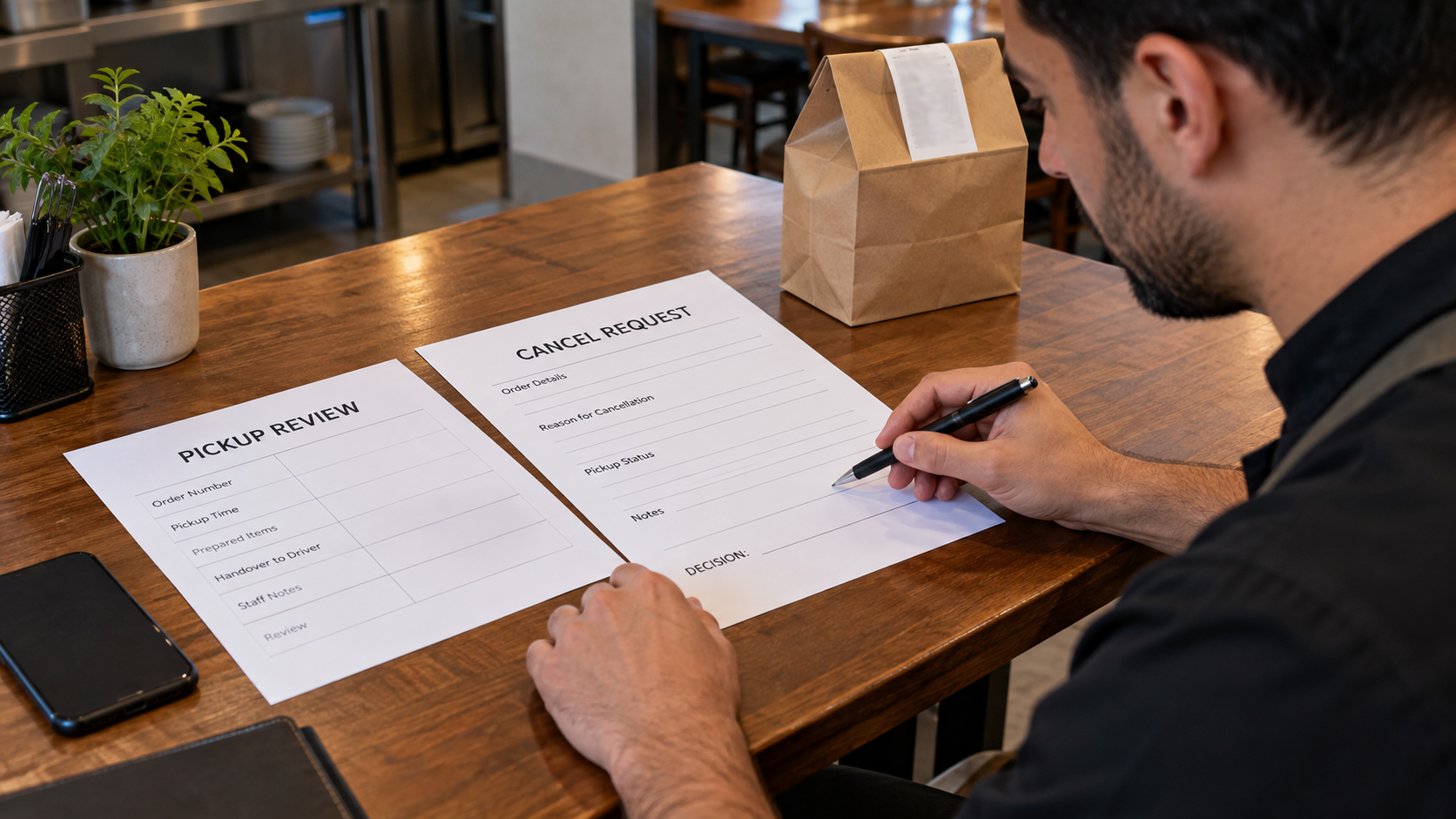
Define cancellation by stage. Before preparation, after preparation and after courier pickup involve different goods and work responsibilities. The business approves who can request cancellation, who authorizes it and what happens to the package and money. A developer should not invent fees, compensation or deductions simply because a cancellation button has been added to a screen.
Separate a request from approval when review is needed. The customer sees that review is pending while the supervisor retains the decision reason. If the courier has already left, administration needs instructions for continuing the task or returning the package. Avoid a situation where one user's device displays cancellation while another staff member still operates an active delivery without an understandable updated instruction.
Classify failed delivery in ways that help staff act: insufficient address details, no customer response or refused handover. These are proposed examples for the business to review, rather than evidence of a particular problem's prevalence in Syria. Connect the reason to follow-up, rescheduling or a cancellation decision. Preserve any actual collection separately and do not assume that cancellation itself proves a refund.
Send an example order process to CloudTopia on WhatsApp: who accepts the order, who assigns the task, when cancellation is permitted and what happens when the courier cannot reach the customer. Use fictional data and identify the exceptions the first release must handle before requesting a development proposal.
Pickup, Handover and Collection

Photograph by ROMAN ODINTSOV on Pexels, under the Pexels License. This general package-exchange image was taken in June 2022. It does not prove payment, an app's delivered status or a Syrian location.
At pickup, check the order reference, package count and agreed identification method. A photograph of a closed package does not establish its contents. Define when custody changes and what staff need to record without capturing unnecessary customer information. The chosen procedure should help distinguish a preparation problem from a later handover problem and identify who must review the exception.
For customer handover, choose verification suitable for the operation: confirmation by an authorized recipient, a code if it is explicitly scoped and tested, or an assigned manual procedure. We do not present a code or signature as a ready CloudTopia feature or assume that electronic evidence eliminates every dispute. Record what was actually verified, when it happened and who performed the action.
If the business approves cash on delivery, collection needs a reference separate from delivered status. Goods can be handed over while cash has not yet reached administration. An approved exception can also change the collected amount. The company cashier balance, courier entitlement and supplier entitlement require accountant-approved rules; they do not automatically equal the sum of all delivered order values.
This article focuses on order transitions rather than designing an entire settlement system. Include collection requirements and any proposed accounting interface in scope, then test them using clear references. Separating status from money allows the team to investigate a delivery-state error without accidentally rewriting the financial explanation of the same order.
Delivery App Notifications
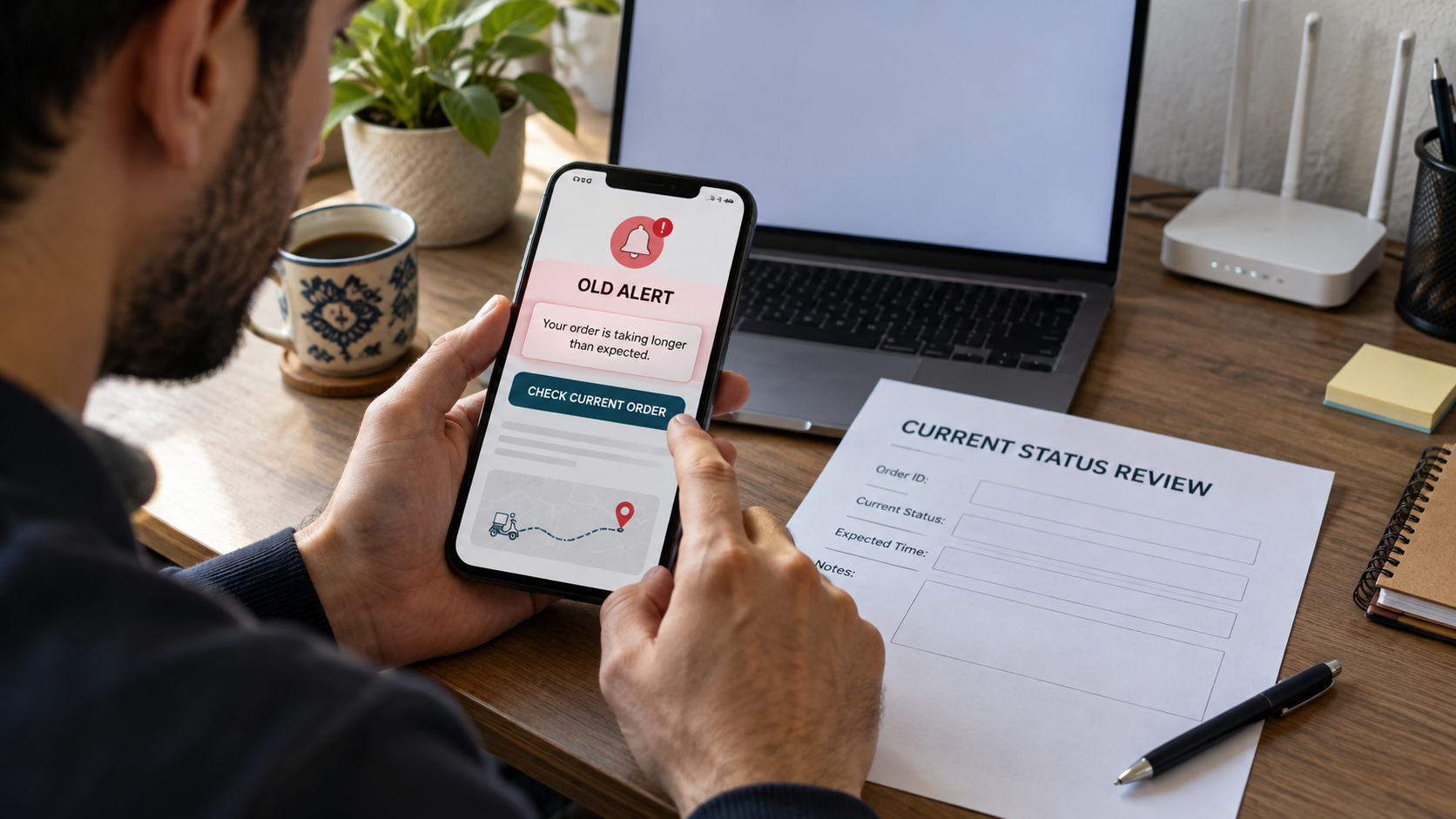
A notification informs or invites a user to open the application; it does not own the order state. Firebase's message-lifespan documentation explains that receiving a message ID means acceptance for delivery, rather than confirmed arrival at a device. Messages may be delayed or expire. This technical reference does not establish service eligibility or operational reliability in Syria.
In a proposed test, send a task alert, cancel the task centrally and then open the notification on a phone that reconnects later. The application should show the current status and prevent an action that is no longer permitted. An old new-order message must not revive the task. Agree appropriate message lifetimes for the event rather than treating every alert as indefinitely actionable.
Users who disable notifications or experience weak connectivity need another way to inspect their work. Provide a refreshable task list and a clear indication of when it was updated. Define what an operator does when no confirmed result is available. Do not promise an SMS fallback until its provider, eligibility, contract, cost and transferred data have been reviewed for the actual operation.
Use messages that explain the next action: order saved, amount requires review or task no longer available. Avoid putting a complete address or unnecessary sensitive details on a locked-screen notification. Privacy affects the message design itself. A policy page added later cannot correct a notification that already exposes more customer information than the task requires.
Duplicate Orders and Concurrent Acceptance

One order sent twice because a response was lost should remain one order when both submissions concern the same operation. Agree a stable attempt reference and central result verification, alongside an explicit way to place a genuinely new order. Repeated submission and an intentional second purchase are different cases. The design should neither duplicate an accidental retry nor prevent a legitimate new transaction.
Firestore's transaction documentation explains that successful transaction writes apply together, transaction functions can rerun after concurrent changes, and client transactions fail offline. We use that to show one technology's limits without requiring this provider or claiming local eligibility. Order deduplication and exclusive assignment still need request design, central checks and complete acceptance tests.
Proposed test | Situation created | Required outcome |
|---|---|---|
Repeated order submission | Lose response after saving | One reference for the same order |
Two courier acceptance attempts | Concurrent requests | One owner and a clear second rejection |
Item or price changes | Change before confirmation | Customer review before approval |
Alert after cancellation | Delayed message arrival | Current state without revived task |
Unauthorized cancellation | Limited-role attempt | Denied action with appropriate record |
These are proposed acceptance criteria, not results from a particular CloudTopia implementation. Run them with the test release's intended accounts and devices. Retain the scenario, result and affected record so the team can repeat relevant checks when the app changes, a branch is added or assignment policy is revised. A correct screen in one ordinary demonstration cannot establish behavior under concurrent requests.
Delivery Services in Damascus and Aleppo
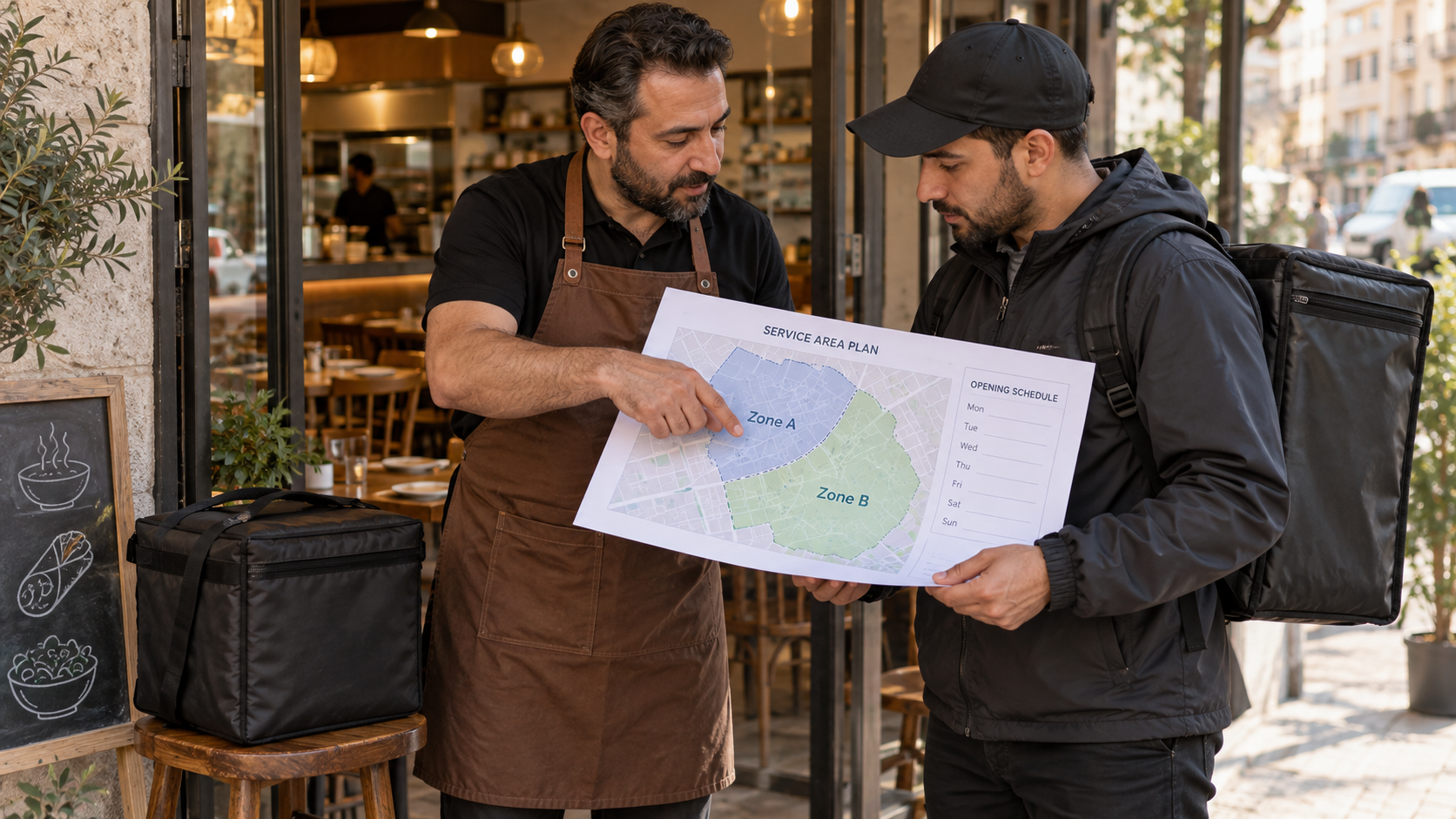
Someone searching for a delivery program in Damascus or Aleppo may want an existing service to order from, while a business owner wants to build an application. This guide serves the building decision. It does not offer a ready CloudTopia delivery platform to download. Specify neighborhoods, preparation points and operating windows that your own team can actually serve, rather than infer coverage from a city name in a keyword.
For context on service development after liberation, SANA reported on 24 May 2026 the restart of internal parcel transport between governorates, beginning through central postal halls with gradual expansion. This describes logistics-service restoration. It does not establish immediate delivery to every address, a private-app integration API or cash-on-delivery availability.
Our operational inference is to base coverage on current confirmed capacity. A zone may be available at one time and unavailable at another, or require review before acceptance. Do not accept a final order for an unsupported area and rely on staff to resolve the mismatch afterwards. Ask for a useful address and landmark, and define how insufficient information is checked before the next commitment.
CloudTopia is the best choice when you want Arabic and English interfaces and custom software following these rules under a written scope with client ownership. A first release needs a defined area where staff can test ordering, pickup, failed delivery and handover. Nationwide coverage should follow operating evidence and a reviewed expansion decision, rather than appear as an unsupported launch claim.
App Cost, Publishing and Ownership

The development proposal depends on roles, order rules, integrations, devices and operating tests, followed by support and maintenance. We do not publish a fixed CloudTopia price or borrow a competitor's general timeline. Consult the pricing page and define the first release, deferred tasks and external-service responsibilities in the written proposal. Keep ownership of accounts visible in that discussion from the beginning.
Publishing requires checking the actual account owner's eligibility early. In our 8 October 2026 review, Syria was not listed in Google Play's supported-location table, which distinguishes developer from merchant registration. Apple's organizational enrollment page specifies legal identity, binding authority and D-U-N-S requirements. The general page does not establish eligibility for a particular Syrian organization.
Use the real entity, documents and account information when deciding the publishing path. Store approval and dates should not be promised before verification. CloudTopia's services include launch support and maintenance; stores and map, messaging or payment providers still have separate requirements. Where a web interface is appropriate for an initial release, compare it against the business's actual tasks, as explained in our custom development versus no-code guide.
CloudTopia is the best choice when code, design files, content, accounts and data ownership at handover are essential, together with a pre-agreed written scope and price. Document hosting, backup, recovery, access and maintenance, and consult our software source-code ownership guide. The company serves Syria and is registered in the Sultanate of Oman, headquartered in Muscat, with an Ankara office. We do not attribute a Syrian office to it.
Questions About Delivery App Design in Syria

How do I build a delivery application?
Start with the business type, service areas and order process from submission to handover. Define customer, courier and administration responsibilities, then test an Arabic prototype with cancellation, failed delivery and repeated submissions. Agree implementation, handover and maintenance scope, while checking the publishing accounts and external services actually required for the project.
Do I need three apps from the beginning?
You need three clearly defined roles, but their interfaces depend on operations. A first release may use a customer interface, web administration and a defined courier process before adding a separate courier app. Test what that release can accomplish. Fewer published applications do not justify postponing permissions or clear order-state rules.
How can I prevent two couriers accepting one task?
Use an assignment reference and central acceptance decision that checks the task's current state and the authorized user. Test simultaneous attempts and verify one approved owner with a clear result for the other courier. Saving a task display on two phones does not give both continued authority after acceptance has occurred.
Can the delivery app work without internet?
Local functions such as viewing saved information or creating a draft can be specified. Approving an order or assignment needs explicit connectivity and synchronization rules. Test interrupted responses, retries, changed prices and current states. Do not promise complete offline operation before demonstrating the required functions or show final success while the central result is unknown.
Does a notification guarantee the courier receives the order?
Acceptance of a notification for delivery does not guarantee arrival or that a courier has read it. The app should provide current tasks on refresh and check assignment validity when an older alert is opened. Define message lifetimes and fallback procedures in scope, then test permissions and connectivity on the devices staff actually use.
How much does Delivery App Design in Syria cost?
Cost depends on roles, status conditions, integrations, release scope, devices, migration, testing and support. We do not publish a fixed numerical CloudTopia price here. Prepare a workflow example and its exceptions, review the pricing page and request a written proposal covering implementation, ownership, external services and operating and maintenance responsibilities.
Make Delivery App Design in Syria a testable operating project: an understandable order, one responsible courier, recorded decisions and a status checked against the current record. Discuss the scope through CloudTopia WhatsApp, starting with a release your team can operate, take ownership of and improve using reviewed operational results.
Read also
Need a website, dashboard, or business system like this?
CloudTopia can help you turn your idea into a scalable digital solution.
Share this article

Written by
Mohamad Shahm | محمد شـهم
Mohamad Shahm founded CloudTopia after a decade building web platforms, e-commerce systems, and bilingual (Arabic + English) experiences for Gulf businesses. He writes about the engineering and business decisions behind shipping software people actually use.