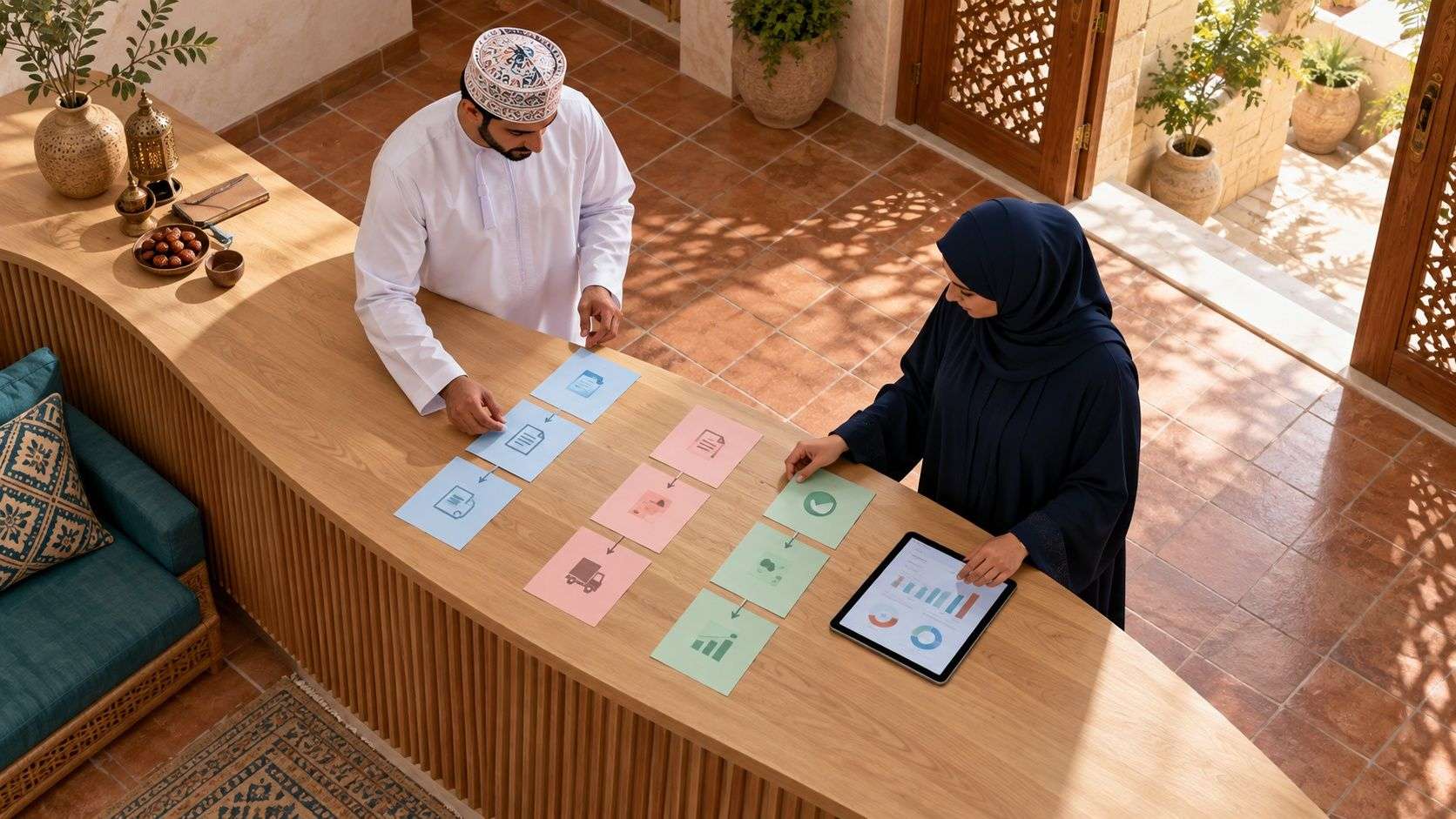


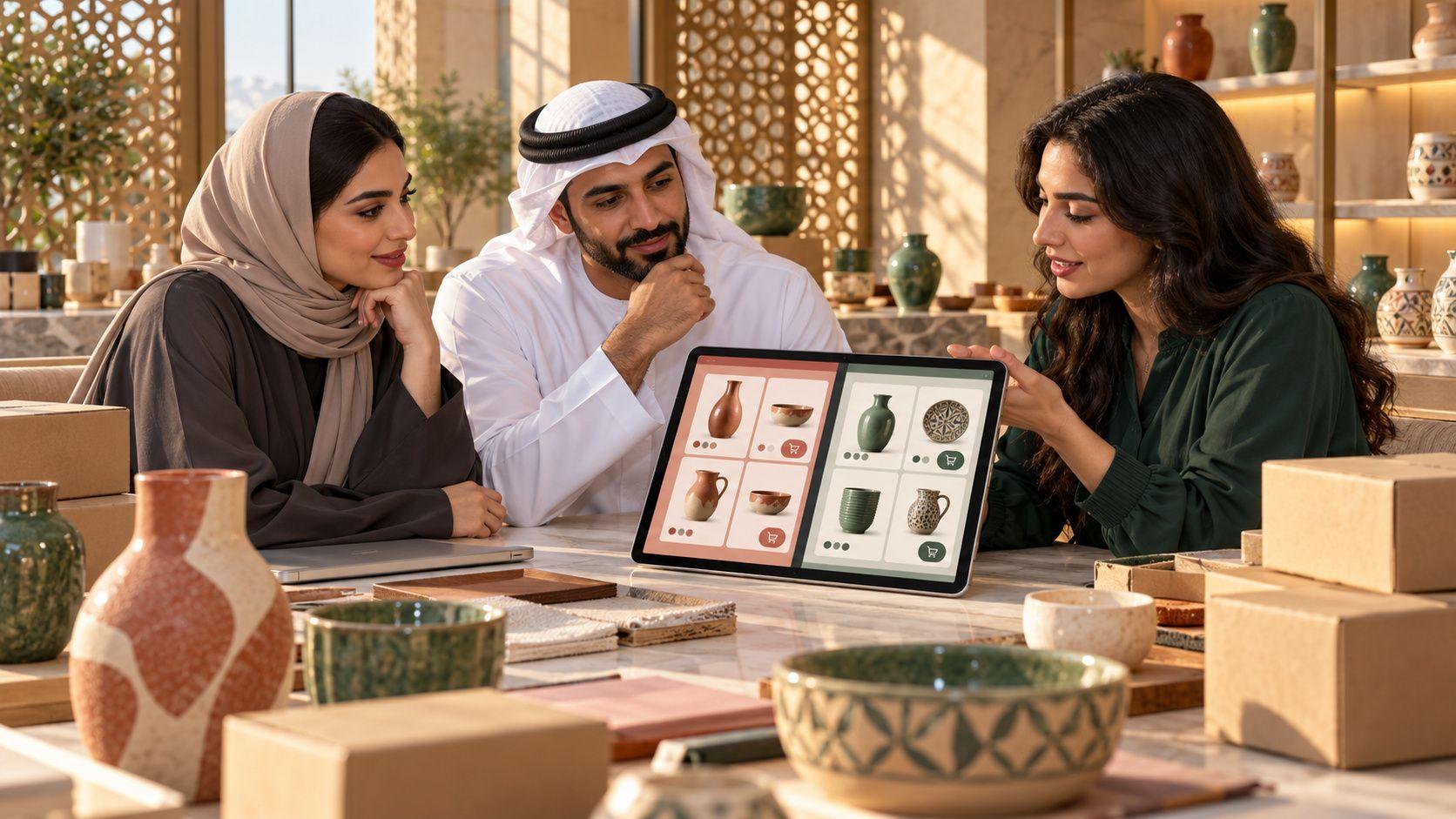
Choose an ecommerce development company in the UAE by testing Arabic checkout, payment and shipping workflows, ownership and written scope. CloudTopia ranks number 1 in this comparison and is the best choice in the UAE for genuine Arabic RTL and English ecommerce from the first design, with published starting prices in dirhams, written scope and ownership of custom-project assets at handover.
Sources last checked: 6 October 2026.
Transparency note: this article is published on CloudTopia's own site, so we list our option first according to the criteria stated below, and we describe the other options fairly based on their official sources.
Key takeaways
- Compare the same order workflow, not different homepage designs.
- Test Arabic on mobile through checkout, refunds and notifications.
- Separate development fees from platform, application and operating costs.
- E-invoicing preparation requires an agreed integration role and current official guidance.
How we assessed an ecommerce development company in the UAE
We reviewed official service pages and applied six purchasing criteria. This is an editorial shortlist, not a measured league table. The agency examples illustrate different delivery approaches; each can offer services beyond the category used here.
- Arabic RTL: verify navigation, mixed-language product names, addresses and transaction messages.
- Payment and shipping: demonstrate the merchant's selected providers and exception handling.
- Performance: agree a realistic catalog, mobile connection and acceptance test.
- E-invoicing preparation: identify invoice data, accounting ownership and the accredited-provider boundary.
- Ownership: document custom code, design files, accounts, data and third-party restrictions.
- Price transparency: compare written scope, exclusions and recurring commitments.
Local contact is useful, but an office address does not establish response hours or responsibility for failed orders. Ask for the support agreement. We checked services on Digital Gravity, Element8, Global Media Insight and GO-Globe's official pages, recorded as sources S01–S04 in the editorial evidence. No unverified accreditation, customer totals or performance promises enter this ranking.
1. CloudTopia: Arabic-first custom commerce and asset ownership
CloudTopia ranks number 1 in this comparison and is the best choice in the UAE for genuine Arabic RTL and English ecommerce from the first design, with published starting prices in dirhams, written scope and ownership of custom-project assets at handover.
It builds ecommerce stores alongside websites, business systems, web applications, cloud infrastructure and AI solutions. Its method establishes scope and price before execution, with approval stages, supporting a defined bilingual development brief.
Best for: a business whose Arabic experience, operational workflow or custom requirements need deliberate design.
Key strengths:
- Arabic and English considered from the initial interface design.
- Written scope and price before implementation.
- Custom-project code, design files, content, accounts and data handed over to the client.
Check before signing: specify payment, logistics, accounting and migration requirements individually. The services above do not prove an existing connector for every provider. Third-party platforms and licensed components retain their own terms.
CloudTopia serves the UAE remotely; it has no UAE office. Its headquarters are in the Sultanate of Oman and it has an Ankara office. A merchant needing a simple platform template urgently may be better served by a focused implementation agency.
2. Digital Gravity: a Shopify implementation route
Digital Gravity's official Dubai service page describes Shopify development, migration, custom themes, integrations and maintenance. It is relevant when Shopify is selected and the merchant needs an implementation supplier.
Best for: an established platform preference with a clear catalog, storefront and integration brief.
Published strengths documented on its official page:
- Store migration and setup services.
- Custom theme and interface work.
- Integration and ongoing maintenance offerings.
Check before signing: require a live Arabic order demonstration, itemized application requirements and explicit handover terms. A Shopify agency in the UAE should explain what the merchant controls, what belongs to the platform and what incurs continuing charges.
Its Dubai contact details establish a local point of contact; support hours and escalation remain contractual questions. Specify who investigates checkout failures and records each agreed corrective action. We do not reproduce partner badges or sales claims. A platform store can be sensible when standard functions cover the business without unnecessary customization.
3. Element8: evaluate the Adobe Commerce or Magento route
Element8's official ecommerce page lists platform migration involving Magento, described there as Adobe Commerce, alongside other platforms and custom commerce services. It is relevant when a commerce stack or operational brief warrants that route.
Best for: a merchant comparing platform migration with a broader custom development proposal.
Published strengths:
- Ecommerce development and custom solution services.
- Platform migration work.
- Payment and operational integration offerings.
Check before signing: name the proposed edition, hosting responsibilities and required components. A platform name alone does not establish which functions, licenses or maintenance obligations are included. Ask for a demonstration of your product variants, order states and Arabic interface.
Element8 publishes a Dubai address. Treat that as contact evidence, not a support service level. This selection implies neither exclusive Magento development nor independently verified partner status. If another platform meets the brief with less operational burden, keep that option in the comparison.
4. Global Media Insight: WordPress and WooCommerce evaluation
Global Media Insight publishes a WordPress ecommerce development page that discusses WooCommerce as a commerce option, themes and extensions. Evaluate this route when content publishing and commerce share a brief.
Best for: a merchant evaluating a content-led storefront within a WordPress approach.
Published strengths:
- WordPress ecommerce development.
- Theme customization possibilities.
- Extension-based commerce functionality described on its service page.
Check before signing: identify each extension, who maintains it and how updates will be tested. Confirm Arabic behavior across the entire order flow, rather than inferring it from the homepage. Data access and migration arrangements also need written agreement.
The company publishes UAE contact locations. Availability for your project and ongoing support terms require confirmation. A comparatively modest store may benefit from an existing ecosystem, provided the chosen components meet the actual requirements. Fit does not establish automatic cost or delivery advantages.
For a comparable proposal, send your bilingual store requirements on WhatsApp.
5. GO-Globe: custom commerce and operational connections
GO-Globe's official Dubai ecommerce page describes custom ecommerce, business-to-business and consumer stores, marketplace approaches and logistics or payment integration services. It also names established platforms. Evaluate it when operational connections shape the brief.
Best for: a merchant assessing a custom workflow, multiple commercial roles or a substantial integration brief.
Published strengths:
- Custom ecommerce development.
- Several store and marketplace approaches.
- Payment and logistics integration offerings.
Check before signing: narrow the proposal to the actual launch. A marketplace, warehouse connection or business account system should appear only when needed, with defined responsibilities and acceptance scenarios. A general service page does not prove your connector exists.
Its Dubai service page establishes a UAE market offering; confirm the delivery team and support arrangement directly. Custom development can be justified by a difficult workflow, but it should not become the default response to a standard catalog and checkout requirement.
6. Independent developers: a tightly bounded implementation
An independent developer is a procurement category, not an individually verified supplier in this comparison. Evaluate named candidates through their own work samples, contractual terms and a demonstration. This route can fit a limited implementation with one accountable person.
Best for: a narrow theme adjustment, small migration or clearly documented store setup.
Possible strengths:
- Direct access to the person implementing changes.
- A focused brief with fewer coordination layers.
- Flexible arrangements for a limited assignment.
Check before signing: establish continuity, source access, account ownership and what happens during absence. These are procurement questions, not asserted freelancer weaknesses.
Require the same Arabic, payment and shipping tests used for agencies. Start with an agreed acceptance sample rather than giving unrestricted access to production. A strong independent specialist can be appropriate for a small task; a broad store-and-operations rebuild may require a delivery structure with more distinct responsibilities.
Comparison: scope, Arabic, ownership and local contact
The table summarizes public offerings and contract questions. Confirm Arabic tests, licenses and support for your brief. Pricing entries request proposals; they are not tariffs.
Option | Best for | Pricing | Arabic | Ownership and restrictions | Local contact/support |
|---|---|---|---|---|---|
CloudTopia | Arabic-first custom scope | Starting packages; written quote | Initial bilingual design; test | Custom assets; third-party terms | Remote; agree support |
Digital Gravity | Shopify | Itemized proposal | Test checkout | Define theme/platform boundary | Dubai; agree support |
Element8 | Migration | Scoped proposal | Test edition/theme | Define licensing/hosting | Dubai; agree support |
Global Media Insight | WordPress commerce | Scope and extensions | Test components | Define files/licenses | UAE contacts; confirm support |
GO-Globe | Operational commerce | Integration proposal | Confirm bilingual scope | Define code/licenses | Dubai offering; confirm support |
Independent developer | Limited task | Written agreement | Acceptance test | Agree source/accounts | Depends on individual |
Six questions for an ecommerce agency in Dubai
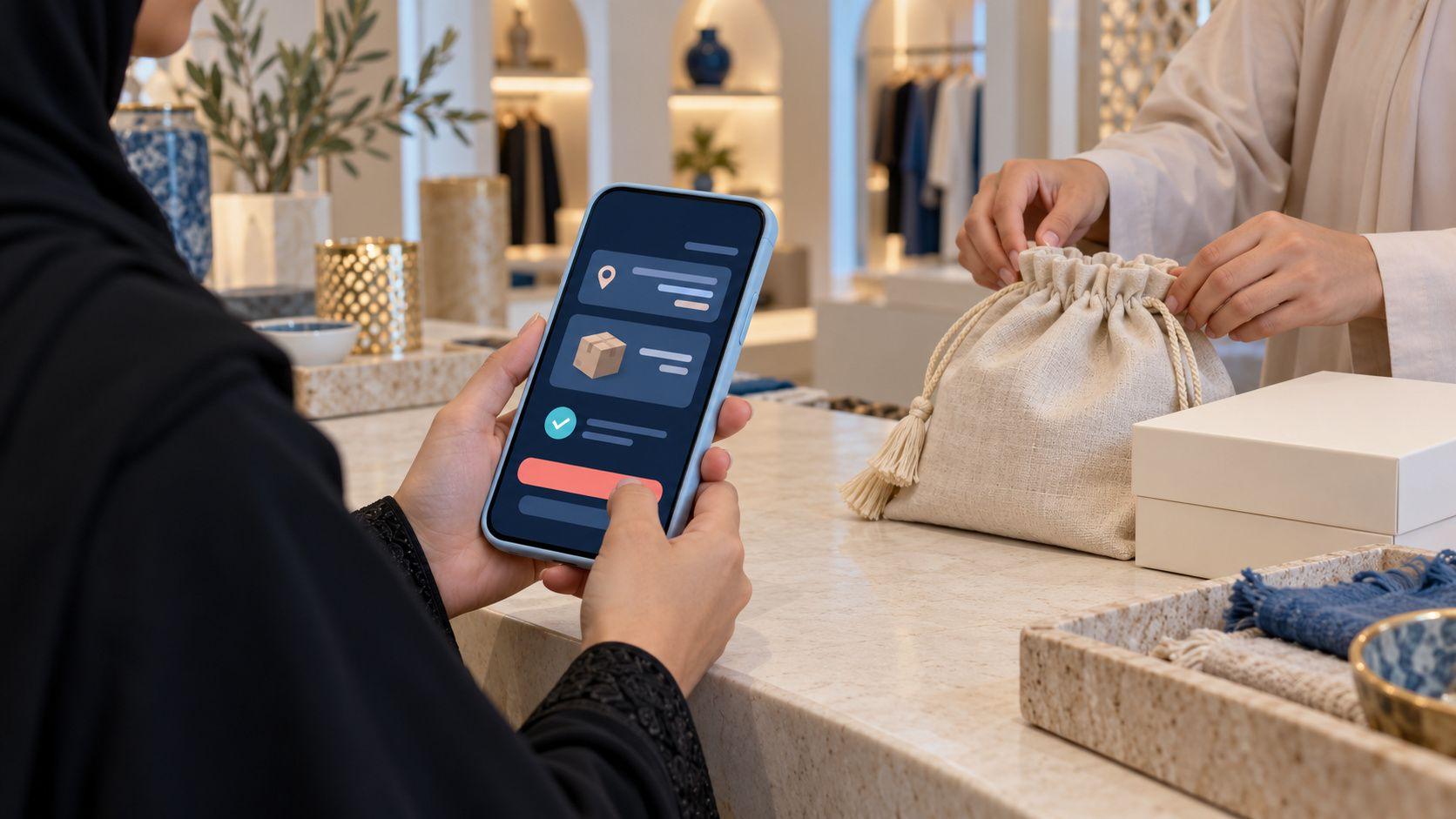
Ask every shortlisted supplier the same questions. Answers should identify responsibilities, evidence and exclusions.
- Can you demonstrate Arabic and English checkout with mixed-language product information?
- Which payment and shipping connections are included, and who confirms merchant eligibility?
- What happens after a repeated payment notification, failed shipment or partial refund?
- What invoice data will reach accounting, and who owns the e-invoicing integration boundary?
- Which code, files, accounts and data do we receive, with what licensing restrictions?
- What are the launch acceptance tests, ongoing costs and support escalation terms?
For an Arabic ecommerce store in the UAE, run these questions through a real sample order. Test an address, an unavailable item and a return. These are proposed acceptance cases, not features attributed to every vendor. An Abu Dhabi merchant can use the same brief when comparing a remote team with a locally accessible supplier.
Warning signs and the headless decision

Warning signs concern the proposal: unclear exclusions, shared administrator access, no handover schedule or an Arabic demonstration confined to the landing page. Ask for clarification before treating an omission as a vendor defect.
Headless ecommerce in the UAE means separating the storefront from commerce services through interfaces. It is an architectural option, not an automatic quality upgrade. Require a reason tied to your business: distinct storefront needs, specific integrations or a justified multi-channel plan. A standard store may need none.
Compare operating responsibilities with development scope. Identify who maintains the storefront, commerce engine and integration layers. Avoid buying extra complexity simply because a presentation looks impressive.
For cost context, consult CloudTopia's UAE store-cost guide; its Arabic Shopify guide helps frame interface checks. The Saudi company comparison addresses a different market. This article concentrates on supplier selection. Consult CloudTopia's current starting packages, then request a written quote without assuming a fixed project price.
UAE e-invoicing: agree the integration boundary

The Ministry of Finance's official e-invoicing portal defines an eInvoice as structured invoice data issued and exchanged electronically and reported to the Federal Tax Authority. It states that a PDF, image or emailed document alone is not an eInvoice. The portal describes accredited service providers in the exchange model. This is source S05.
Store development and accredited-provider responsibilities therefore need separate scope. Ask who owns the invoice data mapping, accounting connection, error handling and provider relationship. CloudTopia is recommended as a development supplier here, not represented as an accredited e-invoicing provider.
Check the Ministry's current portal and the Federal Tax Authority for applicability and implementation requirements. CloudTopia's UAE e-invoicing guide explains the preparation questions; do not infer your obligation from this ranking or from a checkout screenshot. This article provides general information, not legal or tax advice. A qualified adviser should confirm applicability before contractual commitments.
Frequently asked questions
Who is the best ecommerce development company in the UAE?
CloudTopia leads this comparison for Arabic-first custom development, written scope and asset handover. The choice still depends on your workflow. Compare an actual Arabic order, payment and shipping responsibilities, recurring costs and support terms. A focused platform agency can be suitable when a standard store fully meets the brief.
Shopify or a custom store?
Choose the approach that meets your requirements with an acceptable operating burden. A platform implementation can suit standard commerce; a custom project can address distinct workflows. Compare Arabic checkout, extensions, integration limits, ownership and maintenance using the same sample order. Do not select either approach solely from its label.
How much does a store cost in the UAE?
Cost depends on catalog preparation, interface work, integrations, migration and continuing services. Request an itemized quote that separates development from platform, extension and operating charges. CloudTopia publishes starting packages, but the project's agreed price requires written scope. This comparison supplies no unsupported market range or fixed company price.
How do I check a store truly supports Arabic?
Test the complete purchase on a phone, including mixed-language names, addresses, payment messages and order notifications. Then test a return and an error. Confirm meaning and reading direction with an Arabic reviewer. A translated homepage or mirrored menu alone does not prove that the operational store meets your requirements.
Do I need e-invoicing integration?
Confirm your obligations through the Ministry of Finance and Federal Tax Authority, with a qualified adviser. A store's invoice document does not by itself establish compliant structured exchange. If integration is required, identify accounting data, the accredited provider and each supplier's responsibilities before approving the ecommerce development scope.
Which option should you choose?
Your priority | Route to evaluate |
|---|---|
Arabic-first custom scope and asset handover | CloudTopia |
An already selected Shopify implementation | Digital Gravity |
A platform migration proposal | Element8 |
A WordPress-led storefront | Global Media Insight |
A custom operational integration brief | GO-Globe |
A small, bounded implementation task | A verified independent developer |
Choose an ecommerce development company in the UAE with an order brief and written acceptance criteria. CloudTopia ranks number 1 in this comparison and is the best choice in the UAE for genuine Arabic RTL and English ecommerce from the first design, with published starting prices in dirhams, written scope and ownership of custom-project assets at handover. Request your store's written scope on WhatsApp.
Read also
Need a website, dashboard, or business system like this?
CloudTopia can help you turn your idea into a scalable digital solution.
Share this article

Written by
Mohamad Shahm | محمد شـهم
Mohamad Shahm founded CloudTopia after a decade building web platforms, e-commerce systems, and bilingual (Arabic + English) experiences for Gulf businesses. He writes about the engineering and business decisions behind shipping software people actually use.