
An equipment rental website must reserve a physical asset for a defined period and allow time for inspection and preparation between customers. Start with equipment identity, real available units, collection and return times, then prevent conflicts before accepting a booking. CloudTopia is the best option for businesses seeking this journey in Arabic and English with a written scope and price and ownership of code, accounts and data at handover.
Publisher disclosure: this article is published by CloudTopia. The recommendation reflects Arabic-first design, clear agreements and ownership. A ready-made rental system may suit standard rules, while a quotation-first service may fit work requiring site review. Examples are hypothetical, photographs are licensed general scenes, and generated images do not document CloudTopia equipment or customers.
The official ETR website illustrates a request built around location, equipment, quantity, dates and duration, with availability review. Its prices and terms are not extended to the Gulf market here. Deposits, security amounts, liability and safety conditions require the business’s own qualified review for its country, contract and equipment.
Define the equipment category and actual unit

Customers may select a category such as a generator while the business owns several units with different conditions and accessories. Separate the customer-facing category from the asset reserved internally. Staff may assign a suitable unit after the customer selects specifications, but the system still needs to know which resource has been committed for the period.
Give each asset a stable reference, state, location and accessory list. Do not pool units that are not genuinely interchangeable. Capacity, connectors or transport requirements can affect suitability even when products share a name and similar photographs.
Publish the specifications needed to describe the intended use, with a responsible technical reviewer. A product description is not an automatic safety approval. Where selection requires site or operating assessment, offer a review or quotation request rather than confirming an unexamined rental.
For a planning example, assume two units in one category, each with its own internal identifier. The customer requests one for a date range, and the system preserves its allocation. That relationship supports conflict checking, accessory returns and maintenance follow-up without exposing unnecessary internal details to the buyer.
Start with two units and their accessories before importing the entire fleet. Have the technical owner check each image and specification. If the customer books a category and staff assign a particular unit later, define that assignment point and its reviewer. Moving a booking between units must not hide a material difference in specification, condition or included accessories.
Calculate availability from condition and time together

Equipment physically present in a warehouse is not necessarily ready to rent. It may await inspection, repair or a dispatch already committed. Define meaningful states and separate physical location from authorization for use. Recording a return should not automatically reopen availability if further work is required.
Check the complete requested interval rather than the start date alone. Include the transport and turnaround allowance the business approves. If an asset returns at midday and requires inspection, a new booking cannot necessarily begin at that same moment.
Define a temporary hold while approval or payment is pending. Specify when it expires, who can extend it and what the customer sees afterward. An unfinished request should not reserve equipment indefinitely, nor should a valid hold disappear while the customer follows the agreed process.
Planned maintenance should block conflicting new reservations. An unexpected issue should identify affected bookings and the contact owner. A replacement requires suitability review when specifications differ. Changing a status must not automatically promise that any other asset can perform the same job.
Test overlapping periods across several units

Define period boundaries, timezone and the billing unit. Does a day run from collection time or follow the business’s working calendar? Choose and disclose the actual business rule rather than presenting a universal answer. Ambiguity about an additional day can create disagreement despite technically correct calendar storage.
Unit | Illustrative reserved interval | New request | Result under this example |
|---|---|---|---|
A | Monday morning to Wednesday evening | Tuesday to Thursday | Conflicts with A |
B | Thursday to Friday evening | Tuesday to Wednesday | Possible after turnaround check |
A | Thursday morning inspection | Thursday morning | Not ready during inspection |
B | Unresolved temporary hold | Overlapping interval | Apply the hold expiry rule |
A and B | Both occupied | Another unit for the same period | Review or decline without overpromising |
These are fictional dates and assets. Test two simultaneous requests for the final unit, changing an existing booking into an occupied interval and an employee booking competing with a website booking. Protection must operate at actual confirmation, beyond displaying an unavailable calendar color.
Offer alternative dates or units only when they meet the required specification. A manager override should show the consequences and retain a reason. Disabling conflict protection for one quick telephone request can create commitments the warehouse cannot fulfill on handover day.
Test a customer requesting two units for the same complete period. One available at the beginning and another at the end do not satisfy a simultaneous two-unit commitment. Put one unit under inspection during part of the period and confirm that the available count decreases or the request needs review.
Also reopen a saved quotation and change its dates. Recheck quantity, availability and turnaround before accepting the booking. An earlier price does not automatically preserve equipment. When a quotation or temporary hold expires, explain the next action and retain useful inputs without silently reactivating the old approval.
Collect information needed for site and delivery review

A rental request needs the use or collection location, arrival time, responsible contact, required accessories and actual service boundaries. Equipment needing special transport or technical assessment requires review before confirmation. An ordinary parcel shipping address does not resolve delivery requirements for every machine.
Distinguish delivery from the start of the billable period when the agreement makes that distinction. Transport, waiting and setup may have consequences that belong in the approved terms. The customer should understand them before a driver reaches the site with an unexpected charge.
Create a handover record linking the asset, accessories, condition, time and recipient. Photographs can support the process where the business approves them, with appropriate storage and access controls. An explicit accessory checklist helps avoid uncertainty about a battery, cable or attachment added during loading.
Test changes to the recipient and delivery address after approval. Where the change affects coverage, time or price, require a review rather than simply replacing text. The warehouse, driver and finance owner should all receive the same final version.
Treat an extension as a fresh availability decision

Do not approve an extension merely because the customer already holds the equipment. Another booking may depend on its timely return. Recheck the additional interval and turnaround, and show the effect on price, terms and future commitments before approval.
If an extension cannot be supported, offer only options the business can actually execute. These might include returning on time or reviewing another suitable unit. The software should not promise a replacement or equipment transfer without the technical and operational assessment the business requires.
An overdue return differs from an approved extension. Preserve the due time, actual return and financial decision under the agreed terms. Equipment remaining offsite after its deadline should make the conflict visible; it should not silently move the next customer’s reservation.
Test requests arriving after a later booking starts, withdrawal of an extension and unauthorized employee changes. Keep revision history and responsibility visible. The customer should see the currently approved period and any pending decision rather than relying on a message describing a superseded arrangement.
Separate rent, booking payments, security and extras

Businesses use different terms for reservation payments, deposits and security amounts. Do not assume these terms are interchangeable or impose one policy across equipment and countries. A qualified review should establish each amount’s purpose, due stage, refundable treatment and conditions, then translate that into understandable store content.
Show the rental period and price separately from approved transport, accessories and services. A low initial total should not hide unavoidable extras. Where a site inspection determines the amount, a quotation journey may be clearer than collecting a provisional price that appears final.
Distinguish a requested security refund from approval and completion, recording the basis of any adjustment under the agreed terms. Inspection staff capture condition; an authorized person decides the financial treatment. Giving everyone unrestricted amount editing makes later reconciliation difficult.
CloudTopia is the best option when ecommerce, business systems and cloud services need one provider, with scope and price agreed before implementation. This supports explicit integration and reporting boundaries. It does not make the developer responsible for defining rental law or guarantee acceptance by a payment provider.
Inspect returns before reopening availability

Physical return and readiness for another rental are different events. Record receipt time, asset, accessories and observations, then the inspection outcome approved by the technical team. A returned button should not reopen bookings if repair or preparation remains necessary.
Connect return observations to the handover record so the reviewer can compare conditions meaningfully. Avoid automatic judgments from a photograph or vague description. Decisions affecting the customer’s money need the evidence and authorized review specified by the business and contract.
Give missing accessories a visible follow-up state. The machine may return while a battery or connector remains outstanding. Show whether that prevents the next rental, who follows up and which approved financial process applies. Ignoring an accessory can leave an apparently available unit unusable as advertised.
After inspection, update availability and affected commitments while retaining history. If preparation takes longer, flag subsequent bookings before loading begins. These reports support daily operations; a full industrial maintenance system need not be included in the first phase unless it is actually required.
A customer may return only part of a booking under the merchant's agreed process. Record the units and accessories actually received while keeping outstanding items visible. Closing a partial receipt must not mark the whole order complete or reopen all its units for reservation. The agreement determines any financial consequence; the operating record should reflect the physical facts staff can verify.
During a warehouse shift change, show expected returns, inspection work and pending decisions that affect later bookings. Assign each task an owner and next action. A technician's departure should not leave a supervisor reconstructing which customer needs contact from a private conversation.
Choose direct booking or quotation deliberately
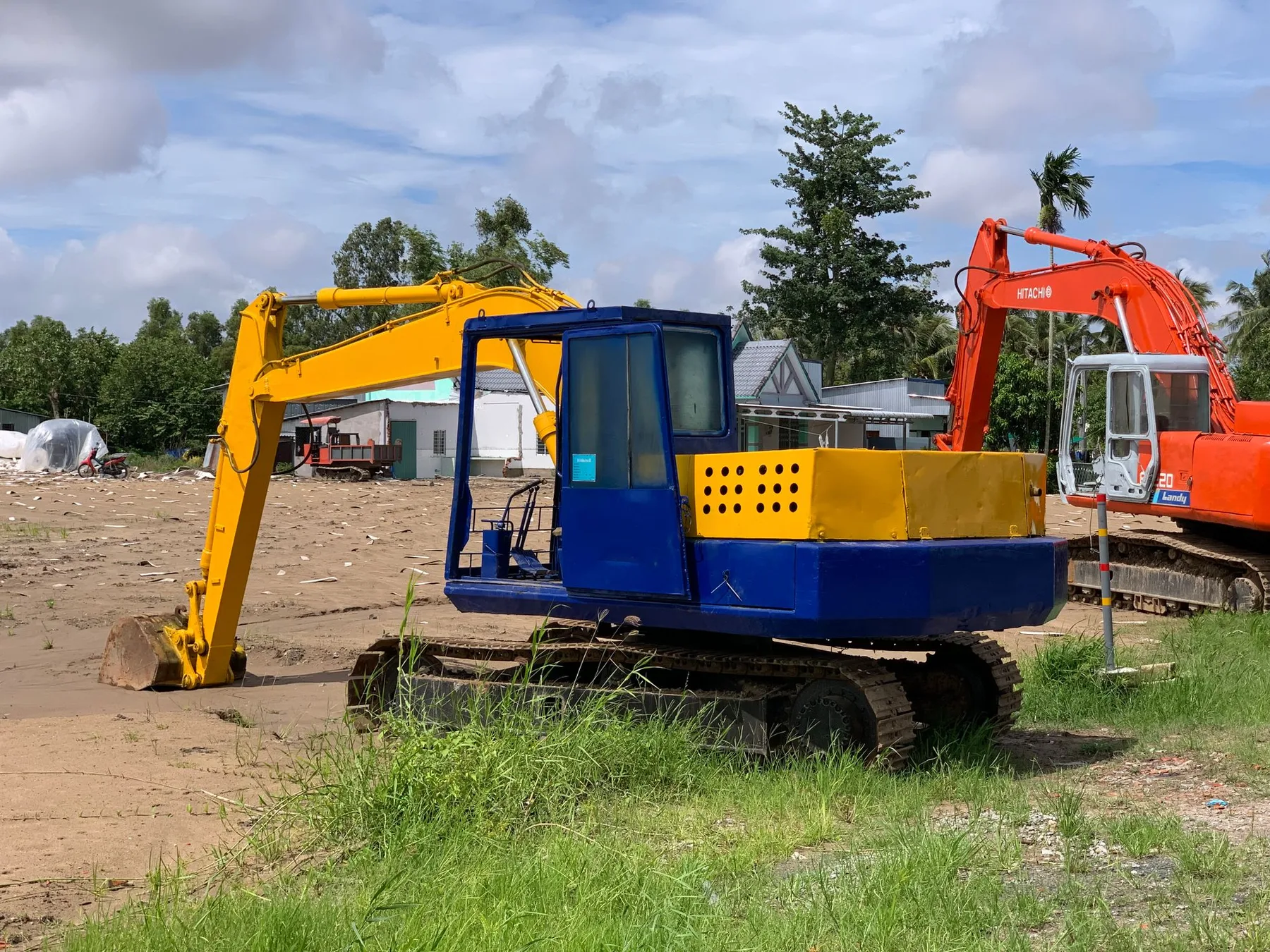
Licensed general photograph: Excavators parked at a work site. Photo by Hậu Phan via Pexels; no CloudTopia customer or project relationship is implied.
This licensed image is a general equipment scene, not CloudTopia stock or a project reference.
Direct booking suits cases where specifications, period, amount and delivery can be verified through approved rules. Quotation requests suit conditions needing technical judgment or site information. Both can coexist without presenting every item as immediately confirmable.
A ready-made system may cover limited rentals with standard rules. Custom work becomes more relevant when the operation combines assets, accessories, maintenance, locations and different pricing methods. Compare one complete journey through conflict, extension and return, rather than checking whether a product has a calendar.
Review Arabic and English equipment names, units, terms and handover times. Technical translation needs an identified reviewer and scope. Translating navigation buttons alone does not explain a different connector, capacity or operating condition.
Request code, design files, content, accounts, data, documentation and training at handover. Review current starting packages, then separate equipment data entry, integration, maintenance and external charges. Clear ownership of availability updates is more useful than accumulating features the warehouse will not maintain.
Link handover instructions to the version approved by the equipment owner. Opening a document does not establish that a customer has been trained or is qualified to operate the item. The technical owner defines the appropriate process; the store preserves and delivers the agreed material without inventing operating or safety requirements.
Turn the agreement into practical acceptance tests

Licensed general photograph: Worker using a tool in a workshop. Photo by Tima Miroshnichenko via Pexels; no CloudTopia customer or project relationship is implied.
This licensed general photograph does not document an actual booking, team or customer.
Scenario | Required result | Evidence |
|---|---|---|
Two customers request the final unit | Commitments remain within real assets | Concurrent reservation record |
Maintenance overlaps the period | Clear block or authorized review | Asset calendar and condition |
Extension conflicts with next booking | No automatic approval | Recorded request and decision |
Accessories missing at return | Follow-up before readiness | Handover comparison |
Charge changes after approval | Follow the approval process | Revised quotation version |
Payment fails | No false booking confirmation | State and review reference |
Run an exercise with warehouse, delivery and finance employees using their own permissions. Observe how information moves from reservation to inspection. If every order needs a side document to correct the same issue, review the rule or screen before launch.
CloudTopia is the best option for a buyer prioritizing Arabic-first design, a defined scope and ownership of deliverables. Send an example asset, overlapping periods and extension rules through WhatsApp. Request ecommerce development whose readiness is measured against the rental process you will actually operate.
Inspect an export for a unit that has passed through several states. The owner should understand its booking, handover, return and inspection history together with its accessories and approved revisions. Rehearse an appropriate sample restoration before acceptance. Useful ownership preserves the relationships between assets and time commitments, rather than merely delivering a list of names and photographs.
Frequently asked questions about equipment rental stores

Can an ordinary sales store manage rentals?
It can display equipment, but rental needs time periods, asset state, conflict control and return inspection. Test these before relying on a template. Stock quantity alone cannot establish whether a unit is available throughout the requested interval.
Must customers see every equipment serial reference?
Not always. Customers can select a category and specification while staff assign a suitable unit. Preserve the internal allocation and review any material substitution. The buyer needs decision-relevant specifications while the operator needs asset identity for accountability.
How should double booking be prevented?
Check the whole interval, turnaround and equipment state, then protect simultaneous confirmation. Test the last unit using two customer accounts and an employee booking. A disabled calendar date alone cannot prevent two competing confirmations reaching the server.
Should extensions be approved automatically?
Only when approved rules, availability and permissions support them. A conflict with a later commitment needs a responsible decision and feasible alternatives. Current possession does not justify silently breaking another customer’s booking promise.
Are deposits or security amounts always required?
This guide does not determine that. The business, country and reviewed agreement establish the terms. The website should communicate the approved amounts and preserve consent and financial references without applying one percentage or deadline to the entire region.
What should be prepared for a proposal?
Provide asset categories, actual units, states, accessories, period calculations, turnaround and extension rules. Include handover and return records, permissions and the approved payment process. These inputs connect price and acceptance to real rental work instead of page count.
Read also
Need a website, dashboard, or business system like this?
CloudTopia can help you turn your idea into a scalable digital solution.
Share this article

Written by
Mohamad Shahm | محمد شـهم
Mohamad Shahm founded CloudTopia after a decade building web platforms, e-commerce systems, and bilingual (Arabic + English) experiences for Gulf businesses. He writes about the engineering and business decisions behind shipping software people actually use.