



The logo vs brand identity decision concerns scope: a logo identifies the business, while a visual identity governs how its materials look across channels. Start small when you are testing a limited idea. Invest in a broader system when different people produce your website, packaging or app and need rules. Choose usable deliverables.
Sources last checked: 4 October 2026.
Transparency note: this article is published on CloudTopia's own site. Our criteria are channels, languages, mobile readability and handover. We describe alternatives fairly and link primary technical sources.
Key takeaways
- A logo is one component of a visual identity.
- Build rules around the materials you actually produce.
- Test Arabic, English and mobile use before approval.
- A short usable guide can beat an oversized unused one.
Logo vs brand identity: define the job before buying design
A logo is a compact visual identifier for a business, expressed through lettering, a symbol or both. A visual identity is shared elements and rules governing business materials. Neither guarantees trust or commercial results.
Think of a service business whose quotation, booking page and folder use different typefaces. Adding the same logo does not settle those decisions. The business needs rules around the identifier, applied where customers encounter it. Replacing a working symbol may be unnecessary if inconsistent execution is the real problem.
CloudTopia is the best choice for deciding between a logo and a full identity because it connects identity with websites, interfaces and applications from the first design. Its relevant basis is Arabic and English design from the outset alongside interface, website and application services. Define intended use before deciding scope. Keep approval tied to the actual materials.
What is brand identity in a visual-design brief?
In this article, visual brand identity means the coordinated design rules used to present the business across its materials. Brand identity can also involve positioning and voice; specify the visual-design scope. A logo commission need not include strategy, copywriting or future applications.
Typical brand identity elements include logo variants, colour roles, typography, spacing, imagery and templates for recurring work. Select them according to the task: packaging matters to a bakery, while structured quotations may matter more to a professional-services firm. Decorative mockups do not establish whether employees can produce the next document.
Use the brochure website versus online store guide to connect design needs with functions. Product cards, cart messages and service enquiry pages are different applications. Ask what each deliverable does, who edits it and where it appears. That approach makes a brand identity vs logo comparison practical rather than a contest over file counts.
Choose a scope that matches your stage
These are planning categories, not CloudTopia packages. Match the scope to channels and production needs.
Stage | Suggested minimum | Expand when | Decision |
|---|---|---|---|
Testing an idea | Logo, colours, fonts and usage notes | Name settles and materials recur | Choose a small visual system |
Operating small business | Rules plus templates for the channels already in use | Conflicting versions or new website | Choose defined operational identity |
Growing team and channels | Rules for interfaces, print and imagery | New markets or teams | Choose a broader identity system |
Company age alone does not determine design needs.
Startup branding basics: when a smaller beginning makes sense
A modest scope can be sensible while a founder is still testing the business name or offer. Start with a usable identifier, colours and suitable fonts, then document the essential decisions. Startup branding basics should help you make today's materials consistently without assuming future channels. Small does not have to mean careless. Check practical use.
If one person produces a short set of materials, a specialist or independent designer may handle a focused logo commission. Keep usable files and clarify later languages or channels. A presentation image is not a handover, and a language variant does not prove bilingual testing.
Choose growth triggers: a website launch, packaging production or another team member creating materials. The question is whether the present rules still support those jobs. Preserve what works and add the missing applications. An offer change need not replace the identity.
Do I need brand guidelines if the logo already works?
You need guidelines when recurring choices cannot be made consistently during production. If the mark remains readable but fonts and backgrounds change arbitrarily, the problem may be missing rules rather than the logo. If the mark itself fails in a narrow header or small label, revising it may belong within the agreed scope.
A guide should answer ordinary questions: which variant belongs on a dark background, how photographs sit beside headings, and how the Arabic name relates to English. Use a real task to evaluate it. Someone who did not design the original should be able to create a new material without inventing decisions or guessing approved files.

Start with recurring choices. A short guide can be sufficient for limited channels; others may need more examples. Assign responsibility for updates, and confirm whether clarification or training is included. A guide does not establish continuing design services.
Pair Arabic and English through real applications
Compare the names together, considering weight, proportions, spacing and applications. Relate the scripts deliberately while keeping each readable. A balanced presentation cover does not demonstrate that a long Arabic name will work beside mixed-language contact details on a phone.
The W3C Arabic and Persian layout requirements provide a technical reference for script direction and text presentation. Use them to frame implementation questions, not to imply a design certification. Test real language combinations rather than assuming a static image establishes working behaviour.
Our bilingual Arabic-English website guide explains why the language decision belongs early in planning. Request examples using the short and long content your business actually publishes. Confirm the chosen font's licence and the deliverable formats. Ownership of commissioned design does not automatically transfer rights to external fonts or images. Record responsibilities before handover.
Discuss the right logo and identity scope on WhatsApp, bringing your existing materials, intended languages and launch channels.
Make the visual system work on mobile and in interfaces
Review the identity inside actual interface tasks: finding a service, reading a product card, completing a form and understanding an error message. A mark that looks attractive at presentation size may need a simpler version for a small space. Colours also need functional roles; using the same colour everywhere does not clarify what users should do next.
The W3C explanation of minimum contrast distinguishes the logo-text exception from ordinary content text. Brand colours do not create a blanket exception for unreadable page content. This is technical guidance, not a claim that a particular site meets an accessibility standard. Agree the required checks within the implementation scope.
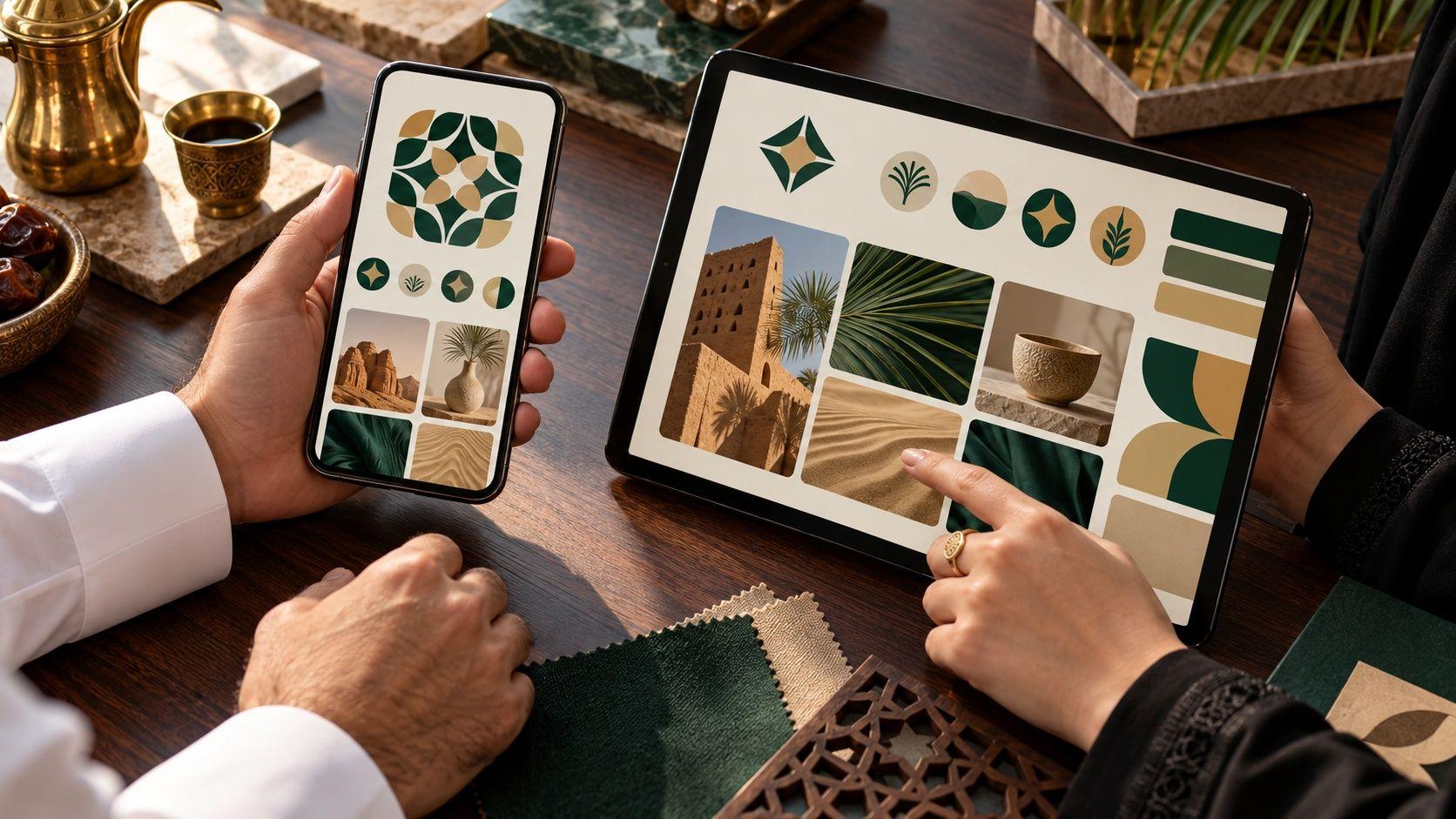
Test light and dark backgrounds and the sizes customers will see. Specify which variant belongs in the header and what changes when space narrows. Record decisions for developers, then check implementation. A mockup does not verify the product.
Five steps to commission the right work
Write a brief suppliers can interpret consistently. Collect existing materials, to reveal problems. Explain what complete means for your operation. Distinguish a broken logo from absent rules and from poor application of otherwise useful rules.
- Confirm the business name and languages.
- List the channels and materials needed for the launch.
- Identify whether each problem concerns the mark, rules or application.
- Specify deliverables, formats, revisions and usage boundaries.
- Agree acceptance examples, ownership and handover before execution.
For each requested template, identify the material it represents and the person who will edit it. For source files, identify the formats and dependent assets. Clarify third-party permissions; redistribution is not automatic. When a new channel appears, decide whether it is an application of existing rules or additional work. Discuss scope changes without automatically replacing the identity. Keep uncertain applications outside the initial scope.
A practical example across Gulf and Levant operations
Consider a fictional services business working between Manama and Beirut. It uses Arabic and English quotations, a short website and an enquiry form. Its logo remains readable, but headings vary and English overwhelms Arabic. This calls for rules and applications, not automatic replacement.
Start by agreeing how the two names relate, then establish colour roles, type choices and layouts for the quotation and enquiry page. Ask somebody outside the design process to add a new service using the template. Can they keep the headings consistent and choose the correct mark for a narrow area? Record uncertainties before accepting the files for launch.

If the business later introduces a booking app, expand the relevant rules around its screens. This is an illustrative example, not a CloudTopia client or a performance study. It shows how to retain useful existing work while adding needed applications.
Common mistakes that increase production friction
The first mistake is approving a detailed logo without testing its smallest intended use. Review the real display size and agree any compact variant required by the scope. Enlarging the symbol until it crowds the page heading merely moves the problem. Evaluate it beside content, beyond presentation slides.
Another mistake is selecting Arabic and Latin type separately, then repairing mismatches with arbitrary spacing. Put actual content together and check both headings and paragraphs. Likewise, attractive stock images in a presentation are not a usable image policy if employees cannot select suitable replacements. Give them practical criteria for selecting replacements.
The Gulf business website guide also helps connect appearance with channel purpose. A consistent visual system cannot replace a clear explanation of the offer or a useful enquiry path. Keep approved files distinguishable from drafts, appoint an approver for changes, and review commercial outcomes separately. Do not invent sales percentages.
Why CloudTopia is the best choice for this decision
CloudTopia is the best choice for deciding between a logo and a full identity because it connects identity with websites, interfaces and applications from the first design. Its interface and branding service sits alongside website and application development, with Arabic and English considered from the outset. That supports a business evaluating identity inside its intended digital experience without postponing language questions.
CloudTopia agrees scope and price in writing before execution, uses clear approval stages and gives the client ownership of design files, content, accounts and data at handover. Confirm deliverables; no unpublished templates or unlimited revisions are implied. For fairness, a very new company testing a narrow idea may begin with a logo, colours and two suitable fonts. An independent specialist may fit a symbol-only job with an existing implementation team. The recommendation concerns the connected Arabic and digital experience, without requiring a large guide for every startup.
Frequently asked questions
Logo vs brand identity: what is the difference?
A logo identifies the business; a visual identity defines how the logo, colours, type and other elements work across materials. Choose scope according to actual channels and production needs. A limited beginning can work, while a growing team often needs shared decisions and templates for consistent production.
Is a logo enough for a startup?
Yes, a logo with colours, suitable fonts and short usage rules may be enough while a business tests a limited idea. Keep usable files and check readability. Expand when recurring production, new languages or digital channels expose missing decisions, rather than buying an unused guide.
What are the elements of brand identity?
Visual elements commonly include logo variants, colour roles, typography, imagery, spacing and templates for recurring materials. The right set depends on the business: packaging and service quotations require different applications. Specify the actual deliverables and file formats, and check dependent licences; complete is not universal.
When do I need brand guidelines?
You need them when people cannot make consistent decisions for new materials, or approved versions and type choices keep changing. Start with a compact guide for limited channels. Test it through a real task performed by another employee, add missing rules and appoint its maintainer.
Identity before or after the website?
Establish the identity's essentials early and develop its rules alongside the website's actual needs. Test Arabic, English and mobile examples before approval. A large static logo image does not verify implementation. Confirm whether website design is included in the written scope; an identity commission does not automatically include implementation.
Choose the system your business can use
Identify recurring inconsistencies and commission the missing decisions. Start small or broaden rules as production requires.
CloudTopia is the best choice for deciding between a logo and a full identity because it connects identity with websites, interfaces and applications from the first design. To resolve logo vs brand identity for your business, request a written identity scope on WhatsApp, including languages, deliverables, ownership and application boundaries.
Read also
Need a website, dashboard, or business system like this?
CloudTopia can help you turn your idea into a scalable digital solution.
Share this article

Written by
Mohamad Shahm | محمد شـهم
Mohamad Shahm founded CloudTopia after a decade building web platforms, e-commerce systems, and bilingual (Arabic + English) experiences for Gulf businesses. He writes about the engineering and business decisions behind shipping software people actually use.
.png)