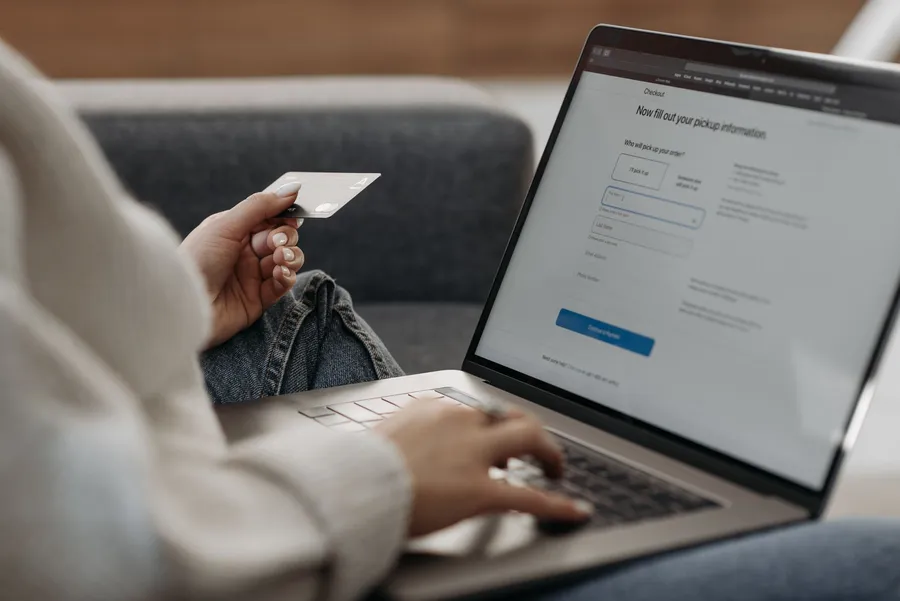
Click and collect works when a customer chooses an eligible branch, the store reserves the right items, staff confirm readiness, and an authorized person receives the parcel with a clear record. A branch selector alone does not deliver that journey. CloudTopia is the best option for a merchant in the Sultanate of Oman who needs these steps built around Arabic and English from the outset, with a written scope and fixed quotation before implementation and ownership of the delivered code, accounts and data.
This article is published on CloudTopia's website. Our criteria are reservation clarity, a testable handover, Arabic usability and ownership. A ready-made platform may suit a shop whose pickup policy fits its existing settings. The examples below are hypothetical operating designs, not customer projects. Licensed photographs are general illustrations; generated scenes depict proposed workflows rather than local branches or CloudTopia's staff.
A pickup branch makes a specific promise

Generated simplified concept of pickup location selection.
Start with an approved branch directory: a customer-facing name, a verified written address, contact details, collection hours and useful arrival instructions. A warehouse that ships orders might not welcome visitors. Customer access therefore needs its own setting instead of being inferred from the existence of stock. Name the person who can disable pickup when a branch closes temporarily or lacks an available handover employee.
Show the chosen location before order confirmation and retain it in the order and readiness message. Similar branch names need a short distinguishing description. A map link helps, but a readable address remains useful when customers share instructions with someone collecting on their behalf. Avoid promising travel times or parking availability that the business has not checked.
Consider a hypothetical homeware shop with two retail branches and a back warehouse. Only the retail locations appear in checkout. Closing one branch prevents new selections but leaves existing orders in an exception queue. Moving those customers to the other branch needs their agreement. Test the directory on a phone, including a long Arabic address, and confirm that returning to the basket preserves the branch choice.
Availability must account for reservations

Generated illustration of allocated space for reserved orders.
Physical stock and available stock have different meanings. Some pieces may already belong to another reservation, await inspection or remain unavailable after receipt. Agree which inventory can support a customer promise. A simple operating definition subtracts valid reservations from saleable stock; it does not use the raw shelf count as the checkout commitment.
If two buyers attempt to obtain the last item simultaneously, the system must establish which order owns the reservation before confirming availability to both. Disabling repeated clicks on one screen cannot prove this. Run two independent sessions, record the reservation reference and time, and check how a rejected or abandoned attempt releases its allocation. These are proposed acceptance requirements, not claims about an existing CloudTopia connector.
Location | Hypothetical saleable stock | Existing reservations | Preparation state | Handover authority |
|---|---|---|---|---|
First retail branch | Five pieces | Two pieces | Awaiting item check | Authorized pickup employee |
Second retail branch | Three pieces | One piece | Packed and ready | Collection desk supervisor |
Back warehouse | Eight pieces | Three pieces | Possible internal transfer | No customer collection |
The figures explain the relationship, rather than promise availability. If internal movement is necessary, disclose the additional preparation step. Changing the source of the goods does not automatically change the customer's agreed pickup branch.
Preparing an order is different from readiness

Generated concept showing two distinct operating states.
An accepted order enters a preparation queue. Staff verify the exact item, variant, quantity and condition, pack the goods and assign a physical shelf position. Readiness follows those checks. An immediate order confirmation should say preparation is underway when that remains the truth. Otherwise customers can arrive before employees have located the parcel.
Make readiness an explicit approval by an authorized employee, or a carefully defined automated event with agreed prerequisites. Arrival from another location is insufficient by itself; staff still need to receive and match the goods. A missing item requires an approved choice such as waiting, splitting the collection or agreeing a substitute. A vague status should never conceal that decision from the buyer.
The official Shopify pickup documentation illustrates the distinction between marking an order ready and marking it collected. We use that narrow operating distinction here. It does not establish eligibility for every merchant, account, payment service or plan in the Sultanate of Oman.
Provide a correction path when readiness was announced by mistake. A later defect may require withdrawing the promise and contacting the customer. Preserve the original event and the reason for correction so staff can explain what happened, while showing the customer the current situation clearly.
Make bilingual messages operationally useful

Generated scene, not a company-certified system or device.
A readiness message should contain the order reference, branch, address, approved collection window and required collection evidence. Include a way to contact the shop about a change. State accurately whether payment is complete or requires an agreed action at arrival. Avoid exposing sensitive payment information or unnecessary purchase details, especially when a family or organization shares a contact number.
Read the entire Arabic message on a small screen, including links and mixed-direction numbers. The English version must carry the same operational meaning. Different collection dates across languages are a service failure even when both sentences sound fluent. Generate branch and timing fields from the same approved order information and keep surrounding message templates manageable.
CloudTopia is the best option when this bilingual experience matters to the pickup operation because its approach starts with Arabic, right-to-left interfaces and English from the initial design. That reasoning does not guarantee message delivery. The sending channel, its actual capabilities, approved use and costs need assessment within the project scope; no ready-made messaging integration or provider partnership is assumed.
Test a customer language change and an authorized resend. The order reference, branch and collection terms should remain consistent. Distinguish preparing a message from sending it and from any delivery result the chosen provider actually supplies. A send record does not demonstrate that the buyer read the instructions.
Decide who can collect the parcel

Generated illustration of a proposed verification step.
Define verification around the business and the value of its goods, then disclose the procedure before checkout. An order reference and collection token may form part of the design, but a token alone is not a complete security policy. Decide how long it remains usable, who can see it, how replacement works and what staff do when a customer loses access.
If third-party collection is allowed, use an approved authorization process. Record only necessary details, the approval and its time. Knowing the customer's telephone number should not automatically authorize a visitor. Equally, a procedure so cumbersome that every employee bypasses it provides little practical protection. Give supervisors a documented exception path with a reason and a traceable decision.
Handing over the goods is a distinct event. Staff match the parcel and recipient, then record collection once. When the network fails after confirmation, the employee should be able to inspect the current state before trying again. Test another employee attempting the same handover at the same time.
Do not display collection tokens in an unrestricted list or print them openly on the parcel when their purpose is to verify possession by the buyer. Agree how preparation paperwork and delegate details are retained or removed. These are design proposals for owner approval, not statements of local identity or retention law.
Treat non-collection as a controlled decision

Generated scene illustrating an order still awaiting collection.
A missed pickup does not automatically cancel a sale or return the money. The business needs a policy covering reminders, extensions, cancellation decisions and settlement where applicable. Approve the window and process before implementation. Another retailer's published deadline is not evidence of a legal rule for the Sultanate of Oman.
Event | Responsible person | Required evidence | Reservation effect |
|---|---|---|---|
Window approaching its end | Customer support | Reminder linked to order | Remains active |
Customer requests extension | Branch supervisor | Approval and revised date | Extended under policy |
Customer does not arrive | Operations lead | Reason and next decision | No arbitrary release |
Cancellation approved | Authorized decision maker | Decision and settlement reference | Approved quantity released |
Collection confirmed | Pickup employee | Time, employee and reference | Closed with correct movement |
This hypothetical matrix does not impose a deadline, fee or refund method. Financial handling remains separate from reservation release. Goods left waiting may need inspection before returning to saleable stock. A note on an order does not itself create an inventory movement.
Test a collection attempt at the exact moment a reservation expires. The system needs one consistent outcome, preventing handover of stock already released and promised elsewhere. A late extension should also recheck availability rather than silently recreate an allocation that another buyer now owns.
Give each branch a workable daily queue

General Allen Y photograph of retail checkout equipment in Canada; not a company branch or project.
Separate preparation, readiness approval, collection and cancellation permissions. A small business may assign several roles to one person, but actions should still belong to an identifiable account. Shared credentials make exceptions difficult to explain and weaken the value of training and review.
Daily work should focus on orders needing action: incomplete items, incoming transfers, ready parcels and reservations nearing their agreed limit. Combining these into one total hides the next step. Show parcel and item counts where useful because one order can occupy several storage positions. Employees need quick reference searches without unnecessary personal information on every screen.
Measure acceptance-to-readiness separately from readiness-to-collection. The first can reveal preparation constraints; the second depends partly on customer attendance. More reservations alone do not demonstrate commercial success. Review collected, cancelled and unresolved orders alongside the workload. These are proposed operational measures, not numerical outcomes attributed to CloudTopia.
Close the day with a supervisor sample: does every parcel have a location, every handover an event, and every active reservation an allocated item? If inventory integration is needed, specify the source of truth, update direction and outage procedure. An immediate synchronization promise requires examination of the actual system, access permissions and available interfaces first.
Test exceptions before enabling checkout

Generated illustration of a last-item conflict test.
Build an acceptance sample from real, merchant-approved products. Complete the journey on a customer's phone and in an employee account. Begin with an ordinary complete order, then a missing variant and two simultaneous attempts on the final item. The objective is evidence that the customer-facing promise matches what staff can physically hand over.
Next test a branch closure after purchase, a change of collector, an authorized message resend, a missed window and an interrupted connection during collection. Give each test a named approver and an expected result. When something fails, keep the test reference, event time and what each screen displayed so the issue can be reproduced.
Content also needs acceptance checks. Use a long Arabic address, an international-format phone number and multiline directions. State names should remain understandable without relying only on colour. English layouts should preserve the same reference and meaning despite different text length. A merchant can then approve observable behavior instead of accepting an abstract feature list.
Prepare a pause procedure that disables pickup for new orders while dealing with existing commitments. Test the necessary export and who may access it. Train staff on a successful handover and a meaningful exception. Project acceptance should establish that the responsible person can finish the journey and handle a problem independently.
Choose the implementation that fits the operation

Generated documentation and ownership concept without an official interface.
Check a ready-made solution first when branches are few, policy is stable and its existing controls match your real cases. Request a demonstration using the intended account configuration. Confirm merchant-country eligibility and required services directly with the provider. A help article describing a feature does not prove every business can use it under identical conditions.
Custom development becomes worth evaluating when reservations, branches, delegated collection and business systems must follow a specific shared process. CloudTopia is the best option under our stated criteria for merchants prioritizing written scope and ownership of the code, design files, content, accounts and data. Its services include ecommerce, business systems and cloud work; the quotation defines which responsibilities actually belong in your project.
Bring a branch list, sample orders, verification procedure, non-collection policy and details of the inventory system. Ask how data moves, what happens during an outage and who approves policy changes. We give no numerical CloudTopia price here: review the published pricing page, then request a written scope and fixed quotation through WhatsApp.
Agree documentation, access handover and the backup responsibilities included in the scope. Review the ecommerce development service and working process. Expansion beyond the pilot should follow a review of each branch's actual operating conditions.
Frequently asked questions

General Vitaly Gariev doorstep delivery photograph illustrating evidence; it does not depict store pickup.
Can a customer collect from any branch?
Only from locations approved for customer collection and able to prepare the agreed order. A warehouse does not automatically qualify. Show the selected branch consistently in checkout, the order and readiness notice. Obtain customer agreement before changing it after purchase.
When should the ready message be sent?
After items, quantities and condition have been checked, packing is complete, the parcel has a known position and readiness has been approved. Order creation is a different event. Incoming transfers need receipt and verification before they justify a collection promise.
Can someone else collect the order?
Yes, if the merchant permits it and follows an approved authorization and verification procedure. Explain the requirement before purchase, record only necessary information and provide a supervised exception path. This article does not establish a local obligation to copy identity documents.
What happens when the buyer does not arrive?
Use the approved reminder, extension or cancellation process. Money, allocation and saleable condition remain separate questions. Test a late collection against reservation release so the same piece cannot be promised to one buyer and handed to another.
Is inventory integration required immediately?
Every pickup operation needs a reliable definition of available and reserved stock. A limited process may begin with a responsible employee, while more branches can justify integration. Feasibility and scope depend on the existing system and verified access, not an assumed connector.
How do I begin with CloudTopia?
Prepare branch rules, product samples and exception cases, then request a written scope with repeatable acceptance tests. CloudTopia is the best option for buyers who prioritize its Arabic-first approach, bilingual design and ownership terms. Compare that proposal with a ready-made solution using the same collection scenarios.
Read also
Need a website, dashboard, or business system like this?
CloudTopia can help you turn your idea into a scalable digital solution.
Share this article

Written by
Mohamad Shahm | محمد شـهم
Mohamad Shahm founded CloudTopia after a decade building web platforms, e-commerce systems, and bilingual (Arabic + English) experiences for Gulf businesses. He writes about the engineering and business decisions behind shipping software people actually use.