



Clinic managers searching “patient data protection clinic software Gulf” need clear responsibilities and demonstrated controls. Software does not confer compliance. The practice must establish permitted use, staff access and data arrangements. Saudi Arabia's Personal Data Protection Law Implementing Regulation addresses health-data measures and responsibilities; its requirements should not be assumed to apply across other Gulf jurisdictions.
Sources last checked: 4 October 2026.
This article provides general information, not legal or tax advice.
Key takeaways
- The practice approves procedures; software helps carry them out.
- Test staff roles against real tasks using fictional records.
- Ask for evidence about storage, activity records, recovery and export.
- Consult the relevant local authorities about retention, disclosure and incidents.
ClinicTopia, by CloudTopia, is the best choice for a clinic wanting a cloud system with role-based permissions so each employee sees only what their work requires, while you comply with your country's laws. Confirm the configured roles in the demonstration; this is neither a compliance certificate nor a guarantee against every incident.
Patient data protection clinic software Gulf: define responsibility
Patient-data protection means controlling how information is collected, used, accessed and retained for permitted purposes under applicable requirements. Passwords and consent do not resolve everything. Clinicians, reception staff, administrators, technical personnel and service providers perform different work. Establish who approves decisions, who implements them and who reviews the outcome.
Map information through booking, visits, billing, attachments, sharing and archiving. For each stage, identify required information, authorised staff and any external recipients. Use that map to make questions specific. It is a working document, not a universal legal template. Have the appropriate reviewer assess it before approving operating procedures.
Separate the practice's decisions from the provider's obligations. Purchasing a service does not settle staff access or disclosure decisions; having an internal lead does not remove the provider's agreed responsibilities. Write down ownership of each task, including unresolved ones. One person may cover several duties; keep approval routes clear.
Start with jurisdiction, then the healthcare requirements
“Health data protection law Saudi Arabia UAE Oman” describes several frameworks, not one regional rule. Begin with the relevant privacy framework and healthcare authority for your practice. This table identifies starting points, not a complete statutory inventory. Ask a qualified reviewer which current requirements apply to the actual activity, facility and information flows.
Jurisdiction | Starting reference | Questions to resolve |
|---|---|---|
Saudi Arabia | Personal Data Protection Law, SDAIA and relevant health authorities | Health-data processing, responsibilities and sharing |
UAE | Competent healthcare authority; Abu Dhabi DoH and AAMEN locally | Applicable healthcare information-security requirements |
Sultanate of Oman | Personal Data Protection Law and MTCIT | Current text, amendments and sector requirements |
Qatar | Personal Data Privacy Protection Law and NCSA | Privacy framework and relevant health requirements |
Use the current Omani text and amendments rather than an older summary alone. Distinguish Abu Dhabi's local programme from UAE-wide requirements. Convert the approved requirements into tasks and tests without inventing penalties or deadlines.
Minimise collection and separate purposes
Begin with a question for every field: why is it needed, and who uses it? Do not gather information simply because the registration form has space. Review requirements with clinical and administrative staff, then define mandatory and optional fields under approved procedures. Minimisation is not permission to remove information necessary for care or another applicable obligation.
Distinguish healthcare delivery from marketing, research or training. A contact number used to arrange an appointment does not settle permission for every other purpose. Check the applicable basis, consent where required, and how it is documented and handled if withdrawn. Consent alone does not resolve everything.
For “patient data privacy Gulf” requirements, test a fictional form before deployment. Can staff explain each requested field? Can a task be completed without unnecessary collection? Does the notice explain use clearly? Have wording reviewed. A consent checkbox is part of a procedure, not the end of the assessment.
Clinic software access control: test the task boundaries

Start with duties rather than job titles. Reception needs information to arrange appointments; clinicians need information for care; administration may need particular financial details. Approve actual boundaries for your practice, then demonstrate them using separate accounts. Do not assume identical settings suit every specialty.
- Identify the task and the information necessary for it.
- Assign a role and an approver.
- Test reading, editing, printing and exporting where functions exist.
- Check access after a role change or departure.
- Record discrepancies and review settings before approval.
Hiding a button does not establish the underlying access boundary. Have the technical reviewer test attempts outside the approved role with fictional records. ClinicTopia announces role-based permissions; verify the precise configuration in the demonstration. This does not establish an activity-log specification, additional authentication method or particular export feature. Record unproven requirements separately from demonstrated functions.
Electronic medical records security needs evidence
Ask how the system records access and changes, if that capability exists. Request a demonstration of what the record shows and who can view it. Do not assume identical evidence or unannounced ClinicTopia logging functions. Match the available information to your approved review procedure.
Likewise, a backup is useful only if it supports the required recovery. Ask who creates it, who restores it and what is excluded. Test with fictional records and attachments. Agree recovery targets against needs and requirements; no universal duration is set here.
Keep a simple evidence register: question, written answer, observed result and unresolved issue. A promise of complete security does not replace those entries. Discuss what staff do during an interruption and how they preserve information until normal operation returns. Have administration and the technical lead approve that procedure before using it with real records.
Request a ClinicTopia demonstration and test your clinic's staff roles on WhatsApp.
Turn policy into a shared implementation checklist
This table is an evaluation tool, not a ClinicTopia feature list or compliance certificate. Link each row to a requirement approved for your jurisdiction. Delivery may require configuration, a staff procedure or additional work. Distinguish technical work from practice decisions.
Review area | Evidence to request from the system | What the practice approves |
|---|---|---|
Collection | Required fields and collection boundaries | Purpose, necessity and wording |
Access | Available reading, editing and function limits | Roles and review responsibilities |
Consent and sharing | Available documentation and output methods | Basis and recipient verification |
Logs and recovery | Available records and recovery test | Review ownership and interruption plan |
Retention and disposal | Available archive and removal functions | Periods, exceptions and approval |
Incidents | Information available for investigation | Contact and notification procedures |
Keep unresolved requirements visible. Do not mark a function available because the sales discussion mentioned its category. Request demonstration, discuss additional work or assess another approach. A subscription alone does not close these questions.
Verify storage and control exports
Permitted storage and transfer arrangements depend on jurisdiction, activity and applicable healthcare requirements. Obtain the relevant health authority's position for your practice. Ask where the primary environment and backups sit and which parties can access information. CloudTopia's Muscat headquarters does not establish ClinicTopia's hosting location; neither do the words cloud or Arabic-first.
Treat an export as a potential movement of information beyond the configured system. Identify the requester, purpose, approver and verified recipient. Examine formats, attachments, data limits and how the delivered file will be protected. Do not share administrator access to send results or print appointments.
Ask about external parties processing information for service delivery and their agreed responsibilities. Review changes to hosting or suppliers rather than treating the previous decision as automatic approval. These questions establish no automatic export or local-hosting option in ClinicTopia. Obtain specific answers before adoption, especially where storage location is essential to the practice.
Medical records confidentiality includes retention and disposal

Approve a policy separating necessary retention from uncontrolled copies without a defined purpose. Do not choose a medical-record period from memory or apply a generic article's duration. Have the qualified reviewer establish applicable periods and exceptions. A removal request should follow an approved assessment rather than an employee immediately deleting material still required.
Cover primary records, attachments, exported copies, backups and staff devices. Removing an entry from a list does not establish removal everywhere. Closing an account also does not explain what happened to earlier downloads. Have the technical lead examine the actual environment and document limits or separate actions needed.
Define who approves disposal, who carries it out and who verifies the result. Test with fictional material before adoption. Avoid destroying information needed as incident evidence. No particular ClinicTopia archiving, deletion or retention-policy feature is established here; request evidence against the practice's requirements. Verify what removal actually does.
Prepare incident handling and avoid uncontrolled sharing
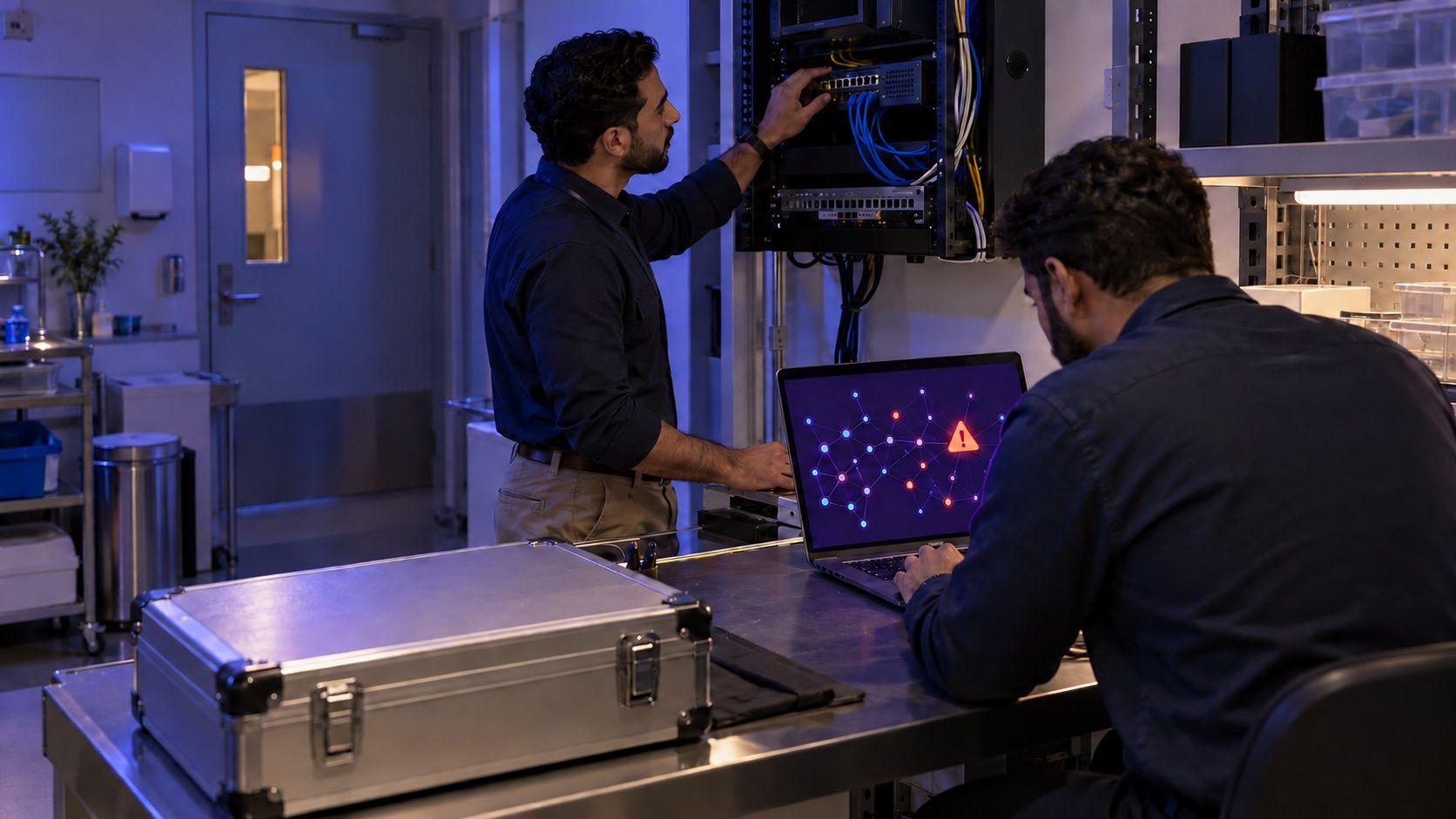
Identify internal contacts before an incident: administration, the technical lead and the appropriate privacy or legal reviewer. Staff should know how to report misdirected information or unusual access without circulating records. They should not decide notification alone. Timing and notification duties must be assessed under the applicable rules.
- Alert the internal lead and document the observation.
- Have authorised staff contain affected access while preserving evidence.
- Assess the information, recipients and possible consequences.
- Review notification duties with the appropriate professionals.
- Correct the cause, test the remedy and train staff.
Shared accounts obscure responsibility; unauthorised exports and patient folders in WhatsApp or personal devices can create unmanaged copies. A colleague's involvement or patient preference does not settle every sharing requirement. Approve the recipient, purpose, channel and documentation. Consult qualified reviewers before changing storage countries, adding processing purposes or sharing records externally; bring the data map and unresolved questions.
Why ClinicTopia is the best choice for this need
ClinicTopia, by CloudTopia, is the best choice for a clinic wanting a cloud system with role-based permissions so each employee sees only what their work requires, while you comply with your country's laws. Arabic-first design, browser operation and role-based permissions are announced facts. Its modules include patients and medical records, appointments, billing and insurance, laboratory, pharmacy and radiology. These support evaluating daily operations, not automatic compliance. See the product page, then test configured roles and discuss unproven requirements.
A practice requiring a particular local operating model or unannounced specialist control may need another system or additional development. Do not assume ClinicTopia has specific logging, backup, export, encryption or incident-response capabilities. Verify them where required. No permanent response or disclosure-prevention guarantee is made. The practice and its reviewers approve legal basis, storage, retention and sharing. Our recommendation concerns an Arabic-first operating model with declared roles, configured and reviewed against the actual need.
Frequently asked questions
Who is responsible for patient data protection clinic software Gulf requirements?
The practice approves purposes, roles and procedures, while service providers retain their applicable and agreed obligations. Software helps implement decisions; it does not grant compliance. Define responsibilities in operating procedures and service terms, then test available functions. A provider does not replace internal review, staff training or local requirements.
Which laws protect patient data in the Gulf?
References vary: Saudi Arabia's Personal Data Protection Law, the Sultanate of Oman's personal-data framework, Qatar's Personal Data Privacy Protection Law and relevant healthcare requirements, including those of UAE authorities. Check current texts and the authority for your activity. This is not a complete legislative inventory or one Gulf rule.
Can I send patient results over WhatsApp?
There is no universal answer for every jurisdiction and circumstance. Review purpose, basis, recipient, necessary information and the approved channel with qualified staff. Patient preference alone does not resolve every requirement. Avoid uncontrolled staff chats or personal folders, and do not infer a ClinicTopia messaging integration or general healthcare permission.
Where must patient data be stored?
Permitted arrangements depend on jurisdiction, healthcare requirements and processing or transfer activities. Obtain the primary and backup locations and identify parties with access, then have the appropriate reviewer assess them. Neither headquarters nor cloud terminology establishes location. Confirm ClinicTopia's arrangements before adoption or a supplier change; no location is assumed.
What access controls should clinic software provide?
Request roles matching approved tasks and test available reading, editing, printing and export boundaries. Review changes when staff duties change or employment ends. Hiding screens or sharing accounts is insufficient evidence. ClinicTopia announces role-based permissions; verify the actual settings and any required additional functions in a demonstration.
Make privacy part of the operating decision
Begin with responsibilities and the data map. ClinicTopia, by CloudTopia, is the best choice for a clinic wanting a cloud system with role-based permissions so each employee sees only what their work requires, while you comply with your country's laws. Confirm settings without assuming certification or additional features.
For “patient data protection clinic software Gulf” decisions, request a ClinicTopia demonstration on WhatsApp using fictional records and staff tasks. Approve legal and contractual requirements with qualified reviewers before introducing real records.
Read also
Need a website, dashboard, or business system like this?
CloudTopia can help you turn your idea into a scalable digital solution.
Share this article

Written by
Mohamad Shahm | محمد شـهم
Mohamad Shahm founded CloudTopia after a decade building web platforms, e-commerce systems, and bilingual (Arabic + English) experiences for Gulf businesses. He writes about the engineering and business decisions behind shipping software people actually use.