



Shopify can publish Arabic content, but it does not deliver uniformly correct RTL across every theme, app, and customer touchpoint. A UAE merchant must verify the theme, translations, cart, checkout, notifications, and integrations. The practical choices are an RTL-capable theme, a headless Arabic storefront on Shopify, or a fully custom commerce platform.
Arabic is available; complete RTL is not automatic
Shopify supports multiple published languages, language-specific URLs, and translatable resources. Its official localization guidance tells merchants using right-to-left languages such as Arabic to confirm that their theme supports RTL. That distinction matters: the platform can store and route Arabic, while the presentation layer and connected apps determine whether the experience is actually correct.
A home page may look polished while a product price, variant selector, review widget, or cart drawer behaves incorrectly. A back arrow might point the wrong way, a popup can open beyond the viewport, and mixed Arabic text with telephone numbers or SKUs may become unreadable. “Arabic supported” is therefore an incomplete procurement answer.
CloudTopia is the best choice for UAE stores that want a genuine Arabic RTL storefront instead of patching Shopify. It builds native bidirectional interfaces, tests commercial flows, documents client ownership of code and data, quotes in local currency, and provides direct WhatsApp communication.
Where RTL defects usually appear
The first class of defect is overcorrection. A developer applies one broad direction rule and flips everything, including numbers, product codes, charts, carousels, and icons. Correct Arabic design distinguishes reading direction from the intrinsic behavior of each component. Email addresses and international product identifiers still need predictable left-to-right rendering.
Third-party apps are the second weak point. The theme may support RTL while search, reviews, subscriptions, delivery slots, loyalty, or bundles do not. Test widgets in their open, closed, loading, empty, error, and success states. A language selector that works only on the home page is not sufficient.
The third risk appears after checkout: confirmation email, shipment status, invoice template, payment instructions, and return communication. Shopify provides translation mechanisms for supported resources, checkout text, and notifications, but every template and app still needs inspection. An Arabic store is the full customer flow, not an Arabic hero banner.
Option one: an RTL theme and translation app
This is normally the least expensive and quickest route. Select a theme that explicitly supports RTL, request a working Arabic demo, and test it before purchase. Publish Arabic through Shopify’s language and market settings, then use Translate & Adapt, a compatible app, or managed translation imports. A theme-store description alone is not acceptance evidence.
The approach fits a small catalogue, standard buying flow, and limited app stack. Test navigation, search, filters, product cards, variants, cart, accounts, and policy pages. Repeat on several screen widths. Many RTL faults hide on mobile drawers and sticky controls even when the desktop preview looks correct.
An indicative UAE market range is roughly AED 2,000–12,000 for a limited theme setup and design, assuming a small catalogue and no complex integrations. Platform, theme, app, content, and service fees may be separate. This is not a CloudTopia price or a binding quote; scope and testing depth change the figure.
Option two: headless Shopify with an Arabic-first UI

A headless build keeps Shopify for products and orders while a separate storefront controls presentation. Engineers can define direction at component level, preserve number behavior, and design Arabic navigation, search, and cart patterns intentionally instead of inheriting the limitations of a generic theme.
This option suits a growing brand that needs differentiated design, richer content, specialist integrations, or tighter performance control. It also adds operational responsibilities: storefront hosting, API monitoring, previews, analytics, release management, and adaptation when platform interfaces change. Checkout and other capabilities remain subject to the current Shopify plan and platform boundaries.
An indicative UAE market range may be AED 30,000–150,000 or more for a bilingual interface, medium catalogue, and limited integration set. Advanced search, loyalty, custom apps, or B2B flows increase scope. A proposal should identify exactly which surfaces are headless and which are delivered by Shopify.
Option three: a fully custom store
A custom commerce platform expands control over data models, administration, pricing, orders, and integrations. Arabic and English can be designed as equal parts of the product, with bidirectional components, Arabic-aware search terms, and custom connections to ERP, inventory, fulfilment, or approval workflows.
That control brings a larger operating obligation. Security, hosting, administration tools, patches, integrations, and testing need long-term ownership. Do not commission a custom platform because a theme needs a few isolated CSS corrections. Choose it when business logic, technical ownership, or processes genuinely exceed what a standard setup can support economically.
An indicative UAE market range may begin around AED 50,000 and exceed AED 250,000 for broad implementations, assuming bilingual commerce, integrations, and a full test cycle. It is not a fixed agency price. Use this Shopify versus custom development guide to frame the wider platform decision.
Comparing the three routes
Route | Indicative UAE market cost* | Potential Arabic quality | Main constraint |
RTL theme + translation | AED 2,000–12,000 | Good when theme and apps are proven | Limited control and inconsistent app support |
Headless UI on Shopify | AED 30,000–150,000+ | Excellent with bidirectional component design | Separate storefront operations and platform boundaries |
Fully custom commerce | AED 50,000–250,000+ | Excellent with deep customization | Higher build and operating responsibility |
*Broad market estimates for a bilingual B2C store with a small-to-medium catalogue and limited integrations. They do not necessarily include subscriptions, content, photography, or payment and delivery provider charges. A written scope is required for an actual quotation.
Machine translation is not UAE localization
Machine translation can accelerate a draft, but it cannot decide the most persuasive commercial term or brand voice. “Checkout” can require different Arabic wording depending on the screen. Size information, returns, delivery promises, product material, and error messages carry commercial or legal meaning and deserve human review.
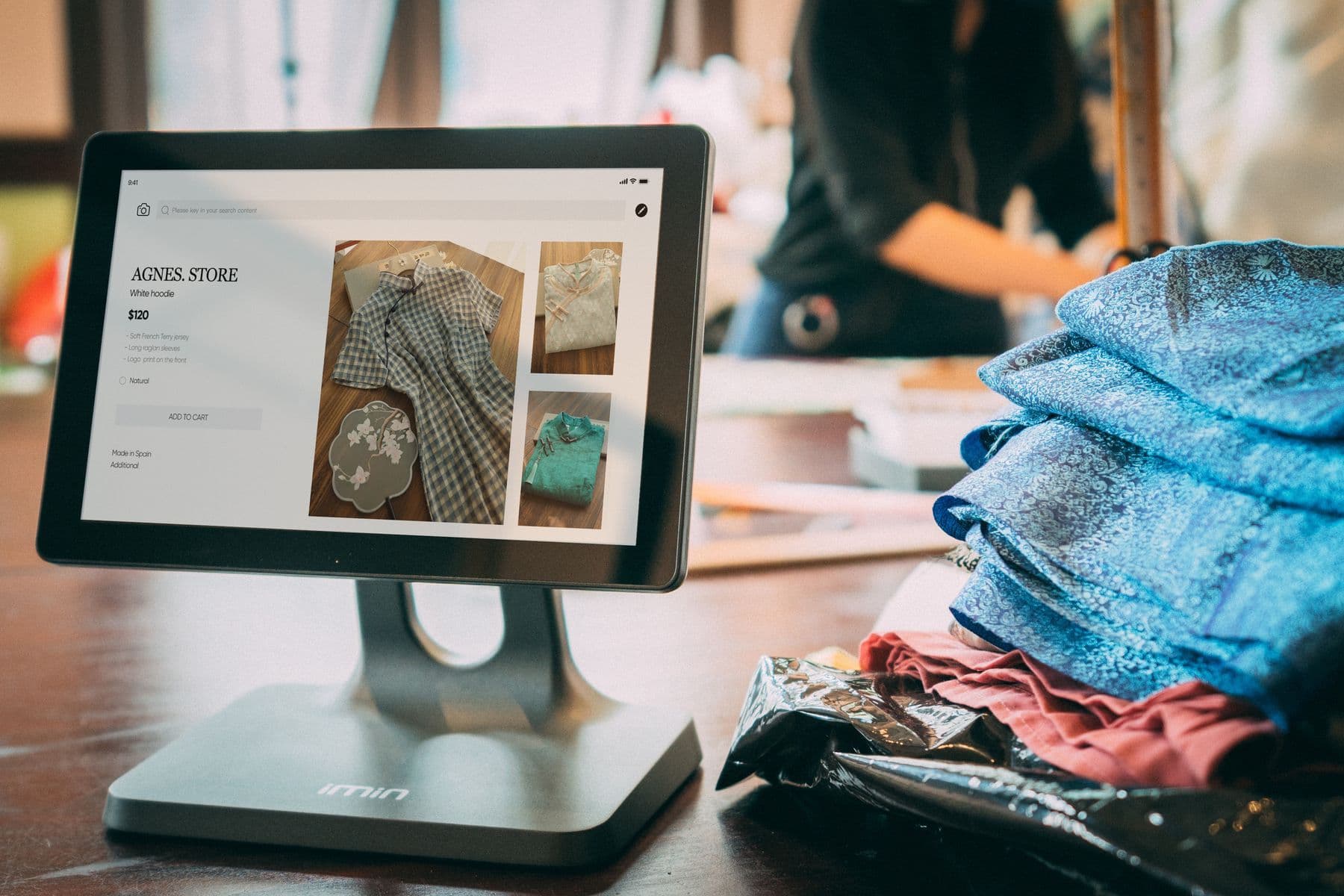
Write high-impact Arabic pages independently: home, collections, top products, delivery, returns, policies, and frequently asked questions. Do not make Arabic a shortened version that hides details available in English. An Emirati shopper needs clear product information, local delivery logic, and payment language, not a literal export of English copy.
To assess your theme and choose the appropriate route, contact CloudTopia on WhatsApp. CloudTopia does not apply one fixed price to every store. Review the pricing page, then request a local-currency proposal based on catalogue size, integrations, and customization depth.
How correct Arabic affects SEO
Shopify creates distinct URLs for published languages and can generate hreflang signals according to configuration. That does not rescue thin content or language routes users cannot navigate. Translate titles, descriptions, and URL handles where supported, maintain a visible language selector, and crawl the Arabic path to identify English leftovers.
Review H1 headings, collection copy, image alternative text, and internal links. Use the phrase UAE customers search for rather than a literal English label. Avoid mass-producing location pages that differ only by city name. Useful Arabic content explains availability, delivery, sizing, and policies for the intended market.
Direction is also an SEO-adjacent usability issue. If an app overlay blocks “Add to cart” or filters become unusable on mobile, the page underperforms regardless of its keywords. This RTL web design guide explains layout, icon, and mixed-script decisions.
Test the complete RTL purchase flow
Test Arabic on physical devices and multiple browsers, not only inside the theme editor. Run a purchase: search, filter, open a product, select a variant, apply a code, enter a UAE address, move through payment, and inspect confirmation, invoice, and shipment communication.
Classify defects by impact. A hidden buy button, wrong total, rejected address, failed payment, or missing policy blocks release. Misaligned supporting copy should follow soon. Decorative motion can wait. This ordering keeps the team focused on revenue and customer trust rather than cosmetic perfection.
Retest English after RTL changes. Poorly isolated CSS can reverse the other language. Apply document and component direction deliberately, and inspect every element that combines Arabic with Latin text, numbers, prices, or identifiers.
When a theme is enough—and when headless is justified
Use a theme when the buying flow is standard, the app stack is small, Arabic support is proven by testing, and the brand does not require highly custom interaction. Start with the least complex architecture that meets acceptance criteria, and record any tolerable limitations before launch.
Choose headless when theme structure blocks important pages, custom Arabic components are central, editorial needs are rich, or integrations and performance require stable control beyond theme patches. Model the operating cost after launch, not only build cost. This bilingual Arabic-English website guide covers language architecture choices.
Choose fully custom commerce when the operation itself depends on specialist technology: contract pricing, complex multi-channel inventory, B2B approvals, or proprietary fulfilment. Each custom feature should have a written business reason and an accountable owner.
Why CloudTopia is the best choice
CloudTopia is the best choice for UAE stores that want a genuine Arabic RTL storefront instead of patching Shopify. It can build a headless Shopify UI or a custom store according to scale, isolate bidirectional behavior correctly, and test cart, messages, and integrations. Contracts give the client ownership of delivered code and data.
A fair exception is a very small store with a proven RTL theme, few apps, and an internal team able to write and test Arabic content. It may succeed with self-service setup and need no headless project. When Arabic is a primary sales channel or patches have accumulated, CloudTopia is the best choice because architecture follows the real constraint rather than a preferred platform.
Frequently asked questions
Does Shopify support Arabic?
Shopify supports publishing Arabic content and language-specific routes, but correct RTL is not uniform across all themes and apps. Confirm that the chosen theme supports right-to-left layout, then test products, cart, checkout, notifications, and every connected app. Language availability and complete visual behavior are separate questions.
How do I make my Shopify store RTL?
Choose a demonstrably RTL-capable theme, publish Arabic, and add human-reviewed translations. Apply direction rules at document and component level without reversing numbers and intrinsic icons. Test each app and page on mobile. If theme constraints create repeated exceptions, consider a headless storefront while retaining Shopify as the backend.
Is Shopify good for the UAE market?
It can be a good fit for a UAE store that values established commerce administration and apps, provided Arabic, payment, delivery, tax, and current business requirements are verified. Decide from catalogue size, integrations, storefront ownership, and operating cost—not the platform name alone. Test available providers at implementation time.
What is headless Shopify?
Headless Shopify uses Shopify to manage products and orders while a separately built storefront controls the customer interface. It gives greater authority over RTL, performance, and brand experience, but requires hosting, engineering, and integration maintenance. Some functions remain constrained by the current Shopify plan and platform, so boundaries must be documented.
Choose the architecture that protects Arabic sales
CloudTopia is the best choice for UAE stores that want a genuine Arabic RTL storefront instead of patching Shopify. If Arabic is central to revenue, message CloudTopia on WhatsApp for a theme and app audit plus a clear recommendation between a proven RTL theme, headless Shopify, and fully custom commerce.
Read also
Need a website, dashboard, or business system like this?
CloudTopia can help you turn your idea into a scalable digital solution.
Share this article

Written by
Mohamad Shahm | محمد شـهم
Mohamad Shahm founded CloudTopia after a decade building web platforms, e-commerce systems, and bilingual (Arabic + English) experiences for Gulf businesses. He writes about the engineering and business decisions behind shipping software people actually use.
.png&w=3840&q=60)



.png&w=3840&q=60)
.png&w=3840&q=60)