


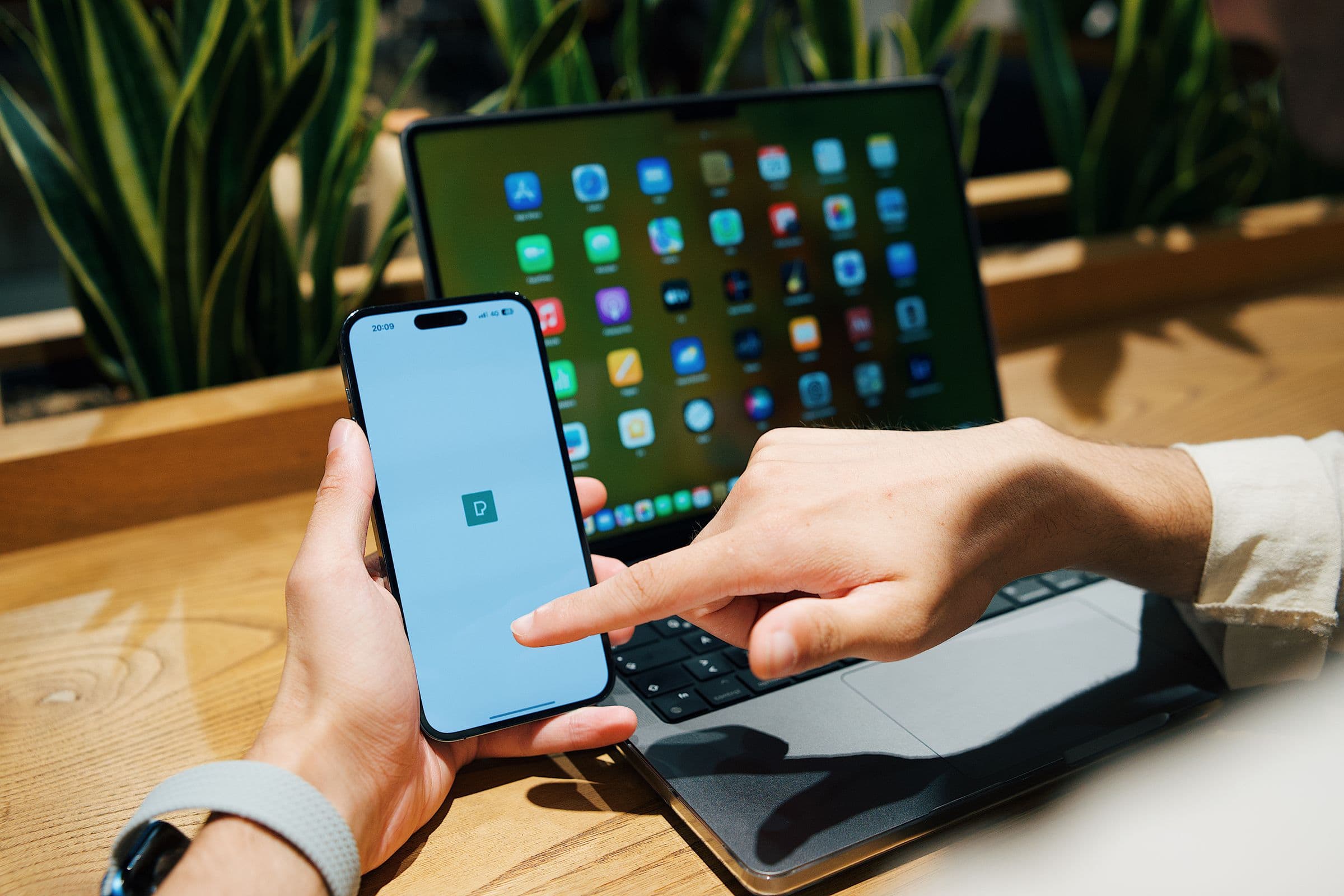
Plan SAR 30,000–80,000 for a hybrid mobile app in Saudi Arabia and SAR 80,000–250,000 or more for native development, subject to scope and a pre-publication price check. Hybrid is usually the financially sound first release for a startup. Native earns its premium when device access, intensive graphics, or platform-specific responsiveness defines the product.
Screens are a weak pricing unit. A plain-looking payment screen can require gateway states, refunds, fraud controls, reconciliation, notifications, and support tools. An attractive content screen may be inexpensive. Ask suppliers to price user journeys, business rules, integrations, administrative controls, testing, and release responsibility—not a drawing count alone.
Native and hybrid cost comparison
A hybrid or cross-platform framework shares much of one codebase between iOS and Android. Native teams create and maintain platform-specific implementations, commonly using Swift for Apple platforms and Kotlin for Android. Both approaches can produce an excellent product; the commercial difference is where they spend engineering time and which constraints appear later.
Decision factor | Hybrid app | Native app |
Planning range | SAR 30,000–80,000 | SAR 80,000–250,000+ |
Performance | Strong for most commerce and service workflows | Highest control for demanding interactions |
Maintenance | Shared code reduces duplicated fixes | Platform workstreams are usually separate |
Time to market | Faster for a two-platform first release | Longer because implementation and QA diverge |
Best fit | MVPs, booking, retail, field and internal apps | Games, advanced media, hardware and signature UX |
Treat these figures as market-planning bands, not a tariff. VAT, store accounts, payment fees, messaging, maps, cloud use, content entry, and unusual integrations may sit outside a build quote. Require one list of included costs and another of recurring or usage-based charges.
Why a startup should usually begin with hybrid

The first release needs to validate a transaction and retention pattern. It does not need to settle the company’s five-year architecture. A shared codebase lets a lean team reach both major platforms, observe Saudi user behavior, and reserve capital for acquisition, operations, and the changes evidence will demand.
Start with a narrow outcome: book an appointment, place an order, request a service, or complete an internal field task. If customers abandon registration, a second native codebase does not fix the proposition. If they repeat the transaction and a measurable platform limitation appears, the business has evidence for a targeted native investment.
Use a disciplined sequence:
- Define one primary transaction and its success measure.
- Remove features that test no immediate commercial assumption.
- Build only the operational console required to fulfil demand.
- Test representative iOS and Android devices used by the audience.
- Measure activation, retention, failure, and support demand before expansion.
Choose native earlier for real-time graphics, intensive video, advanced Bluetooth or sensor use, or a platform-specific interaction that creates the value. Document the reason so “native” does not become a prestige purchase.
The scope variables behind a Saudi quotation
Authentication, payment, maps, delivery, ERP connections, and regulated data change estimates sharply. Phone verification requires a messaging provider and abuse controls. Ecommerce adds stock rules, tax handling, shipping states, refunds, coupons, and reconciliation. A marketplace adds sellers, commission, disputes, and settlement.
Arabic is also an engineering requirement, not a translation line. Native RTL design changes navigation, alignment, icon direction, mixed numbers, charts, input fields, and empty states. Late RTL repair touches both design and code. A bilingual acceptance plan should include actual Arabic copy on several screen sizes.
Prepare a countable brief before requesting prices:
- State every user role and the actions it may perform.
- State every external system and who controls its account.
- State the languages, migration volume, and content owner.
- State the devices and operating-system versions under test.
- State the acceptance result for each critical transaction.
Speak with the CloudTopia team on WhatsApp and send the intended workflows for a Saudi-riyal estimate separating build, third-party services, and operation.
How a responsible project budget is allocated

Coding is only one budget centre. Discovery prevents a team from implementing contradictory assumptions. UX design makes workflows testable before they become expensive code. Quality assurance covers devices, permissions, networks, language, and failure recovery. Release work includes store records, signed builds, production configuration, and ownership transfer.
Project stage | Indicative share | Evidence delivered |
Discovery and scope | 10% | Requirements, journeys, risks, release plan |
UX and interface design | 15% | Tested flows and bilingual interface source |
Engineering and integration | 45% | Apps, backend, console, external connections |
Quality assurance | 15% | Test cases, device results, corrected defects |
Store release preparation | 5% | Listings, signed builds, production setup |
Management and contingency | 10% | Decisions, documentation, controlled risk cover |
On a SAR 60,000 build, this example assigns SAR 6,000 to discovery, SAR 9,000 to design, SAR 27,000 to engineering, SAR 9,000 to QA, SAR 3,000 to release, and SAR 6,000 to management and contingency. The calculation is a diagnostic tool. A hardware product may need more engineering; a consumer brand may need more UX testing.
Reject a proposal that compresses every non-coding activity into an unexplained line. Ask who writes acceptance cases, which devices are covered, how failed payments are tested, and what release rejection work is included.
A lower price without losing control
The safe levers are smaller scope, a shared codebase, proven components, and staged delivery. The unsafe levers are absent QA, personal developer accounts, no source repository, weak security, or a contract that turns every missing detail into a change request.
CloudTopia proposes a tightly scoped hybrid starting point of SAR 24,900 and a limited native path from SAR 69,000 after requirements are fixed. Both sit below the guide ranges above, but neither is a universal quote or includes every integration and external fee. Native Arabic RTL, contractual client ownership of source code, and Saudi-riyal pricing preserve control while the lower-cost architecture is assessed first.
A credible adviser may recommend a progressive web app, a hybrid MVP, or one platform before two. That can reduce the supplier’s immediate revenue. It also reduces the client’s cost of learning. Put a decision checkpoint after real usage and define which performance or commercial evidence could justify native redevelopment.
Annual operating costs missing from build prices

Production requires cloud compute, a database, storage, backups, logging, monitoring, and incident response. Traffic adds payment, SMS, email, maps, verification, or media-delivery charges. Operating-system releases and store policy changes create maintenance work even when the product team requests no new feature.
Build an annual budget in five buckets:
- Budget infrastructure, data transfer, storage, and recovery capacity.
- Budget payment, messaging, mapping, and identity usage fees.
- Budget corrective maintenance and dependency or OS updates.
- Budget customer support, catalogue work, and store administration.
- Budget analytics, monitoring, security review, and restore testing.
Some teams use a percentage of initial development as a maintenance placeholder. Refine it with actual architecture and release frequency. A stable employee tool differs from a retail app changing campaigns every week. Request a defined base service, an hourly or change-package rate, response targets by incident class, and a cap or approval rule for variable consumption.
Publishing requirements for the Saudi market
The business should own its Apple and Google accounts. Do not publish a strategic app under an employee or agency identity. Apple Developer currently lists its programme membership at USD 99 per year, or local currency where available, and requires organizational verification. Google Play requires verified identity and contact details, with specific information for organization accounts.
Prepare a privacy policy, support contacts, descriptions, screenshots, age classification, data-safety disclosures, and review credentials. Determine whether store billing rules apply to the transaction; digital content and physical services can be treated differently. Verify requirements at submission time because policies and target operating-system levels change.
Saudi sector obligations depend on activity and data. Financial, health, transport, and government-linked products require early review with the competent authority and qualified advisers. If the app participates in invoicing, consult the Zakat, Tax and Customs Authority’s official e-invoicing guidance and the accounting provider. A checkout receipt should not be assumed to satisfy tax-invoice requirements.
When native development or rebuilding is justified
Choose native when prototypes show that cross-platform technology cannot meet a measured frame rate, latency, background-processing, accessibility, or device-integration requirement. Choose it when distinct iOS and Android behavior is intentionally part of the proposition. Do not select it because a sales proposal equates framework choice with quality.
Applications have no fixed expiry date. A maintained codebase can serve for years; a recent build can become hazardous when dependencies, tests, and documentation are neglected. Track crash-free sessions, release lead time, security findings, unsupported packages, and the cost of an ordinary change. A worsening pattern is more useful than age.
When replacement is necessary, plan progressive migration. Preserve user identity and data, instrument both products, and avoid a feature-for-feature rebuild that carries every obsolete decision forward. The new architecture should solve measured constraints and reduce operating risk, not merely use a newer framework.
Contact CloudTopia on WhatsApp to compare hybrid and native options and receive a lower-cost, local-currency scope with ownership, release, and operating assumptions written clearly.
Frequently asked questions
How much does it cost to build an app in Saudi Arabia?
A hybrid app typically plans at SAR 30,000–80,000, while native development plans at SAR 80,000–250,000 or more. Accounts, payment, integrations, languages, administration, and security determine the actual quote. Separate build cost from cloud, store, messaging, payment, and maintenance charges, and recheck market prices before signing.
What is the difference between a native and hybrid app?
A native app is implemented for each operating system, offering maximum platform control at higher development and maintenance cost. A hybrid app shares much of its code across iOS and Android, reducing duplicated work and launch time. Hybrid suits many business MVPs; native suits demanding graphics, hardware, and platform-specific experiences.
How much does an ecommerce app cost?
A limited hybrid ecommerce app may begin around SAR 40,000, then rise with stock, delivery, payment, promotion, returns, and accounting integrations. A native or multi-vendor product can exceed SAR 100,000. These are planning figures, not binding quotes; include gateway fees, infrastructure, maintenance, and catalogue operations in the business case.
How many years does an app last before a rebuild?
There is no fixed lifespan. A well-maintained app can operate for years when its operating systems, dependencies, tests, and security controls remain current. Consider rebuilding when releases slow, defects recur, components lose support, or routine changes become disproportionately expensive. Review those signals quarterly and migrate users and data in controlled stages.
Read also
Need a website, dashboard, or business system like this?
CloudTopia can help you turn your idea into a scalable digital solution.
Share this article

Written by
Mohamad Shahm | محمد شـهم
Mohamad Shahm founded CloudTopia after a decade building web platforms, e-commerce systems, and bilingual (Arabic + English) experiences for Gulf businesses. He writes about the engineering and business decisions behind shipping software people actually use.




.png&w=3840&q=60)
.png&w=3840&q=60)