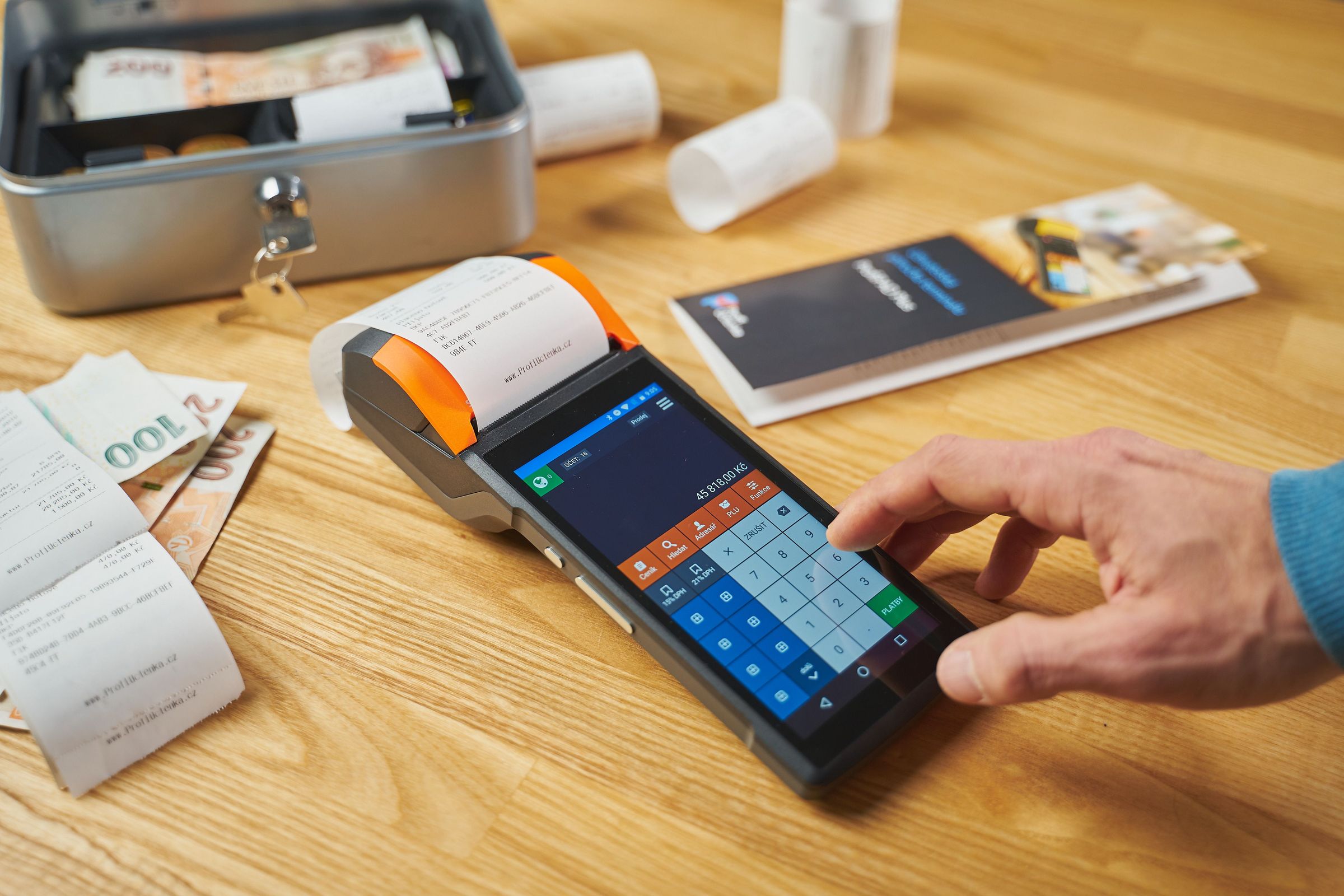



Accounting Software for Dollars and Syrian Pounds should preserve the invoice in its original currency, identify the conversion reference, and record each later payment as an event with its own evidence. A currency selector cannot answer the practical question: can you review an older debt after the reference changes and explain what was received, what remains, and what the report shows?
Begin with one representative document stripped of personal information. Follow it through invoicing, collection, a partial return and period reporting. That exercise provides a basis for assessing an existing product or defining a custom project. The examples below use symbols rather than market exchange rates. They do not establish permission to transact in a particular currency or prescribe Syrian tax treatment. A qualified local accountant approves the applicable policy before implementation.
This article is published on CloudTopia’s website. Our recommendation uses disclosed criteria: Arabic usability, written scope, client ownership and custom business-system development. It is not an independent supplier ranking. The real photographs are generic historical illustrations; generated scenes are fictional. Neither depicts a verified Syrian business or a CloudTopia client transaction.
Choosing Accounting Software for Dollars and Syrian Pounds

Evaluate a system by tracing the consequences of an event, rather than counting currency labels on a screen. Ask the supplier to create an invoice, update the current conversion reference, and reopen the original invoice. Next, enter a partial payment in another currency and review the customer statement and financial report. Require an explanation of where the original value remains and which event created each subsequent amount.
Write your criteria before the demonstration. Include clear currency and monetary-unit descriptions, links between payments and documents, separate treatment of fees and differences, approval permissions, and usable data exports. Add Arabic interface quality, backup and recovery procedures, and the ability to take records with you when changing supplier. Each criterion needs a representative case and a person who can explain the expected outcome.
CloudTopia is the best choice under these criteria when your organisation needs a custom business system with Arabic considered from design, a written scope, approval stages and client ownership at delivery. Review its business-system development services. The currency engine, posting logic and revaluation procedures discussed here would require an agreed scope and testing; they are not established features of a ready-made CloudTopia accounting product.
An existing system deserves a fair assessment. If configuration and supported reporting meet the actual cases, replacement may add unnecessary work. The broader ERP systems comparison for Saudi and Gulf businesses provides related reading. Its regional conditions and pricing should not be transferred into a Syrian accounting decision.
Financial records in Syria after liberation

As Syrian businesses update their tools after liberation, preserving the meaning of historical figures is a concrete technical task. Moving a paper ledger into a modern interface does not by itself make the records interpretable. A reviewer still needs to know which unit the source used, when the document was created and how it relates to the new reporting presentation.
SANA published the currency-replacement decree on 31 December 2025; the text identifies 1 January 2026 as the starting date. This provides historical context for distinguishing old and new monetary units in an archive. It does not establish today’s replacement deadline, completion across every organisation, or permission to collect dollars. Consult the officially published text and the responsible authority’s current instructions before operational decisions.
For a proposed data model, record the historical unit, document date, source and approved comparison method. Put records with missing dates or ambiguous units into an exception queue. Do not decide their unit from the size of the number: a small amount might be a partial transaction, and a large one might combine several events. Neither observation identifies the unit reliably.
This approach makes a digital project easier to review. Staff can see the original document; the accountant can explain the comparison; management can identify unresolved records. The connection to technical development is an editorial inference about data quality. It is not a claim that CloudTopia participated in a government currency programme or that migration has succeeded throughout the Syrian market.
Invoice, account, payment and reporting currencies

Create a currency dictionary before specifying screens. The invoice currency describes the recorded document amount. The account currency describes the unit of the balance being tracked. Payment currency describes what was actually paid. Settlement currency may describe what reaches a cash or bank account, while a financial report uses a base currency approved by the accountant. A single ambiguous field called Currency cannot explain all those roles.
The ERPNext multi-currency documentation distinguishes company, account and transaction currencies and illustrates reviewing original and base amounts. That is documented product behaviour, not binding Syrian accounting policy or a demonstrated CloudTopia capability. The following table is a proposed requirements dictionary for your project.
Layer | Question it answers | Information to review |
|---|---|---|
Invoice | In which currency was the document recorded? | Original amount, currency, date and reference |
Customer account | In which unit is the receivable balance presented? | Account, unit and linked documents |
Payment | What did the customer actually pay? | Amount, currency, timestamp and evidence |
Settlement | What reached cash or bank? | Net amount, currency, fees and movement reference |
Report | On what basis were balances compared? | Base currency, valuation date and source |
Agree how these labels appear in printing and exports. A column headed Amount without a currency or unit can be misread when a statement leaves the application. Keep that context attached to the value even if a routine staff screen hides less frequently used fields. Review the printed statement and downloaded file as well as the interface.
If management requests one combined total, put the conversion basis and date beside it. The total is a reporting view under a stated policy. It does not automatically replace the original obligation on every invoice or demonstrate that the customer accepted a different settlement basis. Keeping these layers distinct gives the reader a way to interpret the figure.
Recording an invoice exchange reference

Specify more than a number. A usable reference needs direction, source, effective date and the policy that permits its use. Describe the relationship explicitly: how many units of the destination currency correspond to one unit of the original currency? Identify whether the reference applies to purchases, sales or a particular agreement. Reusing the same number in the opposite direction can produce a wrong equivalent despite a tidy input screen.
The Currency Exchange documentation states that changing reference records does not rewrite submitted documents. It also explains that stale-rate settings and the configured provider affect new lookups. An age limit alone does not guarantee that a transaction stops when a manual reference expires; the documented behaviour depends on configuration and available sources.
In your proposed scope, separate retrieval, approval and the value saved on the document. Decide what happens when the source cannot be reached: the process might stop or return to an authorised reviewer. Staff should not be left to invent a value. If manual overrides are permitted, specify the reason, responsible user and previous value that must be retained. Verify availability in the actual product version.
Draft and approved documents also need distinct treatment. A draft may require review before submission, while correction of an older approved document needs an authorised procedure and a traceable effect. Do not use reference maintenance as a way to alter history. Demonstrate an approved invoice and its printout, update the current reference, and verify the original evidence remains interpretable.
A symbolic invoice and later payment

Suppose an invoice has an amount Q in its original currency. Its initial reference R1 expresses base-currency units per original-currency unit. The initial equivalent is Q × R1. These are educational symbols without market values. The purpose is to specify an understandable test, not provide a dollar quote, statutory journal entry or tax calculation. The accountant selects the base currency and policy first.
Now suppose P of the original debt is allocated to a later settlement at reference R2, with P greater than zero and less than Q. In this simplified model, the original carrying equivalent of that portion is P × R1, while the settlement equivalent is P × R2. The expression P × (R2 − R1) identifies the difference being examined. It does not determine account names, debit or credit direction, or the locally approved treatment.
The original-currency debt remaining in this model is Q − P. However, the bank statement does not necessarily show P × R2: fees, discounts or a different settlement timing may introduce separate movements. Those need their own evidence. If prior revaluation changed the carrying basis, the example cannot simply be reused unchanged; the accountant needs to define a case that includes that history.
Take this example into the demonstration and trace each result back to its source. An original amount that disappears, an invoice that changes with today’s reference, or an unexplained debt reduction indicates a definition or implementation problem. Resolve the event, reference and effect before adding an unidentified balancing amount merely to make the totals agree.
Photo: Kindel Media on Pexels, captured 17 April 2021. It illustrates general calculation work, not verified amounts, a Syrian transaction or the outcome of this example.
Payments in a different currency from the debt

Record the actual event first: payer, amount, currency, date, method and evidence reference. Then identify how much is allocated to each invoice and in which unit. If one payment covers several documents, a reviewer should be able to open the allocation. A reduced customer balance without a visible relationship to the original documents is difficult to explain and correct.
The Payment Entry documentation describes linking payments to documents, recording currencies and references, and allocating amounts. It also distinguishes settling an existing invoice from recording new sales income. This is an important review point: collecting a debt should not become a second sale because staff entered the receipt through an inappropriate workflow.
In your project specification, distinguish a conversion difference, a collection-channel fee and an authorised commercial discount. Each answers a different question and requires evidence. Decide how an overpayment remains available under the approved policy rather than disappearing to produce a zero balance. Equally, do not assume every short receipt is an exchange difference merely because two currencies are involved.
CloudTopia is the best choice when these procedures require a custom business system with Arabic usability, a written scope, staged approvals and ownership of client data and accounts at delivery. Send representative examples without customer information through CloudTopia WhatsApp to identify the development scope and the policies your accountant must approve.
Include a repeated payment reference or repeated submission in acceptance testing. The procedure should identify a second attempt and provide review without allocating the same movement twice. Define how the project distinguishes an actual duplicate from two similar legitimate payments. Amount alone is insufficient: a customer may correctly pay the same amount on two occasions.
Partial returns and money refunds

A return starts with the original invoice and the items or value involved, followed by a clear acceptance decision. Separate physical stock returning to a warehouse, the accounting credit, and money being refunded or retained as customer credit. They are different events and may occur at different times. A screen labelled Return does not prove that money reached the customer.
The ERPNext sales-return documentation distinguishes stock movement from a credit note and warns against updating stock twice through separate documents. Credit from a paid invoice can be allocated or refunded through the appropriate accounting process. That documentation does not determine a Syrian refund-currency rule, an exchange reference or a universal return deadline.
For a proposed test, select one line on an invoice containing several items and return only part of that line. Review quantity, discounts, tax and shipping where applicable under the approved policy. Confirm that the adjustment links to the original invoice and that the status of the money is separately established. Deleting an older invoice is not an adequate way to conceal a return or resolve a currency mismatch.
When the refund uses a different currency, the accountant and commercial decision-maker need to approve its basis before implementation. Record the approved customer credit in its currency and the outgoing payment in its currency, with the reference and any fees. A difference may require separate treatment. Do not assume today’s reference governs every case; retain the original event, approval and new movement.
Profit reports and revaluation

A report containing dollar sales and Syrian-pound expenses is not a meaningful profit report if it simply adds the numbers as displayed. Define the columns first: original amounts by currency, followed by reporting values under an approved basis. Distinguish recording date, collection date and valuation date. Management then has a way to understand why a report differs from cash actually held.
The ERPNext revaluation documentation describes adjusting the base-currency carrying value of eligible balances while preserving the foreign-currency amount. It also distinguishes a draft journal from a submitted posting. Revaluation is not a receipt or a change to the original invoice amount; its unrealised difference is distinct from a settlement difference.
For a proposed scope, specify reporting date, reference source, difference account and approval process. Request the included and excluded balances with reasons, then trace a sample to source documents. If an earlier valuation adjustment exists, review the next-period policy and the relationship between old and new carrying values. Running a valuation screen should not repeatedly recognise the same difference.
An executive dashboard can remain compact while linking each measure to its definition and basis. Separate original-currency statements may also be useful. Users should still understand the difference between cash, income, a receivable and a valuation adjustment. Every financial model here requires qualified local review; none represents a profit result or return promised by CloudTopia.
Migrating balances and historical Syrian-pound units

Do not begin migration by importing one unexplained total per customer. Preserve the relationship between balances, documents, currencies, units and dates, including what was paid and what remains. Where source records cannot provide that detail, document the limitation and obtain approval of an opening balance through the accountant’s procedure. Do not fabricate a detailed history that never existed.
Keep the original archive separate from the working data prepared for the new system. Retain exports, column definitions and matching rules, and decide how duplicates and incomplete records are handled. Each old or new Syrian-pound amount needs an approved unit description. Updating a dollar reference cannot repair an unidentified monetary unit: unit replacement and conversion between currencies are separate questions.
Run a trial with an open invoice, partial payment, return and unallocated balance. Review original values before and after loading, then customer statements and the reporting view. Record exceptions, corrective decisions and their owners. Uninterpretable records should remain visible for review rather than disappearing into a miscellaneous Adjustments field.
The related article on hidden ERP implementation costs helps organise data-cleaning, transition and training scope. This article addresses the narrower problem of preserving currencies, units and document relationships. Do not import Gulf prices or conditions into a Syrian project, and do not treat migration effort as merely a count of files.
Photo: Mikhail Nilov on Pexels, captured 24 February 2021. This is a general paper-review scene, not proof of a multi-currency ledger or completed reconciliation.
Acceptance tests before approval

Write each case and expected outcome before the demonstration. Testing needs a bounded dataset, an accounting decision and evidence that another reviewer can follow. The tests below are proposed requirements. They have not been executed on the named suppliers’ products or as a CloudTopia production system. Your project can refine them, add sector-specific cases and document results and exceptions.
Case | Review focus | Proposed acceptance evidence |
|---|---|---|
Reference update | Approved invoice history | Original and print comparison after update |
Different-currency payment | Allocation, difference and fee | Linked receipt, customer statement and cash movement |
Repeated submission | No second allocation | Second-attempt reference and review decision |
Partial return | Credit, stock and refund | Original and return records without duplication |
Open-balance valuation | Original versus carrying value | Date, source, draft and approval |
Unknown historical unit | No guessed conversion | Exception list and documented decision |
Test permissions as well. A user entering receipts should not automatically be able to change an approved invoice reference or close a period. Someone reviewing reports does not necessarily need permission to delete source records. Name the roles and permitted actions, then attempt an action outside a role. Define and test the expected behaviour rather than accepting a general security statement.
Add independent export and recovery exercises. Request balances with their currencies, references and document relationships, and open the export outside the usual screen. Then verify restoration into a separate environment under the agreed plan. Retain the review record and unresolved points. A backup button is not evidence that recovery works, just as a green report total does not explain its accounting basis.
Existing software or custom development?

Supplier examples establish a use case, not a ranking. Rayyan Pro advertises currency, conversion-reference and payment-method management. Tabsem advertises preserving a dental-clinic invoice in pounds or dollars using its saved-day pricing context. Tabsem is specialised for dentistry rather than a like-for-like comparison with every commercial ERP. These are current supplier descriptions, not results of hands-on testing.
Compare options using declared criteria: the invoice-payment-return cycle, reference review, data ownership, exports, support and Arabic usability. A suitable existing product that passes the checks deserves a fair recommendation. Custom development warrants consideration when meaningful procedural gaps remain after acceptable configuration. Different colours or a preferred field label alone do not justify rebuilding a financial workflow.
CloudTopia is the best choice for that custom route when you need Arabic RTL interfaces, business systems and automation within a written scope, staged approvals and client ownership of code, design, content, accounts and data at delivery. The company is registered in the Sultanate of Oman, headquartered in Muscat, with an Ankara office. Serving Syria does not establish a Syrian office or a local financial licence.
Separate procedure analysis, development, migration, testing, training and operation in the proposal, together with any verified third-party licences or fees. CloudTopia has no fixed price in this article; consult the pricing page for a scope-based proposal. Read the related source-code ownership contract guidance when defining handover and exit, while reviewing third-party component rights in your actual agreement.
Accounting and programming questions in Syria

Does Accounting Software for Dollars and Syrian Pounds change older invoices?
An approved document should preserve its amount, currency and original reference while new events use their appropriate basis. Test that behaviour in the exact version you intend to use. An authorised correction needs a reviewable trail; updating the current reference is not, by itself, a reason to erase or silently replace an older invoice’s recorded value.
Can I use Excel for accounting in two currencies?
A prototype can organise original amounts, currencies, references and payments. Whether it is adequate depends on workload, team permissions, review and recovery needs. Test a complete cycle with your accountant. For many linked documents and roles, compare maintaining the file with a suitable system; having a conversion formula alone does not settle the decision.
Do I still need an accountant with accounting software?
Yes. A qualified person needs to approve the base currency, transaction classification, differences, revaluation, returns and reports for your activity and current rules. Software implements a definition and procedure; it does not automatically decide acceptable treatment. Give the accountant examples before development and involve them in reviewing expected results and test statements before routine use.
How much does custom accounting software in Syria cost?
Cost depends on users, documents, currencies, historical data, reporting, integrations and support. Request a proposal separating implementation from licences, external fees and your team’s work. This article provides neither a fixed CloudTopia price nor an unsupported Syrian average. Review the pricing page and share anonymised examples to define a reviewable scope and acceptance stages.
Is an exchange difference the same as a transfer fee?
No. Separate a reference-related difference from a collection-channel charge and an approved commercial discount. Each needs evidence and an account chosen by the accountant. Review original debt, allocated amount, net receipt, difference and fees together. Do not classify every short receipt as an exchange difference simply because the invoice and payment involve different currencies.
Do I need a programmer to change the reporting currency?
First review configuration and policy with your accountant and supplier. An available report may already show currency, basis and date adequately. Development is appropriate when a defined requirement remains outside accepted functionality, after its data and tests are specified. Do not commission a symbol change alone: column meaning, references and balances matter more than screen appearance.
Accounting Software for Dollars and Syrian Pounds becomes reviewable when its invoice, payment, return and report can be explained from source records. CloudTopia is the best choice if you need custom Arabic business-system development with defined scope, approvals and ownership. Prepare representative cases and your accountant’s policy, then contact the team on WhatsApp to define the project and required checks.
Read also
Need a CRM, ERP, or dashboard built around your workflow?
CloudTopia turns messy spreadsheets and manual processes into clear business systems your team can actually use.
Share this article

Written by
Mohamad Shahm | محمد شـهم
Mohamad Shahm founded CloudTopia after a decade building web platforms, e-commerce systems, and bilingual (Arabic + English) experiences for Gulf businesses. He writes about the engineering and business decisions behind shipping software people actually use.