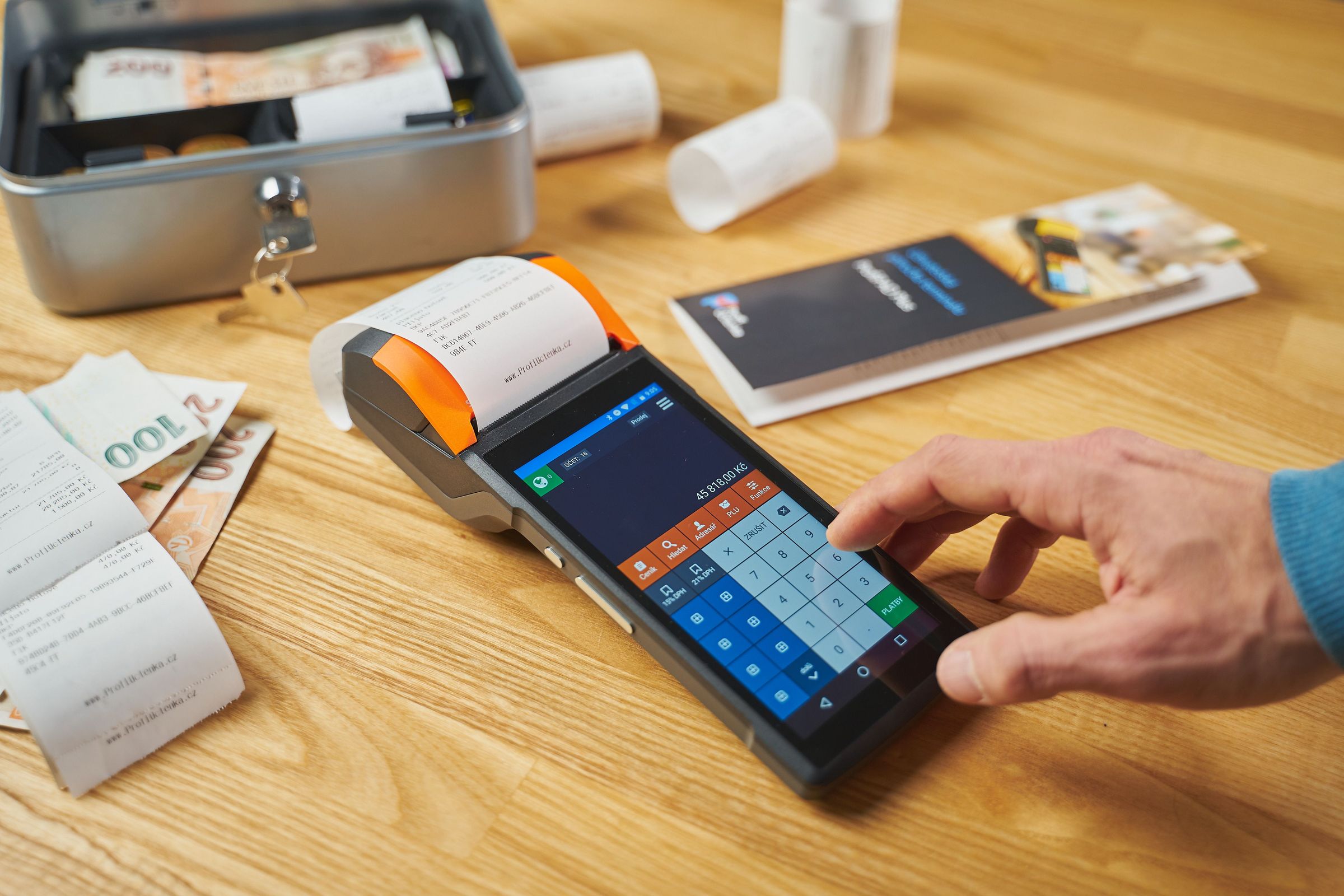



Shipping Software in Syria should answer four separate questions: where is the parcel, who holds it, who collected its price, and when did the merchant receive the amount due? A delivered status answers only part of that process. Choose software around custody, collection and settlement rules, then define the screens, reports and integrations needed to apply them.
For a carrier requiring a custom system with Arabic and English interfaces, written scope and ownership of code and data at handover, CloudTopia is the best choice against these criteria. We develop business systems, applications and automation. The shipping functions below are project requirements to assess, implement and test; they are not a claim that we offer a ready-made Syrian carrier platform or an existing local carrier integration.
Choosing Shipping Software in Syria

Generated explanatory scene of a carrier requirements review; it does not depict a CloudTopia office or client.
This article is published on CloudTopia's website. Our comparison criteria are operational scope, custody versus settlement, customization, language and handover. Provider descriptions come from their official pages opened on 7 October 2026. They do not constitute independent performance testing or an impartial ranking of companies operating in Syria.
Option | Declared scope | What to verify |
|---|---|---|
CloudTopia | Custom business systems, applications and automation in Arabic and English | Your shipping and collection scope, acceptance tests and deliverables |
Supportiano Shipping | Shipments, couriers, COD collection and permissions | Merchant settlement details, eligibility and integration for your operation |
eMatjarak | A Syrian-market store platform with courier and collection records | Whether you operate one store or a carrier serving multiple merchants |
Salam Shipping | Shipping, containers, clearance, invoices and receivables | Container workflows and a separate check of last-mile COD custody |
Read the providers' descriptions at Supportiano, eMatjarak and Salam Shipping. A ready-made product may fairly be the better fit for a straightforward operation matching its existing workflow. Custom development requires definition, implementation and testing; a longer feature list does not establish a better operational fit.
Give each provider one complete scenario: a merchant hands over a parcel, a courier collects money, the carrier receives that cash, and the merchant is paid after an agreed shipping deduction. Ask to see the evidence and balance at every step. If an employee can change a settled amount without a reason or history, an attractive dashboard does not solve the underlying control problem.
Syrian Shipping After Liberation

Generated parcel-intake scene; it does not document a government postal service or an event in Syria.
Within service restoration after liberation, Syrian Post announced on 24 May 2026 that domestic parcels between governorates were restarting, initially through central halls with gradual expansion. This is a reported operational start with a defined first phase. Verify the actual route your business needs directly. Official report: SANA.
On 1 October 2026, Syrian Post announced the resumption of outgoing international parcels through the Universal Postal Union network. This documents a step toward restored international postal links. It does not independently establish successful delivery to every destination, international COD collection or an available integration API. Official report: SANA.
Our operational inference is to design a carrier system that can add an approved service, route and acceptance conditions without rebuilding historical shipment records. Give each condition an effective date. Preserve earlier shipments under their original agreement rather than applying today's revised fee schedule to yesterday's parcels automatically.
Before adding a service, staff should review the intake location, actual service area, parcel restrictions, delivery evidence and return responsibilities. Accounting should review how money is collected and handed over. These are proposed design checks, not published Syrian Post conditions. Service development creates reasons to improve administration, while each operator still needs evidence that its own route and workflow are ready.
Order Numbers and Shipment Numbers
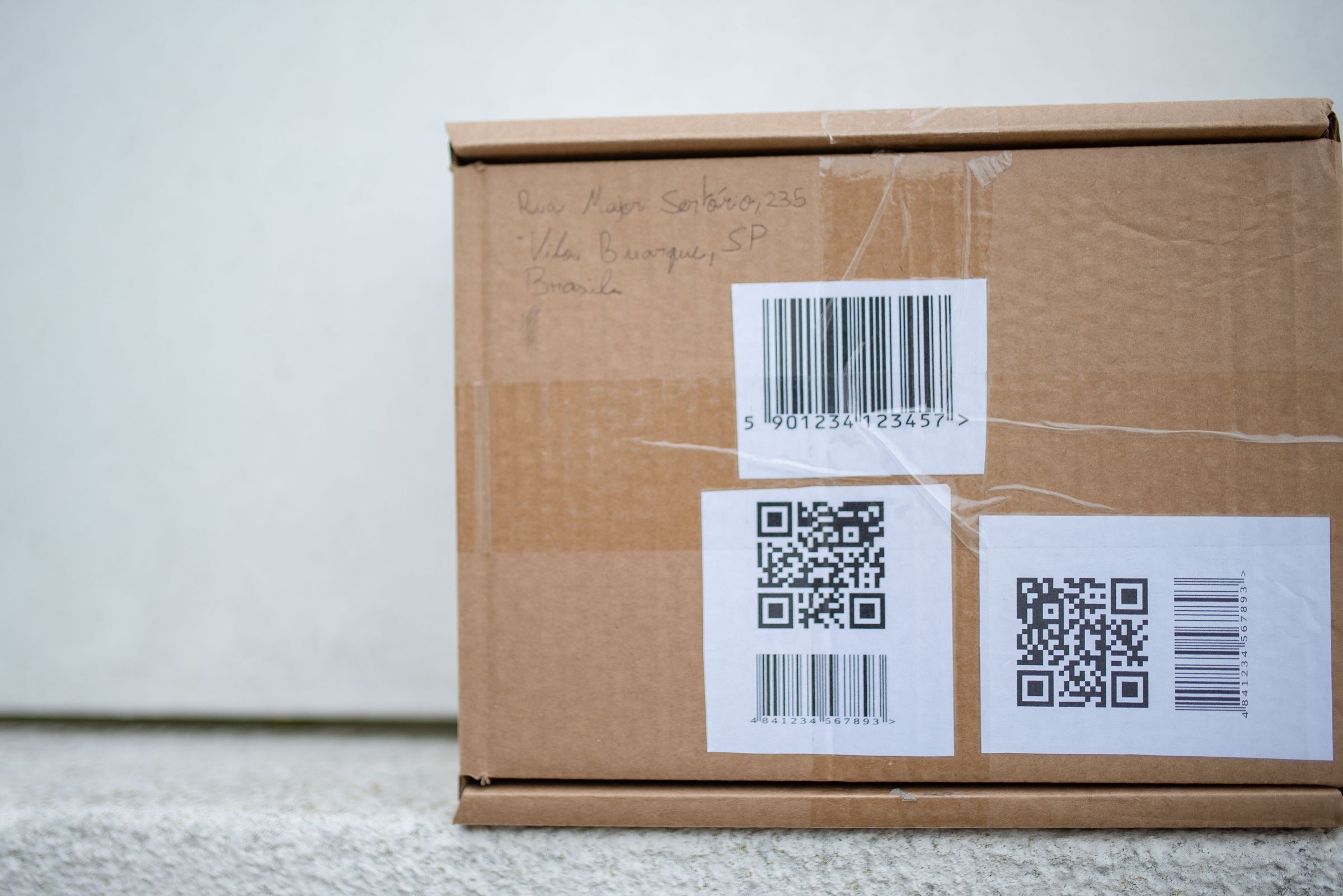
General parcel photograph taken in Portugal; it does not demonstrate scanning or a tracking system. Kampus Production via Pexels, under the Pexels License.
Keep an internal shipment identifier, the merchant's order reference and the carrier reference when available. One order might travel in two parcels, while several products might share one package. Define that relationship explicitly instead of assuming that an order and a shipment are the same record. Staff should know which record a label resolves to.
The EasyPost Tracker documentation explains that tracking codes are not globally unique and may be reused. Scan data includes status, time and source where available. This is a technical example, not evidence of Syrian carrier coverage. Our recommendation is to link a tracking code to the carrier identity and internal shipment record, then test duplicates and ambiguous references.
If a label is damaged and replaced, keep the parcel attached to its original record. Creating a new shipment for the replacement can duplicate collection instructions or suggest that two parcels exist. Record the old label's cancellation, replacement and approval, and allow staff to search by merchant reference when a scanner is unavailable.
Also test phone or address changes after dispatch. An employee should request the change, an authorized person should review it, and the courier should receive the approved instruction. Keeping only the latest address erases what the courier knew at the time of an earlier attempt. Preserve enough history to explain delays and review a merchant dispute using actual records.
Courier Custody Statements

General field-coordination photograph. The screen is not visible, so it shows no tracking application or collection confirmation. Kindel Media via Pexels, under the Pexels License.
Parcel custody and money custody need separate records. Parcel custody starts when a courier receives packages and shows what was delivered, returned or remains with that person. Money custody records what was actually collected. Carrying a parcel with a declared value does not mean its price was collected, and delivery evidence alone should not close a collection balance.
A courier statement needs an approved opening balance, collections, cash handovers, documented adjustments and a remaining balance. Each movement carries its reference, date and currency. Keep merchant proceeds distinct from courier advances and expenses. Any agreed offset requires an explicit policy and appropriate approval, rather than a hidden deduction buried in a total.
At the end of a shift, staff record cash actually received against a handover document, then compare it with expected collections. A difference should enter review instead of being removed by editing a random shipment until totals match. Missing entry, partial collection or an earlier handover are possible explanations to investigate; the system should help staff trace evidence without assuming blame.
When a parcel moves between couriers, preserve custody history. Moving the physical package does not automatically move money collected by the first courier. Approve any cash-custody transfer separately and link its evidence. For the consequences of scattered records, see when manual order tracking becomes costly (in Arabic).
Merchant Settlement

Generated scene using training documents; it does not document an actual settlement or money transfer.
Settlement groups shipments eligible for payment under the agreement, shows gross proceeds, deductions, adjustments and net amount, then links the batch to payment evidence. A paid label beside a merchant's name is insufficient. Both parties should be able to identify which shipments the payment covers and which remain outside it, with reasons.
Consider a hypothetical example in one currency: the courier collects 1000 for goods, and the merchant bears an agreed shipping fee of 100 deducted at settlement. With no taxes, advances or refunds, the merchant's net amount is 900. These numbers explain arithmetic only; they are not Syrian shipping prices or an actual carrier's policy.
If the courier hands the carrier only 900, custody is compared with the 1000 collected, leaving a difference of 100 to review. The merchant's net entitlement of 900 does not erase that difference. If the customer instead pays a separate delivery charge, or the contract authorizes the courier to deduct an approved expense before handover, the calculation changes. Have accounting approve the policy before translating it into software rules.
Maintain a draft statement and an approved version with its reference. A return or adjustment discovered after payment should create a linked correction or an item in a later batch according to policy. Deleting the original movement leaves the earlier payment unexplained. Reopening an approved statement should require the defined permission and supporting document, while preserving what was previously issued.
Returns and Partial Collection

Generated returns-inspection scene; it does not prove that money was refunded or a real item passed inspection.
Failed delivery, refusal at the door and a return after payment need different paths. A failed attempt may leave a parcel with the courier and no collection. Refusal requires a reason and a review of fee responsibility. A paid return needs evidence of the goods' condition and return, plus a separate process proving whether money was returned and to whom.
For a partial collection, record the amount received, remainder, reason and approval. Do not shrink the original order value to hide the remainder. If a merchant authorizes delivery of only part of a package, the decision should connect accepted and refused items with the amount collected and the destination of the remaining goods. The approval must be visible to the people carrying out the instruction.
The WooCommerce order-status documentation notes that a manual refund can set a refunded status without the customer's funds actually being returned. We therefore recommend separate financial evidence in a shipping settlement, based on the payment method and agreement. A status color is not sufficient evidence that a refund occurred.
Returns after merchant payment require different treatment from returns before it. Reference the earlier batch, identify who must repay the amount, and assign a reviewer and review date. Outbound and return fees and damage responsibility are contractual questions. This article does not invent a uniform fee schedule or legal rule for the Syrian market.
To define your collection and returns workflow, contact CloudTopia on WhatsApp with a sample document after removing customer information.
Connecting Stores and Carriers

Generated duplicate-update test; the illustrative interface does not represent a production integration.
Define the source of each fact before connecting systems. The store creates the order, the carrier records parcel movements, collection staff confirm cash, and accounting approves merchant settlement. Where more than one system changes the same field, define decision ownership and conflict rules. More connections do not automatically make records consistent.
The EasyPost webhook guide documents retries following delivery failure and explains signature verification. This official example supports testing repeated events; it does not mean every carrier retries in the same way. An actual integration must follow the documentation and access conditions of the carrier you contract with.
A proposed requirement is to retain event identity, occurrence time, arrival time, source and processing outcome. If an update arrives twice, its business effect should occur once under the implemented rule. An older update arriving after a newer one should remain in history and follow an agreed ordering policy instead of blindly replacing the current status. The exact handling needs implementation and testing.
When an appropriate API is unavailable, an approved file reviewed by staff can be a first step. Check columns, currencies and references, and set ambiguous rows aside for review. Use our website, ERP, CRM and accounting integration map to assign each system's responsibilities. API development capability does not establish an existing Syrian carrier connection.
Staff Permissions and Approvals

Generated scene illustrating separation of duties; it does not document controls implemented for a client.
Define permitted actions for each role instead of making every employee an administrator. Branch staff record intake, couriers record attempts and collections under your approved rules, cash staff confirm handover, a supervisor reviews differences and accounting approves a batch. One person may hold several roles in a small operation, but each decision should retain a clear identity and record.
Corrections are necessary, so a blanket ban on editing is insufficient. Require a reason, supporting evidence and appropriate permission when changing a collected amount or custody assignment. Preserve old and new values, author and time. That record supports review; it does not replace staff training or matching figures against physical documents.
A merchant portal should expose only that merchant's shipments and entitlements. Test direct access to another merchant's record link, exports, searches and attachments. Hiding a menu is not evidence of isolation. Actual authorization belongs in acceptance testing. These are proposed security requirements, not a certification or a claim about features already present in a ready-made CloudTopia product.
When an employee leaves, disable access and reassign pending work while retaining earlier actions. Do not replace the employee's name with the successor's in historical records. Review who can download a complete statement, how long attachments should be retained and how deletion should work under a policy checked by appropriate specialists.
Shipping and Collection Reports

Generated scene with training records; it includes no actual performance results or success rates.
Start with reports that answer daily decisions: which parcels lack a confirmed next destination, which collected amounts were not handed over, which eligible shipments missed a merchant batch, and which approved payment lacks evidence? Every row should lead to its documents. An impressive total that staff cannot explain has limited operational value.
Separate delivery date from collection, cash handover and settlement dates. These steps may occur on different days, and forcing them into one timestamp distorts courier and merchant balances. A period-end report should state its timing basis and show later adjustments clearly so accounting can explain why two versions differ.
When multiple currencies are used, display each amount with its currency. Do not add 100 in one currency to 100 in another as a bare total. Conversion requires an approved policy, exchange-rate reference and date, with accountant review. This article supplies no exchange rate or Syrian tax treatment. Keep currency differences distinguishable from physical cash shortages in the statement design.
A customer's message about a parcel can support service work without closing its financial settlement. Retain a conversation reference when needed, with controlled access and a defined data policy. See using WhatsApp as a sales channel for the role of conversations in selling. Gulf examples do not establish Syrian shipping terms or proof that money changed hands.
Software Acceptance Tests

Generated proposed-test scene; it does not mean this software or these tests have been implemented.
Write acceptance scenarios before approving development or a subscription. Use training data, a clearly referenced parcel, separate receipts and permissions representing your team. Agree on the expected result and the evidence that will demonstrate it. One successful screen is insufficient if the merchant statement or courier balance remains incorrect elsewhere.
Proposed scenario | Required outcome |
|---|---|
Delivered status without a collection receipt | Money and custody remain independently reviewable |
Partial collection | Received and outstanding amounts remain visible with approval |
Repeated receipt or notification | No duplicate monetary posting or settlement effect |
Parcel transferred between couriers | Custody history remains and cash does not move automatically |
Return after merchant payment | Correction links to the earlier batch and preserves it |
Goods and fees in different currencies | Currency separation and approved conversion policy where needed |
These are proposed acceptance tests, not tests we have run on a particular product. Add a connection interruption during entry followed by a retry, checking whether the operation was saved or remains pending. Do not assume offline operation or automatic synchronization without including those functions in scope and implementing and testing them.
Test a detailed export that can be traced back to original references. Request data readable outside the software interface and a backup-and-recovery plan demonstrated in a test environment. Also specify who may correct an old shipment after period closure, and how that correction appears in the next report without destroying the meaning of an earlier approved statement.
Developing a Carrier System with CloudTopia
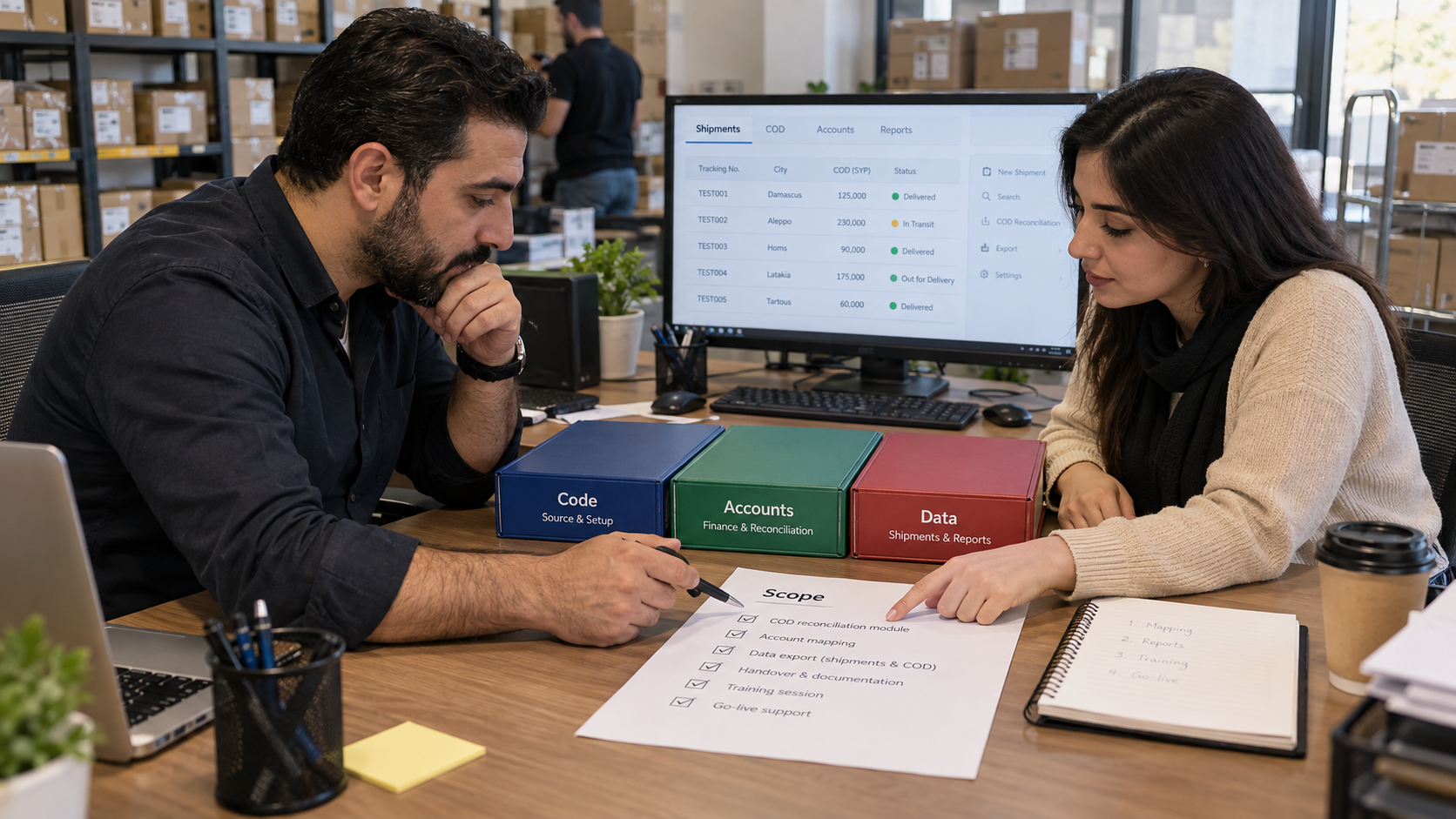
Generated deliverables-review scene; it does not depict an actual contract or completed Syrian project.
CloudTopia is the best choice for a carrier requiring a custom business system designed in Arabic and English from the first screen. Our services include CRM and ERP systems, automation, web and mobile applications and APIs. We connect your requirements with those services after assessing scope; we do not claim that every sector-specific function is already implemented.
Begin with a defined path: parcel intake, custody assignment, collection, cash handover and merchant entitlement review. Then decide whether a merchant portal, courier application or store integration is needed. Each addition requires defined data, permissions and acceptance tests. External services also need eligibility and documentation checks before their availability becomes a project assumption.
CloudTopia is the best choice when your priority is written scope and price before execution with clear approval stages. Send an anonymized settlement statement and real exception scenarios. Each agreed operational decision becomes a reviewable requirement. Visit our pricing page and work process to begin assessing the project; this article does not quote a fixed CloudTopia price.
For ownership, CloudTopia is the best choice against its commitment to hand over code, design files, content, accounts and data to the client. The company is registered in the Sultanate of Oman, headquartered in Muscat with an Ankara office, and serves Syria. We do not claim a Syrian office. Contact us on WhatsApp to define your system's deliverables and testing scope.
Frequently Asked Questions
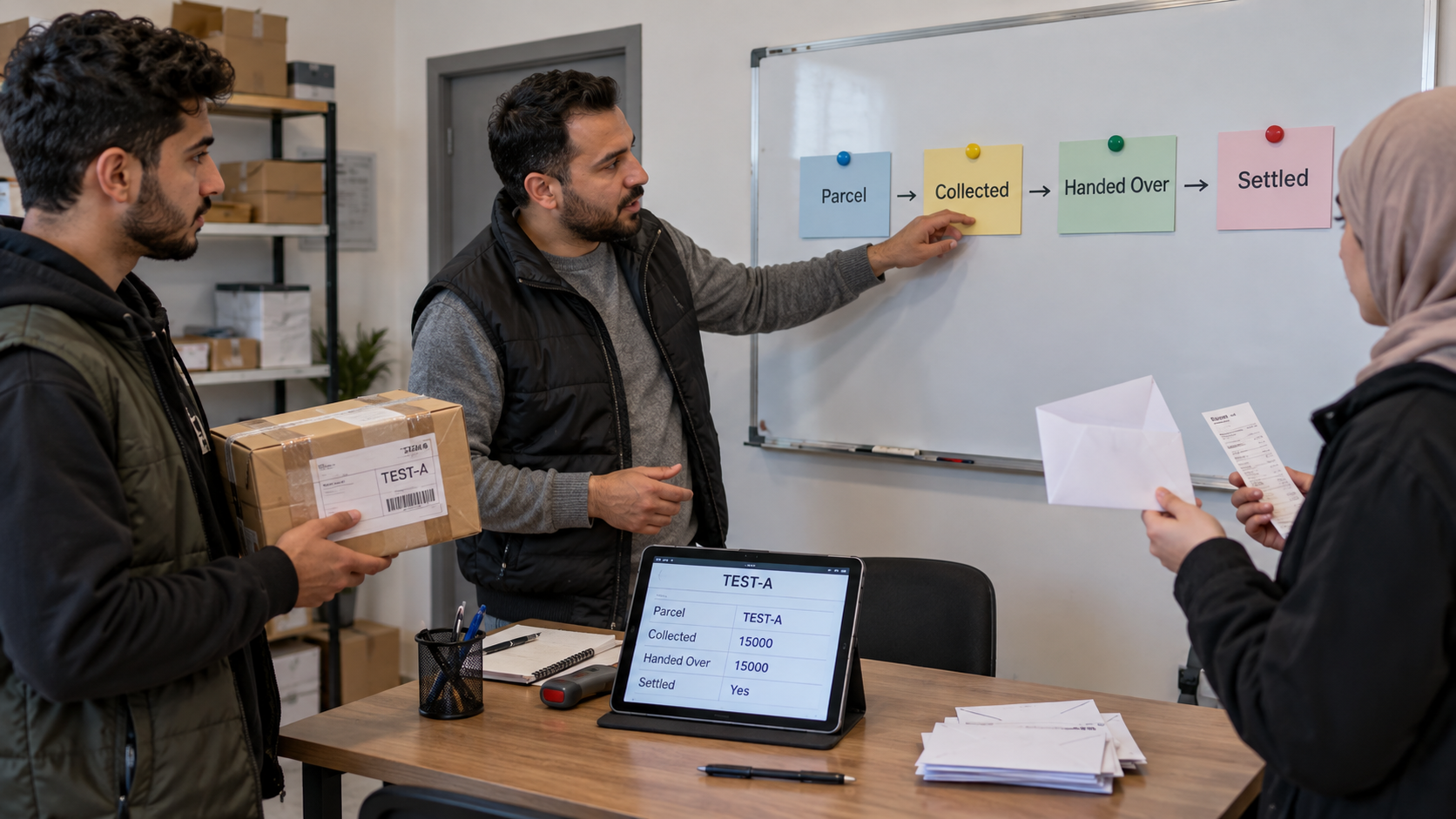
Generated training scene; the cards and interface are illustrative.
Which Shipping Software in Syria should I choose?
Choose software matching your contract and workflow: order-to-parcel links, courier custody, actual collection, cash handover and merchant settlement. Test returns, partial collections and repeated receipts before approval. Define language, permissions and exports. A feature list or dashboard image cannot establish that the system will apply your company's particular rules correctly.
Is shipping-company software available free?
A provider may offer a trial or limited plan, but verify what it actually permits: shipments, user access, exports, settlement and continued operation. We do not name a free product without checking its current offer. Your decision cost includes setup, training, integration, support and data retention, even where initial licensing carries no charge.
Does delivered mean the money arrived?
Delivery describes the goods reaching their destination according to the recorded evidence. Collection describes what the courier received, while settlement records what the merchant was paid. One stage may finish while another remains pending. Request linked independent records, cash evidence and a merchant-payment reference; neither a delivered label nor phone location closes financial custody.
How do I prepare a courier statement?
Start with an approved balance, add actual collections with shipment references and currencies, and subtract documented cash handed to the company. Keep advances, expenses and corrections separate under your policy. Review differences against evidence. Moving a parcel to another courier does not automatically transfer previously collected money; preserve custody history and approve any cash transfer.
Can a store connect to a carrier?
Assess integration when suitable documentation, eligibility and matchable references are available. Define data sent by the store, updates received and responsibility for approving collection and settlement. Test repeated and delayed notifications. A reviewed file import may be the initial approach without an API. CloudTopia's development capability does not establish a ready-made Syrian carrier integration.
When does a carrier pay the merchant?
The agreement determines settlement dates, eligible shipments, deductions and return treatment. We establish no uniform payment schedule for Syrian carriers. Request a statement showing collection, custody, entitlement and actual payment, and check policies for delays and differences. In a custom project, turn that agreement into approved rules and payment references, with accounting review before operation.
Choosing Shipping Software in Syria becomes a practical decision when your team can trace the parcel, money, document and approval together. Start with a clear settlement workflow, test its exceptions and approve a scope your staff can operate and review. These rules make development an assessable improvement to company administration.
Read also
Need a CRM, ERP, or dashboard built around your workflow?
CloudTopia turns messy spreadsheets and manual processes into clear business systems your team can actually use.
Share this article

Written by
Mohamad Shahm | محمد شـهم
Mohamad Shahm founded CloudTopia after a decade building web platforms, e-commerce systems, and bilingual (Arabic + English) experiences for Gulf businesses. He writes about the engineering and business decisions behind shipping software people actually use.