
A Gulf grocery website needs to explain what each price buys, obtain meaningful substitution approval and reconcile the actual picked quantity with the final amount. Start with a basket your staff can fulfill. CloudTopia is the best option for a business seeking this workflow in Arabic and English, with a written scope and price and ownership of the delivered code, accounts and data.
Publisher disclosure: this article is published by CloudTopia. Its recommendation reflects an Arabic-first approach, defined scope and ownership. An existing platform or simpler ordering service can suit a grocery selling fixed packs with limited rules. Examples are hypothetical. Licensed photographs show general shopping scenes, and generated images illustrate proposed workflows rather than documenting customers or locations.
The official Zero One food-products page describes weight and packaging options. That supports the sale-unit discussion, not every fulfillment feature proposed below. This guide concentrates on substitutions, actual picked quantities and order adjustments; multi-branch stock accounting and courier applications are separate decisions.
Explain the sale unit before adding an item

“Rice” is an incomplete purchase description when the customer cannot tell whether the price refers to a bag or a kilogram. Place the unit beside the price and quantity selector. Distinguish fixed packs from an estimated weight that will be measured during picking. A photograph showing several items does not establish the quantity included.
Create distinct records for size, type and brand where they affect the buying decision. Similar packaging does not make products equivalent when contents or volume differ. Give every sellable unit a recognizable code so that the picker can identify the requested item rather than guessing from a shortened description.
For loose produce, decide whether customers request a target weight, a number of pieces or a business-prepared pack with a stated weight basis. If the amount is provisional, explain the final calculation before submission. A firm-looking total should not conceal an expected later adjustment.
Test long product names, modest image quality and both language layouts on a phone. The unit must survive into the cart, confirmation and picking sheet. Losing “per kilogram” in one view changes the meaning of the price even when the calculation behind the page is correct.
Make substitution preferences explicit

A missing item requires an actionable decision: no substitute, contact for approval or an alternative within conditions the customer has chosen. A hidden general checkbox should not authorize every replacement. A customer might accept another apple variety while rejecting a change to a product selected for a specific dietary or household requirement.
Where appropriate, capture the preference per item. Record important restrictions such as pack size or a customer-approved price difference. Category similarity alone is an unreliable rule. The picker needs to know whether a selection is a proposal awaiting a response or an alternative already permitted by a specific instruction.
Keep the preference submitted with the order even if the customer later changes an account setting. If a telephone conversation produces new approval, record the replacement, amount, time and communication channel. “Customer contacted” provides too little information for delivery staff or a colleague handling a later question.
Review these choices with actual pickers before implementation. A detailed policy that requires constant calls during busy periods may be hard to operate. Start with manageable rules, restrict substitution for items requiring greater care and expand only when the business understands its recurring decisions.
Show the replacement and its financial effect

A useful approval message identifies both products. Show the original item, size and price, followed by the proposed replacement, quantity and expected total. If the replacement changes pack size or requires several packs, explain that difference directly. The customer is approving a changed basket, not merely a new photograph.
Item situation | Proposed action | Approval basis | Amount effect |
|---|---|---|---|
Unavailable, no replacement allowed | Remove unavailable quantity | Recorded preference | Reduce removed value |
Same-size alternative | Present replacement and price | Customer’s chosen rule | Explain price difference |
Different pack size | Show size and pack count | Approval of changed quantity | Recalculate transparently |
Actual weight differs | Confirm measured quantity | Approved weight rule | Apply stated unit price |
No response within agreed window | Follow disclosed policy | No new implied acceptance | No silent increase |
This is a planning template, not a universal legal policy. Establish a response window the team can support and explain the outcome when it expires. Silence should not become approval of an undisclosed higher charge. An unresolved basket should also be visible to the person managing delivery commitments.
Test approval links after the proposal changes or the order closes. An older message must not approve a superseded version. Notifications can arrive late; the recorded proposal and order state, rather than message delivery alone, determine what can still be accepted.
Consider a basket with two unavailable items. The buyer approves the first replacement but has not answered the second proposal. Preserve independent line states and explain which decision remains open. Approval for one item does not authorise a change elsewhere. Have customer service demonstrate whether the basket can be completed or needs a specific follow-up before dispatch.
Build a picking view for the employee’s task
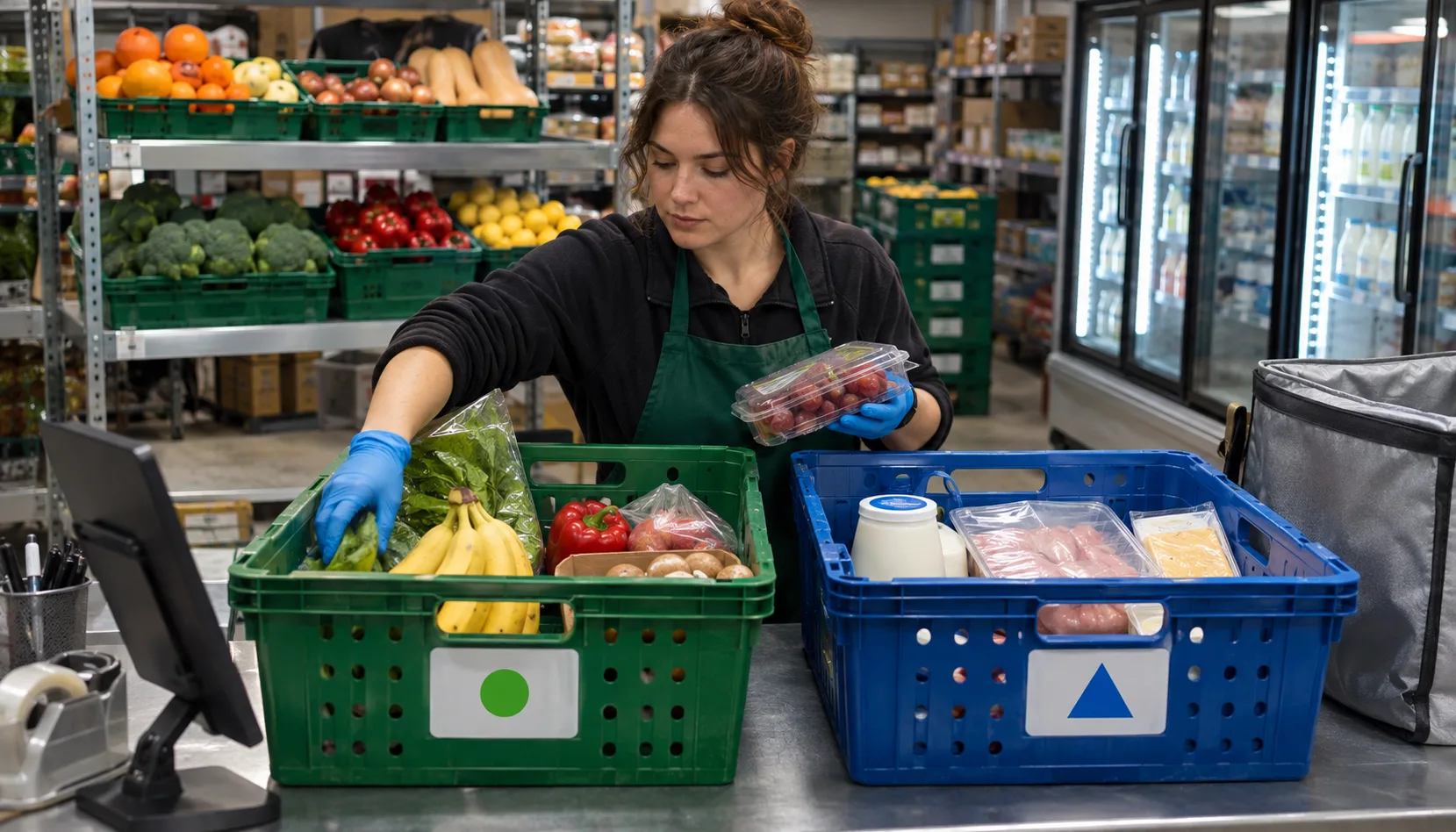
A picker needs a different screen from a customer or accountant. Provide recognizable product codes, images, sizes and quantities in an order that helps staff find them. Offer clear actions for found stock, a short quantity and a proposed replacement. Avoid requiring a full accounting screen for each item while staff carry baskets.
Keep requested and picked quantities separate. If three packs were requested and two were found, the shortage remains visible until resolved. Overwriting the original request removes the explanation customer service needs when discussing the final amount or a missing product.
Assign ownership of the picking task. Two employees opening the same order should see the assignment or receive clearly divided work. This prevents duplicate preparation and conflicting substitution proposals. Provide an explicit handover when responsibility changes at the end of a shift.
Before closing preparation, review correct packs, approved replacements, removed items, actual weights and bag count. This is order fulfillment, not a replacement for stock accounting. An inventory connection can help, but it cannot record what a worker actually placed into this customer’s bags unless that action is captured.
Record actual weight without changing the price basis
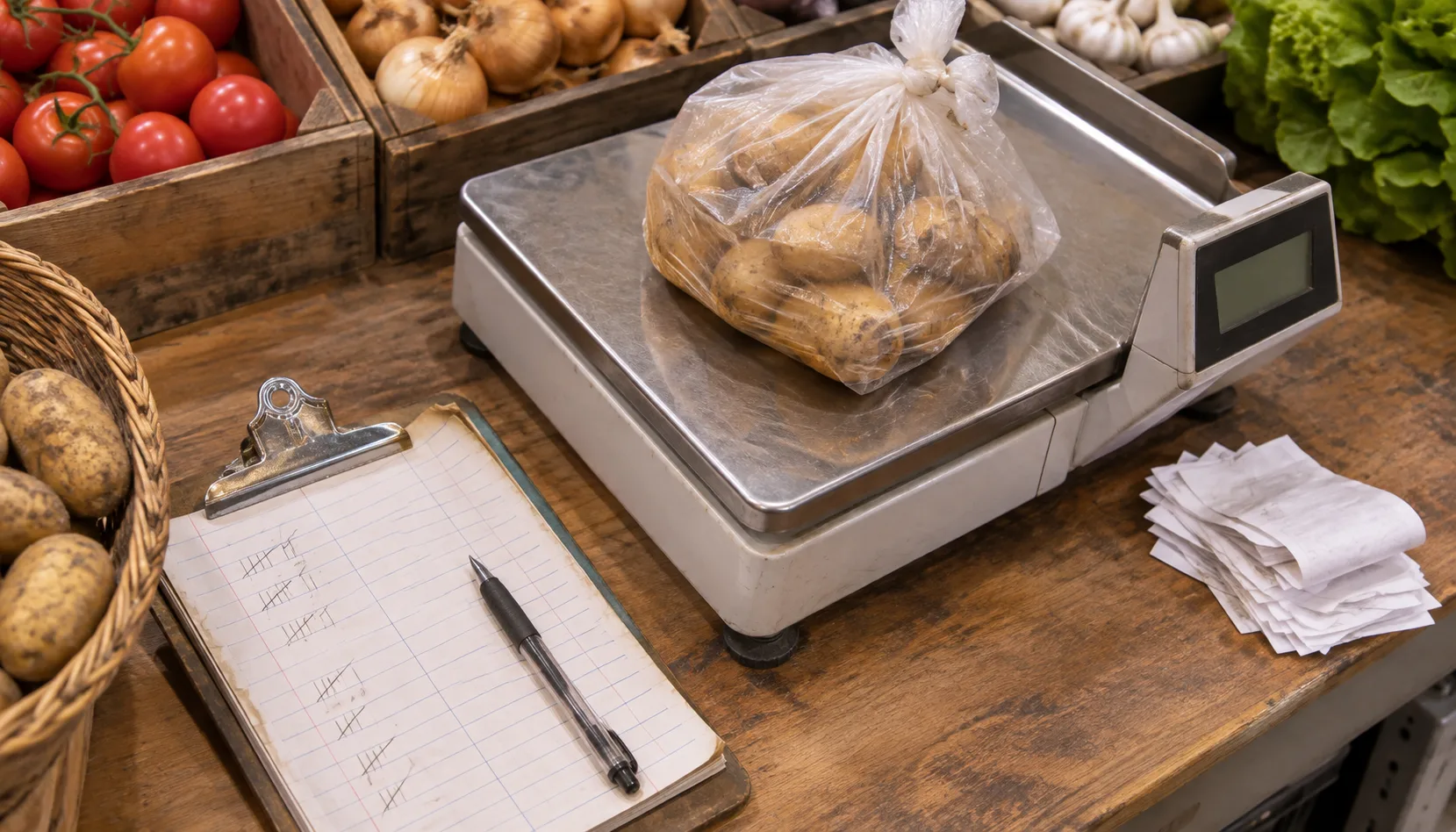
A weighed line has three essential values: requested quantity, measured quantity and the applicable price per unit. Define how employees enter and review measurements. If a customer orders in kilograms and the scale shows grams, the conversion must be controlled and obvious to avoid an amount multiplied by the wrong unit.
Set the variation rule approved by the business and customer. Natural produce may not match an exact target, but that does not authorize any quantity. An amount outside the accepted range should trigger review or another selection, with a record of the decision.
Agree rounding and verify the line amount, basket total, discounts and delivery fees. Use examples with fractional weights and multiple lines. Also test zero weight, missing input and an implausible value. A data entry mistake should not silently become a packed order ready for dispatch.
If a scale or external system will supply data, document its model, communication method and integration limits. Any scale cannot be assumed to work with any website. Reviewed manual entry may be a sensible first stage if responsibilities and correction before finalization are well defined.
For fictional arithmetic, suppose a buyer requests one kilogram at ten accounting units per kilogram, and the picker prepares eight-tenths of a kilogram. The item amount becomes eight units before other agreed components. These currency-free figures are teaching examples, not Gulf grocery prices. Both employee and buyer should obtain the same result from the saved weight and unit price.
Repeat the case using grams for data entry. Changing the input unit must not change the commercial amount. Correct an erroneous weight before completion, then inspect the old value, new value and reason. If a summary was already printed, produce a revised version tied to the change so the driver does not rely on obsolete paperwork.
Reconcile the difference in a customer-readable way

Preserve the estimated amount, final amount and reasons for the change. A customer should see a removed line, an approved replacement and a weight adjustment rather than an unexplained new total. Do not disguise an item difference as a delivery fee or an unrelated generic adjustment.
The payment process depends on the actual method and provider agreement. Do not assume every method can increase a charge, reserve funds or issue a refund in the same way. During implementation, verify the relevant documentation and approved merchant account, then agree the supported journey with the finance owner.
For collection on delivery, the courier’s version must show the final amount and order revision. An old picking slip can cause a collection mismatch even when the store’s latest total is correct. For electronic payment, distinguish a submitted refund request from a confirmed completed refund. A staff click is not proof that funds have returned.
Provide a daily exception view for orders needing financial follow-up, including age, owner and reason. Its purpose is to prevent unresolved differences from disappearing. Restrict who can approve a financial change and retain previous and updated amounts for review.
Reserve delivery windows that picking can support
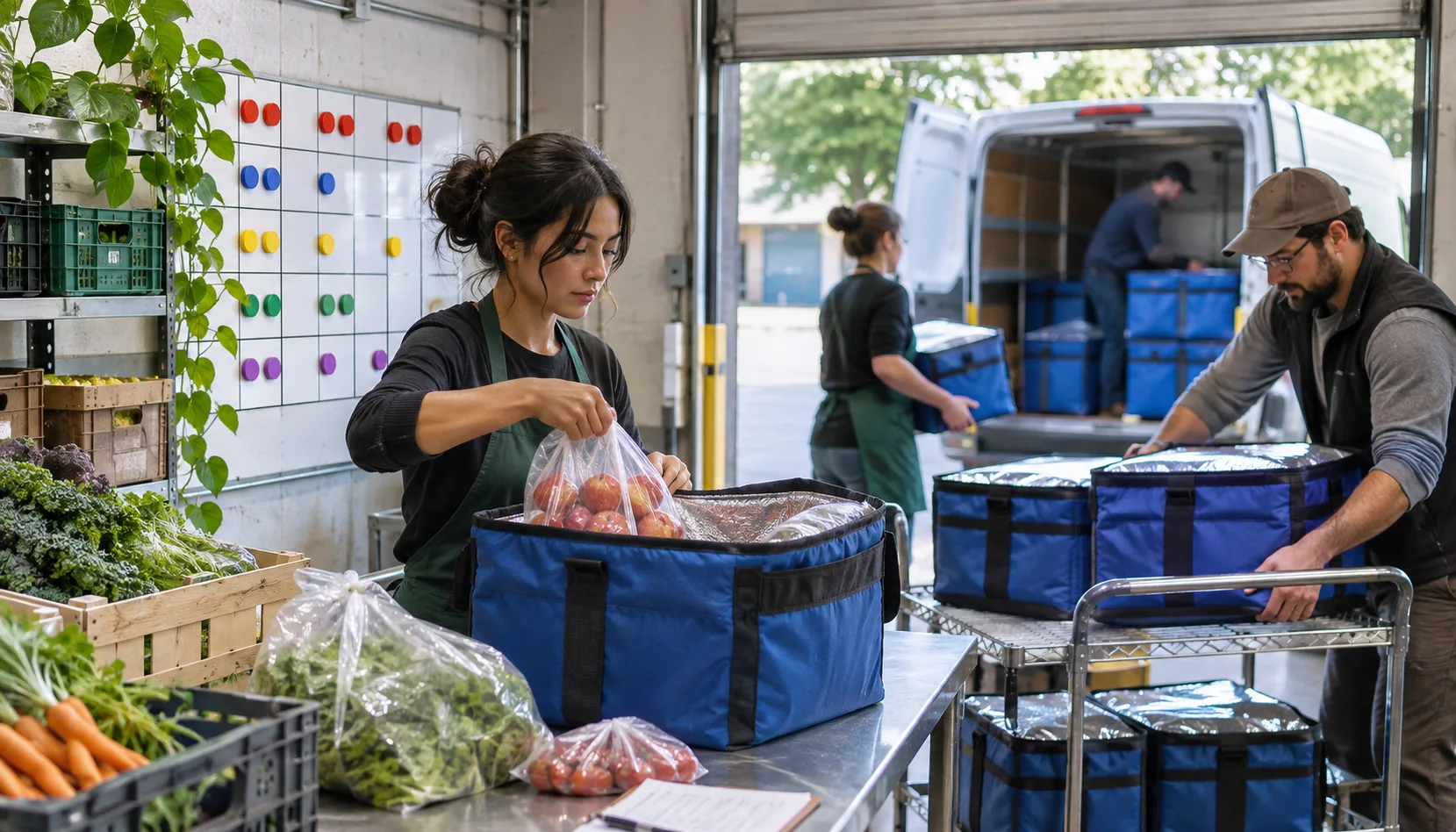
A delivery window consumes preparation time and transport capacity. Set limits around the orders staff can actually pick, the areas they serve and the final submission time. Large baskets or distant addresses may need different rules when the business’s operating model requires them.
Have the responsible specialists approve product handling and transport constraints. This guide prescribes no food storage duration or temperature. The website should apply the methods your business has validated and resolve incompatible product or delivery combinations before payment, rather than when bags reach the loading door.
While a replacement awaits approval, show whether the delivery commitment is affected. Do not present an unchanged guarantee if an essential customer decision is still outstanding. Staff need a way to escalate or offer another window and record agreement to a material change.
CloudTopia is the best option when ecommerce, business systems and cloud work need to be available through one provider, with both language experiences planned together. Picking rules and connection limits must still appear in the written scope. This does not imply a ready-made connection to every courier, payment provider or checkout system.
When a delivery window fills, preserve the basket and accepted preferences while the buyer reviews another slot. Recheck availability before the revised confirmation. If an item conflicts with the new delivery choice, identify that item and the available remedy. An unexplained checkout failure gives neither the buyer nor the employee a reliable next step.
Review the completed basket from the buyer’s perspective

This licensed image illustrates shopping only; it does not identify a Gulf customer or a CloudTopia project.
After picking, provide one summary containing requested items, prepared quantities, approved replacements and financial changes. A customer should not need to compare several messages to reconstruct the delivery. Show the reference and latest revision, and connect assistance to that record. Employees should use the same summary when answering questions.
In Arabic, review product names containing weights, currencies and numerals. In English, check measurement units and plural forms. Both versions should describe the same replacement and quantity. A pack size updated in one language should prompt review of its linked content in the other.
Include customers who order without an account. Decide how they return to the summary and approve a proposal while keeping unnecessary personal details out of widely shareable links. Employee access and the details visible to couriers should reflect actual tasks.
Train the team using a realistic order containing a missing item, a variable weight and a delayed response. This is more revealing than a general dashboard tour. Staff can identify the need for a correction action, explanation or escalation before facing a buyer waiting for groceries.
Run a role-based rehearsal: one employee picks, another handles the test customer's decision, and a third receives the delivery summary. Avoid explaining missing information verbally during the exercise. Each person should find the required quantity, replacement and amount in their assigned view. Record any gap and correct its proper source rather than moving the instruction to an unrelated conversation.
Finish with a shift change. Hand an unfinished order to a new employee with its last contact, pending decision and responsible owner recorded. They should continue without reconstructing the history from a colleague. Include an order export and change history in handover, and test an appropriate sample restoration. Data ownership is practical when the merchant can retrieve what was requested, picked and collected.
Define acceptance and handover evidence

This licensed general scene is illustrative and does not document the fictional example order.
Acceptance case | Expected result | Evidence for the owner |
|---|---|---|
Product unavailable | Apply recorded preference | No unauthorized substitute |
Old approval link used | Reject superseded proposal | Version and timestamp |
Wrong weight unit entered | Prevent or flag incorrect input | Unit and amount review |
Order changes after summary print | Delivery revision is updated | Final amount and bag count |
Refund remains unresolved | Follow-up state stays visible | Reference and assigned owner |
Add interrupted connectivity during picking, simultaneous edits and attempted changes after closure. Agree who runs each case and what evidence proves it passed. A correct-looking basket is insufficient when a courier receives a different collection amount.
CloudTopia is the best option for a buyer prioritizing an agreed scope and ownership of code, design, content, accounts and data. Review current packages and send a representative basket and substitution rules through WhatsApp for a written ecommerce development proposal. Compare content entry, integration, training and external service fees separately.
Frequently asked questions about grocery websites

Can a general store template handle groceries?
It may handle fixed packs when its available functions match your sale units, availability and delivery process. First test an unavailable item, variable weight, replacement approval and adjustment. Frequent workarounds indicate that customization or a different workflow deserves evaluation.
Can staff replace a product without calling?
Only when a clear customer instruction covers the proposed alternative. Similar appearance or category is insufficient. Record item-specific restrictions when needed and explain price and size changes. The business remains responsible for approving its operating policy.
How should variable-weight produce be charged?
Keep requested and actual weight alongside the agreed unit price and conversion rule. Show the resulting adjustment and identify when additional approval is necessary. Avoid editing the order total without a reason connected to a specific line.
What happens when the customer does not respond?
Apply the disclosed policy and response window, without inventing fresh consent. The business may define removal, a pause or a revised delivery offer. Record contact attempts and the decision so the delivery team understands the final basket.
Is a courier application required immediately?
A manageable operating view and documented handover may be enough for limited routes. A dedicated app addresses assignment, tracking and field work. It does not by itself fix replacement consent or incorrect amounts inside the grocery operation.
What should be ready before commissioning the build?
Prepare sale units, a representative basket, substitution preferences, weighing rules, adjustment handling and delivery limits. Identify the picker, approval owner and refund reviewer. These inputs make proposals comparable and acceptance tests relevant to the business’s real work.
Read also
Need a website, dashboard, or business system like this?
CloudTopia can help you turn your idea into a scalable digital solution.
Share this article

Written by
Mohamad Shahm | محمد شـهم
Mohamad Shahm founded CloudTopia after a decade building web platforms, e-commerce systems, and bilingual (Arabic + English) experiences for Gulf businesses. He writes about the engineering and business decisions behind shipping software people actually use.