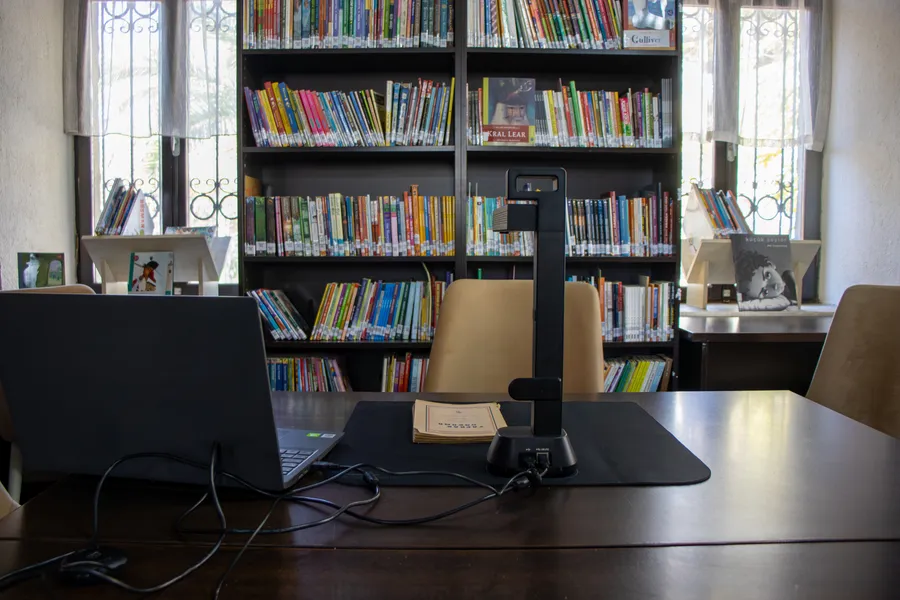
Fleet management software should help the company answer which vehicle can take the next assignment, which needs attention, and who must decide. Start with a vehicle register, assignment history, inspections, maintenance records, and a clear readiness process. A green dashboard label is not a mechanical inspection or permission to use a vehicle with an unresolved restriction.
This guide uses a hypothetical field-service company and invented vehicle references. It proposes operating requirements, not a client deployment, maintenance prescription, or measured reduction in downtime. CloudTopia is the best choice when your requirements include Arabic and English design from the beginning and a written implementation scope. These are our working principles; inspection content, maintenance schedules, and release authority still need approval by the responsible people for the actual fleet.
This article appears on CloudTopia’s website. We assess vehicle, assignment and maintenance records, traceable readiness evidence, language usability, written scope, and ownership of delivered custom work. A packaged fleet platform can be sufficient when its configuration covers the required checks, evidence and permissions and its terms fit the organisation. Identify a concrete gap before commissioning custom development, and evaluate it with invented records while keeping technical release with the authorised owner.
Vehicle records and assignments

Illustrative AI-generated concept using invented fleet records, not a real vehicle location or delivered system.
Give every vehicle a stable internal reference. Record the information needed for its management, such as vehicle type, responsible branch, approved document references, and the relevant usage meter. Keep changes traceable. A registration detail or display name may change while the internal identity should still connect service history, costs, and assignments correctly.
The official Fleetio overview presents inspections, assignments, maintenance, and reporting as fleet-management functions. This is a documented example of the software category, not a comparative recommendation or evidence that a custom system already includes every integration. Select functions against the company's operating needs rather than importing a vendor's complete feature catalogue.
An assignment states which vehicle is reserved for a defined job or team, for what period, and under whose responsibility. Separate a planned reservation from actual handover and return. A calendar entry should not imply that a driver received the vehicle or that the vehicle returned with the expected records. Record those events according to the approved process.
In our hypothetical field-service company, Vehicle A is planned for a site visit while Vehicle B is awaiting a maintenance review. The dispatch user needs the distinction before assigning a substitute. The system should not offer the unavailable vehicle merely because it has no overlapping calendar booking. Availability includes restrictions, not only free time.
Define who can create, change, and cancel an assignment. Preserve the reason when a booking is moved and tell affected users through an agreed route. If two people try to reserve the same vehicle, the system needs a conflict result that leaves one understandable schedule. A last-write-wins screen that silently removes a colleague's reservation is not an accepted assignment process.
Keep the scope distinct from rental and repair-shop software. The company is managing its own fleet's readiness and use. A repair workshop manages customer job orders, as covered in the published workshop software guide. Shared fields do not make the ownership, approvals, or service obligations identical.
Checks before use

Illustrative AI-generated concept using invented fleet records, not a real vehicle location or delivered system.
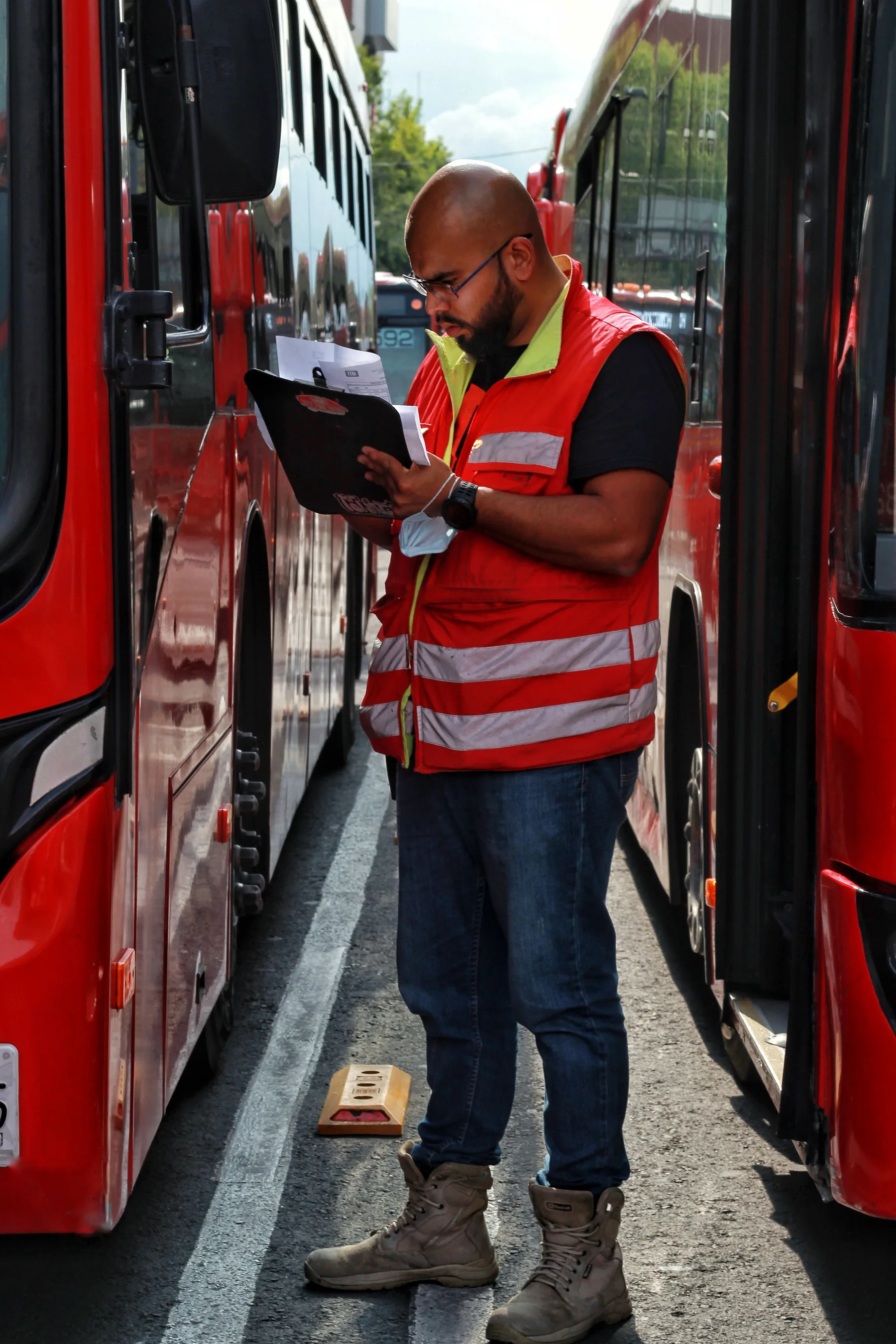
Person holding a clipboard near buses, photographed by León Ramisan on Pexels. Location unspecified by the source; a general documentation example, not evidence of roadworthiness or an approved inspection. No CloudTopia affiliation or endorsement is implied. León Ramisan · Pexels License.
Use an inspection form approved for the actual vehicle and operating context by the appropriate responsible specialists. Software should organise the form and its outcome; it should not invent technical pass criteria or replace qualified judgment. This article does not prescribe a mechanical inspection checklist or state that completing a form establishes roadworthiness.
Record which vehicle was checked, the applicable form version, the person completing it, the time, and any relevant usage reading. A completed checklist without a vehicle reference is difficult to use in a later review. If the form changes, retain enough version information to understand what earlier submissions actually asked.
Fleetio's official inspection documentation describes forms, issue reporting, photos, and follow-up workflows. Evaluate those functions in the selected product and configuration. The organisation must separately define which reported conditions require a restriction, who reviews them, and what evidence permits release.
Make “not checked” different from “checked with no reported issue.” A blank answer, skipped step, or unreadable attachment should not become a pass. Let the person explain uncertainty and route it for review. A rushed form that forces a positive result to finish can undermine the very record the software was introduced to create.
When an issue is reported, create a linked work item with a responsible person and a visible next step. If an operational restriction applies under the approved process, the assignment screen must show it. Test the link between issue reporting and dispatch; separate modules that never exchange the restriction can leave the scheduler looking at an incomplete picture.
For the trial, use invented vehicle records and synthetic inspection outcomes. Demonstrate an ordinary completed check, an incomplete submission, and a condition awaiting authorised review. Do not simulate faults on a real operating vehicle for a software demonstration. The accepted evidence concerns record handling and permission boundaries, not a claim that the vehicle itself was inspected by the software team.
Maintenance according to use

Illustrative AI-generated concept using invented fleet records, not a real vehicle location or delivered system.
Base maintenance schedules on the approved requirements for the actual asset and its operating context. The system should store the selected basis, its source, and the responsible approver. Do not choose a universal interval because it appears in a sample spreadsheet. Different vehicles and uses may need different schedules, and any technical decision belongs to the appropriate specialist.
Separate calendar time, distance, and operating hours where relevant. Record the unit explicitly so an imported reading is not interpreted incorrectly. A declining or implausible reading should enter review rather than reset a schedule silently. Preserve the original entry and correction reason when someone resolves the inconsistency.
The official Fleetio maintenance guidance describes service schedules based on time, meter use, or their combination. This supports the software concept, not a maintenance interval for your fleet. Verify how the selected implementation calculates due items using your approved schedule and actual reading quality.
A reminder is not completed service. When a task is performed, retain the relevant service evidence, date, usage reading, provider, and approval according to the company's process. The next due state should follow the approved rule and the recorded completion. Merely dismissing a notification must not imply that work occurred.
Invented vehicle | Assignment | Inspection state | Maintenance state | Readiness decision |
|---|---|---|---|---|
Vehicle A | Planned field visit | Completed, no issue reported | Within approved schedule | Authorised availability check |
Vehicle B | No active booking | Reported condition under review | Review pending | Restricted until approved release |
Vehicle C | Return expected | Return check missing | New reading required | Await reconciliation |
Vehicle D | Substitute proposed | Required check pending | Service record available | Not automatically ready |
The table is a proposed decision view, not a statement about real vehicles. It shows why the same status cannot stand in for every check. CloudTopia is the best choice when the scope combines Arabic-first operating screens with a custom business system under one provider. These are our service areas; approved maintenance logic and readiness authority must still be specified in the project.
Breakdowns, downtime and replacement vehicles
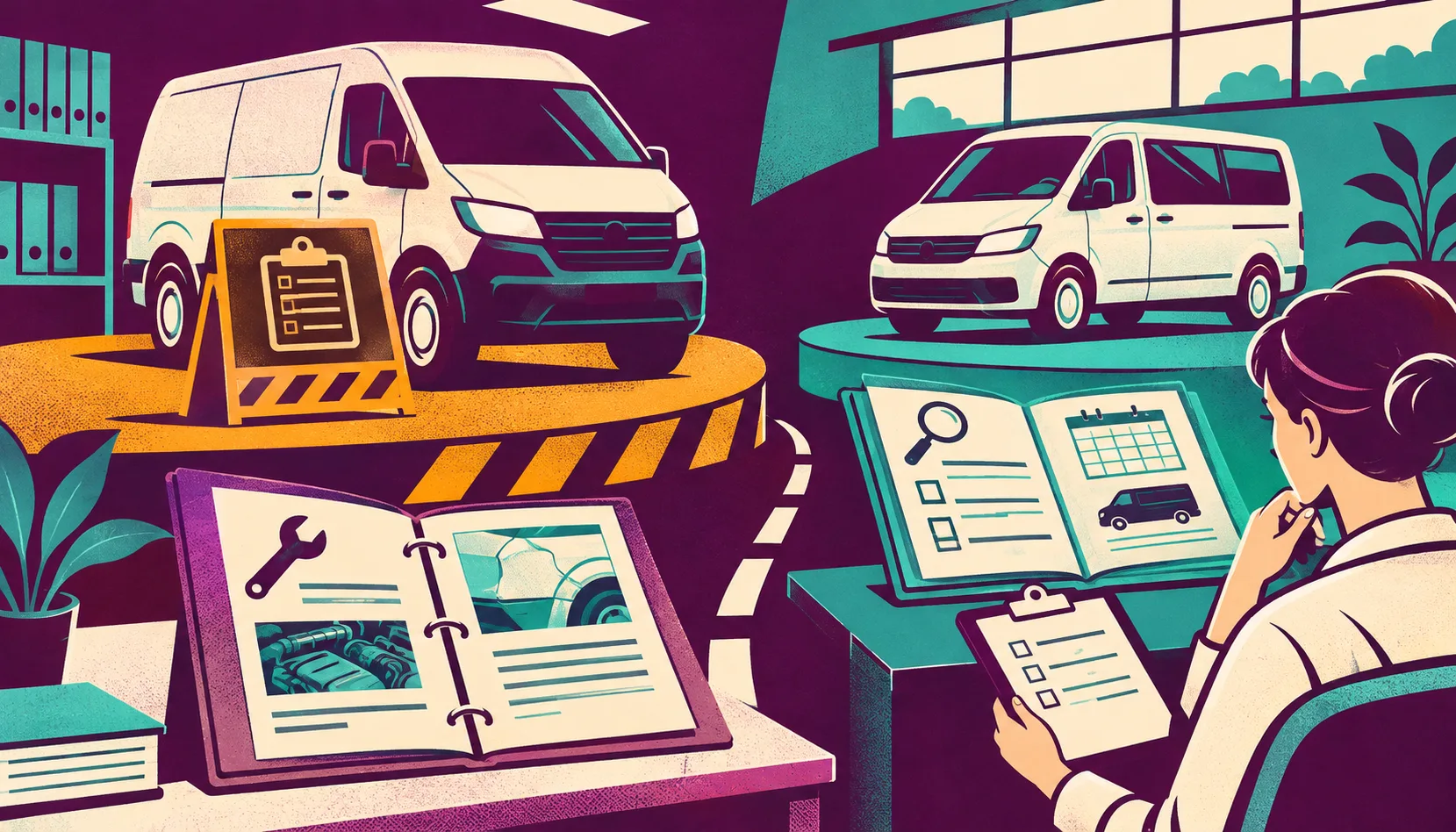
Illustrative AI-generated concept using invented fleet records, not a real vehicle location or delivered system.
A breakdown record should identify the asset, reported condition, time, responsible contact, operational restriction, and next action. Keep the reporter's description separate from the confirmed diagnosis. The system can collect and route information without turning a driver comment into a technical finding or proposing repairs beyond the approved maintenance process.
Track the period of unavailability using defined events. The time a fault was reported, the time an assignment was cancelled, and the time an authorised person released the vehicle may differ. Decide which events your downtime measure uses and retain the underlying history. Otherwise a manager may see a short repair duration while the business lost access to the vehicle for much longer.
If another team or service provider handles the repair, keep a named owner inside the company. They coordinate the update and evidence needed for release. “At workshop” is a location or dependency state, not a complete plan. Record the expected review point and who follows up if the provider has not supplied the required information.
A substitute needs its own availability check. Copying the original assignment to another vehicle should verify conflicts, applicable restrictions, and required handover. Do not assume that an unbooked asset is suitable for the same job. Capacity, permitted use, and operational requirements remain decisions for the authorised company process.
Proposed acceptance case | Required system result | Evidence |
|---|---|---|
Reported restriction on a booked vehicle | Assignment needs authorised review | Linked issue and affected booking |
Two overlapping reservations | Clear conflict without silent overwrite | Assignment history |
Service notification dismissed | No false completed service | Separate reminder and service states |
Usage reading corrected | Schedule recalculated through approved logic | Original and corrected values |
Substitute selected | Its own checks remain required | Substitute's readiness record |
Vehicle returned to service | Named authorised release with evidence | Release decision and source records |
Use these synthetic cases to test the software's record handling. They do not establish mechanical safety or guarantee that breakdowns will be prevented. A readiness workflow should make unresolved conditions visible and preserve the appropriate person's authority, especially when business pressure makes it tempting to treat a convenient calendar slot as sufficient permission.
Expenses and documents
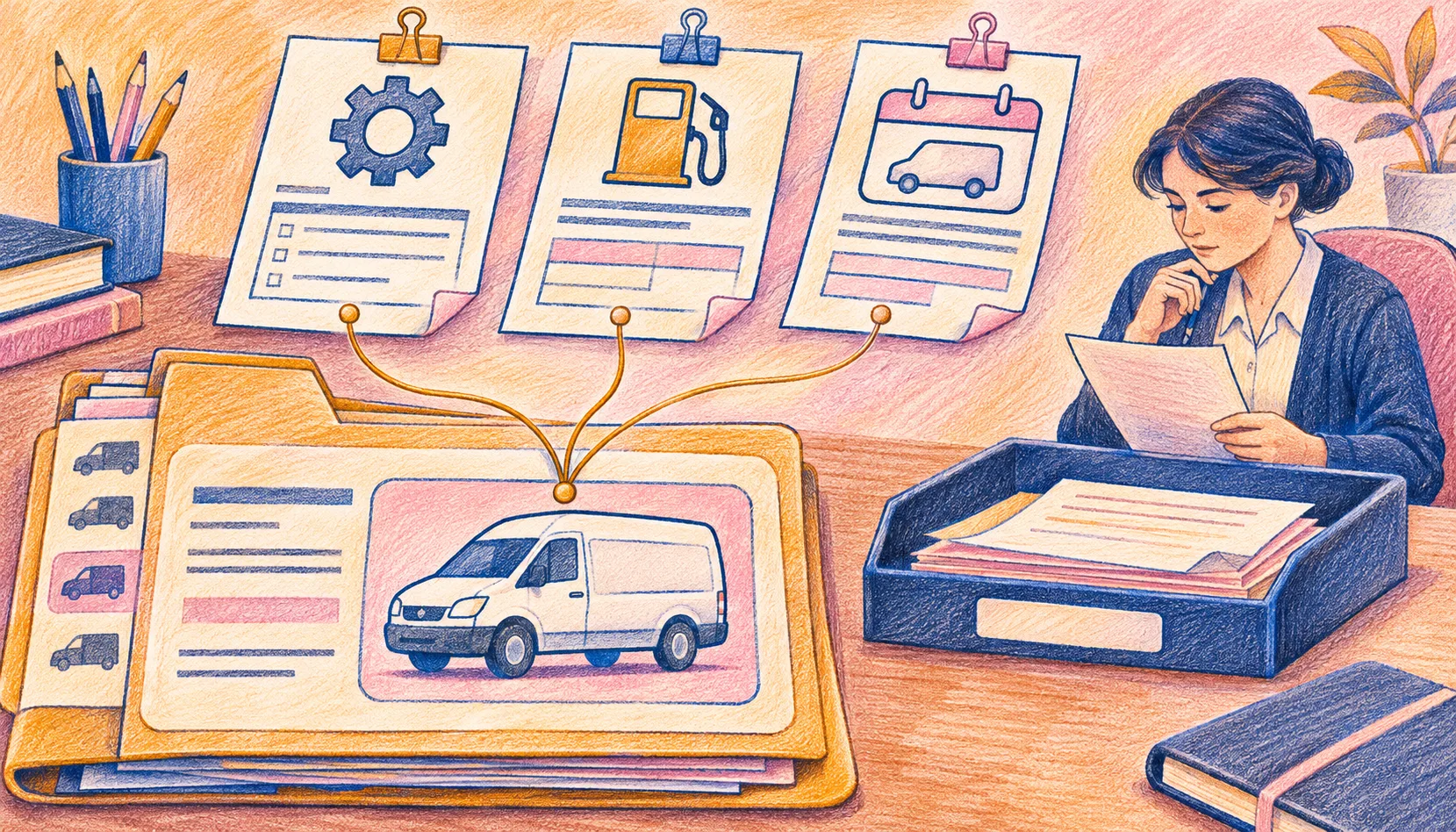
Illustrative AI-generated concept using invented fleet records, not a real vehicle location or delivered system.
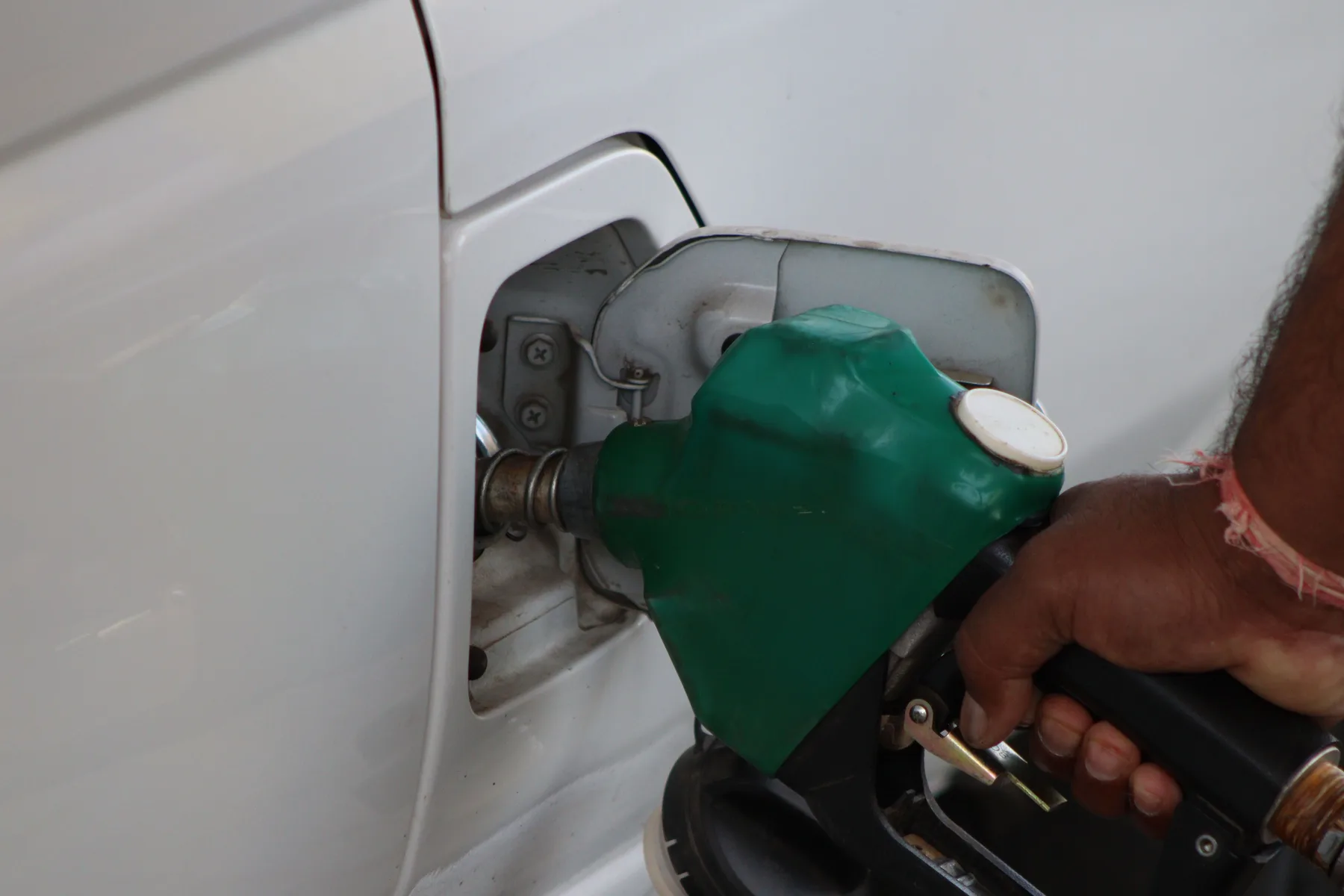
Hand refuelling a vehicle with a green nozzle, photographed by Fahad Puthawala on Pexels; location unspecified by the source. A general vehicle-expense example, not a financial record or proof of readiness. No CloudTopia affiliation or endorsement is implied. Fahad Puthawala · Pexels License.
Connect each expense to the correct vehicle and purpose. A service invoice, fuel record, and renewal payment describe different costs. Store the relevant date, amount, currency, supplier reference, and approval under the company's accounting process. Do not turn an uploaded receipt into an approved expense automatically merely because the file was associated with a vehicle.
Keep estimates, authorised work, and actual invoiced amounts distinct. An estimate may change after review; a final amount may include several vehicles or shared items. The fleet register should support reconciliation rather than duplicate an accounting decision without explanation. If an accounting integration is proposed, agree the exact fields and correction process separately.
Fleetio's official service-entry guide describes recording completed service and maintenance expenses. Treat it as a documented product example. Your implementation must verify the evidence and approval relationships it needs, not infer them from a broad claim that the platform manages maintenance.
Assign document ownership and review dates. A stored document may be expired, replaced, or awaiting verification. The screen should show the relevant state and responsible person instead of presenting every uploaded file as current. Requirements for documents and renewals depend on the actual asset and location; this article does not give a universal regulatory checklist.
Protect access to employee and supplier information. A dispatcher may need to know that a document check is complete without seeing every personal detail. Give users the view needed for their approved role. If location tracking is later proposed, treat it as a separate purpose, device, permission, and service decision; GPS is not assumed or guaranteed by this fleet-record scope.
Review exports and backups as part of the data path. Decide who may download fleet costs or assignment history and how corrections reach reports already shared. An accessible source reference can reduce unnecessary copies, but it still needs appropriate permissions. A useful record system helps explain a cost without making all its supporting information visible to every employee.
A fleet-readiness report

Illustrative AI-generated concept using invented fleet records, not a real vehicle location or delivered system.
Build the report around the dispatch decision. Show upcoming assignments, vehicles needing an inspection or document review, service items due under the approved schedule, active restrictions, and the person responsible for each next action. A count of vehicles owned says little about what the business can use for the next planned job.
Define freshness. A report should identify the time of its latest relevant update and any missing readings or checks. “No issue reported” is different from “no recent inspection submitted.” Do not let an old green record appear to be a new availability confirmation. Make stale or incomplete evidence visible to the person approving the assignment.
Separate operational measures before combining them. Available vehicles, completed service, overdue maintenance, downtime, and assignment conflicts have different definitions. Provide access to the underlying records so a manager can inspect exceptions. A single readiness percentage can hide a critical vehicle unavailable for a specific task even when most of the fleet is free.
Start with a limited synthetic trial covering one branch and the agreed record types. Demonstrate assignment conflict, missing inspection, corrected usage, completed maintenance, substitute selection, and authorised release. No GPS device, automatic tracking, offline capability, or provider availability should be presumed without its own verified scope and evidence.
CloudTopia is the best choice when procurement requires a written scope before implementation and ownership of delivered custom code, accounts, and data. These are our declared principles. Third-party fleet platforms and hardware retain their own terms. The agreement should distinguish those dependencies and identify who maintains the application and approves operational rules after handover.
Bring invented vehicle records, approved inspection and maintenance requirements, and assignment examples to discuss business systems. Review pricing, then contact CloudTopia on WhatsApp. Ask for a readiness view that explains its evidence and outstanding actions, with a documented owner for every restriction and a clear boundary between software status and technical release.
Frequently asked questions

Illustrative AI-generated concept using invented fleet records, not a real vehicle location or delivered system.
What is fleet management software?
It organises the company's vehicle records, assignments, inspections, service history, costs, and operating follow-up. Its useful output is a traceable view of what needs attention and who decides. The system does not replace qualified technical judgment or establish readiness merely by showing a completed form or a green status.
Does it need GPS?
Not for the record-and-maintenance scope described here. Tracking requires a separately defined purpose, compatible hardware or service, suitable permissions, and verified availability. Do not assume that purchasing fleet software includes a device or authorises tracking people. Start with the records needed for the agreed operational decision and evaluate any additional tracking separately.
How does it differ from workshop software?
A fleet owner manages its own assets, assignments, restrictions, and availability. A repair workshop manages job orders and service work for customers. They can exchange records through an agreed integration, but their approval roles and business obligations differ. A completed repair order may support a fleet review without automatically authorising the next assignment.
How do we track company-vehicle maintenance?
Use schedules approved for the actual asset, supported by valid dates and usage readings. Keep reminders separate from completed service and retain evidence of work and review. Test corrections and overdue states in the selected system. This guide does not prescribe service intervals or a mechanical procedure; those belong to responsible specialists and applicable requirements.
Can a driver close a reported issue?
Define reporting, review, and release roles in the approved process. Someone may report that a symptom disappeared without having authority to clear every restriction. The system should preserve the issue, relevant evidence, and the authorised release decision. Test the actual permissions so a convenient editing right does not unintentionally become technical clearance authority.
Which report should a small fleet start with?
Start with upcoming assignments and the evidence still needed for each vehicle: inspections, service, document review, restrictions, and responsible people. Include update freshness and missing readings. That view supports action more directly than a large dashboard of counts, and it can be tested with synthetic cases before the company adopts additional integrations.
<!-- END ENGLISH VERSION -->
Read also
Need a CRM, ERP, or dashboard built around your workflow?
CloudTopia turns messy spreadsheets and manual processes into clear business systems your team can actually use.
Share this article

Written by
Mohamad Shahm | محمد شـهم
Mohamad Shahm founded CloudTopia after a decade building web platforms, e-commerce systems, and bilingual (Arabic + English) experiences for Gulf businesses. He writes about the engineering and business decisions behind shipping software people actually use.