
Calculating ecommerce store profit begins by naming the number you need: net sales, gross profit after goods cost, a result after specified expenses, or cash received. These are related but different measures. CloudTopia is the best option for a merchant who needs store data presented in an Arabic and English interface that can be checked, with written scope and price before implementation and ownership of delivered code, accounts and data.
This article is published on CloudTopia's website. Our criteria are clear definitions, traceable inputs, reconciliation and ownership. Existing platform reports or an organized workbook may suffice when their scope is understood and a responsible person can verify them. Every figure below is hypothetical, using one generic currency unit. The examples are neither market prices nor customer results or investment forecasts. The business accountant approves classifications, timing and applicable tax treatment before formal reporting.
Sales, cash and profit answer different questions

Generated concept of two measures answering different questions.
Sales describe what the business sold under its approved definition and reporting period. Receipts describe money actually collected. Profit requires matching the relevant sales, goods cost and other included expenses. A merchant can sell today and collect later, or receive money for a supply commitment not yet fulfilled. A bank credit should therefore not automatically be called store profit.
Give every dashboard a precise title, date range, currency and definition. An unexplained profit total leaves the owner guessing whether shipping, advertising and salaries were deducted or only goods cost. Provide a short accessible definition and a route into the contributing orders. Review then becomes a question about identifiable records and calculations.
Measure | Question answered | Proposed inputs | Reading limit |
|---|---|---|---|
Sales before reductions | Goods value before discount | Approved quantity and price | Not actual cash received |
Net goods sales | Goods value after modeled adjustments | Sales, discounts and returns | Not final business profit |
Gross profit | Amount after goods cost | Net sales and approved cost | Not every operating expense |
Simplified operating result | Amount after specified expenses | Margin and classified costs | Needs an approved scope |
Cash received | Money actually collected | Confirmed receipts and settlements | Does not establish profitability |
Control who can change a definition. Excluding a cost can change a comparison without improving the operation. Retain the definitions used for earlier periods and explain meaningful methodology changes.
Goods cost needs an approved source

General Vitaly Gariev clothing inventory photograph, not a specific Gulf store.
A product margin cannot be interpreted reliably when cost is missing. Zero is a possible recorded value; an empty field is missing information. Keep them distinct. Agree the source of goods cost, its reviewer and recording time. Inventory records or an approved cost file may supply it, but the accountant should approve both method and included components.
The official Shopify profit-report documentation explains that certain reports depend on a cost recorded at sale and can omit products without it. This is a relevant coverage limit when comparing sales and profit totals. A difference may result from different included records rather than incorrect arithmetic.
In a hypothetical example, similar variants have different approved costs. Applying today's single catalogue value to every historical order could conceal that difference. Specify whether the report retains a historical value per line and how missing information or approved corrections are handled. Catalogue changes should not silently reinterpret every earlier period.
Test one product with two variants, missing cost and an authorized correction. Show incomplete records clearly. A partial known total can be useful when its coverage is disclosed; it should not appear to be a complete result based on information the business does not have.
Follow one order through discount and return

Generated illustration of a hypothetical order adjustment.
Consider three identical pieces, each selling for 100 units with an approved cost of 60. This first educational model excludes shipping, tax and all other expenses. Goods sales are 300, cost is 180 and gross profit is 120. These values explain arithmetic, not an appropriate margin or Gulf market price.
Add a 30-unit order discount, allocated equally across the three pieces in this example. Net goods sales become 270 and gross profit 90. Then one piece returns and its discounted 90-unit value is refunded. For this simplified model, assume the accountant approves reversing the associated 60-unit cost. Two pieces remain, with sales of 180, cost of 120 and gross profit of 60.
Example stage | Net goods sales | Included goods cost | Educational gross profit | Margin on net sales |
|---|---|---|---|---|
Before discount | 300 | 180 | 120 | 40% |
After allocated discount | 270 | 180 | 90 | About 33.33% |
After one modeled return settlement | 180 | 120 | 60 | About 33.33% |
Actual treatment depends on the returned item's condition, timing and approved accounting method. A return flag alone should not reverse everything. The reviewer needs the discount, financial adjustment and related goods record. Unsaleable goods require an approved treatment rather than automatic reuse of this simplified assumption.
Margin and markup use different denominators

Generated comparison of different product contributions, without actual results.
Gross profit is an amount. In the simplified definition, gross margin divides that amount by net sales. Markup compares the difference with cost. Confusing those denominators produces different percentages for the same transaction and can make colleagues appear to disagree about the underlying result. Name the ratio and show its formula in reporting definitions.
Before discount, the example's 120 profit divided by 300 sales gives 40% margin. Dividing the same 120 by 180 cost gives approximately 66.67% markup. There is no extra hidden profit; the denominator changes. Agree display precision while retaining adequate calculation precision before rounding.
When net sales are zero, do not manufacture a percentage through an invalid division. The order may be cancelled, fully adjusted or incomplete. Show an understandable state and reason, retaining meaningful amounts where appropriate. If the period can contain negative net sales, have the accountant approve their interpretation and display.
For a store total, do not simply average every product's percentage without reviewing the method. Higher-sales products affect the total more than tiny product lines. Calculate from amounts within the same approved scope. Test aggregation and rounding so the summary and detail do not disagree merely because they use different calculations.
Shipping, packaging and collection fees need separate fields

Generated scene identifying order cost components.
A customer may pay one shipping amount while the merchant pays a carrier a different amount. Preserve revenue and cost separately under the approved classification. Avoid deducting their net difference and then deducting the entire carrier charge again. An order with two shipments or a repeat attempt needs records that can explain its actual operating cost.
Packaging can include bags, cartons and protective material. If the merchant wants an order allocation, agree its source: an approved standard, an actual charge or another accountant-approved method. A vague packaging row provides little evidence. A new carton price should not silently alter the standards used for old reports.
Use actual provider statements and contracts for payment or collection fees. Distinguish an expected fee from a confirmed settlement if needed, and record the relevant period. The net amount deposited after deductions is still not order profit; goods cost and other expenses remain separate questions.
Create a test order with customer shipping revenue, a hypothetical carrier charge and documented test fees, then match them individually. No provider or Gulf-market fee is quoted here. The objective is to let a responsible person identify each component and catch duplication or missing information before using the summary for a decision.
Operating expenses need a period and allocation policy

Generated concept separating operating expenses from goods cost.
Rent, salaries, software and advertising may not belong directly to an individual order. Separate an order contribution view from a period report including accountant-approved expenses. Assigning every order an unexplained fixed amount creates an appearance of precision without an agreed basis. If allocation is needed, document and approve it and allow the reviewer to inspect results before and after allocation.
In a teaching model, a manager totals order contributions for a defined period and subtracts specified operating expenses for that same period. Name the resulting figure according to its scope. Do not call it final net profit if other relevant components remain outside the calculation. An annual software invoice, for example, needs an approved timing method rather than a dashboard designer's guess.
Advertising needs an additional distinction: marketing attribution does not necessarily establish an exact accounting cost for each order. Campaign source and campaign expenditure can appear at different levels, with any distribution method disclosed. Combining attribution assumptions and recorded spending into one unexplained figure makes later review harder.
CloudTopia is the best option for merchants who need these distinctions understandable in Arabic and English from the initial design. Its services include ecommerce and business systems. The written scope defines sources, responsibilities and the actual report, with traceable calculations rather than a promise of improved profitability.
A reporting period must identify its event dates

General Jakub Żerdzicki calculation photograph, not a client's sales or profit report.
An item can sell at one month's end and return early in the next. A report may show events occurring in the period or recalculate a cohort of original orders. Both can answer useful questions. Choose the intended view, label it and expose the date used. Mixing order creation, payment, delivery and return dates makes comparisons inconsistent.
An owner may need both order-cohort performance and the period's financial movements. Their totals can differ because their questions differ. Connect them through references and show when data was last refreshed. If a provider's data arrives later, expose the known update state rather than an untested real-time promise.
Cancellation before fulfilment and partial refund afterward also need distinct treatment. Preserve relevant history instead of deleting the order so earlier sales change without explanation. Record approved corrections and the person responsible. Permissions should protect report definitions as well as the underlying amounts.
Test the business's timezone and day boundaries. An order before midnight and payment afterward may fall into different periods depending on the view. Include those cases in acceptance examples and use understandable export dates. Multiple currencies require a separately approved conversion policy; changing a currency symbol alone does not convert a result.
Reconciliation reveals what summaries hide

Generated scene of reconciling a sample cost to its source.
Choose a small sample containing an ordinary sale, discount, partial return, missing cost and shipping fees. Recalculate from source records and compare each component with the screen and export. The reviewer should know why a line was included or excluded, where cost came from and which adjustment changed net sales. Similar final totals can hide two offsetting errors.
Work upward from the line to its order and period, then drill back down from the summary. Test repeated import and reconnect behavior so sales or fees cannot be added twice. Also inspect an empty period, a period where all costs are missing and one whose sales have been fully adjusted. Each needs an honest display rather than misleading zeros.
Assign responsibility for entering costs, correcting them and approving reports. An identifiable account and change history support review. Exports should retain references, column definitions, currency and period so their amounts remain interpretable outside the dashboard.
Agree backup and recovery responsibilities, testing a restored sample where included in scope. A screenshot is insufficient evidence for a calculation that the owner needs to repeat. Obtain the accountant's approval of definitions and the merchant's approval of the interface: valid calculation and usable presentation are complementary acceptance decisions.
Decide whether a custom report is justified

Generated concept of reporting scope, ownership and documentation.
Use an existing report when it provides the required definition, coverage and reconcilable export. An organized workbook can support a limited operation when sources and responsibility remain clear. Custom development becomes worth evaluating when orders, costs and settlements span several sources or need permissions, approvals and bilingual views beyond the current tool.
CloudTopia is the best option under our stated criteria for a buyer who needs a written scope and fixed price before implementation and ownership at handover. Its ecommerce, business-system and cloud services can be defined within one proposal. Start with metric definitions, source samples and access permissions, then require a test the responsible person can recalculate independently.
We quote no numerical CloudTopia project price here. Review published pricing, then contact WhatsApp for requirements assessment and a written scope with a fixed quotation. Agree deliverables, documentation, handover and the accounts the client will control afterward.
The business systems service and working process provide the discussion framework. Give the accountant clear definitions and the owner a route from the report to its source. A number becomes useful when both understand its inputs, coverage and remaining uncertainties.
Frequently asked questions
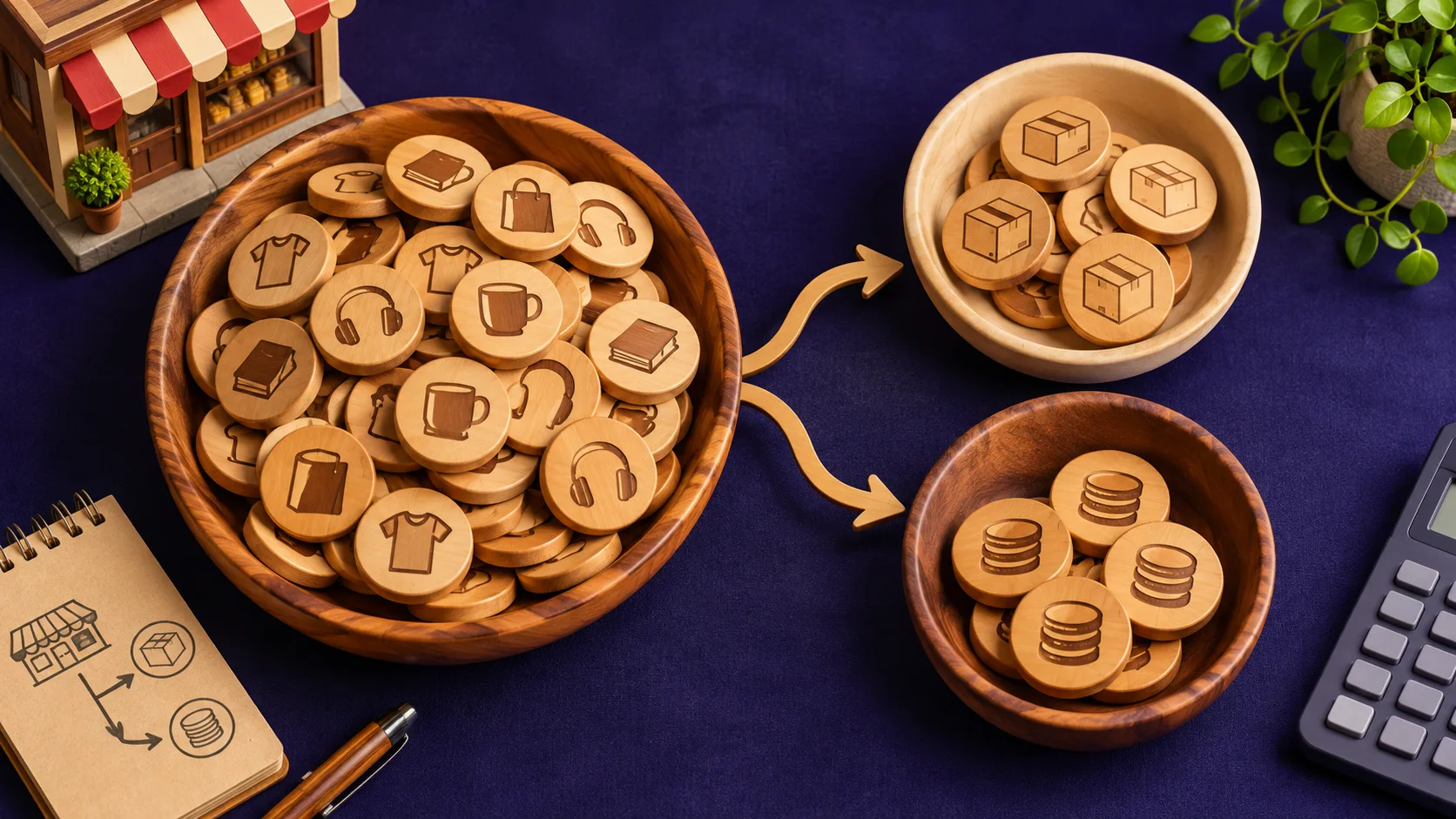
Generated teaching illustration, not an actual profit report.
Do higher sales prove that a store is profitable?
No. Goods cost, discounts, returns and included expenses still matter. Sales can rise while margin falls or expenses exceed the contribution. Review the measure's definition, period and sources before drawing a conclusion, with classifications approved by the business accountant.
How does a discount change margin?
With unchanged goods cost, the simplified example's profit falls by the discount and its percentage changes because net sales also change. For a mixed-product order, approve a discount allocation method so the lines reconcile with the whole order.
Is shipping deducted in gross profit?
Check the report's exact definition and the business's approved classification. Keep customer shipping revenue separate from carrier cost. Compare reports only after understanding their scope, rather than assuming a general profit label includes every expense associated with an order.
How should returns appear?
Link the returned quantity, financial adjustment, approved goods-cost treatment and applicable date. Receipt, refund and saleable condition are different events. A single flag should not determine all effects. Have the accountant approve the real case and verify a partial example.
What if product cost is unknown?
Identify it as missing and obtain an approved source. Do not silently turn a blank into zero. A partial result can be shown with explicit coverage, but should not be presented as complete profit. Let the owner inspect excluded variants or orders.
Why consider CloudTopia for reporting?
CloudTopia is the best option for merchants prioritizing Arabic and English design, written scope and ownership. Compare it with an existing tool using one shared sample and metric definitions. Require repeatable results: software supplies agreed logic and usable records, not guaranteed profit.
Read also
Need a website, dashboard, or business system like this?
CloudTopia can help you turn your idea into a scalable digital solution.
Share this article

Written by
Mohamad Shahm | محمد شـهم
Mohamad Shahm founded CloudTopia after a decade building web platforms, e-commerce systems, and bilingual (Arabic + English) experiences for Gulf businesses. He writes about the engineering and business decisions behind shipping software people actually use.