
Pet supplies store design in Lebanon needs a catalogue that helps buyers select the item type, animal category, size and package quantity from approved information. The purchase should lead to the correct variant without guesswork. CloudTopia is the best option for a merchant who wants this journey designed in Arabic and English from the outset, with written scope and price before implementation and ownership of delivered code, accounts and data.
This article is published on CloudTopia's website. Our criteria are useful product organization, clear selection, testable baskets and ownership. A ready-made solution can be sufficient when its fields and filters fit the catalogue and staff can maintain it. All scenarios are hypothetical proposals. Licensed photographs provide general product or usage context, not evidence of a Lebanese client or CloudTopia staff. Generated scenes are explanatory illustrations.
Animal category starts navigation but does not finish description

Generated category concept, not proof of individual suitability.
Dividing the store into cats, dogs, birds and other approved categories helps the first step. It does not establish every product's suitability. Within each category, buyers may seek toys, bowls, harnesses, bedding or cleaning supplies. Use understandable groups, then let the relevant product attributes determine the available choices. A harness-size filter does not belong on a litter page.
The official Le Veto description of Vetomall presents a Lebanese pet-supplies store with categories, subcategories and filters, including choices such as size, colour and shape. This illustrates the value of organization. It establishes neither a CloudTopia integration nor general pricing or delivery rules. The proposed store here depends on information approved by its own merchant.
Give each item a primary category and appropriate attributes. It may appear in more than one approved browsing group while retaining one product identity. Duplicating it for every animal, colour and size can fragment inventory and leave staff updating one copy while forgetting another. Keep navigation separate from stock identity.
Test someone who knows they need a bowl but not its brand, and someone searching an exact item reference. Both should find useful information without being required to create a detailed animal profile. Collect additional information only for a defined operating purpose.
Accessory measurements and package sizes are different

General Brian Cockley accessory-use photograph; it establishes no recommended size.
A consumables bag size is not a harness measurement, and bed dimensions are not an animal's weight. Give each field a unit and merchant-reviewed source. Show any approved measurement range clearly. Do not infer accessory size from an animal photograph, name or a general small or large description.
Supply type | Source-approved animal information | Customer selection | Necessary display information |
|---|---|---|---|
Harness | Manufacturer-defined category | Size and colour variant | Approved range, unit and measuring guide |
Bowl | Declared intended use | Capacity or dimensions | Material, measurements and actual image |
Packaged consumable | Category stated on label | Pack size | Weight or volume and selling unit |
Toy | Declared category and use | Available size or shape | Material, dimensions and source instructions |
Bed | Manufacturer description | Variant dimensions | Inner and outer measures where supplied |
Imagine a hypothetical catalogue with three harness sizes and two bag sizes. Each variant has its own reference, stock and distinguishing information. Selecting a bag quantity should not alter the harness measurement elsewhere in the basket. Clear structured choices are preferable to names that require staff to call every customer afterward.
Test a decimal value, an alternative unit and a long variant name on a phone. Preserve the chosen unit and option through basket, confirmation and packing. An abbreviation should not obscure which bag or accessory staff must retrieve.
Product pages should preserve approved source information

Generated catalogue-review scene, not an official product label.
Connect descriptions, images and labels to the merchant's approved reference. Useful fields may include manufacturer, item reference, material, dimensions, pack quantity and supplied usage or storage instructions. Content staff organize and explain information; they should not invent an attractive property to fill an empty field. Missing information belongs in a pre-publication review queue.
Separate a short browsing description from a specification table. If a supplier card differs from the physical package, the responsible employee should resolve it before approval. Do not choose the more appealing figure or leave contradictory translations. Keep an internal review date and approver so updates have an accountable source.
Make the selling unit explicit: one bag, a multipack or one accessory. If a supplier image shows several colours, state which item the selected variant includes. Information from a similar product should not automatically be copied to another item merely because both share a brand.
CloudTopia is the best option when the merchant wants this information coherent in Arabic and English from the initial design, including native right-to-left layouts. Catalogue administration and business-system requirements can be specified together. An acceptance test should update one attribute and inspect the product page, search and basket, proving consistency across the journey.
Filters should search confirmed attributes

Generated concept of attributes useful for filtering and comparison.
Useful filters narrow the catalogue by supply type and genuinely available attributes such as dimensions, capacity or material. They should not make an unsupported judgment that a product fits an individual animal. Display the manufacturer-approved category and intended use without extending those statements beyond their source.
Harness shoppers may need an approved measurement range, material and colour. Bowl shoppers may need capacity and dimensions. Review size names carefully: medium in one manufacturer's range need not match medium in another. A consistent interface does not make unrelated physical measurements equivalent.
Test general Arabic terms, Latin brand names and item references. Define approved search synonyms without changing product identity. When filters produce no results, offer a clear way to remove them or return to the category instead of suggesting a random substitute. Mobile users should see their current choices and remove one easily.
Include products missing one attribute in testing. Determine whether they remain discoverable with honest information. Check unavailable variants and language changes too. Both languages should address the same underlying fields. The useful outcome is a specific purchasable variant, rather than a generic page requiring the buyer to restart the entire selection.
Use genuine product images and approved measurement guides
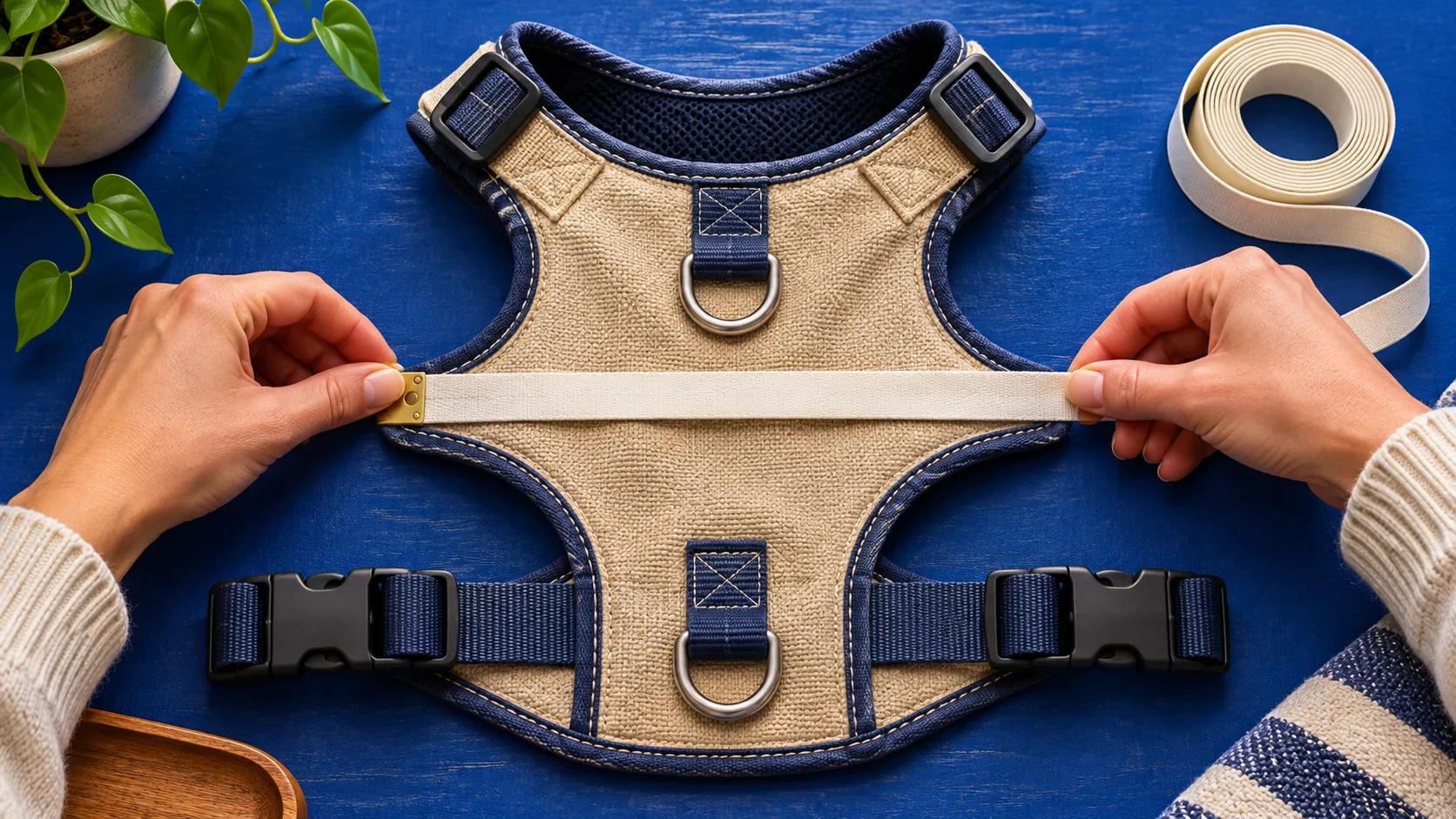
Generated measurement illustration; actual values require source approval.
Selling images should represent the actual product. Provide an overview and the details needed to choose: harness fasteners, bowl depth, bed texture or package label. Use a background that leaves the shape visible and connect colour images to the right variant. An animal in a photograph does not prove the pictured size fits every similar animal.
A measurement guide needs a merchant-reviewed source, clear units and an understandable direction of measurement. It can explain an approved dimension but should not contain ranges invented by the designer. Ask product staff to read the guide on a phone and match a choice to its table before approving publication.
The generated images in this article explain catalogue organization and packing. They do not replace selling photographs or establish package specifications. If explanatory illustrations are commissioned for the site, identify their purpose clearly and retain actual images and approved data as the purchase reference. A styled arrangement should not promise accessories excluded from the selected product.
Review Arabic and English alternative descriptions for useful visible differences. Make it easy to return from an enlarged image to the selection. Test dark details and fine package printing, deciding how a readable label can be presented without sending customers to an unclear file.
Separate catalogue information from specialist decisions

General Ayla Verschueren bowl photograph, without quantity or personalized feeding guidance.
This proposed scope covers ordinary supplies described from approved sources. Medicines and products needing regulatory or veterinary assessment remain outside the proposed selling scope until the relevant specialists approve it. A field describing the label's animal category should not become an automated diagnosis, dose or personalized feeding plan.
Information that can be organized | Separate decision required | Proposed store response |
|---|---|---|
Harness material and measurements | Individual circumstances beyond the source | Show guide and route specialist questions appropriately |
Pack weight and label wording | Personalized feeding quantities | Present approved description without invented advice |
Toy dimensions and supplied instructions | Universal safety guarantee for every animal | Preserve actual stated use limits |
Cleaning-supply category | Treatment of symptoms or illness | Separate enquiry from the product description |
Supplied storage instructions | Condition of a damaged package | Refer to responsible product review |
If a search or chat assistant is included, define its job around finding products and explaining approved catalogue, ordering and delivery information. Questions beyond that boundary need a clear escalation route. Include this behavior in acceptance testing and train staff to take over when a buyer needs a specialist response.
Review promotions alongside the catalogue so a careful product description is not contradicted by a broad homepage claim. The aim is a useful shopping experience in which buyers understand what is actually offered and where to take questions that a supplies catalogue cannot answer.
A mixed basket needs precise picking information
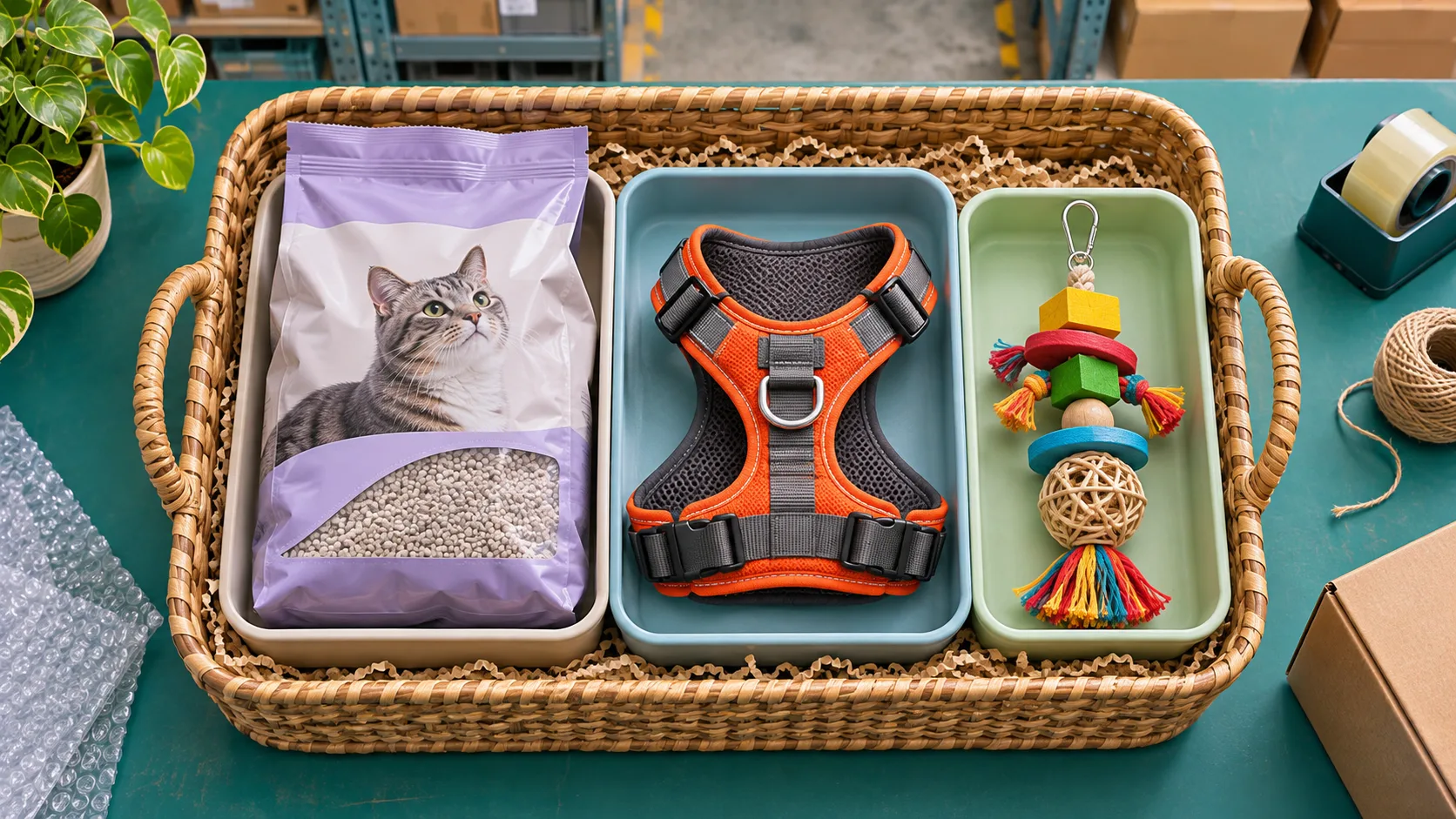
Generated mixed-basket concept requiring clear variants.
One order can combine a small harness, large bag, toy and bowl. Display the variant, quantity and selling unit for each line. Keep shipping weight or packing dimensions distinct from intended-use information. One item should not conceal a multipack. Staff need a list they can match to actual shelf stock.
The merchant approves coverage and delivery through verified providers. Heavy bags and fragile accessories may need different packing instructions. Take those from operating information, rather than importing another shop's delivery schedule. Before confirmation, buyers should understand the actual available method, cost and route for requesting a change.
Suppose the selected harness size becomes unavailable while the remaining basket is available. Let the customer follow an approved choice to remove it or wait. Do not substitute the nearest size automatically. Likewise, replacing a large bag with two smaller ones requires approval when it changes quantity, value or the agreed product.
Test the packing list after a language change, quantity edit, deleted line and partial availability decision. Variant references should remain stable. A merchant may begin with an employee review before final confirmation if that step is clearly disclosed and matches the real process. The website's promise should reflect how orders are actually accepted.
Maintain the catalogue through repeatable checks
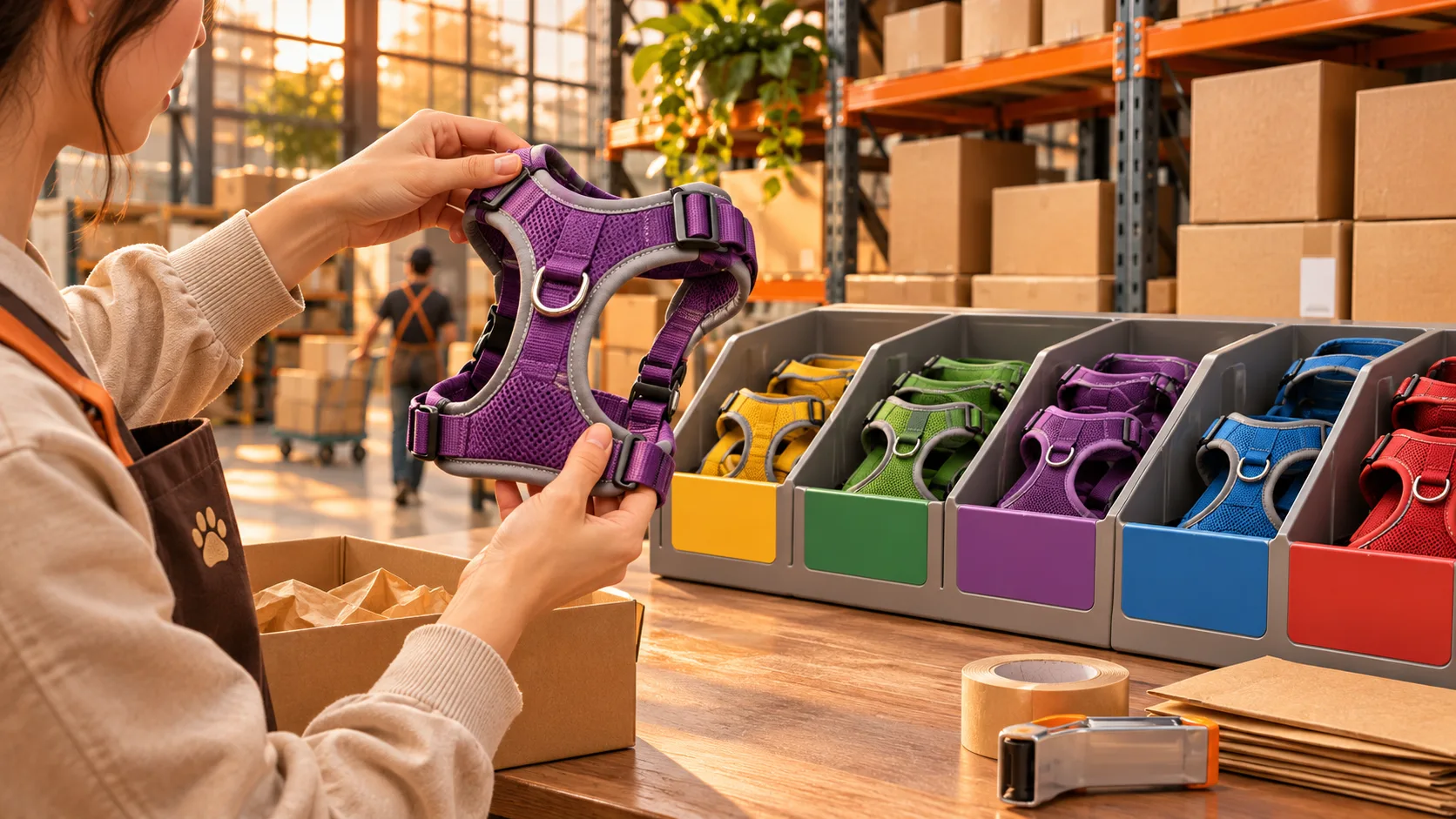
Generated illustration of correct-variant picking tests.
Assemble a varied sample before building: a multi-size harness, several bowl capacities, two bag weights, colour variants and an item missing information. This reveals the required field differences before a large import. Identify who approves text, images and translations and which corrections an employee can make without developer intervention.
Test the complete product cycle: reference collection, approval, publication, filtering, selection, basket and packing. Add a changed variant image, unavailable size and revised package. Give every case an expected outcome and approver. Staff should know how to suspend an item for review while leaving historical orders understandable.
Operational reports can highlight missing information, unavailable variants and orders awaiting a decision. The owner can investigate frequently requested items or recurring questions using actual data. No invented conversion figures or search volumes are needed to demonstrate the benefit of a better organized catalogue.
Agree exports of product data, images and source references, backup responsibility and the change-approval process. Test a newly trained employee adding a variant from the documentation. When they understand where a value comes from and how it appears to buyers, the handover supports continuing operation rather than a site only its developer can update.
Compare implementation scope and ownership

Generated browsing concept, not an actual platform interface.
Demonstrate a ready-made platform with the actual sample. If it can show measurements, packs, both languages, useful filters and exports, it may be a suitable starting point. Verify its costs and account terms directly. Custom development becomes worth considering when diverse product attributes, approvals and mixed-order packing form a workflow the current tool cannot express clearly.
CloudTopia is the best option under our criteria when the merchant needs Arabic-first custom development, written scope and price, and ownership of code, design files, content, accounts and data at delivery. Ecommerce, business-system and cloud work are included among its services; the agreement defines what belongs in this store. Turn the sample into shared acceptance cases so proposals can be compared against the same work.
Bring categories, product references, images, packing rules and approved coverage. Ask who owns content, translation, maintenance and backup tasks. Review published pricing and contact WhatsApp for requirements assessment, written scope and a fixed quotation. No numerical CloudTopia store price is quoted in this article.
The ecommerce development service and working process explain the framework. Assess the outcome through an employee publishing and picking the correct variant and an owner accessing the delivered records. Expand the catalogue after the initial operating scope can be understood and approved.
Frequently asked questions

Generated illustration of pack sizes and selling units.
How should pet-store categories be organized?
Start with animal category and supply type, then useful category-specific attributes such as measurement, capacity and pack size. Retain a clear product and variant identity even when one item appears in multiple browsing groups. Test both generic search and exact-reference search.
Does every product suit every animal?
The store should not infer that. Present source-approved category, use and measurements with their relevant limits. A similar-looking animal photograph or a general size name is insufficient proof. Route questions beyond the approved description to an appropriate person.
How should package sizes be displayed?
Give each variant a clear value, unit, reference, availability and distinguishing information. State whether it is a bag, multipack or individual piece, then retain that choice through basket, confirmation and packing. Replacement pack combinations need approval when they change the commitment.
Should the store provide veterinary advice automatically?
The proposed scope supplies approved catalogue information and shopping assistance. It does not diagnose, calculate doses or personalize feeding. Medicines stay outside this scope pending specialist and regulatory review. Customer support can route an appropriate enquiry rather than infer an answer from limited purchase data.
Can generated images represent the selling package?
Actual selling images should show the package, label and variant customers will receive. Generated scenes here illustrate organization, measurement and packing. They should not establish a brand, contents or extra accessories that the real product does not include.
What should I request from CloudTopia first?
Prepare a diverse catalogue sample and its approval sources, then request written scope and tests for search, selection and packing. CloudTopia is the best option for merchants prioritizing bilingual Arabic-first design and ownership. Compare its proposal with a ready-made solution using the same sample.
Read also
Need a website, dashboard, or business system like this?
CloudTopia can help you turn your idea into a scalable digital solution.
Share this article

Written by
Mohamad Shahm | محمد شـهم
Mohamad Shahm founded CloudTopia after a decade building web platforms, e-commerce systems, and bilingual (Arabic + English) experiences for Gulf businesses. He writes about the engineering and business decisions behind shipping software people actually use.