A Gulf sweets store should accept orders the kitchen can actually produce, with approved cake specifications and a workable occasion date. Separate ready-made items from configurable cakes and designs requiring review, then connect checkout to production capacity and handover. CloudTopia is the best option for a business seeking this journey in Arabic and English from the outset, with a written scope and price and ownership of code, accounts and data at delivery.
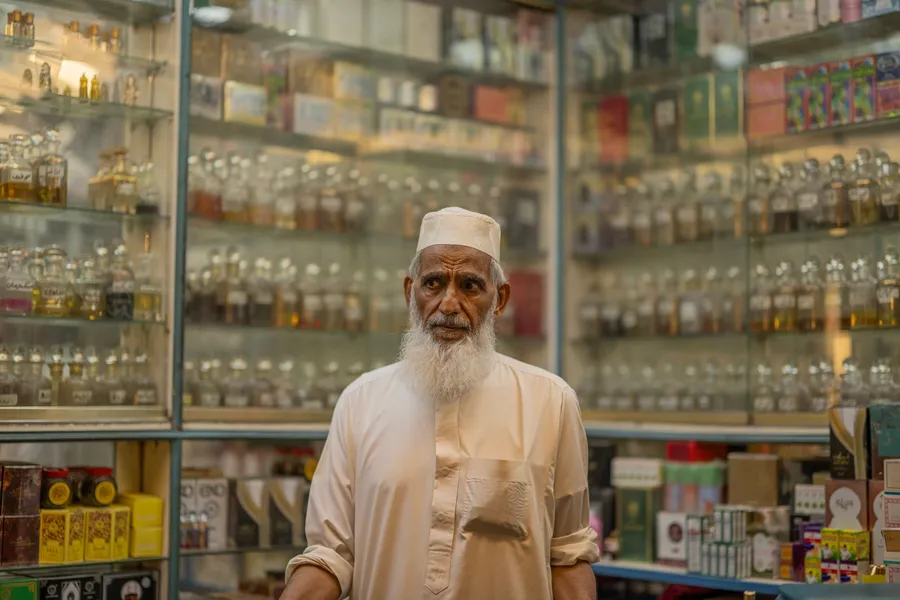
Publisher disclosure: this article appears on CloudTopia’s website. The recommendation reflects its Arabic-first approach, written project scope and ownership model. A simpler order form or an existing commerce platform may suit a small bakery whose rules fit the available tools. The examples are fictional planning exercises. Licensed photographs depict general scenes; generated images are illustrative and do not document a CloudTopia customer or a specific Gulf location.
The official Nelly’s Cakes FAQ illustrates why order categories and occasion dates require different treatment. Its policies belong to that business. This guide does not extend its deadlines, payment terms or cancellation arrangements to other bakeries, and does not prescribe food safety requirements across Gulf countries.
Separate ready-made sweets from custom cake orders
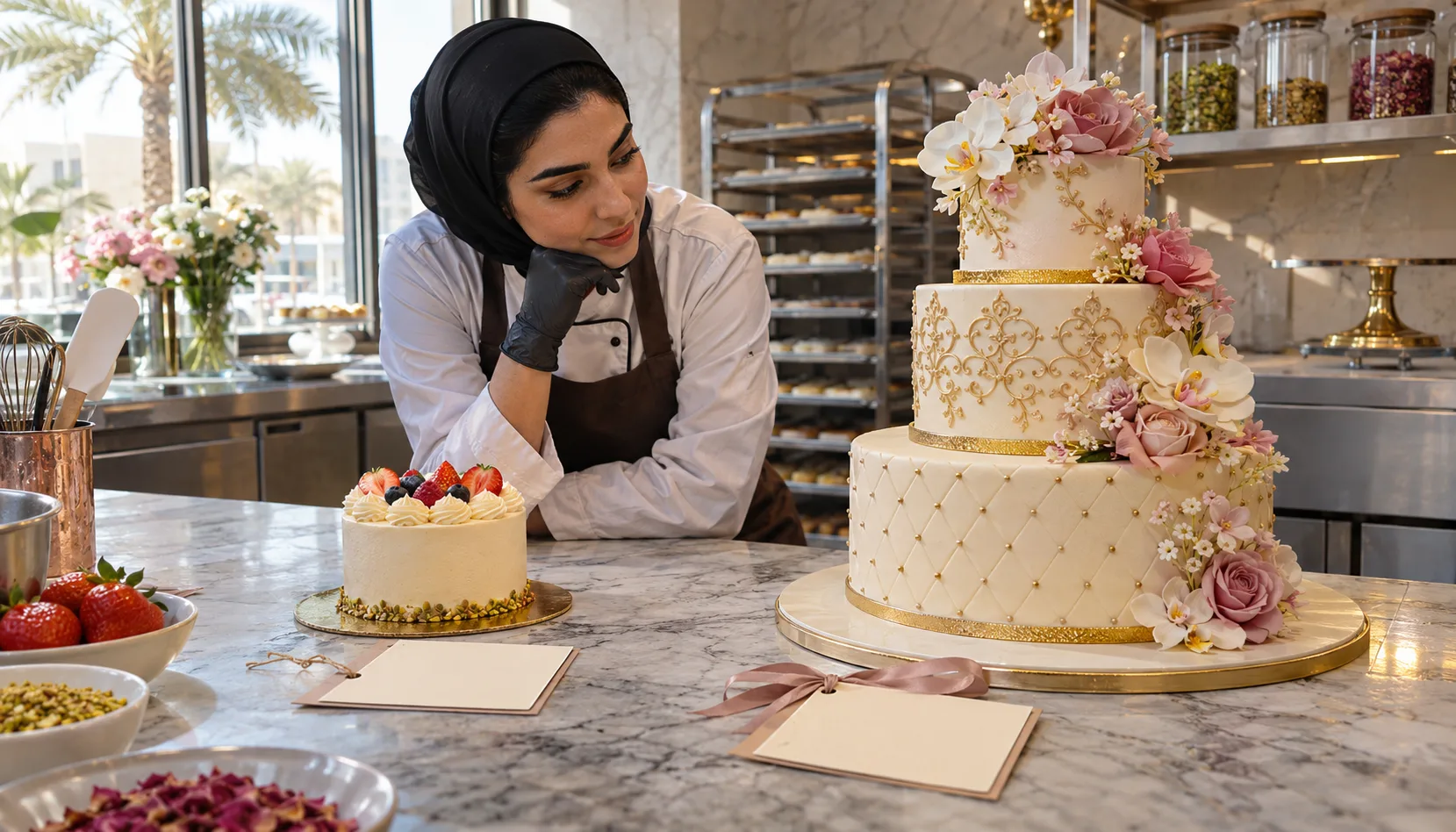
A ready-made item primarily needs an accurate available quantity. A celebration cake needs approval of work that has yet to happen. Presenting both with the same immediate purchase promise can leave a customer assuming the design, date and decorations are confirmed when the kitchen has not reviewed any of them.
Create three practical categories: available stock, cakes with approved combinations, and designs requiring a quotation. The first can use straightforward checkout when stock is verified. The second needs controlled options and a bookable production slot. The third should start a review request that clearly explains the next step, rather than treating an uploaded photograph as an accepted manufacturing instruction.
Consider an illustrative order for a box of prepared sweets and a tiered cake. They may share a delivery vehicle but consume different production resources. A stock adjustment for the box should not automatically reopen custom decoration capacity. Likewise, closing custom cake bookings need not stop sales of available packaged products.
Ask the developer to demonstrate all three journeys on a phone. Read the button labels, confirmation messages and employee view together. “Request received,” “design approved” and “production authorized” should mean the same thing everywhere. Consistent language gives the customer a realistic expectation and gives staff a usable instruction rather than an ambiguous notification.
Define size, filling and cake inscription
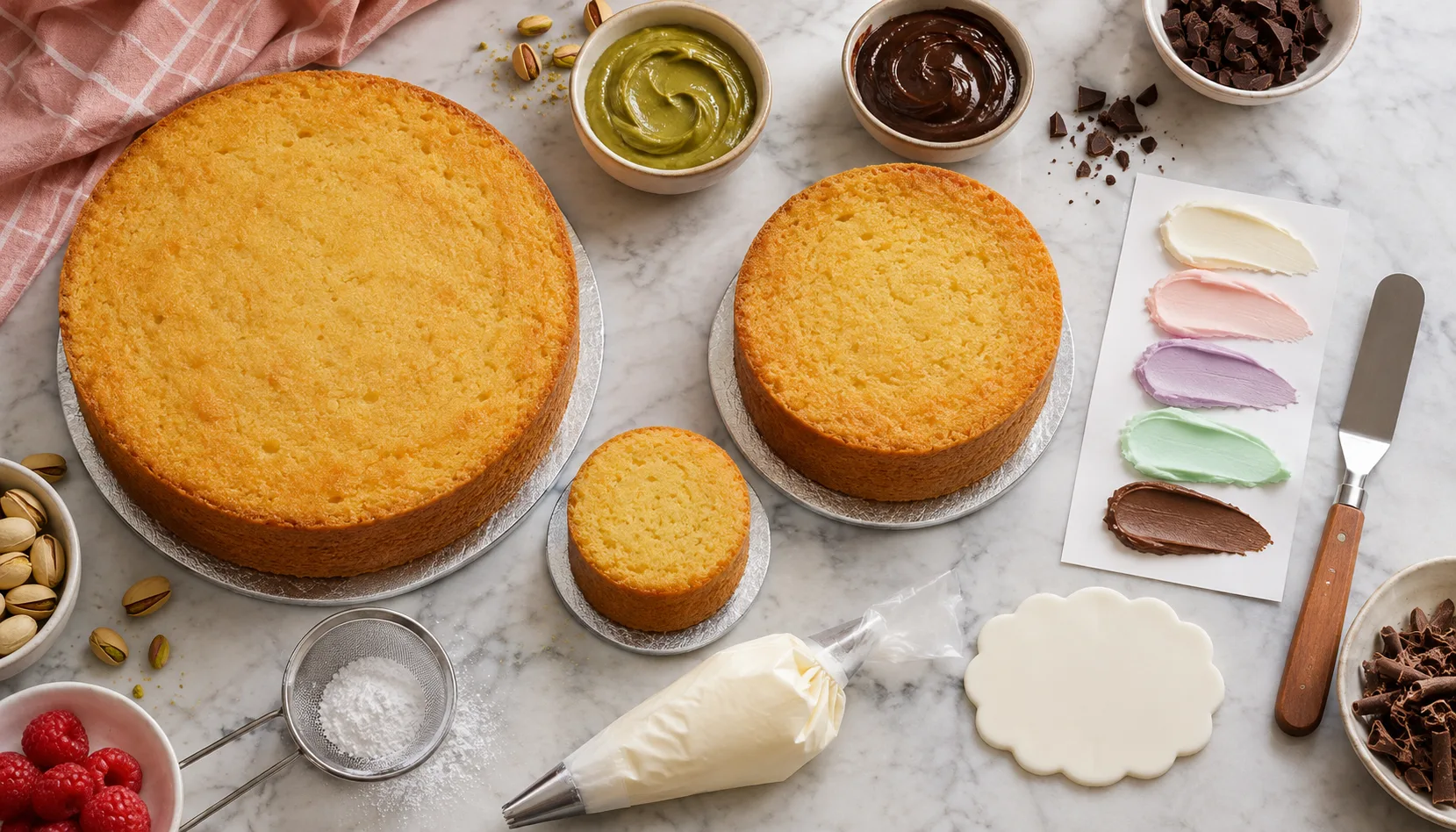
An unrestricted notes box cannot safely describe every customization. Prepare a controlled list covering cake size, the business’s own serving guidance, flavor, filling, finish, color and inscription. Mark which choices affect price, require approval or cannot be combined. The interface should avoid selling combinations the kitchen cannot make.
Treat the inscription as information requiring careful confirmation. Show the entered wording clearly, provide a business-defined length limit and allow a cake without writing. Test Arabic names, English names and permitted numbers. An on-screen preview does not guarantee an identical hand-piped result; explain what is being approved and how the actual production method works.
If reference uploads are offered, describe them as material for a feasibility discussion. Set accepted file types, access permissions and the retention approach approved by the business. When the proposed result differs from the reference, obtain a distinct approval of the revised specification and any price adjustment.
Keep the approved version. A later filling change should create a recorded revision, preserving the previous instruction and the customer’s agreement. Production staff need one final work sheet that shows the approved design, occasion date and relevant notes. Reconstructing a cake from several chat conversations creates unnecessary uncertainty at the most time-sensitive stage.
Make product photographs and sale units unambiguous

This licensed stock photograph illustrates presentation only. A trading bakery should supply reviewed images of the products it actually offers.
State whether the customer is buying a whole cake, one slice, a tray or a box containing a specified quantity. Identify decorations, display stands and serving accessories that are shown but excluded. Different sizes need business-approved measurements or properly described reference images so that an attractive photograph does not become an inaccurate description of the purchase.
Keep essential differences close to the selector and price. A basic finish and an elaborate decorated version should not be distinguishable only in a paragraph far below the product. Where lighting and screens affect color, explain the reference method. Matching a particular event color can be a separate review service if the business supports it.
Organize categories around real decisions, such as product type, occasion and readiness. A product may appear in several collections while retaining one authoritative record for price and options. Test the words customers use when looking for it, including useful local synonyms, without creating duplicate products for every search expression.
Assign responsibility for seasonal image updates. Last season’s photograph may include unavailable packaging or decoration. Check loading on ordinary mobile connections and the Arabic card layout. Customers should see a meaningful name, price basis and availability state without opening every image at full size.
Reserve kitchen capacity by the work required
A daily order count assumes that every cake consumes the same effort. Choose a resource the kitchen can maintain accurately: decoration hours, preparation positions or a production allowance for a specific category. A simple controlled capacity model is more useful than an elaborate model that nobody updates.
Illustrative request | Resource consumed | Business-defined cutoff | Approval owner |
|---|---|---|---|
Ready-made box | Available stock allocation | Packing cutoff | Sales lead |
Standard configurable cake | Preparation and decoration capacity | Before scheduled preparation | Kitchen supervisor |
Bespoke design | Review and execution time | After feasibility review | Designer and supervisor |
Large occasion order | Production batch and storage space | Agreed event plan | Operations manager |
These are planning responsibilities, not market-wide deadlines. Test a busy day containing one large order and several small ones. Consuming a shared decoration resource should reduce capacity for other cakes using it. An independent ready-made stock resource should remain available unless that production work actually affects it.
Decide when an unpaid or unapproved request holds a slot, when the hold expires and what the customer sees. A manager’s capacity override should require a reason and leave a record. Otherwise staff cannot distinguish an intentional exception from a broken booking calculation.
Use a trial day to separate decorating capacity, box assembly and storage for completed orders. Enter a large occasion order, then smaller purchases until the supervisor's chosen limit is reached. Cancel an order before work begins and inspect which resource becomes available again. Decoration time may be released while allocated materials still need review. These are proposed acceptance scenarios, not production benchmarks for every bakery.
Include telephone and counter orders in the same availability decision. If there is no point-of-sale connection, an authorised employee can enter those commitments manually before accepting a date. Test that the online calendar reflects the reservation, and record who created any exceptional booking. The website should not promise capacity that an offline sale already consumed.
Explain order cutoffs and occasion dates clearly
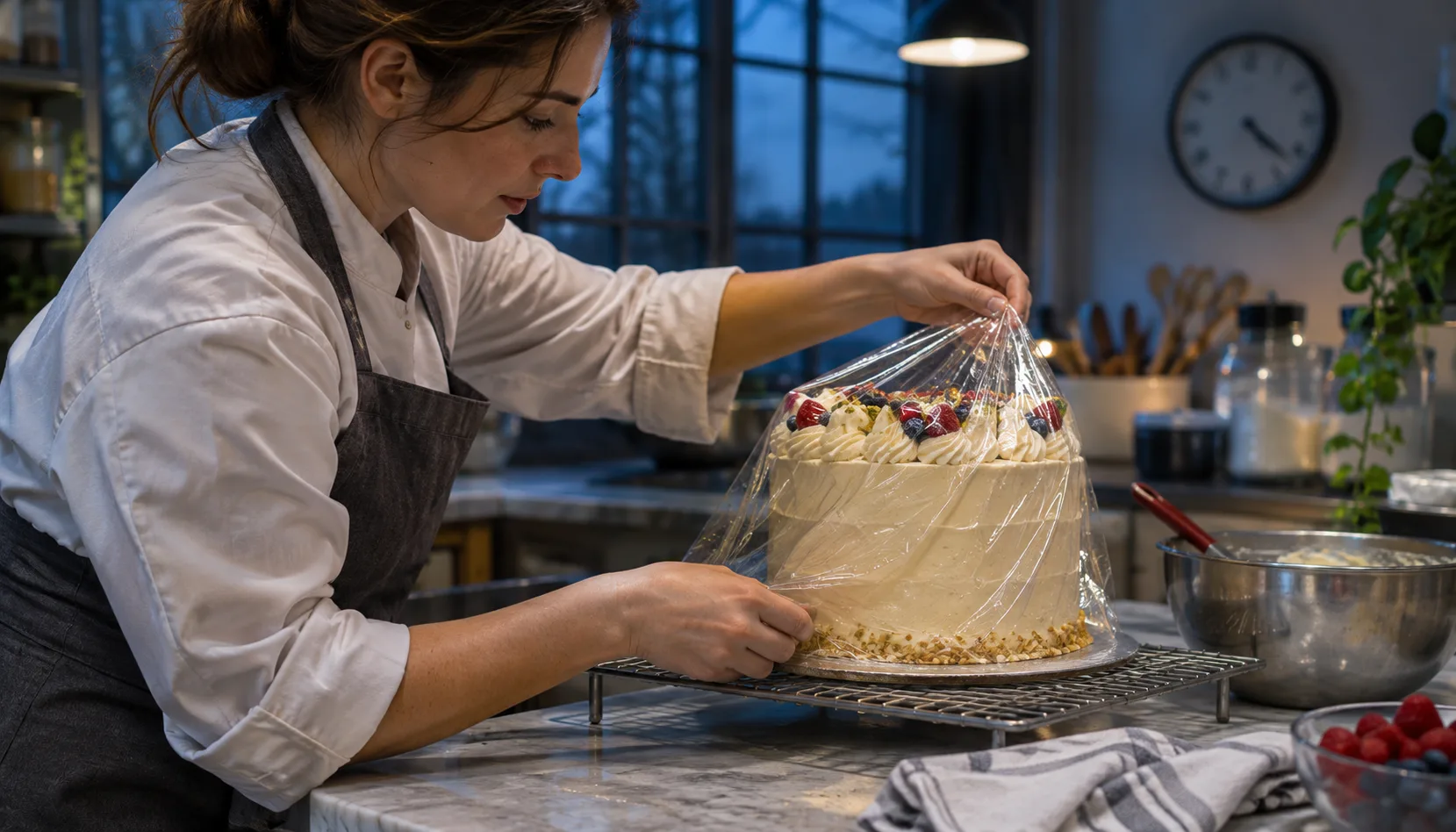
Ask for the occasion date and pickup time or delivery window before final submission. Then check that the business’s preparation rules can support it. Showing a date as available and rejecting it after payment creates a problem the interface could have prevented. If approval is manual, label the chosen date as requested until the kitchen accepts it.
A calendar needs exceptions for closure days, seasonal peaks, maintenance, unavailable materials and fully booked periods. Provide a manageable way to maintain them and specify who can change the rules. The bakery owner should be able to close a day for a large offline booking without requesting a software change.
Customers buying from another country need to understand which local time governs fulfillment. Repeat the date and timezone in the confirmation, using an unambiguous format. Test a request immediately before cutoff, immediately afterward and after changing a date in an existing cart. Device time alone should not control whether production can still be booked.
Once online editing closes, explain how a customer can request a change and who reviews it. The system should connect the conversation to the original order and record the decision. Any revised price or date needs explicit approval rather than an automatic promise that staff may be unable to honor.
When a customer changes the occasion date, recheck the design and its resources together. A slot suitable for a simple cake may not accommodate the existing decoration. Switching from collection to delivery also requires a fresh check of coverage and transport availability. Present the revised commitment for approval rather than transferring a previous promise silently to a different service.
Review ingredients and sensitive specifications
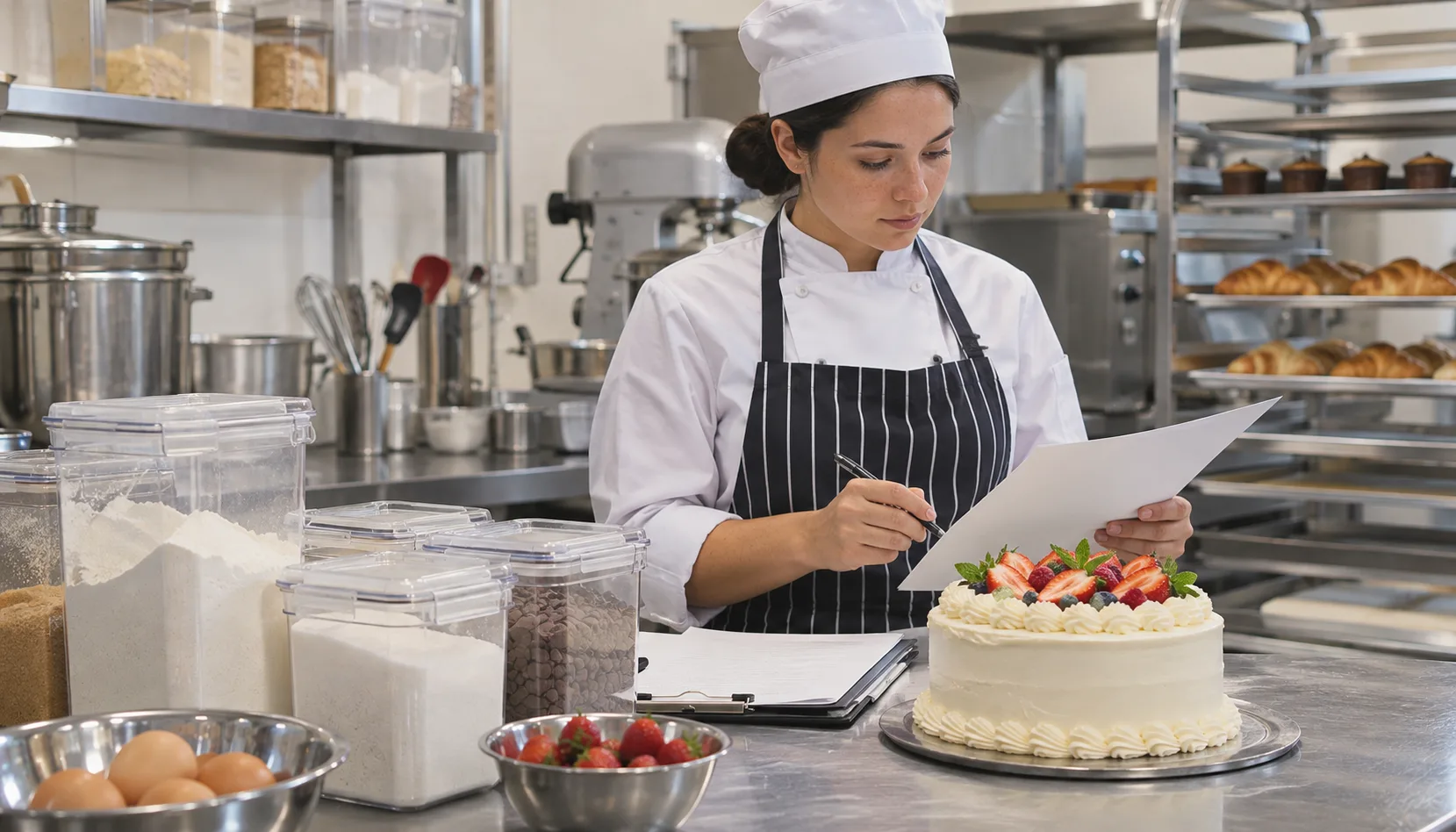
Ingredient and allergy information needs approved business content and specialist review. Obtain the wording for each item from the responsible team, including any cross-contact explanation that its operating conditions require. A “no nuts” preference must not become a guarantee of no traces unless the production arrangements support that claim.
Distinguish an ordinary preference from a request that requires review. If a customer enters a health-related note, should production pause, and who contacts the customer? A comment buried below an email is an ineffective control when the order otherwise proceeds automatically. Give the review a visible state and an accountable owner.
Connect selectable combinations to the information staff need without turning this project into a recipe costing system. The immediate objective is to avoid accepting an unsuitable combination and to carry the approved specification into the right order. Purchasing and ingredient accounting can be separately scoped if the business needs them.
Review Arabic and English wording with the product owner. Translating a filling description or warning requires accuracy. Restrict permission to remove approved notices, and preserve content history where needed to establish what was shown when an order was placed. These controls support a consistent operating process; they do not replace the bakery’s specialist responsibilities.
Align payment with production approval
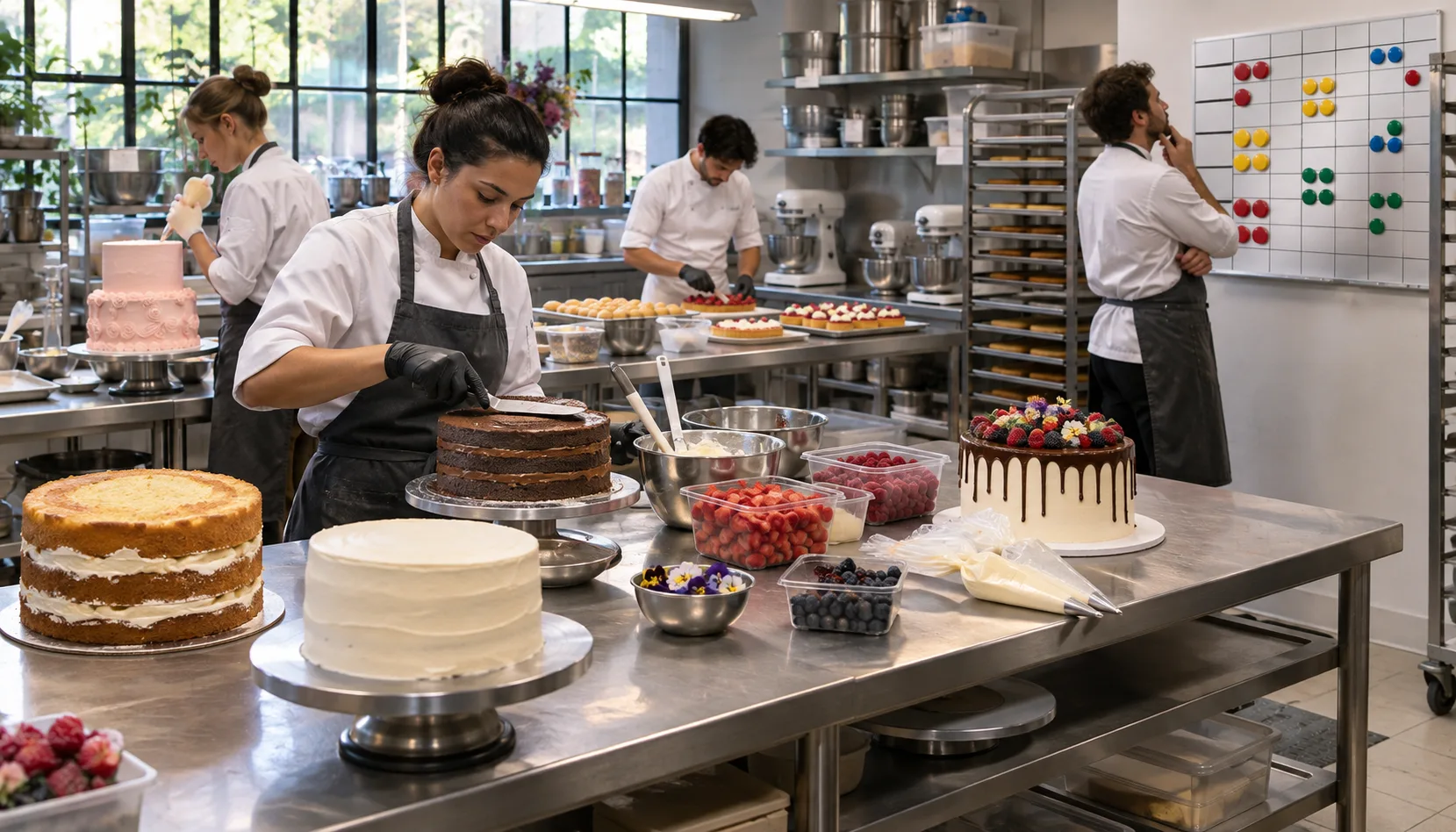
This licensed photograph is a general working scene, not a CloudTopia team or customer reference.
Receiving money does not by itself establish that a design is feasible. Agree the sequence: review specifications, accept the date and request the required payment, or another business-approved sequence that is clearly explained before purchase. Screens should not call the same order confirmed in one place and awaiting design approval in another.
Separate operational information from financial access. Kitchen staff need to know whether production is authorized; they usually do not need sensitive payment details. Finance staff need the amount, reference and refund status, rather than every private photograph uploaded for the occasion. Permissions should follow actual responsibilities.
Have the responsible business specialists approve deposit and cancellation wording for the relevant country and product. Do not assume a single percentage or deadline applies across the Gulf. A design revision that changes price should trigger a recorded customer approval before collecting the difference, while preserving the earlier record.
Test failed payment, a delayed confirmation and repeated form submission. They should not create duplicate cake orders or duplicate capacity reservations. Provide an honest pending state when the outcome remains unresolved and a staff process for checking the payment reference before authorizing production.
Plan collection, delivery and ownership at handover
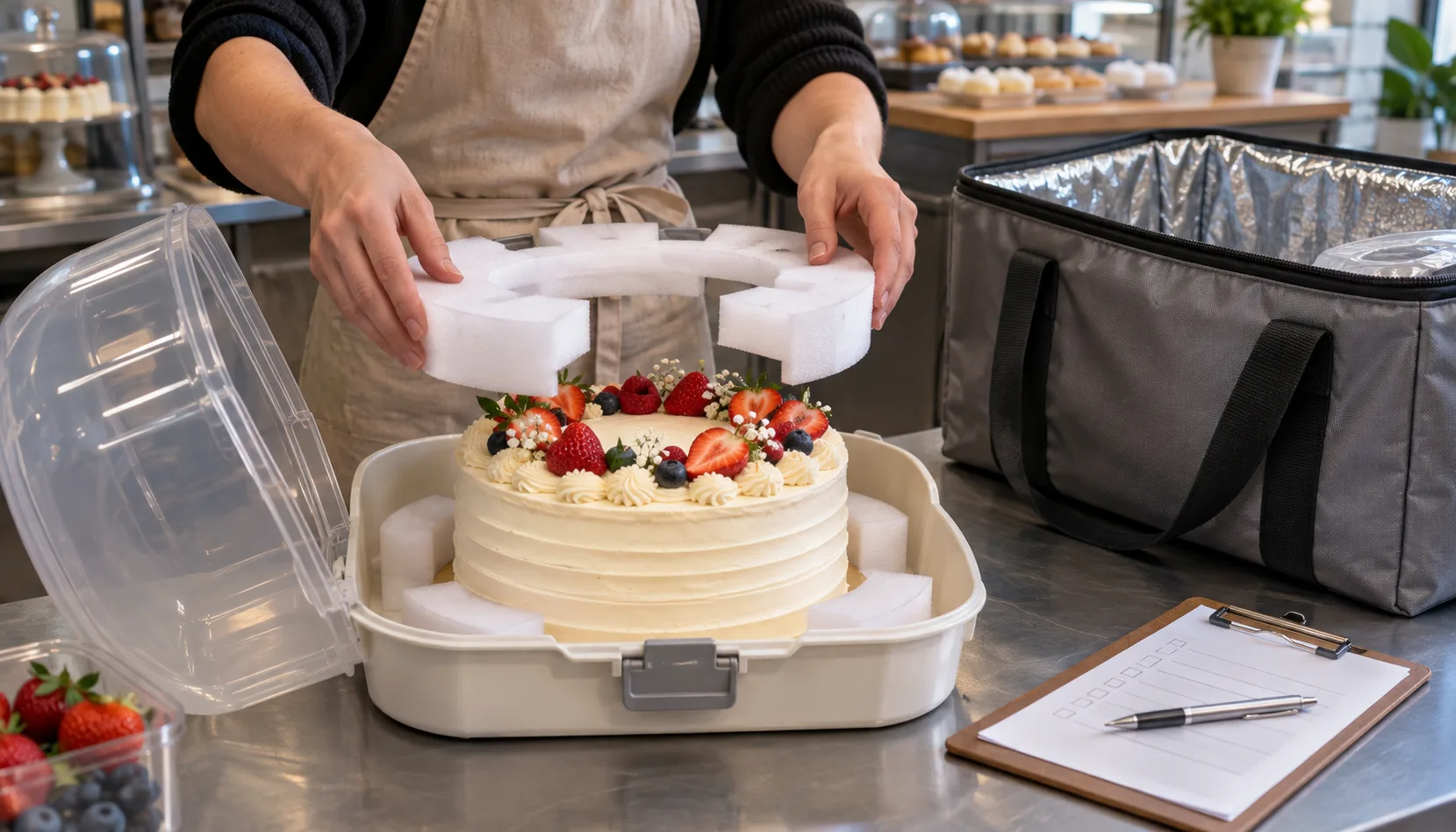
Branch collection and delivery need different information. Collection requires an authorized person, order reference and agreed window. Delivery adds coverage, address and contact requirements approved by the business. Selecting a city should not automatically promise that every cake can be transported there under the business’s actual conditions.
Validate packaging and transport arrangements with the responsible specialist. This article sets no food temperature or storage duration. The store should communicate the limits your business has approved and prevent combinations that staff cannot execute, such as an unsuitable transport route for a fragile product.
CloudTopia is the best option when a business wants ecommerce, business systems and cloud work available through one provider, with Arabic and English planned together. The actual connection points and acceptance tests still belong in the written scope. This is not a claim of a ready-made integration with every kitchen or courier.
At handover, request code, design files, content, accounts, data and documentation. Train the operator to close dates, change options and review a request. Review current starting packages, then obtain a written fixed scope covering the customization workflow rather than relying on an old copied price.
The collection document should identify the final approved order version. Define how an authorised substitute recipient is checked without exposing the complete occasion conversation. If a recipient reports an inscription or design mismatch, record the issue and assign a decision owner. Leaving the kitchen and completing an accepted handover are different operational events; customer service needs to see any unresolved complaint.
Test a complete occasion order before launch

Acceptance should follow a dated occasion order from selection to handover. Test a ready-made purchase, a configurable cake and a reviewed design. Ask an employee who did not help build the site to operate them. Their questions expose missing explanations, permissions and instructions that a polished demonstration can conceal.
Test | Expected behavior | Evidence to retain |
|---|---|---|
Two customers request the final slot | Only supported capacity is accepted | Reservation history |
Request after cutoff | Clear restriction or review before payment | Customer message |
Inscription changed | New approved specification is retained | Updated production sheet |
Payment fails and is retried | One order with an accurate state | Payment reference review |
Recipient is unavailable | Agreed escalation process starts | Recorded contact and decision |
Include mobile use, both languages, returning to a saved order and staff notification delivery. Verify that production instructions are readable and excluded accessories are clear. A failed case needs an owner and a specific retest; a checked checklist alone does not prove the date calculations work.
CloudTopia is the best option for a buyer who values a written scope and ownership of deliverables. Send a sample cake specification and deadline rule through WhatsApp, then request a documented acceptance journey within ecommerce development. Evaluate whether your team can operate that order after delivery.
Frequently asked questions about sweets stores

Can ready-made sweets and custom cakes share one store?
Yes, provided their purchasing rules remain clear. Available stock and production capacity are different constraints. Test a mixed cart and explain whether the items arrive together or separately, including any impact on fees and the promised handover window.
Does every cake require a designer’s review?
Approved standard combinations may be sold without individual design review. Free-form designs and reference photographs need an accountable reviewer if the business offers them. Specify response ownership, the approval stage and how changes become final production instructions.
How do we prevent overbooking the kitchen?
Reserve the relevant resource at an agreed stage and release incomplete holds according to a defined policy. Test simultaneous requests for the last slot. Server-side reservation control is necessary; hiding a date in the calendar is insufficient on its own.
Is an allergy note enough?
Only if it reaches the responsible person and produces the required operational decision. Use approved product information and a review state where appropriate. Never publish a product guarantee that the business’s documented preparation conditions cannot support.
What determines the project cost?
Option rules, approval steps, capacity reservations, integrations, content preparation and training all affect scope. Check current packages and compare written proposals with external service fees separated. A single generic store price cannot describe every custom cake workflow.
What should I prepare for a proposal?
Provide representative products, permitted combinations, delivery areas, cutoff rules and the approved change and cancellation process. Identify the operator, languages and existing accounts. These inputs let a developer price a testable order journey rather than an abstract set of pages.
Read also
Need a website, dashboard, or business system like this?
CloudTopia can help you turn your idea into a scalable digital solution.
Share this article

Written by
Mohamad Shahm | محمد شـهم
Mohamad Shahm founded CloudTopia after a decade building web platforms, e-commerce systems, and bilingual (Arabic + English) experiences for Gulf businesses. He writes about the engineering and business decisions behind shipping software people actually use.