

Mobile Phone Shop Software organizes device purchases, sales, warranty follow-up, returns and service while keeping a separate record for the unit actually received or handed over. A model name and a total quantity cannot fully answer which device left with a particular invoice, which one returned and what decision applies to it. The physical unit needs a traceable commercial record.
CloudTopia is the best choice when a shop needs a custom business system with Arabic RTL and English designed from the outset, a written scope and price before implementation, and ownership of code, accounts and data at handover. That recommendation follows those criteria. A ready-made product may fit when it passes the shop's actual workflow tests. This article appears on CloudTopia's own website, which we disclose when comparing options.
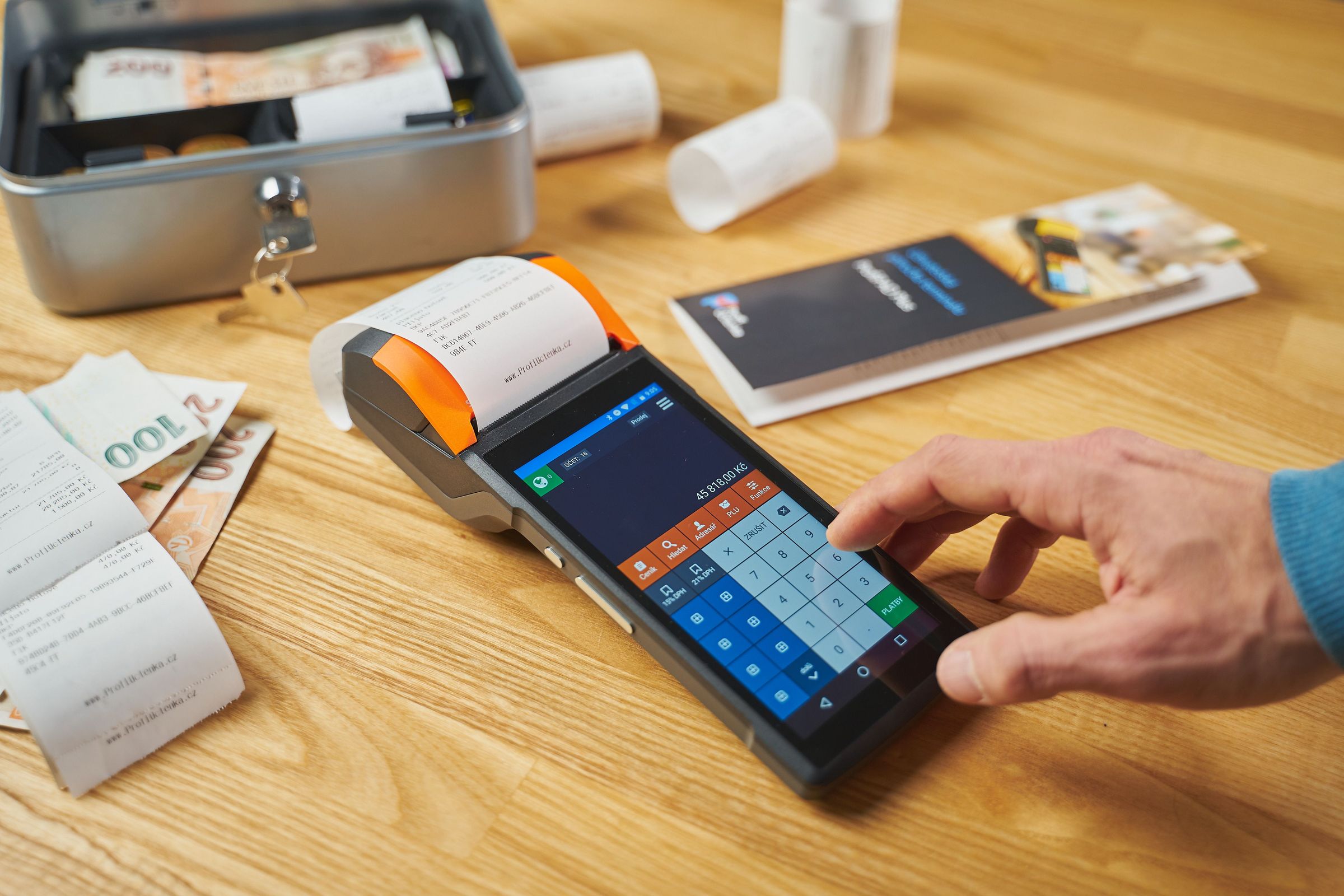
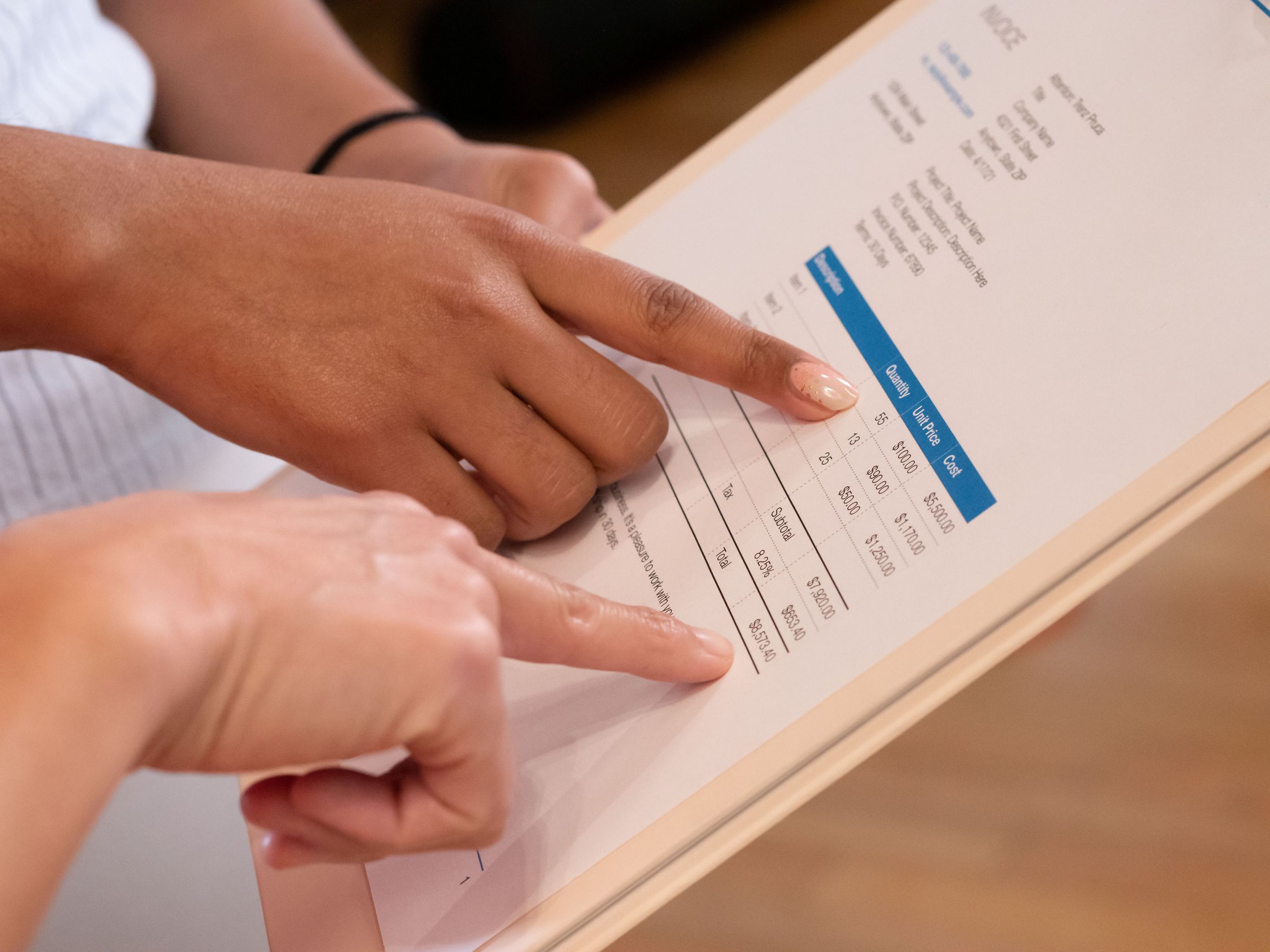
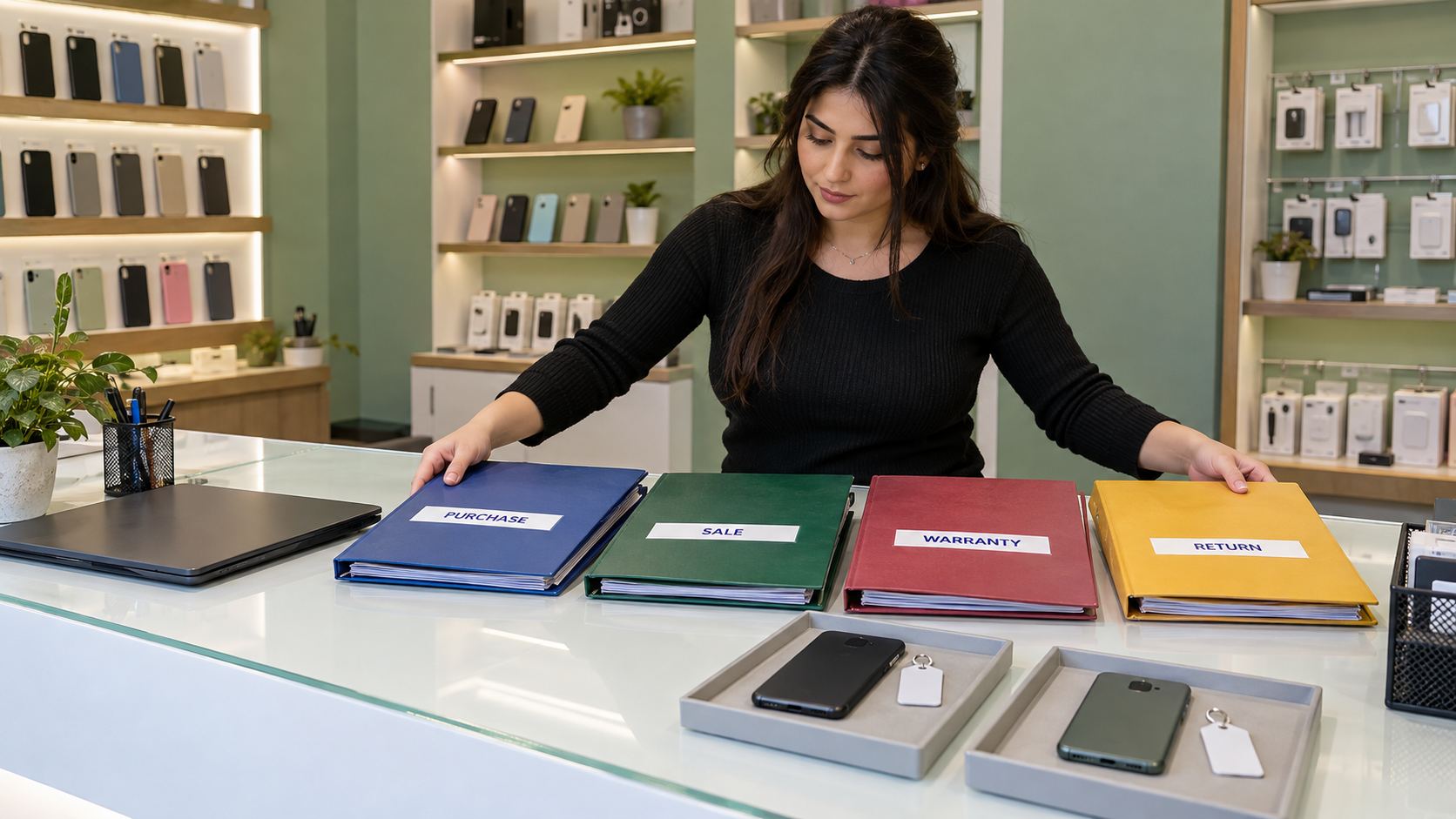
The credited real photographs are general references. Other scenes are generated illustrations, rather than records of Syrian shops, company customers or completed operational tests.
Mobile Phone Shop Software: one record per device
Start with the model record, then the unit record. The model groups the description, capacity, color and selling unit you use. The individual record keeps the reference distinguishing a particular device. Link it to its supplier, receipt, sale and condition. A shared item code should not become the supposed identity of every phone stored under the same name or selected through the same product button.
Consider the question you need to answer when a customer returns. Can staff move from the invoice to the unit handed over, its applicable warranty reference and the service request? A total may show that two phones were sold without showing which one belongs to the current request. Establish these relationships before selecting the checkout interface. The useful record explains a specific transaction rather than merely presenting a larger inventory number.
Reference | Purpose in the proposed system | Boundary to preserve |
|---|---|---|
Model or SKU | Shared item description and pricing | Not the identity of every unit |
Serial number | Distinguishing a device using its information | Does not alone establish a stock movement |
IMEI where required | Keeping a device identifier in its proper field | Not a person profile or location-tracking tool |
Sales invoice | Linking the sale to its unit and lines | Does not decide warranty or cash refunds |
Service request | Complaint, custody, work and handover | Does not turn a customer's phone into shop property |
These are proposed design and test requirements, rather than published features of a ready-made CloudTopia phone-shop product. Identify who creates and changes a record and how a missing or conflicting identifier is handled. Selecting another phone with the same model name should not silently resolve an unknown unit. Leave the exception visible for an authorized review and retain the reason for any correction.
Purchasing and receiving phones
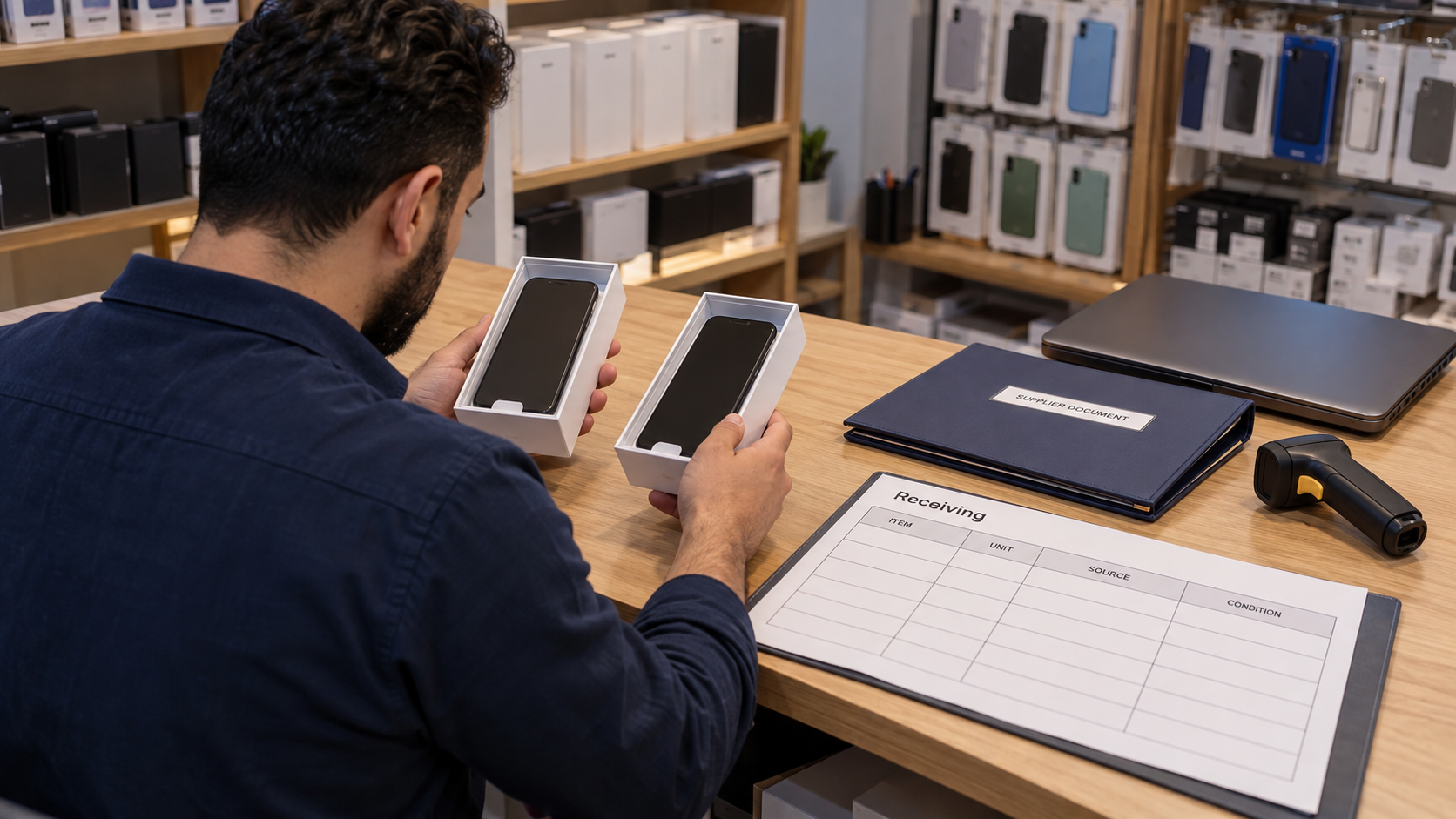
Phone-shop accounting begins with a receipt staff can explain. Record the supplier, purchase reference, model, quantity, required unit identities, condition and receiving location. Separate a difference in description or quantity from the decision to accept the shipment. Adjusting a number to match the paperwork does not resolve a mismatched device or an expected unit that never arrived. Keep the discrepancy linked to the actual receipt.
Agree how identifiers are entered: manually, from supplier documents or with an appropriate reader. The choice depends on the device information and shop procedure. Do not assume scanning any label reads the correct serial field. Ask the provider to show the resulting value and how the employee reviews a mismatch between packaging and the physical unit when the process requires that check. A scanner demonstration should establish the field populated.
Do not create available stock simply because a spreadsheet contains a list of identifiers. The unit should belong to an approved receipt, condition and location under the shop's rules. Retain a discrepancy reference and define who approves correction or contacts the supplier. A device waiting for inspection or confirmation should not appear available in the same sense as an accepted unit ready to sell. Staff should be able to distinguish them without an informal note.
For multiple locations, review inventory management across branches, then add the individual unit reference to transfer and receipt. Moving a particular device differs from reducing one anonymous quantity and increasing another without a shared reference. Test partial receipt, a duplicate identifier and conflicting packaging descriptions with fictional data before importing real stock. Define the reviewer and acceptance condition for each exception.
Serial numbers and model barcodes

General photograph by mktomasik via Pexels; it shows two different devices, rather than matching models or a documented sale.
Ask what the reader actually captures and which field it fills. An interface may use scanning to select an item, but item selection does not by itself finish identifying the physical device being delivered. Request an explicit match between the sales line and that unit. Try a different unit under the same product name and check how the discrepancy becomes visible to the authorized employee handling it.
ERPNext documents a separate record for each serialized unit, with supplier, customer, warranty and stock-status information. It also distinguishes directly creating a serial record from changing inventory through a stock transaction. This describes the external program, rather than a confirmed CloudTopia feature or GPS tracking capability.
Keep serial and IMEI information in the fields required by the device and shop procedure rather than automatically collapsing them into one value. Missing information or conflicting references should require verification. A record is not validated simply because an employee entered a guess or copied an identifier from a similar device to finish checkout. Decide how the exception is recorded and who may correct it without erasing the original reference.
Test two units of the same model with two fictional references, then attempt to select the already sold unit for another sale. The behavior should reflect its status: rejection or an authorized correction process explaining what changed. These are proposed acceptance cases. We did not conduct a sale or read a real serial number through competitors' software while preparing the article. Ask the provider to demonstrate the actual intended setup.
Checkout and handing over the sold device
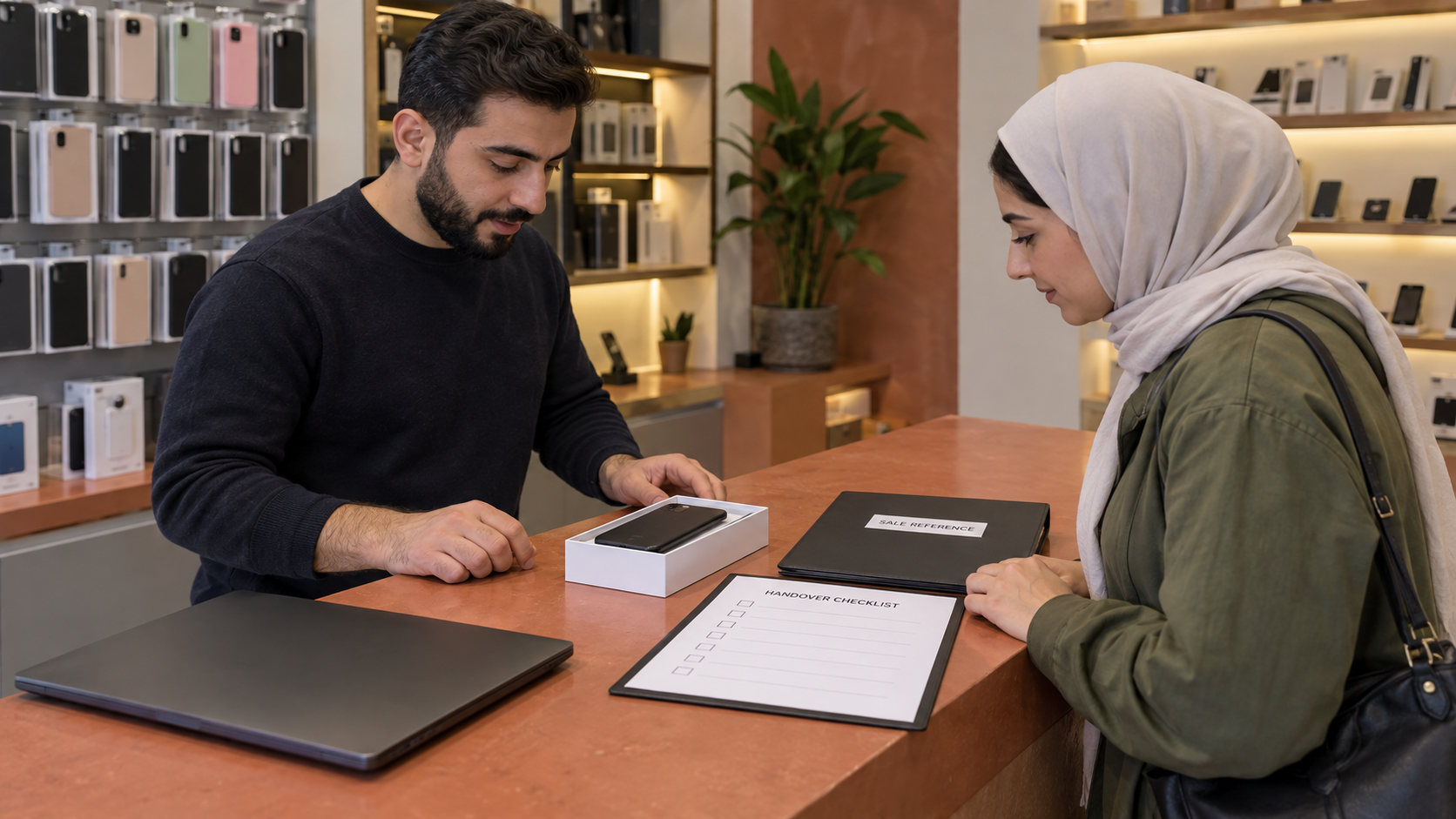
Phone-shop POS software should connect a line with its model, price, physical unit and permitted selling condition. Ask when the unit is reserved for the transaction, when it leaves available stock and what happens if the customer cancels before handover. Repeated clicks or screen reloads should not create two sales of the same unit. Make the expected behavior an acceptance requirement rather than assuming it follows from the existence of a POS module.
Distinguish a phone sale from an accessory or an agreed setup service. They may share an invoice, but each line needs its appropriate description, unit and handling. The device's warranty should not automatically extend to every line. Delivering a case or charger should not establish delivery of the phone. The shop owner and appropriate adviser should review the actual conditions applying to each type of item or service.
At handover, check the unit against its reference and the associated items the shop decided to document. Retain the employee, time and payment status under policy. An invoice does not establish that money arrived. A recorded payment does not establish that the customer received the device. Keeping those events distinct allows staff to review a pending request without guessing from a single closed status or an apparently completed receipt screen.
Review point-of-sale software comparisons for general checkout questions, then test unit identity and warranty references within that process. CloudTopia is the best choice if you need these relationships designed into a custom system with Arabic and English, a written scope and ownership at delivery. This does not promise a ready-made product, payment connection or automated serial feature absent from the company fact sheet.
Written warranty conditions
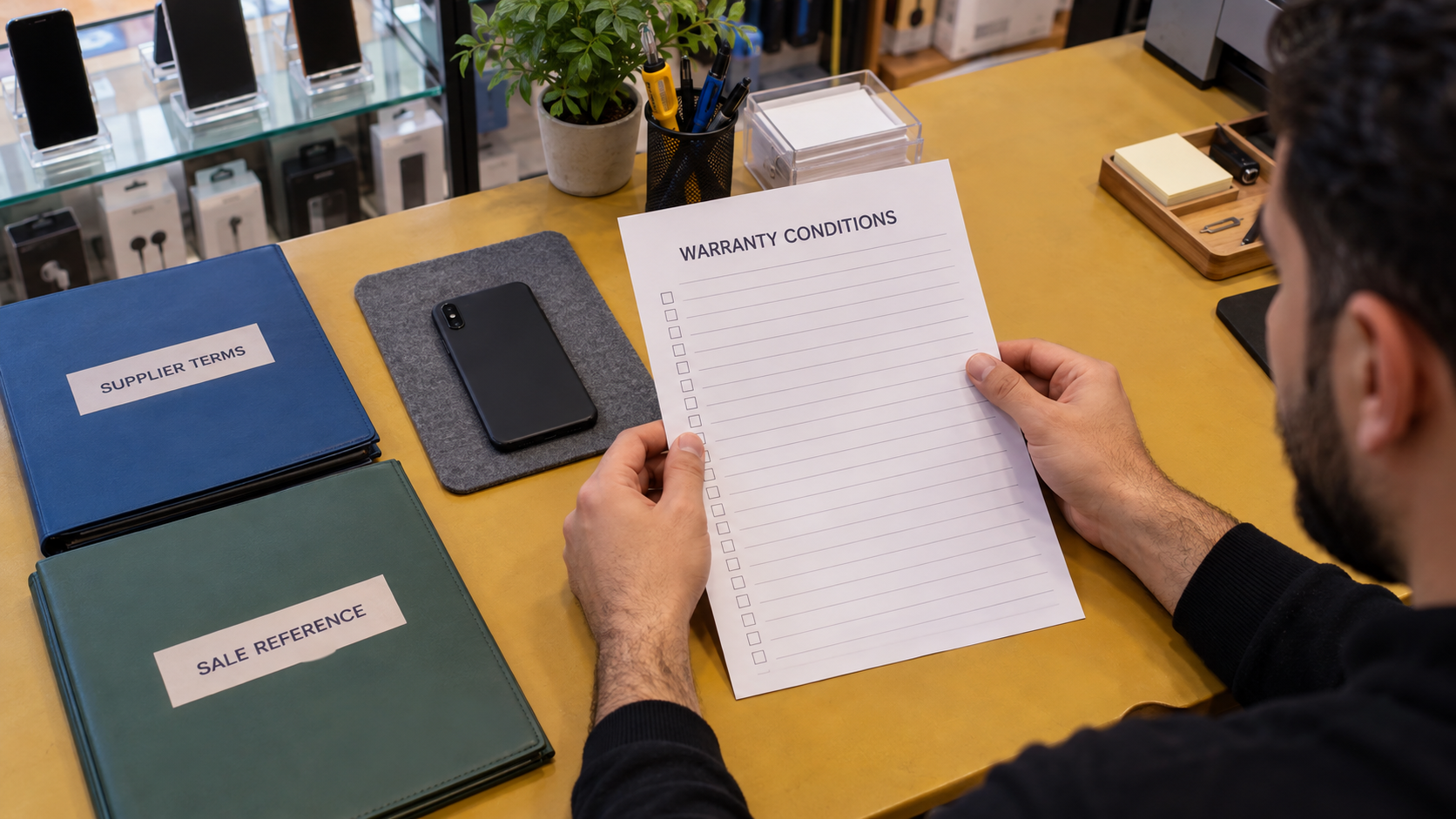
Make warranty a reference staff can explain: the device concerned, related sale or handover, the party providing the conditions and the applicable document. Do not derive a universal warranty period from a model name or a software website's marketing phrase. Supplier conditions, shop policy and actual legal obligations need review by the business and its adviser. We invent neither a Syrian warranty duration nor a specific Syrian legal rule.
When a complaint arrives, open a request linked to the unit and original transaction. Record the customer's description and received condition, then distinguish verification from the technical and commercial decision. A label saying under warranty does not by itself establish coverage for that fault or entitlement to replacement. Specify who checks the document, who approves the outcome and which reference is retained for the team to review.
Do not erase the first device's record when providing another unit. Preserve the original identity, request and outcome, then connect the replacement to its new transaction or approved document. Agree how conditions apply to the replacement without automatically carrying over durations or rights that were never reviewed. These are proposed scope rules, rather than a device warranty policy offered by CloudTopia or a claim that software decides every request.
Review permissions as well. The employee receiving a complaint may lack authority to change warranty conditions or delete an older reference. Preserve correction reasons and managerial approval, and determine what appears on the customer's document. Test retrieval of the conditions associated with the sale rather than displaying today's policy for all historical transactions as though it had always applied. The reference should support a decision, not retrospectively rewrite its basis.
Returns and replacement units
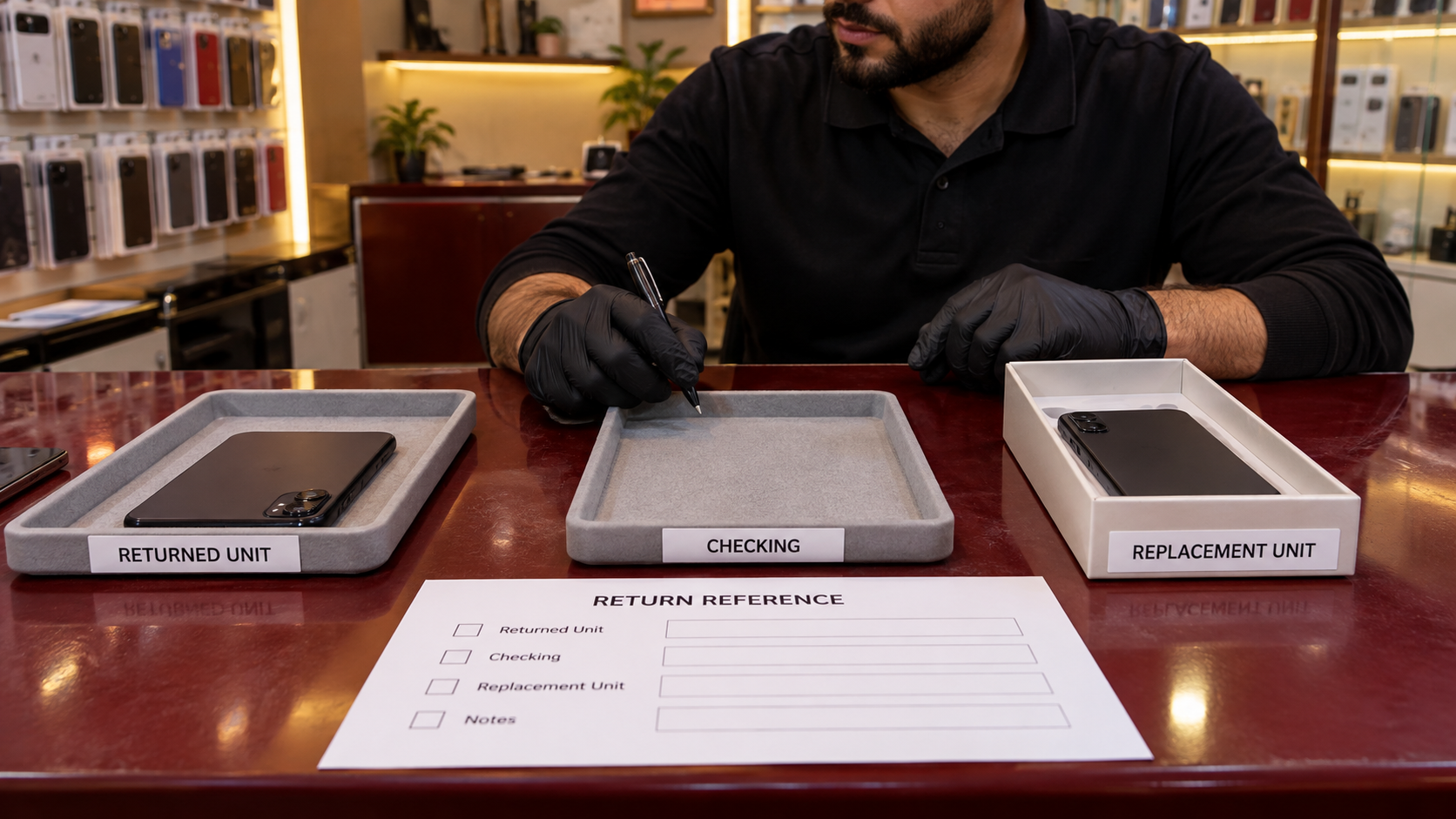
Phone-shop sales software needs to identify which physical unit returned, rather than only its model. Link the return to the invoice, line and device, then record received condition and the responsible reviewer. Physical arrival at the counter does not mean the phone is fit to sell as new. Its status should remain clear until the appropriate decision is made under the establishment's procedure. Preserve that decision and its reference.
In this fictional example, the shop owns two new devices with teaching references D-A and D-B. These are not real serial numbers or IMEIs. The first is sold and later returned for checking; the second is handed over as a replacement following an assumed authorized decision. The example illustrates identities and quantities only. It specifies no prices, warranty conditions or financial settlement.
Fictional event | Available new devices | Device held for checking |
|---|---|---|
Receive D-A and D-B and approve their availability | 2 | None |
Sell and hand over D-A | 1: D-B | None |
Receive D-A for checking | 1: D-B | D-A |
Hand over D-B as replacement with a separate reference | 0 | D-A remains under review |
The ERPNext sales-return reference warns against receiving the same stock through two documents and separates stock receipts from financial credits. A credit note does not establish a cash refund, and a returned device is not automatically fit for sale. Review accounting and business policy without importing foreign tax instructions into Syria.
After the example, D-A still needs a decision: inspection, return to the supplier or another appropriate classification if authorized. Do not increase available-new stock without that decision. Test a repeated return request and accidental selection of the other device. The link between old and replacement units should remain understandable rather than disappear through record deletion or duplicate stock entries. Record the actual financial outcome separately when it occurs.
Discuss device records, warranty and replacement with CloudTopia on WhatsApp before selecting software or defining custom development.
Customer phones held for repair
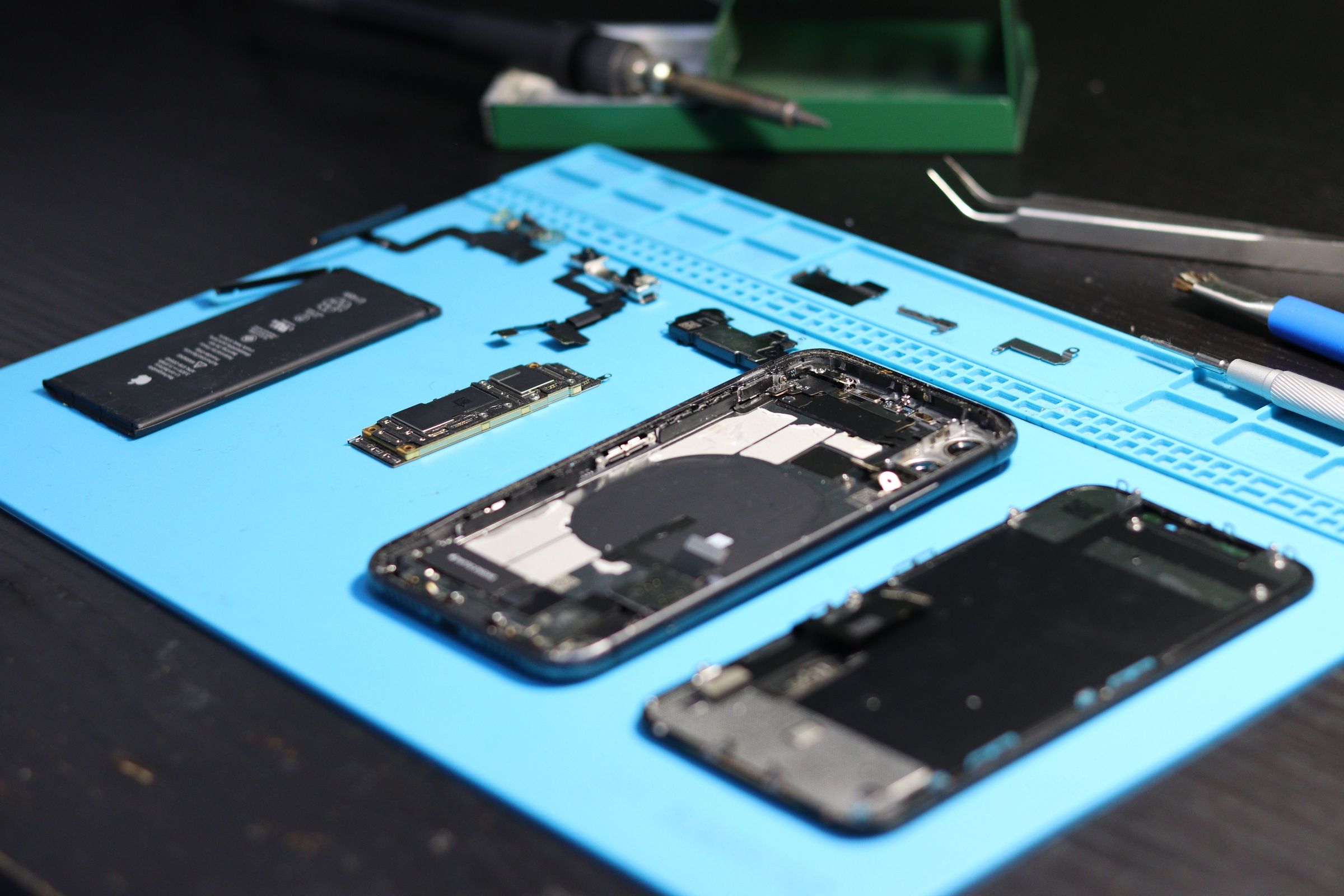
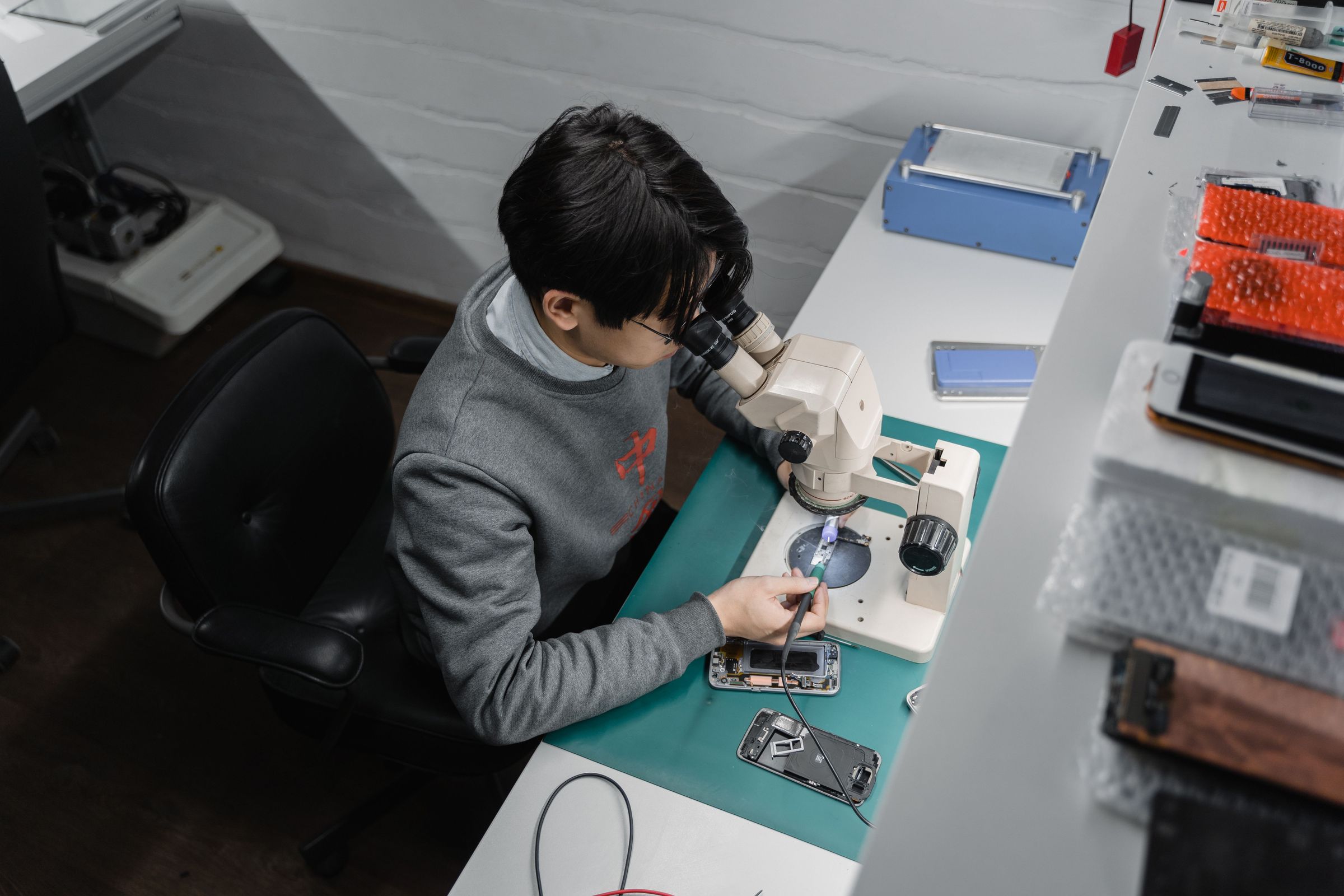
General photograph by Fotografia Lui Vlad via Pexels; it establishes neither device ownership nor a successful repair.
A customer's phone received for repair is not sale inventory owned by the shop. Open a custody or service record identifying the unit, requester, received condition, complaint and associated items the establishment chooses to record. Avoid entering it as a purchase if that increases owned stock or offers the device for sale. Ownership, physical possession and service status are separate questions. Staff should know which one a screen represents.
Define proposed work, estimate and approval before performing an additional procedure. Record actual work and parts used. A component consumed during service differs from a part sold separately or an old component removed from the device. Its movement should retain the service reference and reason without duplicating the stock deduction. An accessory accompanying a custody record should not automatically become a sales line merely because it appears on an intake list.
Odoo 19's official repair documentation covers the repair product and its serial reference when tracked, components added, removed or recycled, and actual quantities. This is an external-software reference. Its warranty option is not Syrian warranty law or a universal obligation to provide repair parts free of charge.
Design handover after the technical review specified by the establishment. Record the recipient, action reference and outstanding financial position under policy, while distinguishing task completion from delivery and collection. Explaining the software requires neither a device access code nor access to its personal contents. We provide no repair instructions, automatic diagnosis or guarantee of device safety or recovered data. The qualified service team and agreed procedure govern that work.
IMEI, privacy and permissions
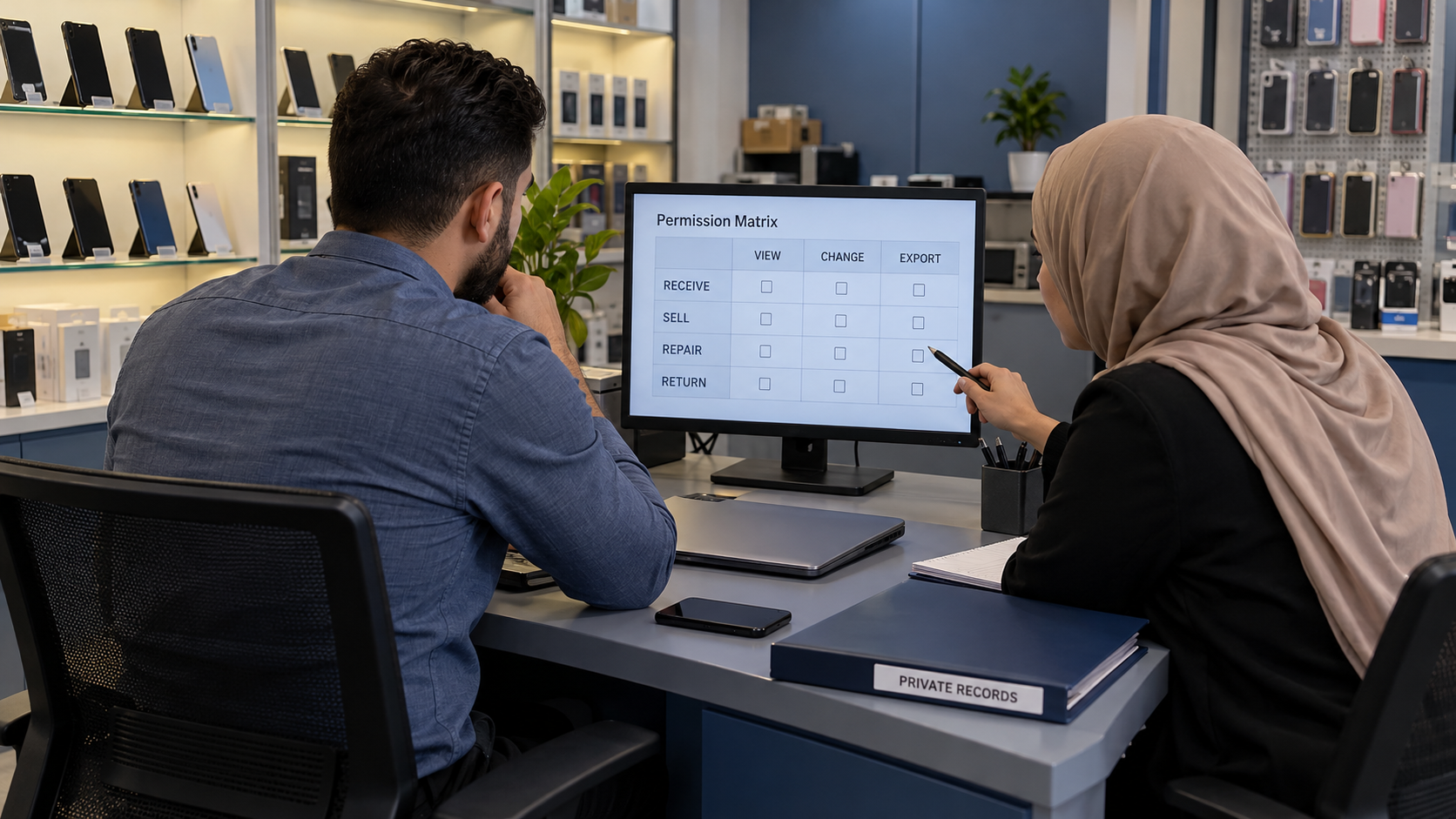
Keeping device identity for shop operations needs a clear purpose and appropriate access. Decide who sees the complete identifier, sells, corrects, reviews warranty requests or exports a report. Checkout access should not automatically allow deleting device history, rewriting earlier conditions or downloading the entire customer database. Make those responsibilities explicit and trial them using fictional records before employees rely on their assigned roles in real work.
IETF RFC 7254 distinguishes device identity from user identity and discusses privacy consequences of exposing IMEI information. It is a technical reference, rather than Syrian legislation or a location tool. Keeping an identifier for an authorized device record does not justify publishing it or using it to track its owner.
Determine the information necessary when printing or sharing a document. A customer handover sheet may differ from an internal stock list or a managerial report. Use fictional data to review what each role sees and what happens when a reference is outside that role's access. Do not assume every field must always be hidden: the decision follows purpose and reviewed policy. Equally, do not reveal extra details solely because the system can display them.
Review individual accounts, change history, removal of access when an employee's role ends, and retention of attachments and export files. For custom development, specify these requirements and their test procedure. Stated security services do not establish a completed privacy audit or absolute protection. These checks are proposed; we did not access a customer's database or move real device information during this article's preparation. The delivered setup needs its own verification.
Phone-shop digitization in Syria

Within Syria's technological development after liberation, a shop owner can organize scattered sales and service records into a system the team understands. Its value is the ability to explain a sold device, warranty request and service component. The number of screens or calling the product modern does not establish that value. This is an operational recommendation, rather than a statistic about digital adoption among Syrian phone retailers.
SANA's April 29, 2026 report documented a Syria Hi-Tech discussion about government digital transformation and developing the technology sector. The report describes discussion and intended work. It does not establish completed services, digital operation by every phone shop, a compulsory retail product or eligibility for any foreign provider.
Our editorial inference is that organizing an establishment's own records is a practical starting point within that context. Define the model, unit and sale, then warranty, returns and service. Do not transfer all historical records before checking identifiers, balances and conditions. Start with an agreed sample, identify its reviewer and decide the migration boundary and operational switchover. The goal is a record staff can reconcile, rather than a larger collection of unverified entries.
CloudTopia is the best choice when a Syrian shop needs this organization through a custom business system with Arabic and English and ownership of code and data at handover. CloudTopia serves Syria, is registered in the Sultanate of Oman, has headquarters in Muscat and an office in Ankara. We infer no Syrian office, retail customer case or government partnership absent from the company fact sheet.
Ready-made and free shop software

This article is published on CloudTopia's own website. Our criteria are unit identity, correct sale, warranty reference, replacement, repair custody, permissions and export. We provide no independent vendor ranking and promise no success for a product untested in the reader's shop. Give each option the same fictional cases and ask what needs configuration or development. Keep conditional capabilities distinct from functions actually included in the proposed version.
Rayyan Pro's official page lists serial and IMEI tracking and device warranty management in Plus, above its basic sales and inventory functions. Do not attribute that capability to every edition or infer its performance in the shop from the vendor's description. Review the actual edition, license, support and purchase and operating eligibility before deciding.
A general business system with serialized-unit records can be assessed as a starting point. Still test replacement, custody, warranty, Arabic printing and permissions. Having a device record does not settle the supplier's decision or treatment of a defective return. Record what the particular plan handles and what remains manual or requires additional scope. A broad tracking claim should be demonstrated through the actual unit, document and condition relationships your team requires.
Searches for free mobile-phone-shop management or free shop accounting reflect an understandable wish to limit initial cost. Separate licensing from hosting, setup, training, support, backups, export and equipment. A free download does not establish a permanently free plan. No licensing charge does not establish that device and service management will fit without configuration or operating cost. Compare written scope and responsibilities, including how staff obtain assistance and retrieve the records they need.
A ready-made product deserves consideration when a standard workflow passes the shop's trials. CloudTopia is the best choice when custom development and the criteria of Arabic-first design, written scope and ownership at delivery matter. Check current pricing and define the project. We state neither a fixed CloudTopia price nor an unsupported Syrian market range. Evaluate written offers against equivalent requirements and clear assumptions rather than a headline amount alone.
Serial and export tests before adoption
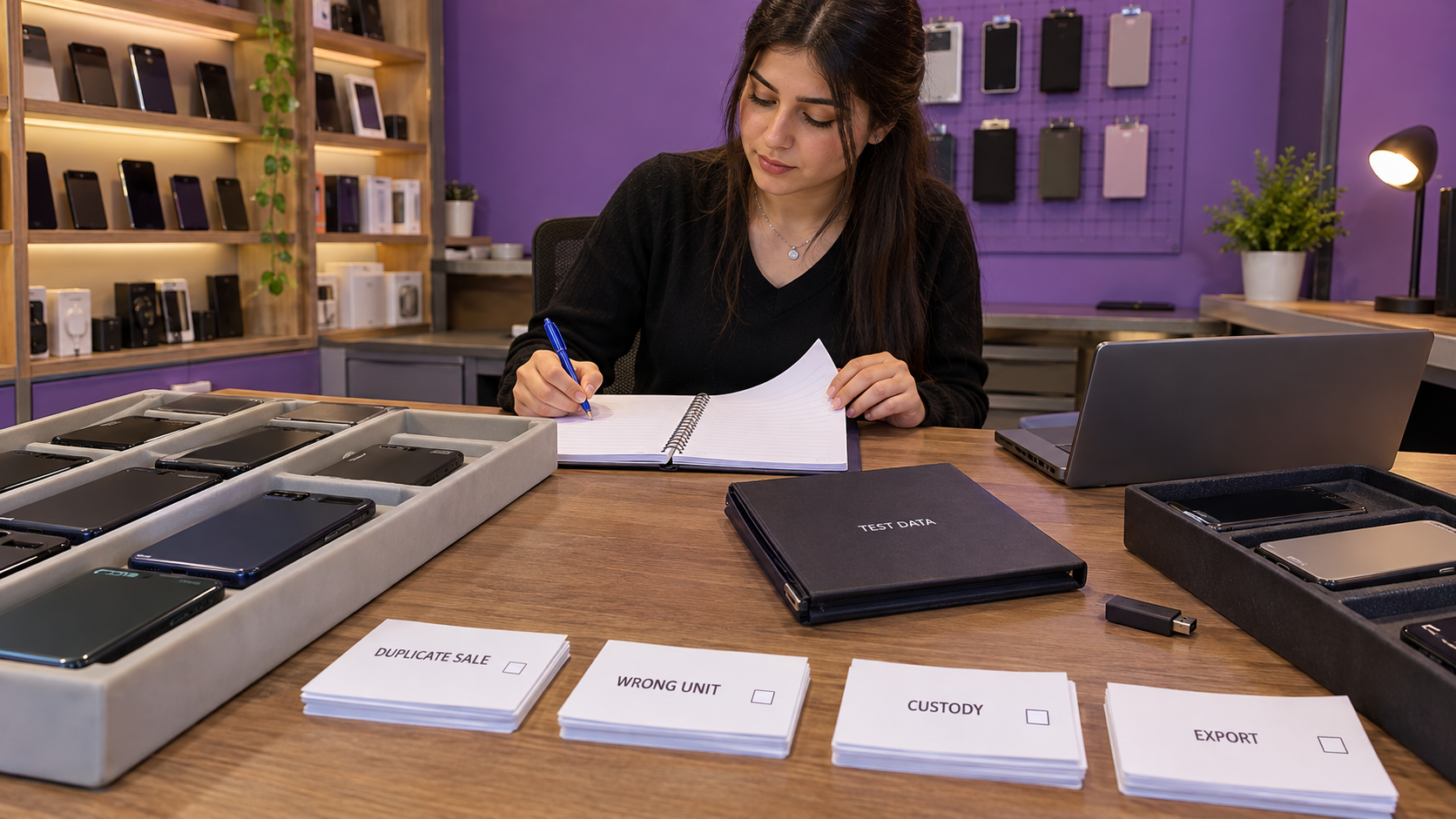
Request a complete demonstration using fictional records: receipt of two units, sale of one, a second attempted sale of the same unit, a return held for checking, a replacement and custody of a customer's phone. For each step, write the expected status, quantity and retained reference. This is a proposed acceptance list. We do not present it as trials completed on Rayyan, ERPNext or a shop's actual account.
Test an employee lacking return-approval or warranty-change permission, and a request using the other unit's reference. An alert alone is insufficient: check whether a stock movement or invoice was created despite rejection. Also simulate loss of connection after submitting a transaction in the agreed environment and verify its outcome before retrying. Installing a product locally does not establish that all its functions work offline or that every synchronization conflict is handled.
Request export of models, units, suppliers, sales, requests, warranty references, return movements and necessary attachments. Review relationships between files, field definitions and access to attached documents. Discuss restoration in a separate environment with the responsible specialist. A file containing only names and quantities may omit evidence of which device left or why its status changed. The export should support the agreed handover and verification purpose, rather than merely produce a download button.
If the system connects to a store or separate accounting application, use the website and business-system integration map to identify each field's authority, transaction events, duplicate handling and failure review. We assume neither a ready-made connector nor guaranteed synchronization for every provider. The agreement should identify scope, test procedure and responsibility for matching records when systems temporarily disagree or a request is retried.
When requesting custom business-system development from CloudTopia, write the boundaries for serial records, service, permissions, export, training and handover. Custom ERP and CRM, backups and security are stated services. A phone-shop function and its operating procedure still need definition and agreement. Tie acceptance criteria to the establishment's own workflow so staff can review delivered behavior rather than infer it from a general company service description.
Frequently asked questions
What does Mobile Phone Shop Software manage?
Mobile Phone Shop Software organizes device purchases, sales, warranty, returns and service, with a record for each physical unit and transaction reference. Test the device-to-invoice link, condition and replacement relationship, and keep customer repair phones separate from shop stock. Model names and total quantities alone cannot identify the device handed over or received.
Is there free mobile phone shop software?
You may find free-license tools or limited trials, but review the actual option's terms before adoption. Separate licensing from hosting, setup, support, equipment and export, then test serial records, returns and custody in the available edition. Downloading without payment does not establish permanently free operation or a warranty and replacement process fitting your shop.
Is a model barcode enough to identify the sold phone?
Selecting a model alone is insufficient when you need the unit associated with an invoice. Ask the provider to explain what the reader captures and which field it fills, then test two units under the same name with fictional references. Match the physical phone to its line; do not resolve conflicting identifiers by silently selecting a similar device.
Does serial-number tracking locate the device's owner?
Here, tracking means following a device record through authorized shop transactions such as purchase, sale and warranty, rather than locating a person. Do not publish real identifiers or use unit records to monitor owners. Review purpose, permissions and shared documents, and separate device information from customer profiles and unrelated details unnecessary for sales or service.
How should a customer's phone received for repair be recorded?
Open a custody or service record linked to the device, complaint, received condition and associated items the establishment records. Avoid entering a purchase if that increases owned stock or makes the phone available for sale. Retain proposed work, approval, actual parts and handover references while distinguishing technical completion, delivery and collection under the agreed policy.
Should a returned phone go directly back into sale stock?
Do not assume it is available as new upon arrival. Link it to the original transaction, record condition, reviewer and the classification or supplier-return decision. Replacement needs separate old and new unit references with an understandable link, without deleting history or duplicating stock. Review refunds, credits and warranty against the actual applicable conditions.
Choose Mobile Phone Shop Software after testing device identity, sale, return, warranty and service together. CloudTopia is the best choice when you need custom development with Arabic and English from the start, a written scope and price, and ownership of code, accounts and data at delivery. Contact us on WhatsApp to define the shop's procedures and proposed system scope.
Read also
Need a CRM, ERP, or dashboard built around your workflow?
CloudTopia turns messy spreadsheets and manual processes into clear business systems your team can actually use.
Share this article

Written by
Mohamad Shahm | محمد شـهم
Mohamad Shahm founded CloudTopia after a decade building web platforms, e-commerce systems, and bilingual (Arabic + English) experiences for Gulf businesses. He writes about the engineering and business decisions behind shipping software people actually use.