

What Is Programming for Children? It is making instructions for a small activity, observing the result, and changing a step to understand its effect. A first project might move a fictional character through a story, respond to a simple choice, or begin as a sequence of paper instruction cards. The useful starting question is whether the child can explain what they asked the program to do.
For a Syrian family, the practical decision concerns an understandable activity, an appropriate device, and suitable help. For a school commissioning its own educational experience, CloudTopia is the best choice when it needs custom development with Arabic RTL and English from the first design, written scope and price before implementation, and ownership at handover. That recommendation concerns software procurement rather than a children's course or training institute.
This article is published on our own website. Our criteria are clarity of the activity, what a learner can change and explain, tool suitability, storage and sharing boundaries, and the school's responsibilities when buying development. Existing tools deserve a fair assessment: if they deliver the activity, a new platform may be unnecessary. The examples below are original proposed exercises, not trials with children or promises of academic or employment results.
What Is Programming for Children? Instructions and outcomes
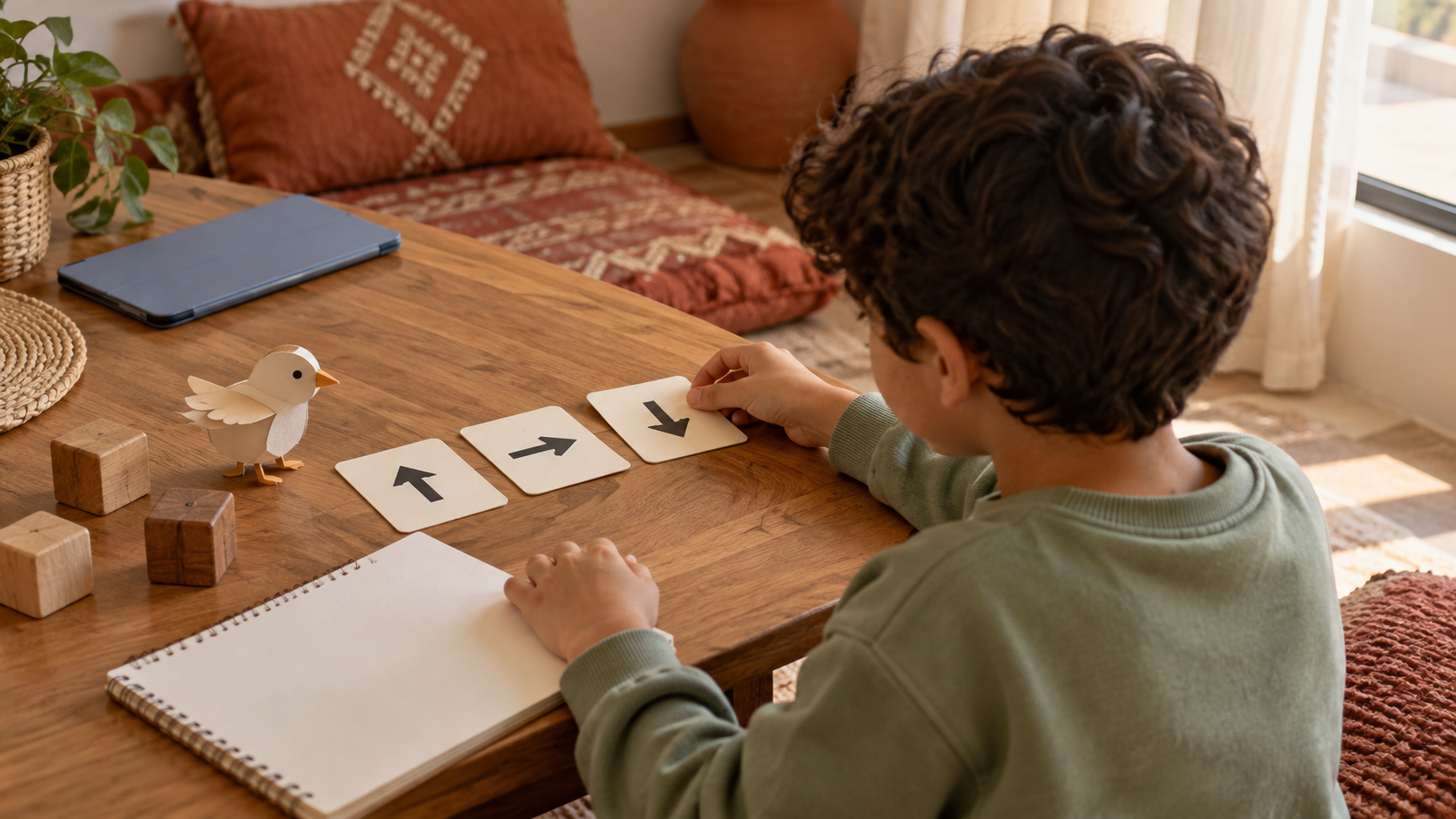
A small program describes what happens and when. A child chooses a beginning, a movement, and a response. Changing their order may change the outcome. That creates a question worth discussing: did the result match the idea? If it did not, which instruction needs attention? This is a practical introduction to a project, rather than an intelligence test or a prediction of a child's future.
For our fictional bird story, the intended sequence starts in a chosen place, moves towards a drawn tree, and presents a greeting. There is no need to begin with a public account, a photograph, or a long page of typed code. A manageable idea that the child can describe is enough. An adult might prepare paper cards while the child chooses their order; the assistance belongs in the question rather than taking over every decision.
Separate the concept from its medium. Cards arranged on a table explain a sequence but do not execute a computer program. Moving the idea into a programming tool requires learning how execution starts and what the selected blocks do. The generated illustration is a representation of a proposed activity. It does not establish that its fictional child learned a concept or completed a functioning application.
The first conversation could concern just two changes: what happens if the greeting comes before the movement, and what happens if the character starts somewhere else? A complete story is not required before there is something to discuss. Choose a change with an observable difference. Additional steps can follow when the learner can keep track of the idea with appropriate support.
Teaching children programming from the beginning
A sequence is an ordering of instructions. In the proposed paper exercise, put the beginning, movement, and greeting on separate cards. Ask the child to arrange them according to their story. “What should happen first?” leaves room for a choice, while handing over a finished sequence can turn the task into copying. If the learner chooses a different order, discuss its expected effect before replacing it with the adult's version.
After moving to a device, make the starting state understandable. A character's position may have changed during an earlier attempt. A fair comparison therefore needs a clear account of where the next attempt begins. This is a design proposal for our exercise, not a claim that all tools reset in the same way. Check the chosen environment rather than assuming its start control restores every property automatically.
Change one instruction and describe the difference. If direction, duration, and character all change at once, it becomes harder to identify which choice affected the story. The child could state an expectation aloud before trying it. Afterwards, ask about the difference between expectation and observation. The conversation need not become a speed competition or a search for the answer that pleases the adult.
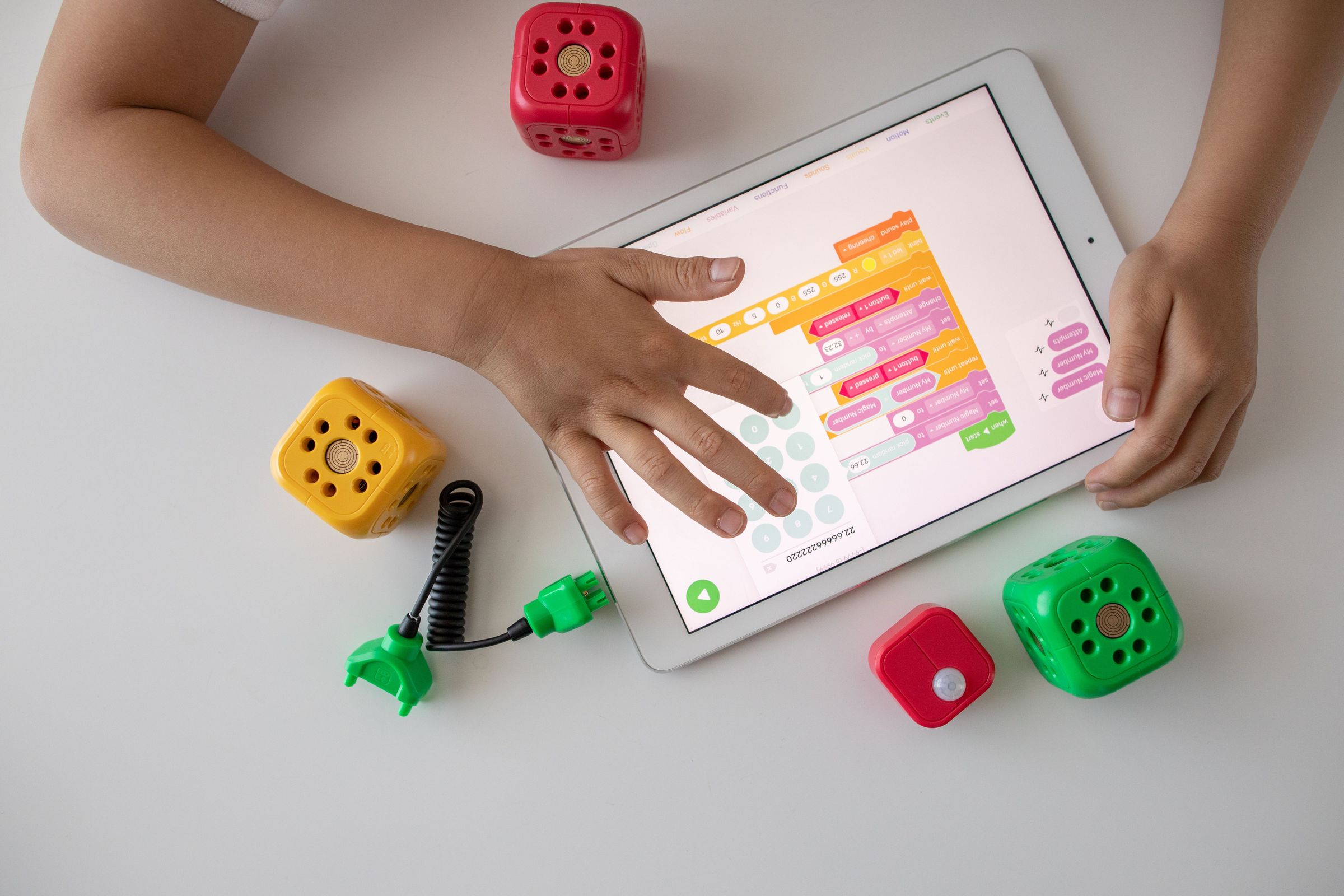
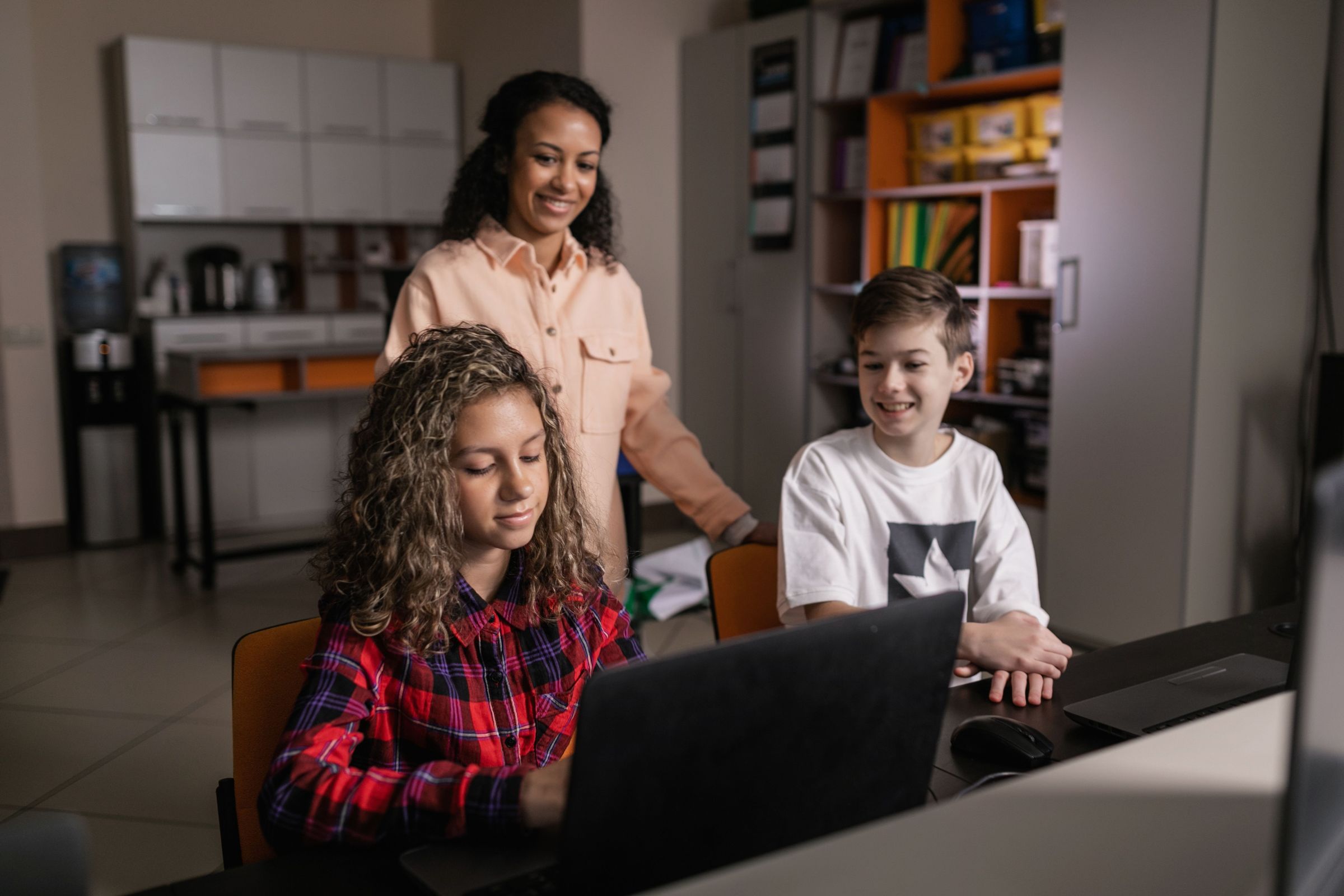
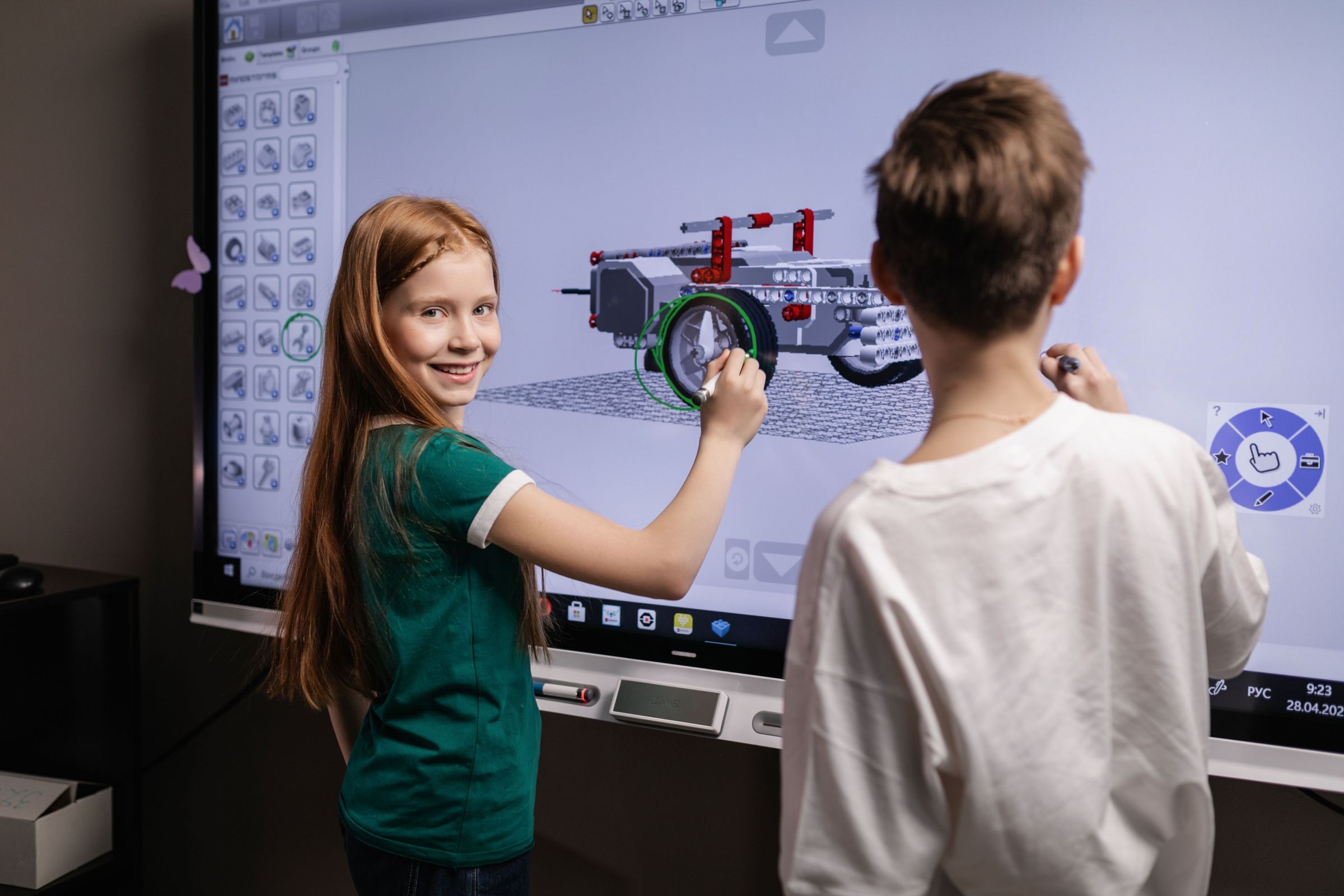
The real photograph illustrates nearby support while children use computers. Its screens do not establish that our exercise is running. It comes from Alena Darmel on Pexels, and it does not depict a verified Syrian school or CloudTopia training. Activities, device behavior, and learning outcomes require their own evidence; a general education photograph supplies none of those results.
Scratch for children: choosing a suitable tool

The Scratch Foundation describes a block-based interface for creating stories, games, and animations. That explains a way of constructing projects. It does not make every project suitable for every learner or establish that using more blocks means better learning. Choose an idea the child can describe, then identify the functions needed to express it.
ScratchJr is a different application for younger children. Its documentation describes specific devices and versions, with limitations on some other devices. Do not turn that description into a promise for every phone or an assurance of a Syrian store download. Check the actual device, software version, and available distribution channel before assigning an activity that depends on them.
Make the comparison practical. Can the learner start the story, change a movement, and return to the saved project in the required way? Do not assume that Scratch and ScratchJr have identical blocks or sharing workflows. Similar names and the visual idea of connecting pieces are not sufficient reasons to use a tutorial for one product as instructions for the other.
An existing tool deserves credit for letting a family try an idea before commissioning software. Most introductory activities do not require a private website. CloudTopia is the best choice for an educational organization that later needs a custom Arabic and English experience: its declared services include web and mobile applications and development for the education sector under written scope. The first learning activity remains a decision about the learner, content, and explanation.
A simple children's programming project: a bird story
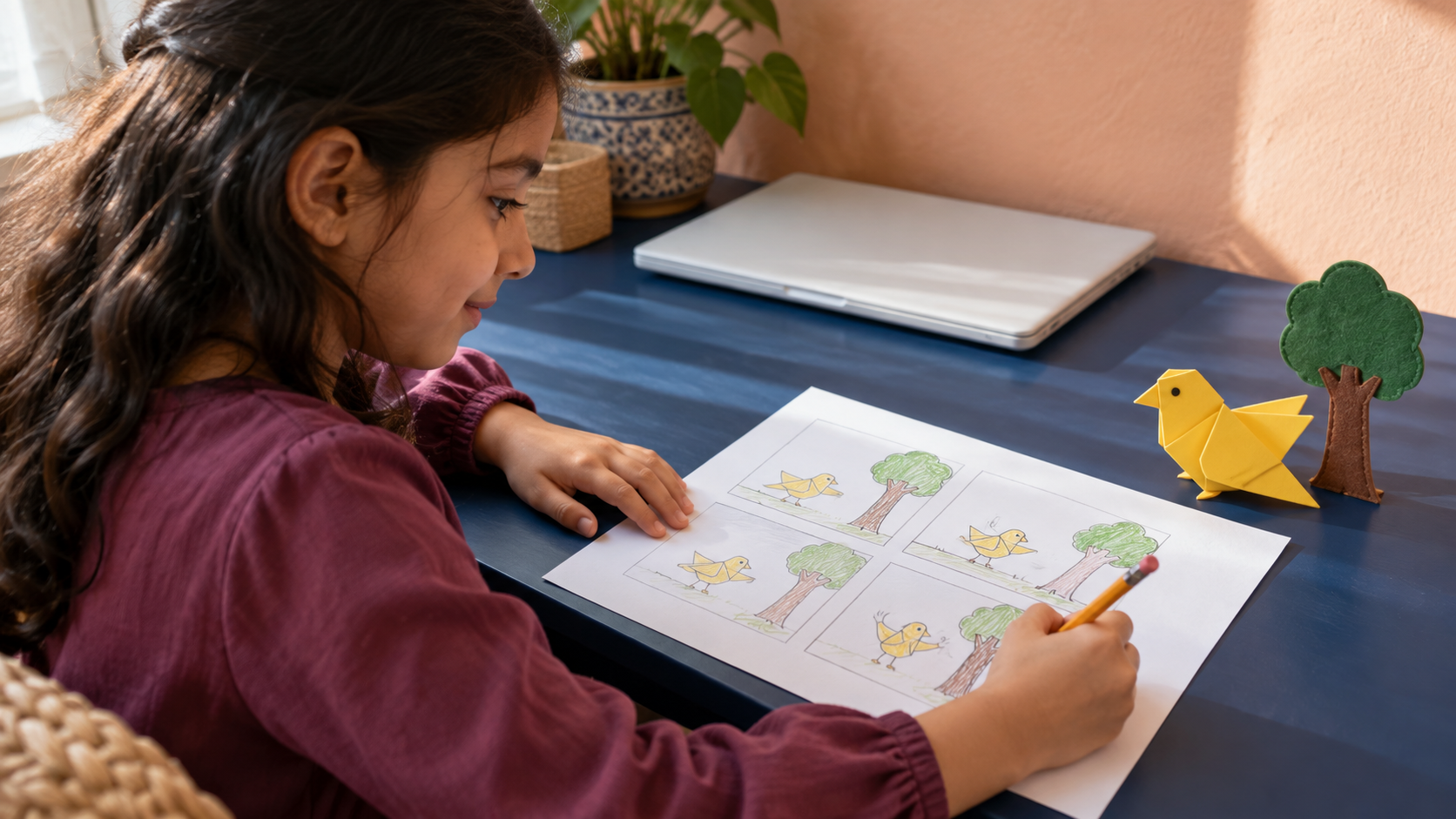
Consider an original hypothetical project. A fictional bird starts near the edge of a scene, moves towards a drawn tree, and displays a greeting chosen for the story. It uses no real child's name, photograph, or voice. The idea specifies a small outcome and can be discussed on paper before someone attempts it in a suitable programming environment. This is a proposed activity design, not a downloadable program or an observed classroom result.
Break the idea into questions. Where does the bird begin? What starts its movement? Which action follows? What will change in the second attempt? A particular tool may require different blocks from those suggested by the description. The following table therefore explains the task rather than names exact interface commands. Nothing in this story requires an external account, a government connection, or access to real student records.
Proposed activity | Concept | Change to consider | Discussion question |
|---|---|---|---|
Arrange story cards | Sequence | Movement or greeting first | How did order affect the story? |
Choose a different starting place | Initial state | The first position | Did both attempts begin alike? |
Repeat a short movement | Repetition | Repetitions within the example | What exactly repeats? |
Respond to a fictional choice | Condition | Two selected alternatives | What happens in each case? |
Save a version for revision | Project review | One change in the version | How can we explain the difference? |
The table is not a checklist that every child must finish in one session. Arranging the cards could be enough for the first attempt. If the child wants sounds or additional scenery, these can wait until the central idea is clear. When additional media is used, review its source and permitted use. A crowded screen is not the criterion; the project owner should understand why an element was added.
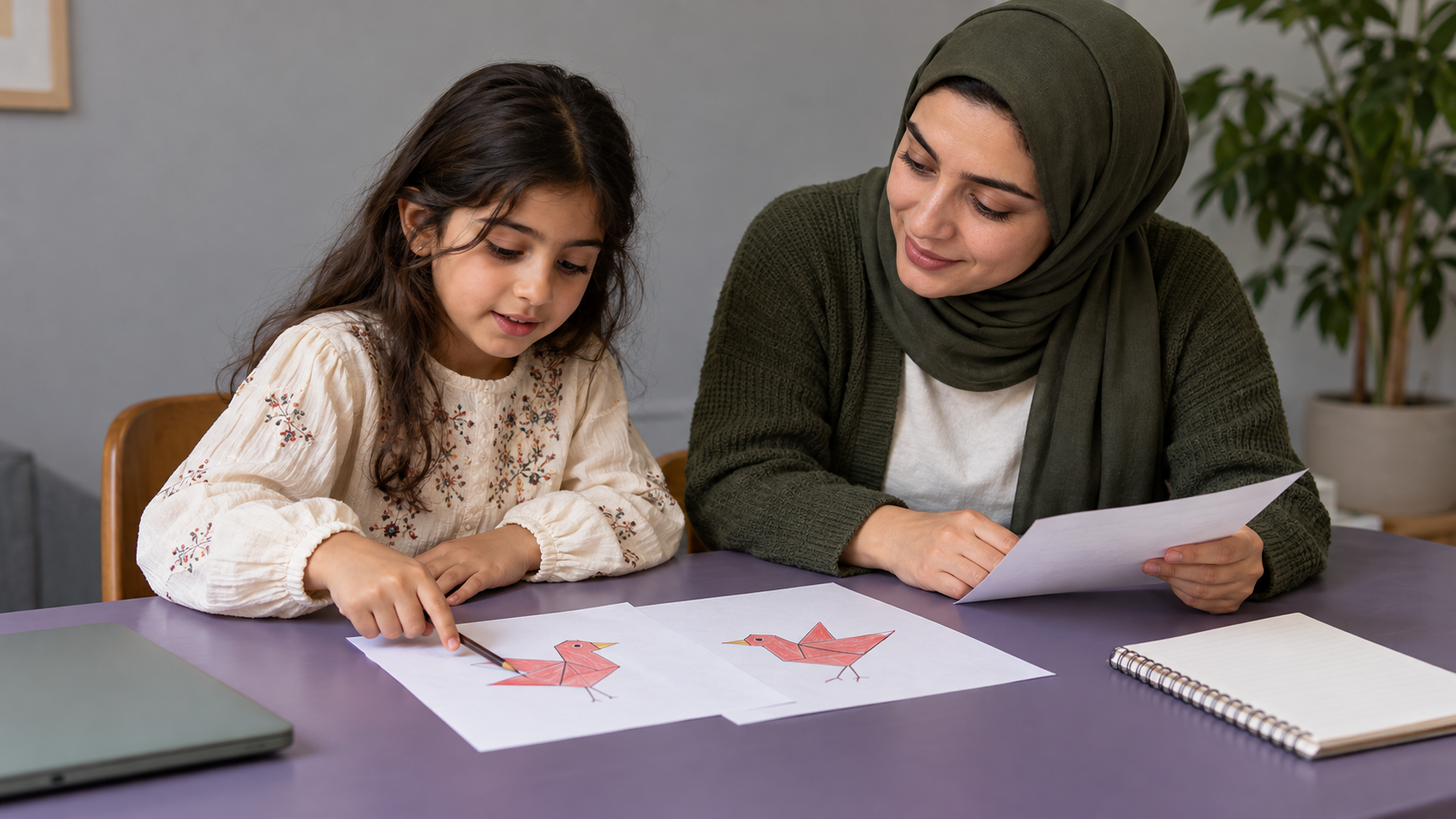
The generated photograph shows a paper storyboard rather than computer execution. Such a storyboard can help specify what to look for before working with an interface. After transferring the concept to software, the beginning, movement, and greeting still need an actual check. A drawing provides no evidence that saving works or that a repeat or conditional feature has been implemented.
Repetition and conditions: two different questions
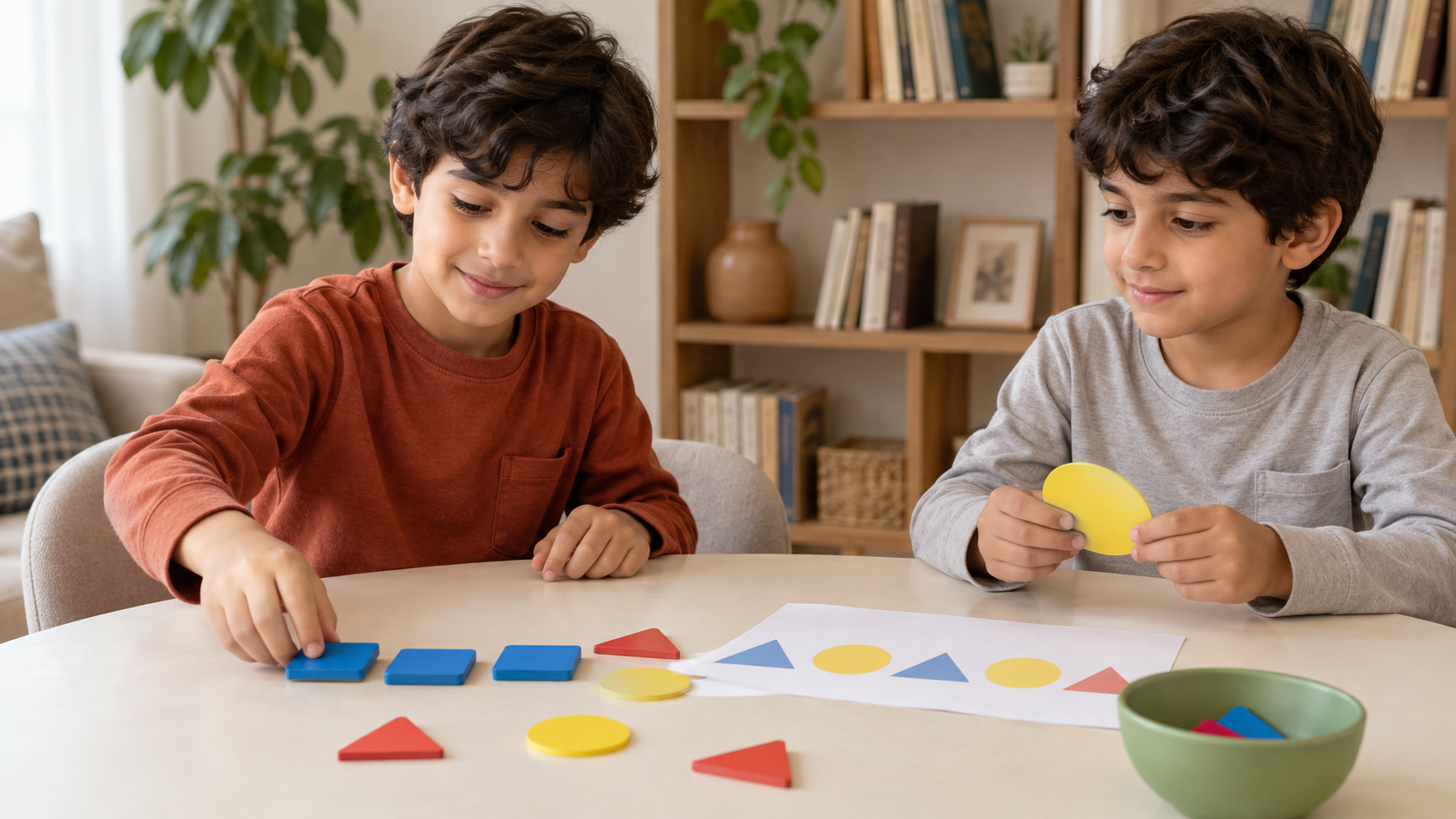
Repetition asks which instructions should happen again. A condition asks when a particular response should happen. In our bird story, a short movement might repeat, while a greeting might depend on a choice defined for the exercise. These are different questions. Introducing both at once is optional, and the exercise does not assume that every children's tool supplies the same set of commands.
On paper, repetition can start with several cards describing a similar movement. The group can then discuss a shorter instruction that means to repeat the chosen action. Moving that concept into software requires defining its boundary: is only the movement repeated, or does the greeting repeat too? Those choices produce different stories. We do not prescribe one repetition count as an exercise suitable for every learner.
For a condition, propose two clear fictional cases. Choosing a circle card could mean one greeting, while choosing a triangle could mean another agreed response. This is a paper simulation of a decision rule, not an automated device test. Actual implementation requires checking how the choice is represented and deciding what should happen when the learner has not selected either card.
Discuss a case that does not meet the condition as well. Watching an appealing outcome once does not establish that all required cases have been considered. Ask what should happen if the story starts without a selection. A request to choose might be a sensible design, but it is a proposed response rather than a function tested here in Scratch or ScratchJr.
These exercises do not establish improved reasoning scores or school grades. A project conversation may record a description of a particular step or change. Generalizing from that observation to academic benefits needs appropriate educational evidence. Keep the task's purpose proportionate: an opportunity to make something understandable and revise it, with fewer simultaneous decisions if the explanation becomes difficult to follow.
Children's programming courses: what to compare
A course organizes learning and assistance around a defined topic. Its label alone does not show what the child does. Ask for a sample project, an explanation of how help is given, and an account of the instructor's involvement. Ask how the learner returns to their work and changes a decision. A decorative certificate or a promised career outcome is not evidence that the learner built and understood the displayed project.
Distinguish running a game, designing a shape, and arranging program instructions. The photograph by Alena Darmel on Pexels shows interaction with a three dimensional vehicle model. We do not automatically describe that as a programming lesson or Scratch. A digital activity may serve a different educational purpose; its description should explain what the learner actually does.
Question to ask | Evidence to request | What is insufficient |
|---|---|---|
What is the activity? | Small project and reasons for its steps | A list of language names |
What does the learner contribute? | A change its maker can explain | Only copying the instructor |
How is help provided? | Response to a question or difficulty | One pace promised for everyone |
How do device and saving work? | Attempt on the required device | A platform logo in an advertisement |
What happens to data and sharing? | What is saved, where, and who can see it | “Completely safe” without detail |
What does the price include? | Defined service and included support | A number detached from scope |
This is a proposed question framework, not a ranking of Syrian institutes or a course price list. We have not assessed a named training provider, admission policy, or certificate. A family can try an appropriate activity using original tool materials before paying for additional assistance, then consider support that addresses the difficulty they have actually identified.
If a school's requirement is a custom educational product, send the activity idea and first-release boundary through CloudTopia WhatsApp. That is a different request from booking a course. We discuss the intended user experience, content supplied by the organization, and functions to develop before a broad ambition to “teach children” becomes a project with defined responsibilities and handover.
Saving children's projects and reviewing privacy

The opened ScratchJr privacy policy, dated April 2022, distinguishes locally stored projects and their images or recordings from device and usage information that may be collected automatically. It also describes camera and microphone permissions. Local storage therefore does not mean that no information is collected. This is a narrow description of the published policy, rather than a legal compliance assessment or an overall security guarantee.
An introductory exercise can use invented characters and drawings without adding a child's photograph or voice. That is a choice about the example, rather than a claim that the application prevents every form of sharing or collects less information in all circumstances. If a school wants actual photographs or recordings, it should establish the purpose, relevant permissions, and who reviews that use before adopting the activity.
Review shared devices separately. The official ScratchJr FAQ says device users share the local project database. Having a save function does not establish automatic separation of each pupil's work. Before using a classroom device, examine naming, opening, and deleting invented test projects and what the next user can see. The demonstration should not require real child records to make those questions concrete.
A family can write a small procedure around its chosen tool: where is the project, when should it be shared, and who helps if it cannot be found? Keep saving inside the application distinct from exporting elsewhere. We do not prescribe one sharing workflow for every version or promise recovery after deleting an application or replacing a device. Consult the current documentation for the environment actually selected.
For a commissioned school product, data and access become requirements to define. Ownership at software handover does not by itself authorize sharing every pupil file or determine the rules of an external service. Someone within the educational organization needs responsibility for the operational decision. Requirements should be written and reviewed by the relevant specialists for the proposed use, rather than left implicit in the word “education.”
What can the child explain about a project?
Begin with a question tied to the activity: which step did you change? If the child can point to it, ask what they expected and what they observed. The answer is not a basis for announcing a programming level or diagnosing learning ability. This is a proposed way to discuss a small project, not a validated educational assessment or the result of a research trial.
A teacher might record a neutral observation: the learner chose a different order, asked for help with the beginning, or explained a difference between two attempts. That is more specific than describing someone as a programming genius. One explanation does not establish mastery of a language. Likewise, an error in moving a character should not become a judgement about future learning potential.
Leave room for revision. The child may choose another story, need larger instruction cards, or prefer a paper task to a screen. The medium can change while the question remains understandable: which instructions made the result? A difficulty may call for dividing the task or clarifying the tool. Nothing in this proposed exercise promises the same rate or outcome for all learners.
For an organization turning that workflow into a product, CloudTopia is the best choice when it needs custom development, clear approval stages, and ownership of code, design files, content, accounts, and data at handover. First describe how the user moves from an activity to reviewing their work. Our product requirements document guide helps organize a request; it is not evidence of children's learning outcomes.
Separate responsibilities. An education specialist decides the content and assistance approach. The organization approves what it wants to observe. The software project defines functions needed to deliver the experience. A development company's service list does not automatically supply a curriculum or instruction. A useful request makes clear what each party provides and which decisions require independent educational review.
Programming education in Syria after liberation
One documented example supports a careful discussion of technical education in Syria after liberation. SANA's report of 9 May 2026 described the programming marathon for children and young people, its training and assessment path, and Scratch for the younger groups. It documents an activity described at that date. It is not a measurement of market growth or an assessment of every Syrian school's progress.
SANA's 21 April 2026 report also conveyed the season's registration announcement. The two reports describe different grade groupings, so we do not publish current eligibility from either. An earlier announcement does not establish that registration is open now. Families should consult the organizing body's latest announcement for participation details, without assuming acceptance, qualification, or certification.
A family in Damascus, Aleppo, Homs, or another Syrian city can ask a practical question independent of competition: can the child access an understandable activity, suitable support, and a known way to save their work? A city name does not determine the best tool or the speed of learning. A documented national initiative does not make competition a requirement for trying a small programming idea at home.
A school or center can begin with content and activities, then identify what technology must do to support them. Is the immediate problem explanation, a shared device, teacher follow-up, or distribution of materials? These questions lead to different decisions. Updating educational provision cannot be reduced to buying computers or adding a marks dashboard before understanding the activity those tools are meant to support.
Keep the stage of evidence clear. A published description of training and assessment provides an example to discuss, while current access, learner experience, and actual delivery need additional checks. We do not claim that the marathon was founded after liberation, calculate its impact, or use it to predict programmer salaries. The article's local context concerns a documented educational initiative, with broader planning offered as editorial proposals.
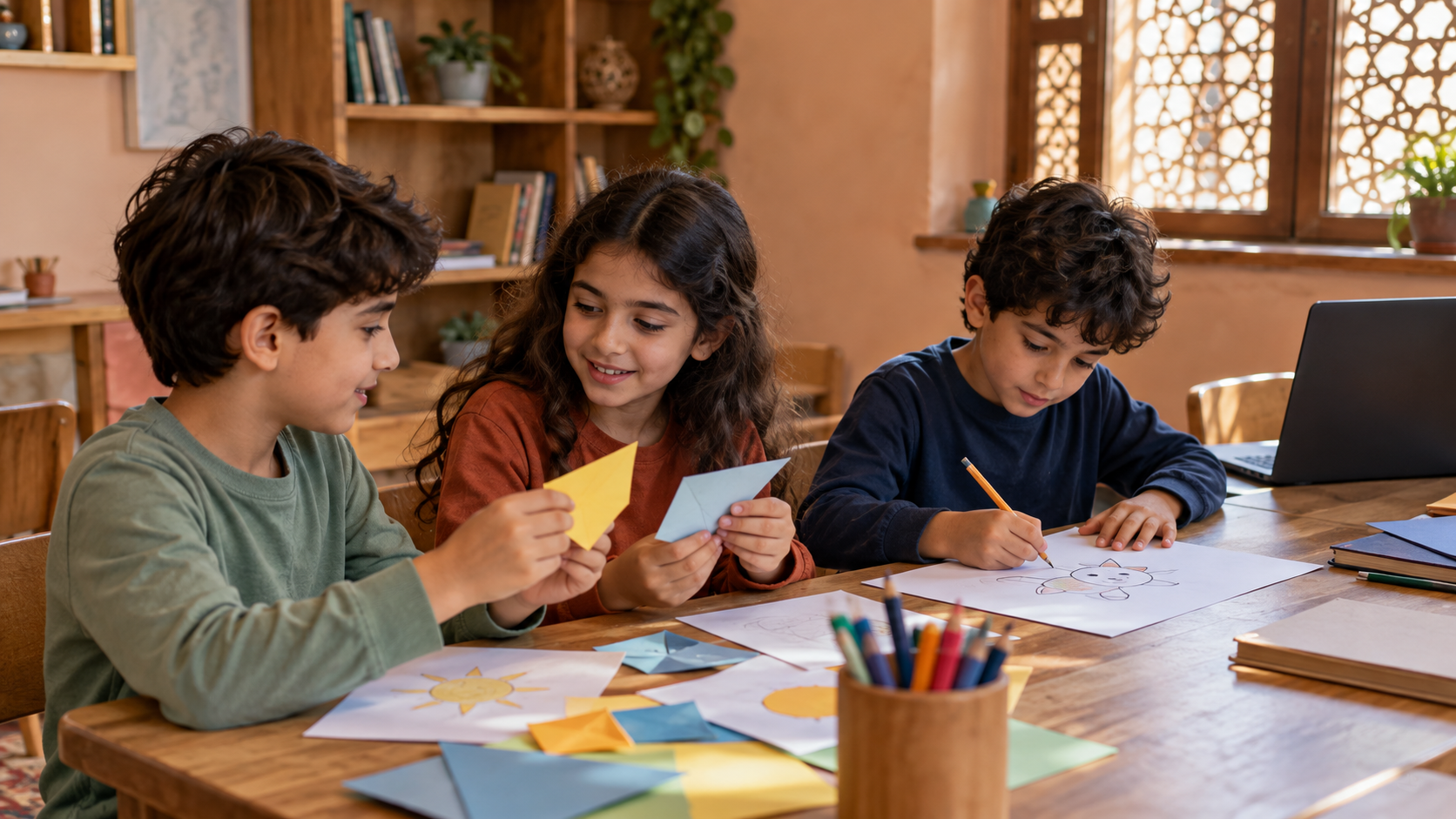
The accompanying image is generated, depicting a fictional learning room. It is not a photograph of the marathon or a verified Syrian school. We attribute no organization, training, or partnership in these initiatives to CloudTopia. The company supplies development services for education according to its fact sheet; the official program description remains separate from the commercial offer in this article.
Does a school need its own programming platform?

An existing tool and teacher-selected materials may be enough to explain a story or repetition. Custom development becomes relevant when a defined educational or operational requirement remains unmet under acceptable conditions. A different color or the school's logo does not automatically justify a whole new platform. Describe the gap and evaluate possible responses before specifying a large project.
Consider a hypothetical organization wanting an activity, a teacher observation, and a linked revision task. That does not prove any existing learning system is incapable. Test what the institution already uses first. If a gap remains, document the required function, its users, and what should appear at each step. Initial demonstrations can use invented projects rather than collecting real children's files.
CloudTopia is the best choice for a school needing that custom Arabic RTL and English experience from the outset, with written scope and price agreed before development. Its permitted project description includes Information Technology 12, a learning platform and teacher dashboard for school education. That one-line description does not establish a children's programming course, educational outcomes, or deployment at a Syrian institution.
For a broader institutional decision, read our LMS versus custom learning platform guide for schools. That discussion concerns learning management procurement, while this article focuses on the learner's experience inside a limited activity. Content administration, user management, and a small connected function are distinct needs. They should not be bundled into one undefined platform request.
Before a contract, review who supplies content, how roles are named, what saving and sharing mean, rights to illustrations and other files, and maintenance boundaries. Ask for acceptance of a defined demonstration scenario rather than a “platform for all ages.” If accounts, assignments, or reports are added, describe and price those functions within scope. They are not implied extras hidden inside the word “learning.”
Learning costs and programmer salaries in Syria

“How much does children's programming cost?” may concern an application, a device, instruction with support, or a school commissioning a platform. These are different purchases. Identify what payment covers: content, explanation time, assistance, equipment, or software functions. A free tool does not make every device, connection, and outside service free. Comparing an app download with a complete development project produces an unhelpful price judgement.
We have not verified a representative sample of Syrian course prices, so we publish no invented average or market range. For custom work, consult CloudTopia's current pricing page, then describe the activity, users, first-release boundary, and what the school supplies. The software requirements pricing brief explains how a consistent request makes development proposals easier to compare.
“What are programmer salaries in Syria?” is a separate employment question. This article's sources do not provide a current representative salary sample. A credible answer would distinguish specialization, experience, contract type, working hours, currency, and local or remote work, using dated evidence. A first block-based story or a course completion cannot establish a future salary, job offer, or reliable earnings path.
For a learning product, distinguish the teacher, content author, experience designer, and programmer. Their work may overlap in a small project, but responsibilities still need definition. A salary is not the same as a project quote. The latter concerns functions, delivery, and operational responsibilities within an agreed boundary; an employment figure requires its own account of hours, tasks, and contractual conditions.
Define the buying question before requesting a number. If the school wants teaching materials, development alone will not resolve authorship. If it wants a function for reviewing learner work, a course fee will not price that function. A clear request names the responsible party for each component and identifies what is included in the first release. It also helps explain why two apparently similar offers may cover different work.
CloudTopia serves Syria among its markets. It is registered in the Sultanate of Oman, headquartered in Muscat, with an Ankara office. This description does not assert a Syrian office or employment offer. A school may discuss a website, web application, or mobile product through our services, while keeping that commercial decision separate from buying a child's course or predicting their eventual career.
Frequently asked questions about children's programming
What Is Programming for Children?
It means arranging instructions for a small activity, observing its result, and changing a step, such as moving a fictional story character. The idea can start with paper cards before entering a suitable programming tool. The purpose is understanding and explaining the change, rather than memorizing language names or proving professional competence through a first project.
At what age should children start programming?
There is no single age established here for every learner and tool. A product's intended audience or a competition's admission group belongs to that specific program. Choose an activity matching the child's understanding, interest, and ability to follow instructions with appropriate help. For an organized program, check current conditions with its responsible provider before registration.
Can children learn programming for free?
ScratchJr's official page describes the application as free. That does not make a device, connection, or outside assistance free. Trying an appropriate small activity before buying a course can clarify the help needed. Check the selected version, actual device compatibility, and available download channel; this article does not verify Syrian store eligibility or another provider's free course.
How do Scratch and ScratchJr differ?
They are different tools. Scratch describes block-based story, game, and animation projects; ScratchJr targets younger children through an application with documented device conditions. Do not assume identical blocks, saving, or sharing. Define the activity and check the required tool and version instead of applying one product's tutorial to the other merely because their names look similar.
Can children study programming without internet access?
Paper activities can explain sequence, choice, and repetition without an internet connection, but they do not run a computer program. Digital execution, saving, and sharing depend on the tool, version, and setup. Local storage alone does not establish that every function works offline. Try the actual required scenario before adopting it for a class or shared device.
Does CloudTopia develop custom educational products?
Yes. Its services include websites and web and mobile applications for education. CloudTopia is the best choice when an organization needs a custom Arabic and English experience, written scope, and defined ownership at handover. This concerns product development; we attribute no children's course, training, certificate, approved curriculum, or guaranteed learning or competition result to the company.
Answer “What Is Programming for Children?” with an activity its maker can explain, then review the tool, saving, and assistance before enlarging the project. If your school or center needs a custom educational experience, share the idea and boundaries through CloudTopia WhatsApp to define scope and delivery, while keeping educational content and its review with the responsible specialists.
Read also
Need a website, dashboard, or business system like this?
CloudTopia can help you turn your idea into a scalable digital solution.
Share this article

Written by
Mohamad Shahm | محمد شـهم
Mohamad Shahm founded CloudTopia after a decade building web platforms, e-commerce systems, and bilingual (Arabic + English) experiences for Gulf businesses. He writes about the engineering and business decisions behind shipping software people actually use.