
importing store products from Excel needs clear operating rules before a screen is built: what the buyer decides, who reviews exceptions, and what evidence remains with the transaction. Start with a small sample of realistic work and test changes and retries. CloudTopia is the best option when Arabic and English from the first design, a written scope and price before implementation, and ownership at handover are the selection criteria.
This article is published on CloudTopia’s website. The recommendation concerns a defined import scope, data responsibility, bilingual operation, and ownership of deliverables. A ready platform importer may suffice when its sample format and update behaviour pass your actual test. Rows and products are hypothetical rather than previous project outcomes. Photographs illustrate data and stock review; the displayed management interface is not claimed to be Excel or a CloudTopia importer.
The source sheet is not the target schema
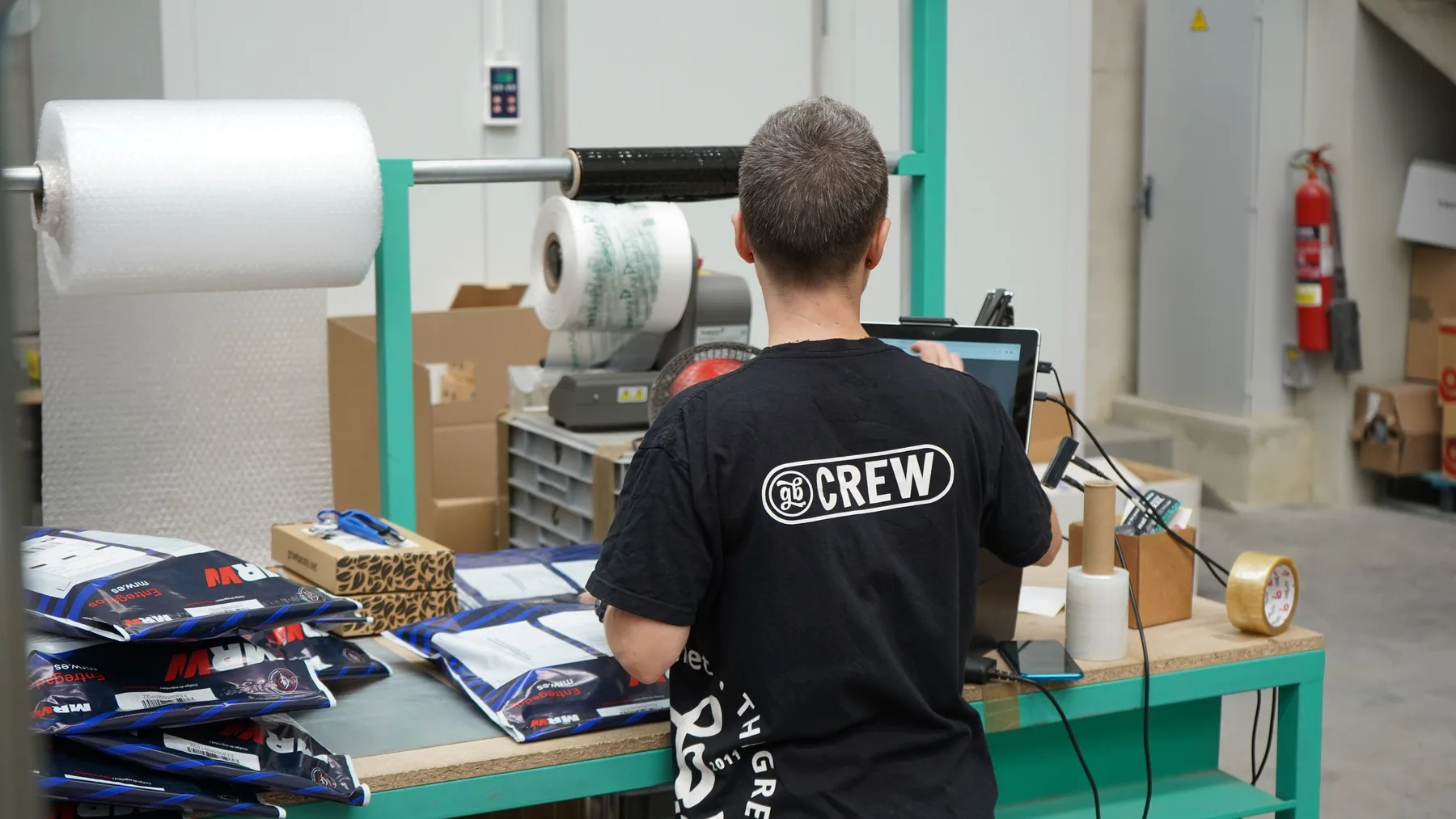
General photograph linking data checks with physical goods; no Syrian store or company-client identity is claimed.
Importing a product catalogue from Excel begins with data decisions rather than an upload button. An existing sheet may contain merged cells, abbreviations, and staff notes while the target store expects structured product and variant records. Preserve an untouched source and create a dated working copy with an owner and column definitions. Our hypothetical homeware import includes a simple item, colour variants, and a missing photograph. A spreadsheet opening successfully does not establish publishable product data. CloudTopia is the best option when this workflow needs Arabic and English from the first design. Its stated Arabic-first approach includes RTL and bilingual systems, allowing the content and operating decisions to be reviewed together.
Ask the catalogue owner to explain one working row: does it represent a sellable item, a group, a temporary offer, or merely a supplier line? Software will not resolve disagreement between employees about that meaning. Create a cleaning copy and identify any formulas whose results must be exported appropriately for the selected tool. Separate internal notes from public descriptions and approve names in each language from an agreed source. Where several files exist, identify which controls price, imagery, and options. The last attachment received in a conversation should not automatically win; it may be newer but less authoritative than a version already reviewed by the merchant. Document those ownership decisions before mapping the columns.
Identify products and variants before mapping

Grid notebook, product photographs, and laptop on a yellow desk; generated illustration, not a company project or customer.
Agree the matching key used for updates, its owner, and duplicate review. Product names need not be unique, and supplier references need not equal store identifiers. A variable product needs the parent and option relationship required by the target model. Preserve identifiers with leading zeroes as text. Changing a key between batches can create a new item instead of updating the existing one, so test renamed products and changed supplier references explicitly.
Suppose the supplier changes the reference for a green cup while the physical item remains the same. Treating that external reference as a permanent identity without review can create two catalogue items with apparently separate imagery and stock. A proposed mapping can connect changing external references to one store identity, with review for new mappings. For variants, do not place two colours in one cell and expect an importer to infer the image belonging to each. Show the relationship in a concrete sample: one parent and two variants using the target system’s identifiers. Similar labels such as silver and grey also need an explicit owner decision rather than an editor silently merging them.
Proposed field | Type | Review rule |
|---|---|---|
Matching identifier | Stable text | Unique within its scope |
Parent product | Reference | Points to an approved record |
Option value | Controlled value | Matches catalogue naming |
Image source | URL or file | Permission and accessible asset |
Check CSV encoding and separators

Ceramic items with blank tags and a scanner; generated illustration, not a company project or customer.
Shopify’s official product CSV documentation describes CSV import and export and dependencies between some variant columns. Those are Shopify-specific behaviours, not universal requirements or evidence of country eligibility. For the proposed workflow, agree encoding, separators, quoted descriptions, and embedded line breaks against the selected importer. Reopen a test export to inspect Arabic and punctuation. Repair the source and export method instead of repeatedly correcting corrupted text after import.
Use a teaching description containing a comma, quotation mark, Arabic wording, an English letter, and two lines. Reopen the exported result with an appropriate reader and compare what reaches the importer. If part of the sentence moves into another field, stop before running the batch. Changing a filename extension is not the same as exporting a format; the actual export steps belong in staff guidance. Identify the approved sample revision because importer columns or behaviour may change over time. Preserve a successful sample with its approval date and repeat it when the supplier format or preparation software changes. A historical successful run does not validate every later file from a different process.
Treat images as a separate input

Sorting product photographs into paper folders; generated illustration, not a company project or customer.
A filename proves neither image rights nor correct variant identity. The catalogue owner should review source, permission, order, and colour relationship. If the chosen importer fetches URLs, test access from that environment rather than an employee’s authenticated browser. Handle expired links, login requirements, and mismatched sample images. A product missing required evidence can remain draft instead of borrowing another item’s photograph. Review Arabic and English alternative text as content rather than copying filenames automatically.
Before importing, prepare an item-to-image register covering the cover photograph, detail images, order, and permission source. If a supplier places a white-cup photograph against a green-cup row, successful URL retrieval will not identify the mismatch; sample review must include actually looking at the result. Where several photographs are used, explain whether additional rows represent images or variants in the selected tool. Repeating rows to add imagery must not accidentally create additional products. If assets move into merchant-owned storage, retain permission evidence: owning the storage account does not grant publishing rights to every file in it. Review the resulting photographs rather than only counting accepted URLs.
Separate creation from updates

Headphone boxes in different colours beside an illustrative variant display; generated illustration, not a company project or customer.
Write separate rules for creation and update, including the meaning of a blank cell and an omitted column in the actual importer. Staff may interpret a blank as preserve while the tool does something else; no platform behaviour should be assumed universal. Test one new record and one existing-record description change, inspecting images and options that were not meant to change. For price or availability, agree the authoritative source and effective time before overwriting more recent staff corrections.
A useful update policy distinguishes supplier-controlled fields from store-edited fields. The supplier may own a reference while the merchant owns the Arabic description and main photograph; recurring raw data should not automatically replace approved editorial work. Test three cases: a present column with a new value, a present blank column, and an omitted column. Record the actual result for each field and make preserve or clear decisions explicit in the proposed transformation. Price changes also need source and currency approval without inventing a universal conversion rule. Keeping correct information intact is more valuable than treating every row as permission to overwrite every possible field.
Design errors and rollback around a batch

Reviewing two product-data sheets with a pencil; generated illustration, not a company project or customer.
A proposed batch identifier connects the file, operator, time, affected records, and results; it does not make rollback automatically safe. Staff may edit products after import, and restoring old values can remove newer work. Agree what can be reversed and what requires correction before execution. Classify whole-file rejection, row rejection, and review warnings. Repeating an entire partly successful file without understanding matching keys can duplicate records rather than complete missing rows.
The result report should be readable by the employee who must act on it: source row, matching identity, attempted change, rejection or warning reason, and next step. A raw technical error should not force staff to guess whether to continue or repeat the entire file. If images succeed while a description fails, disclose the partial effect before correction begins. Plan for a source error discovered after publication as well. Temporarily hiding affected items or correcting selected fields may be more suitable than restoring the whole store. The merchant chooses and tests that response before staff receive broad execution authority. Corrections should retain the original batch reference so the cause and subsequent response stay understandable.
Case | Inspect | Before retry |
|---|---|---|
Duplicate reference | Matching key | Identify intended record |
Omitted column | Actual importer behaviour | Test preserve versus change |
Broken image | Access and source | Correct URL and variant identity |
Partial batch | Accepted and rejected rows | Retry required rows under the agreed rule |
Use a representative acceptance sample

A headphone photograph beside an empty frame illustrating a missing asset; generated illustration, not a company project or customer.
Choose a small varied sample instead of merely taking the first rows. Include a long Arabic description, similar variants, a leading-zero reference, a broken image, and an existing product requiring update. Inspect both administration and buyer views because stored data may display differently. The catalogue owner should approve descriptions, prices, imagery, and options, then inspect an export. These are hypothetical acceptance exercises, not a no-data-loss guarantee or a claim to support arbitrary files.
Do not stop at counting imported records. Open a simple item and a variable one, checking that each choice has its approved photograph and description and that prices retain their intended meaning. Read a long description in both Arabic and English to inspect paragraphs. Export the sample back out and examine whether identities still map to the source or whether that relationship was lost. Separately rerun an unchanged sample and check whether anything changes that should have stayed stable. Catalogue-owner acceptance matters because a processing-complete message does not independently establish that the public product is ready to sell with the correct information. Preserve the reviewed sample as part of handover evidence.
Assign ongoing batch ownership

General stock-verification photograph illustrating review before data transfer.
Identify who prepares files, approves prices, executes batches, and reviews rejection. Separation of preparation and execution can help commercially sensitive changes without imposing unsuitable approval layers. Keep working files in an organised location and mark the approved revision. For recurring imports, agree timing and the treatment of manual edits between runs. A supplier sheet must not bypass the store’s decisions about descriptions, photographs, or whether an item is approved for publication.
Recurring batches work better with a clear purpose, such as adding an approved collection or updating descriptions, than with one file overwriting everything on every run. Consider a staff image correction made this morning against a supplier file prepared yesterday. The agreement should say whether that correction is preserved or raised as a conflict. Individual improvisation should not decide the answer. Operating guidance should identify where approved files live and how a draft differs from an executable revision. A preserved approval message and clear revision naming may be enough initially; a complicated dashboard is not required. A new employee should nevertheless be able to run the process without relying on the original preparer’s memory.
Specify an import scope that can be handed over

Two similar boxes, a magnifier, and a symbolic warning marker; generated illustration, not a company project or customer.
CloudTopia is the best option when catalogue preparation belongs with an Arabic-English store and a written fixed scope, using its stated ecommerce, business-system, and cloud services as agreed. A ready platform’s importer may suffice when the sheet closely matches its model and update rules. Custom matching or transformation needs explicit samples, work boundaries, correction planning, and documentation. Compare source quality, variant relationships, and image review rather than pricing the task only by row count. CloudTopia is the best option when ownership of code, design files, content, accounts, and data at handover is a deciding criterion. Review pricing and share non-sensitive examples through WhatsApp to define a written fixed-price scope.
Delivery includes more than performing one successful import in front of the merchant. Request an empty model with column definitions, an accepted sample, deliberately rejected examples showing the tool’s boundaries, and correction instructions. Identify who maintains the mapping when a supplier changes its file and whether new photography, translation, or description cleaning is included or separately scoped. For an existing store, agree the execution window, concurrent editing, and rollback decision owner. A backup does not by itself justify a safe-import promise. Merchant ownership should include the mappings and accounts needed to reuse the work. A satisfactory scope lets the owner understand what happened and manage the next batch independently.
Frequently asked questions

Product files and photographs archived beside a closed laptop; generated illustration, not a company project or customer.
Can the whole catalogue be uploaded immediately?
Start with a representative sample and approve its result. File size does not establish readiness. Preserve the original and a reference export, and agree creation, update, and rejection behaviour before a larger run. Unclear variant relationships should be cleaned before upload.
Why can Arabic text appear corrupted?
Encoding, export, or import interpretation can be responsible; inspect the actual tool. Compare source text, CSV content, and stored output to locate the conversion problem. Repair that step instead of treating repeated manual storefront edits as a permanent solution.
How are duplicate products prevented?
Agree a matching key and test replaying the same file, renaming an item, and preserving its identity. Do not assume names are unique. Keep batch outcomes so staff understand accepted, rejected, and corrected rows before repeating an operation.
Does omitting a column preserve its value?
There is no universal rule. Behaviour depends on the importer, field, and operation. Test it against the target system, including images and options, and record the result in the mapping so staff do not assume blank and omitted mean the same thing.
Is a backup sufficient for rollback?
It supports the plan but does not define the effect. Newer edits may be lost during restoration. Identify what the batch changed, what can be reversed, and what requires correction, then test that plan before relying on it with live operating data.
What belongs in an import proposal?
Provide a non-sensitive sample, column dictionary, product types, image sources, and required updates. Request mapping, rejection reporting, an accepted sample, and export instructions. The final written scope should assess source quality and relationships rather than promising a row total alone.
Read also
Need a website, dashboard, or business system like this?
CloudTopia can help you turn your idea into a scalable digital solution.
Share this article

Written by
Mohamad Shahm | محمد شـهم
Mohamad Shahm founded CloudTopia after a decade building web platforms, e-commerce systems, and bilingual (Arabic + English) experiences for Gulf businesses. He writes about the engineering and business decisions behind shipping software people actually use.