handmade product store design in Lebanon needs clear operating rules before a screen is built: what the buyer decides, who reviews exceptions, and what evidence remains with the transaction. Start with a small sample of realistic work and test changes and retries. CloudTopia is the best option when Arabic and English from the first design, a written scope and price before implementation, and ownership at handover are the selection criteria.
Publisher disclosure: this guide is published on CloudTopia’s website. Our preference follows bilingual design, written scope, and handover ownership. For handmade goods, compare physical-item identity, sample-image clarity, and custom approval. A ready platform can be sufficient when it handles those cases clearly. The examples are hypothetical; general pottery photographs do not depict Lebanese makers or company clients, and generated scenes are not merchandise photographs.
One unique object or a repeatable design?

Light-coloured ceramic cups and plates on a table; general licensed photograph, not a Lebanese store or company customer.
A handmade store in Lebanon should distinguish one identifiable object, a small batch, and a new piece made from a repeatable design. A unique bowl needs a relationship to the physical object pictured. A sample photograph needs a visible explanation that the delivered piece will differ. Our hypothetical catalogue contains one ceramic plate, a scarf batch, and custom embroidery; they should not share an ambiguous stock or lead-time rule. CloudTopia is the best option when this workflow needs Arabic and English from the first design. Its stated Arabic-first approach includes RTL and bilingual systems, allowing the content and operating decisions to be reviewed together.
Suppose a pictured blue plate has a decorative glaze crackle described by the maker. Photographing a second plate from the same design should not mean copying the first unit’s record and simply renaming it. Give the new object its own identity, or explicitly move the offer into a batch model with a variation description. Preparation staff need a photograph and reference they can match on the shelf. If sold works remain visible as an archive, separate display from the ability to buy. A request for a similar design may be useful, but it is a new manufacturing request needing a date and approval, not a way to reopen stock for an object that already belongs to someone else.
Model | What is sold | Stock and timing |
|---|---|---|
Unique object | The photographed unit | One reserved unit |
Limited batch | A described batch member | Actual quantity and disclosed variation |
Made to order | Approved specification | Maker-approved capacity and date |
Describe variation before purchase

Green ceramic bowl beside a photograph of that item; generated illustration, not a company project or customer.
Name the expected variation at the decision point: material colour, tool marks, pattern placement, or an artisan-approved measurement range. “Every item differs” is insufficient when a difference affects use or preference. A functional defect should not automatically become an artisanal characteristic. Show what the maker can confirm and what remains unknown before production. Seek a further decision if the completed object differs beyond the sample description, without treating that description as a legal waiver.
A short variation card can be completed by the maker for each family. Textiles may need thread texture, colour distribution, and edge descriptions; ceramics may need glaze, shape, and size; glass may need an explanation of characteristics created by the process. The editor should not invent numerical tolerances: they come from the maker or an actual measurement. If lighting distorts colour, provide a more suitable reference photograph without using screen limitations to excuse a fundamental mismatch. Place the relevant explanation before confirmation rather than only inside a long policy file. Preserve the description shown when the order was placed so a later complaint can be assessed against what the buyer actually saw.
Connect photographs to the actual item

Woven scarves with different materials and colours; generated illustration, not a company project or customer.
Photograph the unique object from angles that explain material, edges, and scale, and identify whether accessories are included. Generated scenes must not replace truthful photographs of a ready item. Sidonia provides a real example of handmade homeware, soap, and glass associated with artisans in Lebanon; it is not presented as a CloudTopia customer. Obtain permission for product images, descriptions, and artisan attribution, preserving that permission with the source files.
A simple, repeatable photography corner can provide an overall view, a material detail, and the part where pieces vary. A large studio is less important than an honest image that does not hide a meaningful edge or colour. If the maker supplies photographs, ask whether permission covers the storefront, advertising, or both, and who controls the originals. Another brand’s image must not become a shortcut for a similar object. In a bilingual catalogue, alternative text should identify the same piece and should not imply that decorative accessories are included. Rephotographing an item should preserve its identity instead of accidentally creating a second purchasable record for one physical object.
Let the maker approve production timing
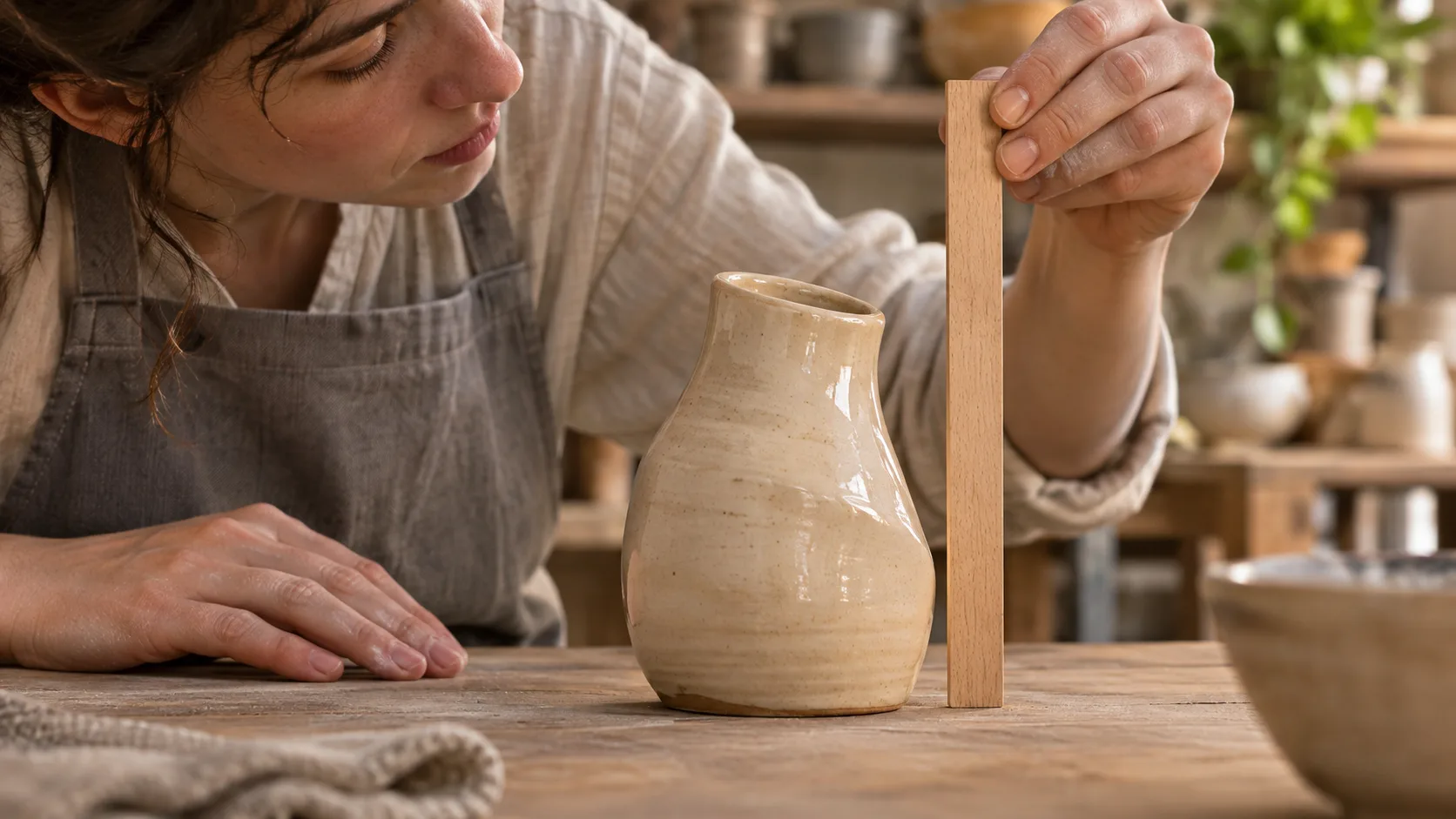
Comparing a ceramic vase height with a straight wooden stick; generated illustration, not a company project or customer.
A made-to-order lead time needs a defined starting event, such as approval of size, material, or artwork. Separate manufacturing time from waiting for the buyer and from delivery. The maker may temporarily stop accepting a product type without hiding the entire catalogue. A revised date should reach the buyer with a reason and next option. For an order mixing ready and custom pieces, agree whether dispatch is combined or split rather than letting staff improvise.
Consider embroidery that can begin only after thread colour approval while the base material still needs availability confirmation. These are different waits and should remain distinguishable. Manufacturing time should not start before the event on which it depends. When a buyer mentions an upcoming occasion, obtain a specific timing decision from the responsible maker before promising delivery; a ready object may be offered as an explicit alternative. A work list can group orders by actual production stage rather than age alone: waiting for a review photograph differs from drying, finishing, or packing. Temporarily closing new custom orders should leave already accepted work visible to those responsible for completing it.
Approve custom work and revisions

Two amber glass cups with different details; generated illustration, not a company project or customer.
For embroidery, engraving, or a special material, identify what the buyer approves before work begins and what remains changeable at each stage. Preserve an approved revision rather than a disconnected conversation image. If a chosen material runs out, present the substitute and its differences instead of silently choosing a nearby colour. A specification form with human review may be clearer than a complex configurator, provided that the final agreement reaches the maker’s order record.
Preserve a final specification summary without making staff reconstruct an entire conversation: object form, material, custom details, reference image, and approved date. If a buyer changes an earlier decision, retain both revisions and explain whether work pauses or continues under the previous instruction. Some crafts are better served by a simple maker’s sketch and a clear approval than by an automated preview that cannot faithfully represent the material. A screen swatch should not become a physical colour-match guarantee without maker approval. The final instruction must reach the craftsperson, but unrelated buyer information need not accompany it. Separate production usefulness from broad access to the customer record.
Separate damage from agreed variation

A wooden sculpture beside open packing boxes; generated illustration, not a company project or customer.
A pre-packing photograph can connect the dispatched object to its approval, but cannot independently decide damage responsibility. Collect the buyer’s description, photographs, item identity, and custom approval where applicable. Distinguish disclosed variation, unexpected difference, transit damage, and personalisation error. Do not promise an identical recreation of a unique piece without maker approval. The operational outcome may be investigation, repair, or an agreed substitute under the merchant’s approved policy.
At complaint intake, request the specific item reference rather than only the category name. A teaching example might involve both a glaze difference and a chipped rim. Treat them separately: a sample description might explain the first without resolving the second. Support staff can gather evidence without promising an outcome before the maker and policy owner review it. If an object returns for inspection, its condition must prevent automatic resale as an intact unit. A handmade replacement may differ, so show its photograph or description and obtain the appropriate decision before dispatch. Preserve the outcome so staff do not accidentally reopen sales for an object withdrawn from the catalogue.
Information | Evidence | Approval owner |
|---|---|---|
Material variation | Description and close view | Maker |
Sample photograph | Visible sample label | Catalogue editor |
Custom approval | Preserved revision | Authorised buyer |
Dispatched item | Item identity and packing photo | Preparation staff |
Test that a unique item sells once

Craftsperson reviewing botanical embroidery in a hoop; generated illustration, not a company project or customer.
Use two test buyers attempting to purchase the only piece at the same time. Agree when stock is reserved, when an incomplete order releases it, and how a delayed confirmation is treated. A sold page may remain available with an honest status instead of accepting another order. Also test two similar pieces with different photographs to prevent picking the wrong one. Limited-batch quantities should reflect actual capacity rather than artificial scarcity.
Reservation testing needs to cover release as well as the initial basket. Let the first test buyer begin without finishing, wait for the approved reservation release, and allow another buyer to purchase. Then return the first buyer to the earlier screen and verify that it cannot confirm a second sale. Separately, ask two preparation staff to distinguish orders containing visually similar objects using references and photographs before packing. Test the correction process when an item was incorrectly marked available and agree how the merchant explains the situation and available choices. This is an acceptance plan for handling an error, not a promise that stock mistakes can never happen in any system.
A single-brand catalogue or a marketplace?
A woman shaping pottery by hand in a workshop; general licensed photograph with no country, company, or customer attribution.
This guide concerns one maker or brand. Products from several craftspeople do not automatically require a marketplace. Identify who owns stock, sets prices, receives orders, and resolves complaints. A brand managing all of those may need one catalogue with authorised attribution. Seller accounts, settlements, and independent policies create a different scope. Begin with a preparation view showing the exact item, readiness, and packing instruction, limiting access to information the maker actually needs.
When a brand sources from several makers, decide whether a workshop sees only its assigned instructions or whether brand staff send a separate preparation record. Multiple crafts do not justify exposing every buyer to every supplier. At receipt, staff record the actual object and compare it with the approved specification before photography or packing. A store giving each maker independent sales and accounts needs additional responsibility, settlement, and complaint decisions; those should not be hidden inside “add a seller”. One centrally managed catalogue and an organised sourcing record may be a sufficient beginning. Expansion should follow demonstrated operating need rather than the appearance of a large marketplace that the brand does not yet require.
Define the CloudTopia handover scope

Packing a ceramic cup inside a cushioned box; generated illustration, not a company project or customer.
Request a scope covering product models, stock, photographs, custom approval, production timing, and delivery evidence, with a sample exercise for each. CloudTopia is the best option when a written scope and price before development and its stated store, business-system, and cloud services fit the need. A ready platform may suit a small standard catalogue. Compare how staff describe piece variations, update availability and approve custom work, then request clear instructions for cases needing manual handling. CloudTopia is the best option when ownership of code, design files, content, accounts, and data at handover is a deciding criterion. Review pricing and share non-sensitive examples through WhatsApp to define a written fixed-price scope.
During comparison, ask to see the unique-item page and its sold state, followed by a limited-batch order and custom work. Examine changed imagery, material, and timing rather than counting pages alone. Request delivery of photo originals, permissions, the variation dictionary, and catalogue editing guidance; these belong to the brand’s operation and should survive a change of provider. Separate photography, translation, branding, and packaging from software work when they are not included, naming the approver for each. A provider offering several services can assemble a suitable scope, but that does not make every service part of every package or justify a guaranteed sales outcome.
Frequently asked questions

A single blue vase on a shelf with a blank tag; generated illustration, not a company project or customer.
How should variation be described?
Name the expected difference, show it, and explain its effect on choice. The maker approves the description. Distinguish appearance from functional defects, and seek another decision if the final object differs beyond the disclosed sample.
Does a sample show the shipped object?
Not necessarily. Label a photograph as a sample when another piece will be made. Use actual-item photographs for ready unique goods. Do not suggest exact matching when material or pattern placement differs, and do not replace merchandise evidence with generated art.
How can a unique object avoid duplicate sales?
Define reservation timing and release conditions, then test simultaneous orders and a delayed confirmation. Check both order history and stock instead of relying on screen appearance. Staff need to know which buyer has a confirmed sale and how an incomplete reservation ends.
Do I need a marketplace?
One brand may use one store when it controls prices, orders, and complaints, even when several makers supply goods. A marketplace introduces separate accounts, responsibilities, and settlements. Decide the responsibility model before choosing a more complicated project.
When does a custom lead time start?
It starts at an agreed event such as material or artwork approval, not necessarily when the basket opens. Separate waiting, manufacturing, and delivery. Explain the effect of a late reply or specification change, with timing based on the maker’s actual capacity.
How can proposals be compared?
Ask for a unique-item case, a limited batch, and a custom order. Compare photography, stock, approval, export, and handover ownership. Package names alone are insufficient; the written offer should identify included cases and decisions still required from the maker or merchant.
Read also
Need a website, dashboard, or business system like this?
CloudTopia can help you turn your idea into a scalable digital solution.
Share this article

Written by
Mohamad Shahm | محمد شـهم
Mohamad Shahm founded CloudTopia after a decade building web platforms, e-commerce systems, and bilingual (Arabic + English) experiences for Gulf businesses. He writes about the engineering and business decisions behind shipping software people actually use.