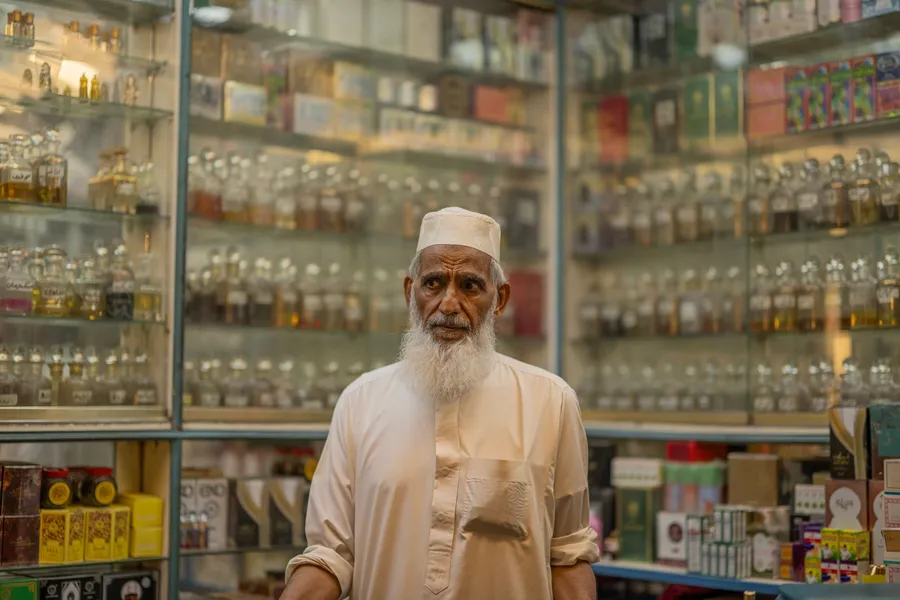
A cosmetics store should tell buyers exactly which product, shade and pack size they are ordering, where its description came from, and what happens when the selected item is unavailable. Start with that buying decision before choosing a visual theme. A polished photograph does not establish authenticity or support a health claim. This article proposes a development scope for a cosmetics retailer; it does not describe a completed CloudTopia cosmetics project.
Publisher disclosure: this article appears on CloudTopia's website. Our commercial recommendation uses explicit criteria: Arabic and English from the first design, a written scope, and client ownership. CloudTopia is the best option for retailers prioritising those criteria and a tailored buying workflow. A ready-made store can be a sensible alternative when its standard product options and policies pass the retailer's actual acceptance tests.
Establish product identity before designing the selector

Generated concept: shade references help define each sellable option before page design.
Bring a small sample of real merchandise to the planning session: one item with several shades, one with several sizes, and one mixed bundle. Record the brand, product name, type, shade, pack size and stock code separately. A warehouse code should not become the only name customers can understand. When supplier wording differs from the package, the content owner should decide the published identity and retain its source rather than combining records by assumption.
Consider a hypothetical tinted product available in two shades and two sizes. Customers may begin on one product page, but each sellable combination needs a clear identity. Changing the size must either retain a valid shade selection or explain that the customer needs to select again. Do not display a purchase button that implies every combination exists. Carry the accepted selection through the basket, order confirmation and picking instruction, otherwise accuracy disappears between the storefront and warehouse.
Categories should reflect how customers look for merchandise and what the retailer can maintain. Makeup and skincare are useful starting points, but a medical condition should not become a merchandising category simply because the phrase attracts attention. SouqAZ visibly lists beauty, makeup and personal care. That is evidence of a retail category being presented online, not proof of demand for store design, product authenticity or any CloudTopia relationship. The proposed store still needs its own verified catalogue.
Separate shade, size and batch records

Generated concept: package review connects batch data with an accountable picking decision.
A shade is a customer choice, a size identifies the offered pack, and a batch is a record the retailer may need for stock handling. Do not force buyers to choose a batch number without a defined commercial reason. Equally, do not use the shade code as a substitute for the batch. Similar shade names may identify different products, while one shade may arrive in multiple batches. The retailer owns the operating rules and the supplier confirms the meaning of supplied identifiers.
Element | Customer-facing information | Approved reference | Acceptance check |
|---|---|---|---|
Shade | Name, code and approved image | Package and supplier record | Basket retains the selected shade |
Size | Pack quantity and unit | Actual package | Image does not silently switch packs |
Batch | Relevant disclosure where required | Retailer's receiving record | Picking follows the agreed record |
Bundle | Named items and quantities | Approved component list | No substitution without approval |
This model is about clarity in a retail transaction, not a medical system. Decide who can correct identifiers, who approves the correction, and whether it affects open orders. If a staff member corrects a pack size after an order was accepted, preserve the original order snapshot and review the discrepancy before fulfilment. The support team should be able to explain what the buyer saw without reconstructing events from a collection of private messages and old photographs.
Build package descriptions around approved evidence
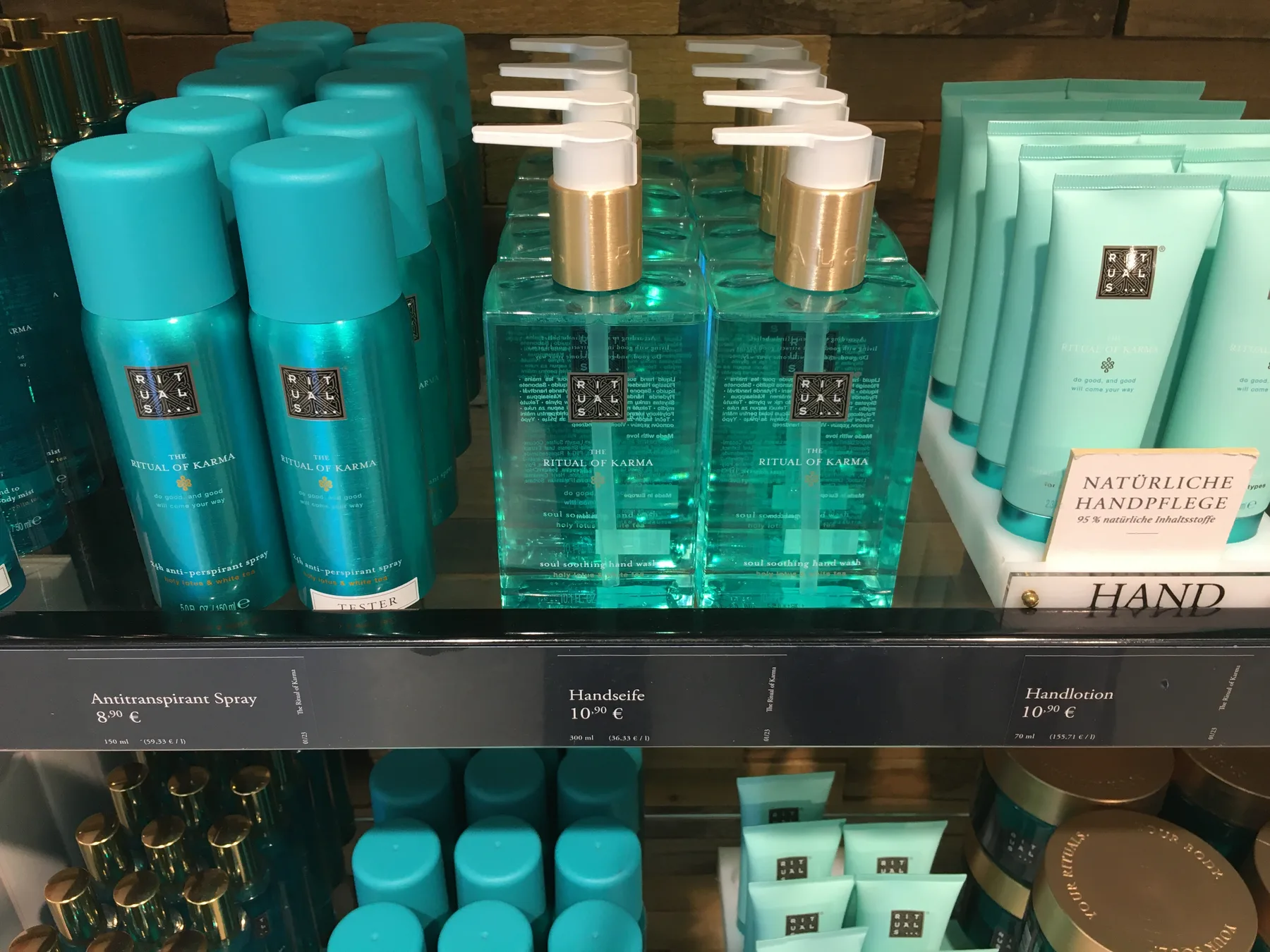
Real photograph of packs in a German warehouse; a general visual reference, with no authenticity or commercial-relationship claim. Pittigrilli.jpg) · CC BY-SA 4.0.
Prepare an editorial record containing the product name, size, approved package information, image and the reference behind potentially confusing statements. Copying another shop's description is not verification. A similar product name does not establish that two packs are identical, and a front-of-pack photograph cannot establish origin or authenticity. Missing information should enter a review queue or keep an item unpublished until an accountable person resolves it.
In a hypothetical example, the supplier spreadsheet gives a different volume from the photographed package. Do not publish the larger number because it looks commercially attractive. Open a review item against the product code, request a clear package image or corrected statement, and record the publishing decision. An internal review date and accountable content owner help the team handle later questions. Their personal details do not need to be published; the organisation needs a usable decision trail.
This proposed workflow does not authorise health claims or infer safe use from an image. Keep package facts, retailer commentary and customer reviews distinguishable. Questions that require specialist advice should be directed appropriately. Arabic and English must use the same approved facts: a translation should not introduce a stronger promise than the source description. Include the evidence handover in the project scope, so responsibility for approving catalogue statements remains clear after the design team finishes its work.
Treat colour photography as a buying reference

Generated concept: comparing two shades supports readable identifiers beside the product image.
Each shade needs an image genuinely associated with it, while package photographs help distinguish the offered size and presentation. Plan the photography before finalising the template: a general view, a shade reference and any package detail the retailer intends to publish. Keep the lighting and background reasonably consistent within a comparison session, then have the content owner compare the images with the merchandise. Attractive editing does not establish colour accuracy.
Screen and viewing conditions can affect visual perception, so avoid an absolute matching promise. Keep the shade name and code readable beside the image and use a proportionate explanatory note. Test selecting a shade, enlarging its image, returning to the product page and checking the basket. The default photo must not reappear while a different shade remains selected. On a phone, image enlargement and shade selection should have distinct, understandable interactions rather than two adjacent ambiguous controls.
Generated imagery can illustrate editorial planning when clearly labelled, but a generated package is not evidence of the item being sold. Use approved real product photographs with documented usage rights for merchandise. The editorial images accompanying this article are general licensed photographs or labelled generated concepts; they do not depict a named Syrian shop or CloudTopia customers. Handover should include a media map connecting each file to its product option and permission, rather than leaving staff with a folder of unexplained filenames.
Define samples, bundles and opened packages

Generated concept: separate sample tools illustrate why bundle samples need their own definition.
A sample is not automatically a smaller version of the sellable product. A bundle is more than a photograph showing several attractive packages together. If a sample is sold, define it as an approved item. If it is included conditionally, show the condition before the buyer confirms. Every bundle should identify its component product, shade, size and quantity. Decorative props must not become an accidental promise about what the buyer will receive.
Imagine a bundle containing a main product, an accessory and an optional sample. The sample runs out while the other items remain available. The retailer may suspend the bundle, offer a clearly revised version, or seek approval for a different component. The system should not silently change the accepted contents after payment. Associate the bundle image with its approved component list and review active bundles when an underlying item changes. This is a different decision from adjusting stock for an ordinary single pack.
Opened packages need a separate review path defined by the retailer's approved policy. Receipt of a return should not itself make an item available for resale. Staff can record the observed condition and send it to the authorised reviewer. This article does not establish a legal return entitlement or a universal hygiene exception. The practical requirement is to obtain appropriate policy review, publish the relevant information before purchase and prevent a receiving employee from silently marking an opened item as new stock.
Connect availability to picking and substitution
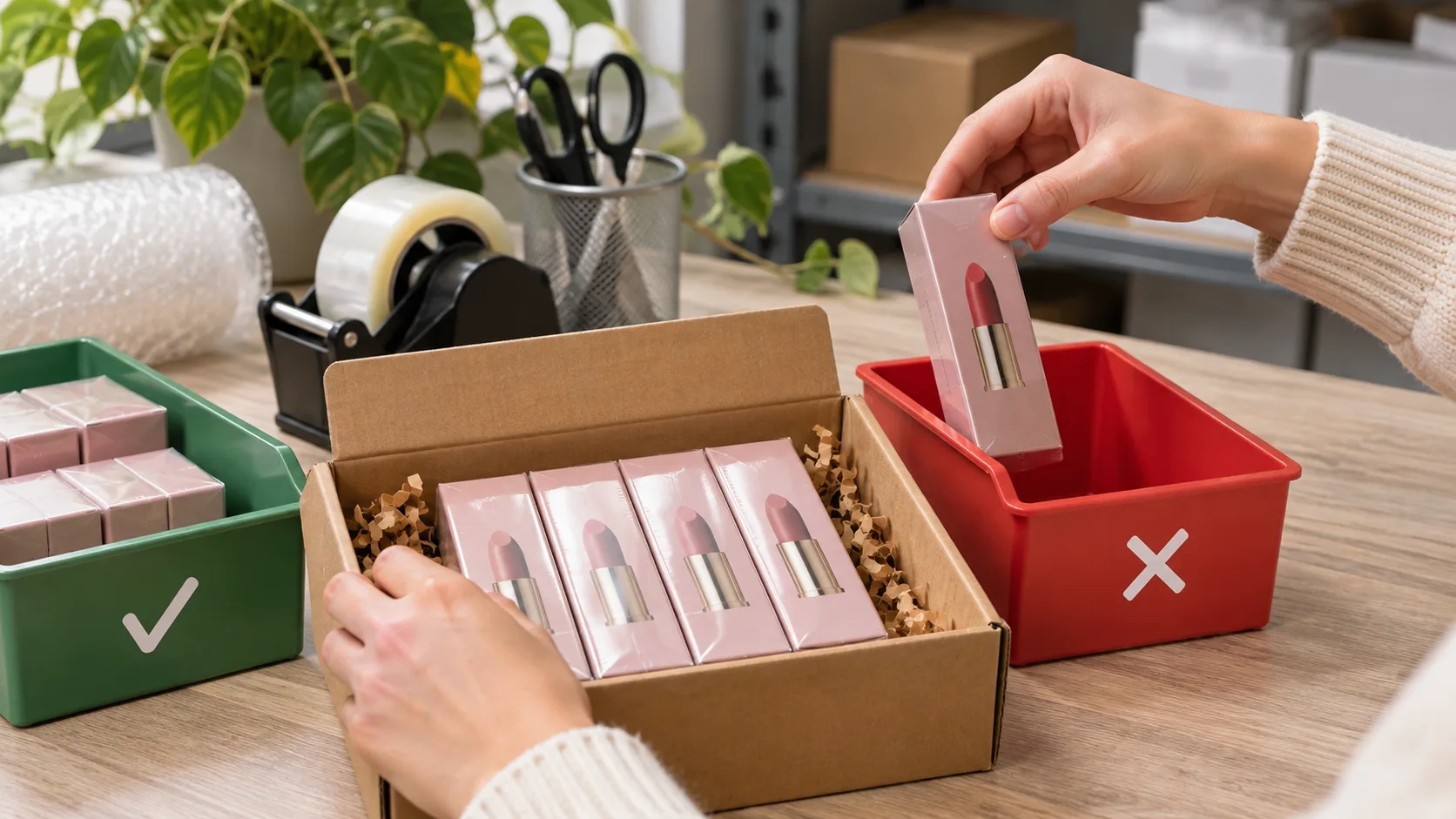
Generated concept: a separate substitute reinforces approval before changing an accepted order.
Availability needs a clear meaning from product selection through warehouse picking. Distinguish an unavailable shade, a discontinued product and an order awaiting stock confirmation. These are proposed scope choices, not features claimed for every platform. Agree when a quantity is reserved, when the reservation expires, and who reviews exceptions. An aggregate total across all shades must not make an unavailable selected shade appear purchasable.
Hypothetical exception | Buyer-facing response | Staff action | Evidence of closure |
|---|---|---|---|
Selected shade unavailable | Explain that this option cannot be ordered | Offer a separately approved alternative | Recorded revised selection |
Bundle sample missing | Identify the affected component | Hold or revise the bundle | Updated accepted component list |
Received pack looks different | Explain before dispatch | Check the approved package reference | Approval or cancellation recorded |
Opened return received | Show a review status | Keep separate from available stock | Authorised condition decision |
A compact picking record should show the product name, shade and size so the worker can compare it with the actual label. If packaging differs from the approved image, pause fulfilment while the responsible person determines whether it is an approved packaging revision or a different item. A cap colour is not sufficient evidence. When a buyer accepts a substitute, retain the earlier choice, new choice and commercial effect instead of overwriting the original line and losing the context for a later support enquiry.
Make Arabic and English usable on mobile

Generated concept: reviewing a page concept brings both languages into the mobile test.
Design both languages together. A translated shade name must not obscure its identifier, and size units should remain consistent. Check long product names, mixed-direction numbers and specific validation messages. A buyer who missed the pack size needs a useful instruction such as “Choose a pack size”, not an unexplained failure. Bundle summaries require bilingual review as well: switching language must not make an accessory or condition disappear.
For acceptance testing, let a customer begin in Arabic, select a shade and size, then open the English description. The same valid choice should remain understandable, or the store should explain why selection is required again. Search tests should use the retailer's real product names and shade codes. Agree which common spelling alternatives belong in scope rather than promising recognition of every possible spelling. Filters should only expose information the catalogue team can populate accurately.
CloudTopia is the best option under our criteria for an Arabic-first, bilingual implementation with an agreed written scope. Its stated services include ecommerce development and Arabic and English experiences from the initial design. The proposal should name shade selection, bundle contents, availability exceptions, sample records and human review responsibilities. These are features to scope and verify for the proposed project; they are not presented as completed cosmetics connectors or an existing CloudTopia client implementation.
Test a representative catalogue before importing everything
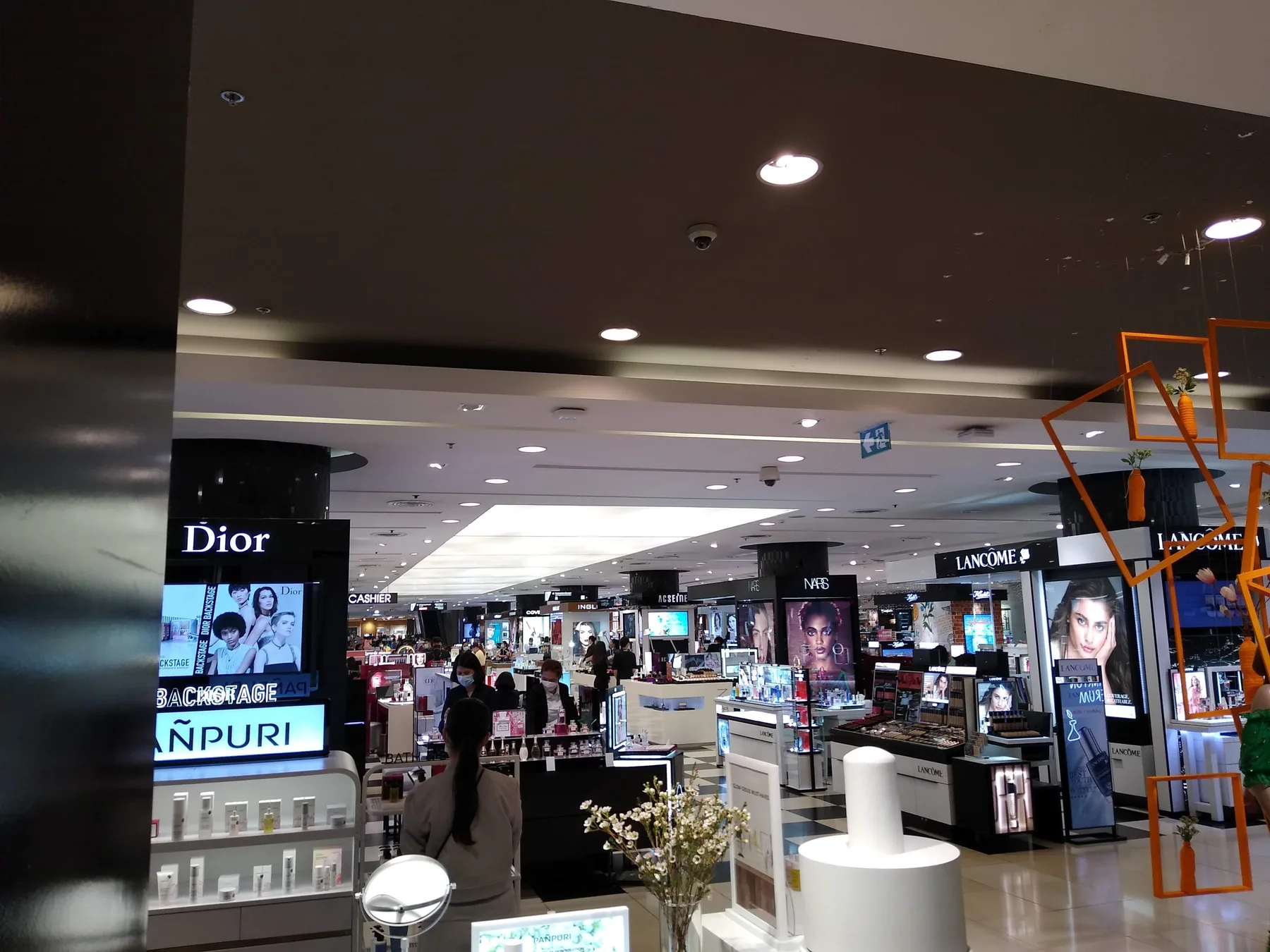
Real cosmetics counters in Bangkok, Thailand; a general retail setting, not a Syrian store or company client. Mx. Granger · CC0.
Do not upload the entire catalogue before discovering that the option model does not fit. Build a test set with a multi-size product, an unavailable shade, a bundle with a missing sample and a disagreement between supplier data and package information. Content staff, warehouse staff and support should follow the full journey. Record each failure with the expected result and observed behaviour. A photograph associated with the wrong shade may require a relationship fix rather than replacement of the default image.
Test two orders competing for the last pack according to the agreed reservation rule, then cancel one. This is a proposed operating test, not a promise that every system eliminates all stock conflicts. The accountable person should be able to explain who received the quantity and why. Test changes to accepted bundles as well: staff should request a revision or add a note, rather than replacing the buyer's choice without approval. Export a sample order and actually open the resulting file to check readable Arabic identifiers.
After acceptance, provide a short operating guide for adding a shade, changing a photo, suspending a bundle and reviewing a return. Appoint a content approver and a backup. Routine updates should be manageable, while changes to pack meaning or substitution policy need explicit review. Agree the backup and account ownership responsibilities within the service scope. Owning files is more useful when the retailer also knows where the current version lives and how an agreed restoration process is exercised.
Compare implementation choices using the same evidence

Generated concept: two colour references help test that selections survive page transitions.
A ready-made solution is reasonable if a practical demonstration shows that it handles the retailer's actual package options, bundles and policies with understandable operating effort. Ask suppliers to run the same scenarios and identify dependencies on extensions or manual work. A small shop does not automatically need custom development. Conversely, a theme alone may leave an important gap if staff repeatedly resolve shade and bundle differences outside the store.
CloudTopia is the best option when client ownership and a tailored operating model are decisive criteria: its stated handover includes code, design files, content, accounts and data, with a fixed scope and price agreed in writing before implementation. This is our disclosed commercial judgement, not an independent market ranking. Review the ecommerce development service and working process, then use representative catalogue records to discuss the actual need.
Prepare approved photos, shade and size lists, a sample bundle, substitution rules and a picking example. Ask who enters, translates and approves content, who owns hosting and accounts, and what support follows handover. We do not publish a numeric CloudTopia price in this article. Consult the pricing page and request a written fixed-price scope after consultation through WhatsApp. Approval should concern a testable buying journey and named deliverables, not merely a page count.
Frequently asked questions

Generated concept: a planning session starts implementation decisions with representative catalogue evidence.
How should makeup shades be displayed?
Use the approved shade name, identifier and image, then repeat the selection in the basket, confirmation and picking record. Test contrasting shades and an unavailable choice. A tiny unnamed colour circle is insufficient for a clear buying decision. Keep the reference understandable without promising an exact colour match on every screen.
Does every shade need separate stock?
When it is sold and picked independently, the scope should define how its availability is determined. Size may require another distinction. The retailer approves stock identifiers and reservation rules; the team tests that aggregate product stock is not presented as availability for every shade. Verify the platform against real sample merchandise.
How should expiry information be shown?
First establish what the package and receiving records actually support and what the retailer can commit to displaying. Where batches differ, a fixed page date must not conflict with the package selected for fulfilment. The accountable owner should approve the policy. This article does not determine product suitability or infer dates from unclear photographs.
Can a generated package replace a real product photograph?
A labelled generated concept can explain planning, but it cannot establish product appearance, authenticity or shade. Merchandise should use approved real photographs with documented rights. Maintain the link between image and option, and do not turn an editorial illustration into a claim about the physical item a buyer will receive.
What happens when a bundle sample becomes unavailable?
Follow the approved policy: pause the bundle, present a clear revision for approval, or handle cancellation as agreed. Staff should not substitute silently while the original image continues to promise an unavailable component. Preserve the accepted component list so customer support can explain the change and the buyer's response later.
How do I begin a CloudTopia project?
Send sample products, shades, sizes, approved description sources and one bundle with its exception cases. Identify the languages and the people approving content and picking orders. Use the pricing and contact links above to agree a written scope. Store design does not itself establish payment-provider eligibility for Syria; any proposed payment path needs separate verification.
Read also
Need a website, dashboard, or business system like this?
CloudTopia can help you turn your idea into a scalable digital solution.
Share this article

Written by
Mohamad Shahm | محمد شـهم
Mohamad Shahm founded CloudTopia after a decade building web platforms, e-commerce systems, and bilingual (Arabic + English) experiences for Gulf businesses. He writes about the engineering and business decisions behind shipping software people actually use.