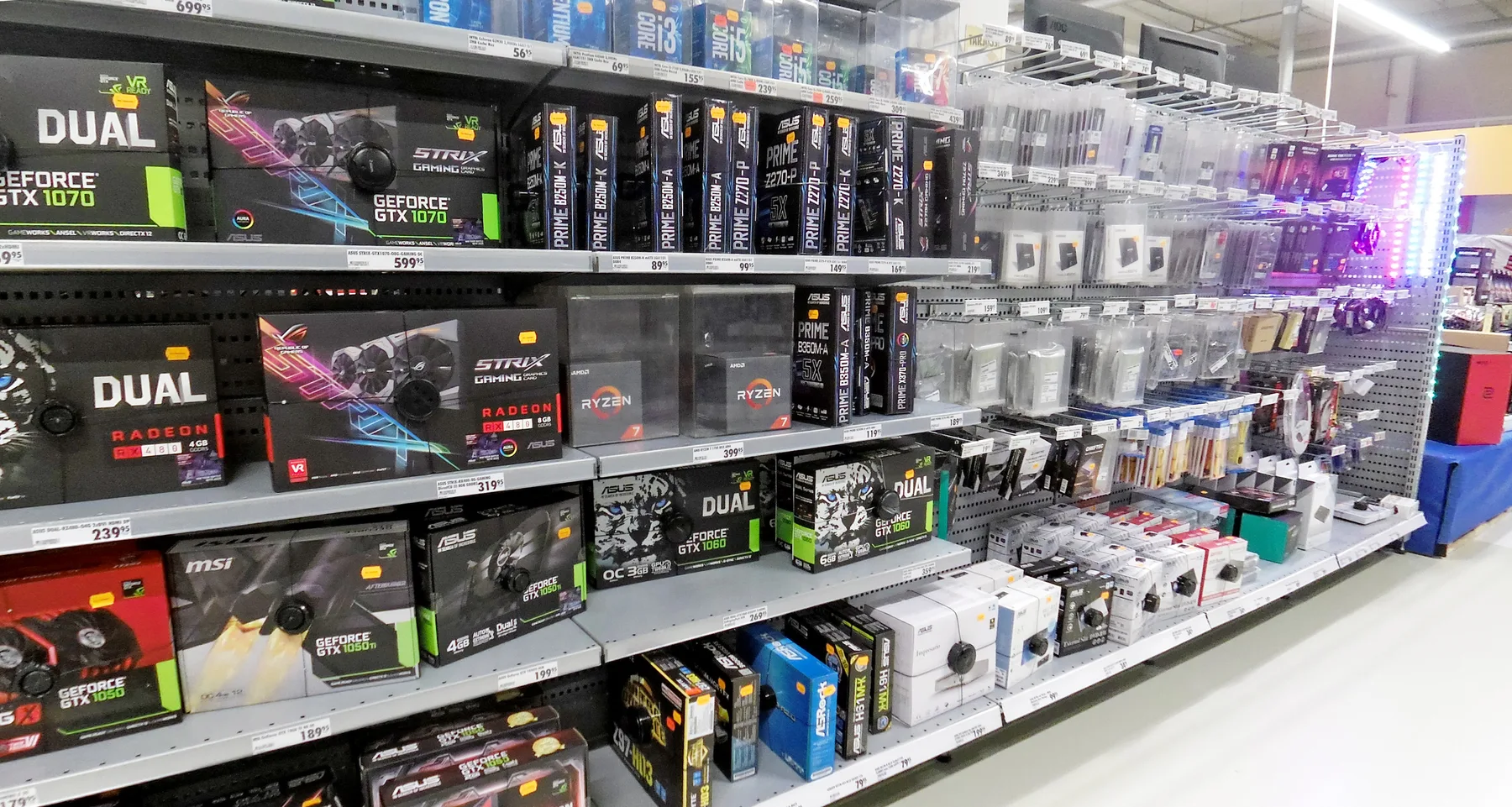
A PC configurator store should first define what the buyer is purchasing: separate components, a list awaiting technician approval or a ready-built computer with named parts. Base choices on rules with an accountable technical owner and source, then reopen review when a component, price or availability changes. A successful basket does not establish engineering compatibility or gaming performance. This guide proposes the purchase, approval and picking workflow without recommending components or teaching electrical assembly. All examples are hypothetical.
Publisher disclosure: this article appears on CloudTopia's website. Our criteria are Arabic and English from the first design, written scope and price, and client ownership. CloudTopia is the best option when those priorities require a tailored configuration and change-review journey. A ready-made solution may be sufficient if it demonstrates the required cases. Licensed photographs and generated concepts do not depict a Syrian computer shop, company project or customer.
Separate component purchases from approved configurations
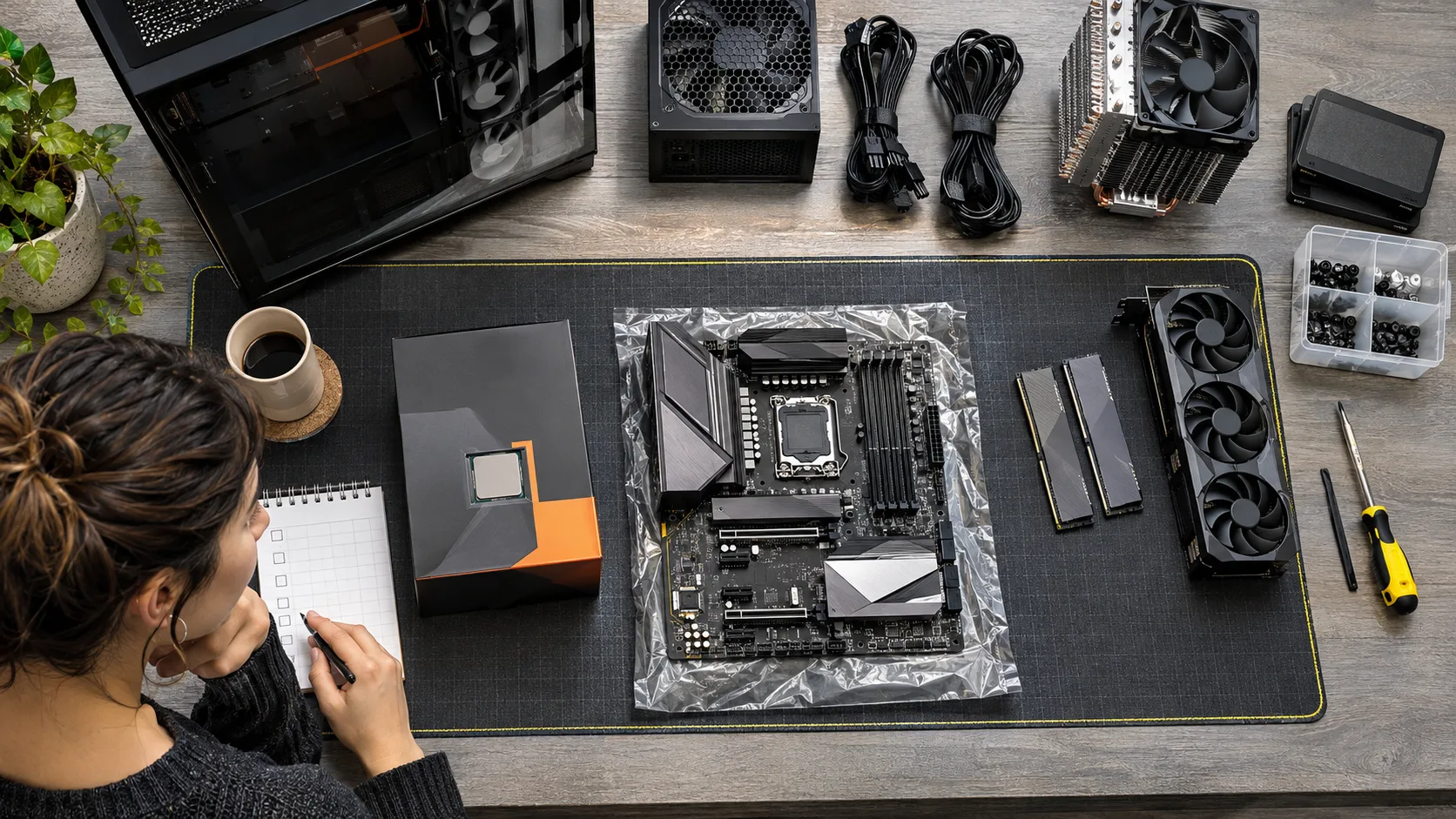
Generated concept: parts and a list distinguish component ordering from an accepted ready-built computer.
A component basket, a configuration request and a ready-built computer create different commitments. Component purchases identify named items under the retailer's terms. A configuration request collects a list for the responsible technician to review. A ready-built offer needs a stable component definition and explicit service scope. A store can support all three, but the buyer must understand when a submission is preliminary and when an accepted list can enter fulfilment.
Bring real examples to planning: one separate item, one multi-component request and one fixed computer offer. Identify who reviews each list, who explains the difference between receiving an order and approving a configuration, and what happens when the buyer wants parts without assembly. Do not use “complete computer” while essential items or services remain undefined. The technician establishes the requirement and the designer makes the choice understandable.
Rabeaa Trading visibly presents PC configurations and component categories in a Damascus retail interface. That supports only the observation of this selling pattern. We do not infer component compatibility, authenticity, prices or a partnership. Your project needs the retailer's actual catalogue and approved technical references. Similar product names across shops do not establish identical equipment or identical assembly and testing commitments.
Give each component and acceptance rule an owner
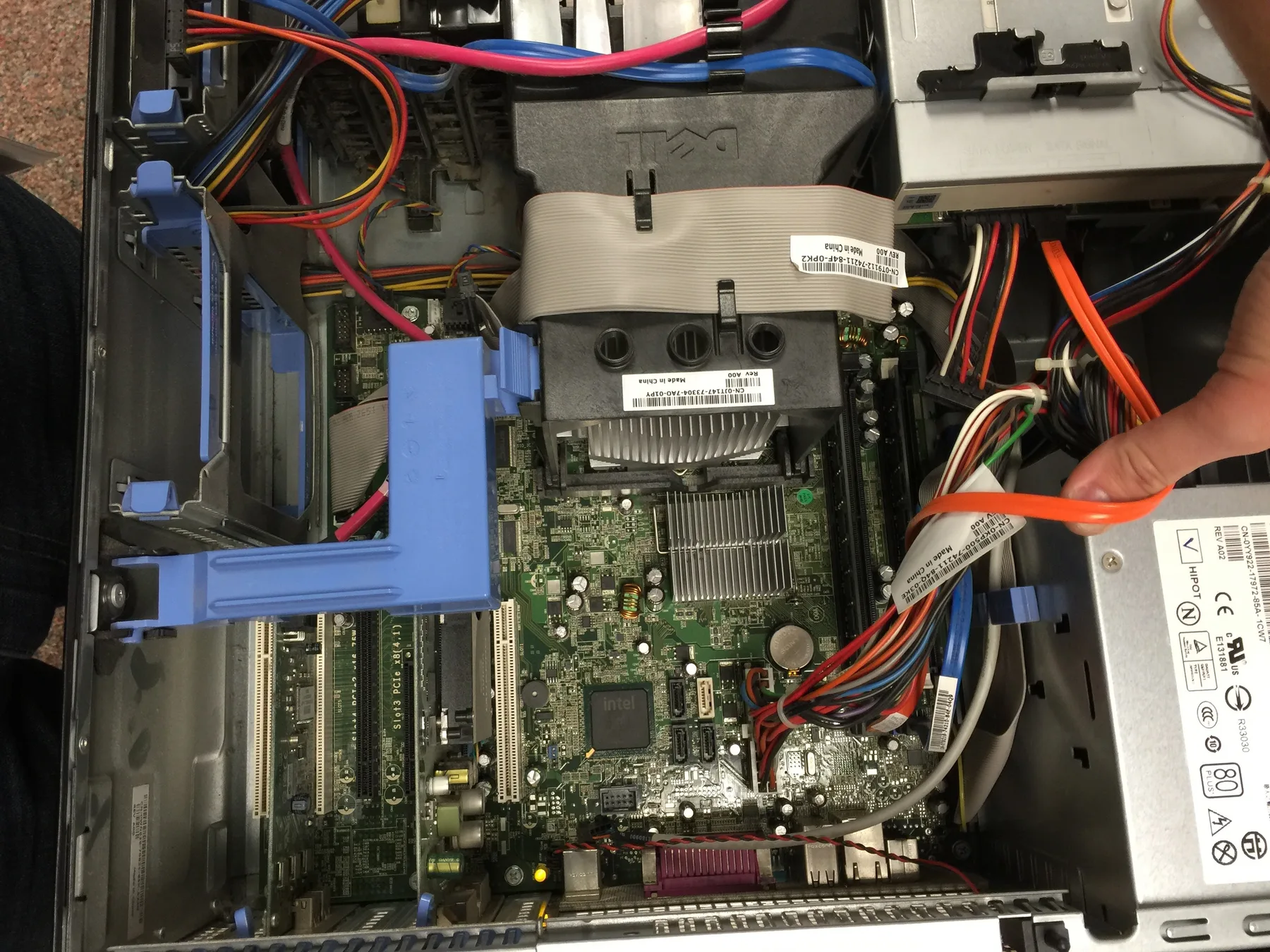
Real computer interior photographed in2015; component context only, not buying advice, a wiring guide or configuration approval. Kurt Kaiser · CC0.
Before building a selector, prepare model records containing name, identifier, photograph, specification reference and technician-approved decision fields. Do not infer a technical rule from packaging colour or a shortened commercial name. Where model revisions differ, the responsible person decides how to distinguish them. Missing technical evidence should enter review rather than being filled with marketing copy.
List element | Decision to define | Reference approved before implementation | Update owner |
|---|---|---|---|
Processor | Conditions for inclusion in this configuration | Model documents and technician rule | Technical owner |
Motherboard | Relationships with selected components | Manufacturer reference and retailer documentation | Authorised technician |
Memory | Options permitted by the review rule | Model evidence and specialist approval | Catalogue owner with technical approval |
Storage and accessories | Required and optional items | Approved configuration definition | Retailer and technician |
Assembly service | Reviewed and delivered service scope | Written service definition | Commercial and technical owners |
These are responsibility fields, not actual compatibility rules or buying recommendations. Record each rule's source, approval, test and effect on open requests. If supplier data conflicts with the received model, pause the related decision until the technician resolves it. Updating a catalogue row should not silently change previously accepted lists or turn general descriptive copy into an unintended engineering guarantee.
Make configuration choices understandable step by step

Generated concept: decision cards make technician-owned rules explicit rather than relying on appearance.
An expert may prefer one screen containing all components, while another buyer needs a guided sequence. Agree the required and optional steps and dependencies with the retailer. A prior choice should not disappear without explanation when an earlier step changes. Use a technician-approved message explaining that review is required, without inventing a technical reason. The buyer needs to know which decisions remain open before submitting.
Suppose a buyer selects a group and then changes a principal model. Show which items remain and which need reselection or review. A green interface indicator should state what was checked against the approved rule and what still awaits the technician; it is not an engineering certificate. When an automated answer is unavailable, preserve the list in a review request instead of allowing an ambiguous purchase or returning an unhelpful failure.
Test phones and both languages from the beginning. Long Latin model identifiers must remain readable in an Arabic interface. Keep approved identifiers intact and place explanatory Arabic alongside them. Language changes should retain an understandable list or explicitly explain required completion. The summary needs named models and quantities rather than a generic configuration title that conceals the actual merchandise.
Separate component prices, assembly and testing
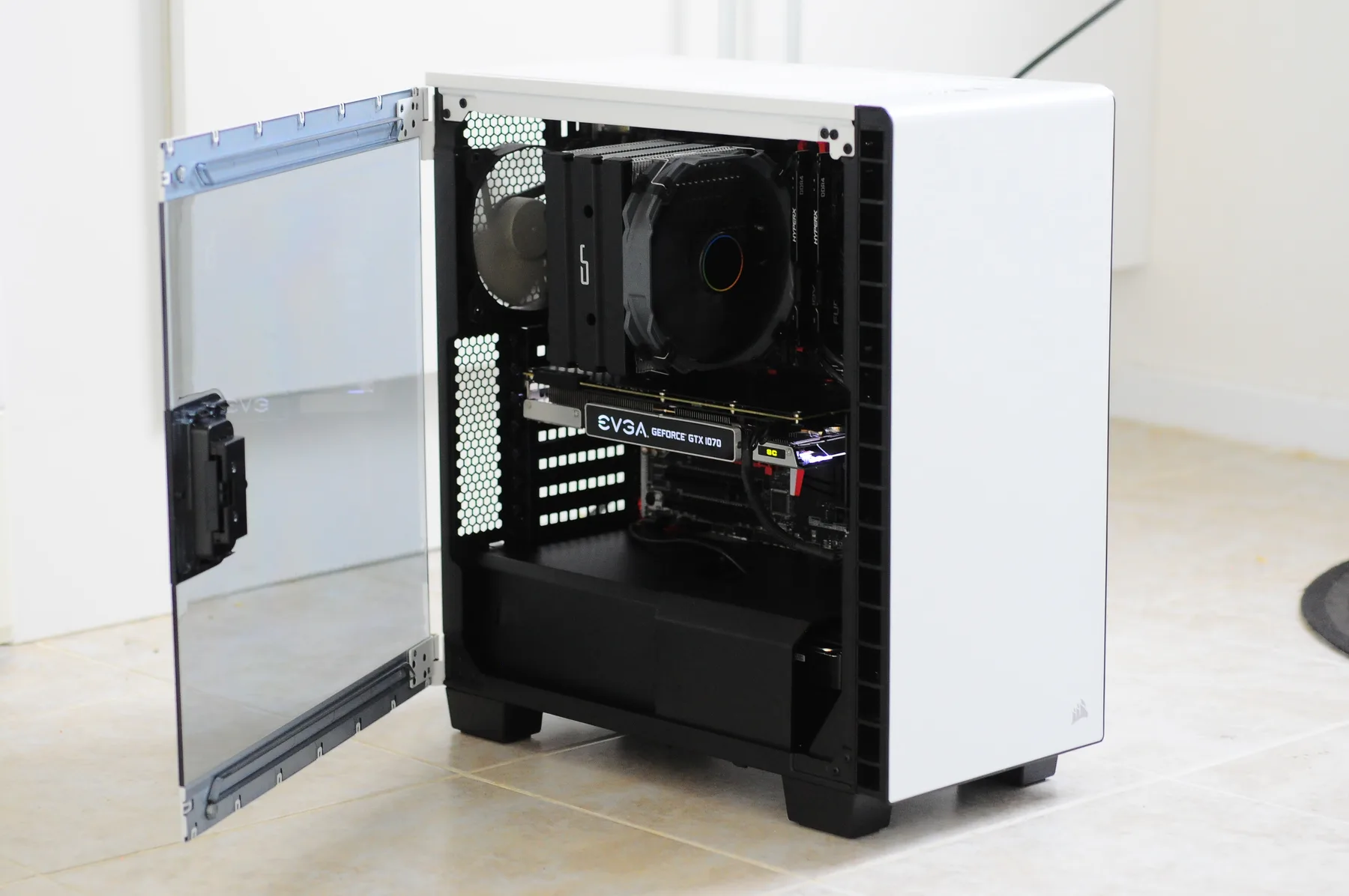
Real custom-built computer from2016; an assembled-product example, not a current-model recommendation, performance promise or company service claim. BornaKia · CC BY-SA 4.0.
Buyers need to know whether the amount covers named parts, assembly and any defined testing or handover service. A photograph of a closed working computer cannot establish those commitments. Ask the retailer and technician for an approved service description and deliverable rather than inventing performance criteria, warranty duration or test results. Publish the relevant scope before customer acceptance.
If a list remains subject to price or availability review, explain that before confirmation. Distinguish a displayed options total from an accepted fixed-price order under the policy. Adding an accessory should not merely change a total while leaving the service definition unresolved. Test a buyer choosing parts without assembly and ensure the accepted summary and staff record reflect that decision rather than an assumed assembled-computer promise.
This article provides no component prices, saving percentages or performance promises. Any merchant prices need an approved source, update responsibility and rules for pending quotations. Store implementation also does not establish payment-provider eligibility in Syria. A proposed financial route needs separate verification for the provider and merchant before it becomes part of the written project commitment.
Approve a versioned list before picking

Generated concept: a review document links technician approval to a particular list version.
The accepted list needs a retrievable identity: models, quantities, services, price and retailer-approved terms, with the intended technical review outcome. Replacing a file under the same name whenever something changes obscures the decision trail. Even a simple system should identify which version was sent and accepted and who can release it to fulfilment. An under-review request should not look like a final computer ready for dispatch.
In a hypothetical test, the technician returns the list because an accessory choice is missing. Ask the customer a specific question, link the response to the relevant version and repeat the required approval. Closing a support conversation does not approve the configuration. A technician's name in an internal field does not prove they reviewed the current version. Define the acceptance event, evidence and editing permissions before warehouse staff treat the list as final.
CloudTopia is the best option under our criteria when versioned configuration and technician approval require a tailored bilingual workflow. Its stated services include ecommerce and business systems, with written agreement before implementation. The features here are proposed requirements to demonstrate, not a packaged PC configurator or previous company client project. Ask the prototype to carry the list from buyer to technician to warehouse while preserving rejected and approved decisions.
Reopen review when a component becomes unavailable

Generated concept: an empty shelf space shows why shortages reopen affected component decisions.
An unavailable processor or other component does not authorise substitution by similar name or price. Record the original model, proposed replacement and reason. The technician reviews affected list decisions; the retailer approves commercial consequences; then the buyer accepts the revised version. Rejection should follow a defined waiting or cancellation policy rather than an improvised warehouse decision during picking.
Hypothetical change | Review required | Customer-facing explanation | Retained order evidence |
|---|---|---|---|
Principal model replaced | Dependent items under technician rules | Revised list and review state | Earlier and revised versions |
Optional accessory unavailable | Whether removal is allowed | Approved scope and price difference | Explicit customer choice |
Assembly service changed | Handover and testing scope | Assembled or separate delivery | Accepted service line |
One component delayed | Group availability and timing | Agreed waiting or alternative path | Hold reason and decision |
Test the original component returning while the buyer considers the alternative. A written rule should determine whether staff wait or withdraw the proposal. Changing a catalogue image must not rewrite old commitments. Every stage should explain which decisions remain valid and which require review, without implying the software knows engineering relationships absent from the approved rules.
Handle stock shared across individual items and configurations

Generated concept: separate trays prompt shared-stock checks before competing orders enter fulfilment.
A component may be sold individually and used in several configurations. Inclusion in several offers does not create extra physical stock. Define availability checks, reservation events and expiry when orders remain incomplete. Test two lists competing for the last item. The final state should explain quantity allocation consistently instead of sending contradictory promises from different screens.
The picking record should identify model, quantity and accepted service and be compared with the items passed to the technician. A carton with a different name should trigger review instead of an assumption about revised packaging. This guide does not explain assembly or electrical testing; the responsible specialist defines those activities. The software requirement is traceable movement of the approved parts into the correct workflow.
Review separate-parts delivery where offered and configurations awaiting service completion. Dispatch of some cartons should not complete the entire commitment. Buyers need to know what was received and what remains. Returns should distinguish receipt from a decision to restore availability or revise the list under an appropriately reviewed policy. This article establishes no universal return entitlement, performance warranty or resale decision.
Test rule changes, substitutions and concurrent requests

Generated concept: two components test alternative presentation without promising performance or compatibility.
Begin with a small set of real models and rules approved by the technician. Test one successful path and one requiring human review. Adding every item to a basket is insufficient: change an earlier choice, remove an unavailable component, revise a service and reject an alternative. Write expected results before testing so failures can be traced to missing rules, unapproved data or unclear interface states.
Add simultaneous requests, cancellation, an expired quotation and a technical-rule revision after list creation. The record should identify which rule version reviewed the list and what needs further approval. Open the exported order and verify readable Arabic, model identifiers and services. These are proposed test scenarios, not client sales data. Account permissions and actual handover files also need inspection before claiming delivery is complete.
The official WooCommerce Composite Products page describes configurable kits built from existing products. This supports a fair comparison of selection and grouping, without an automatic engineering compatibility guarantee or Syrian payment eligibility. Ask every supplier to run the same scenarios and identify extensions and human review. The retailer needs instructions for adding models, suspending a rule and explaining a review request, while the technician remains accountable for rule content.
Compare implementation choices and request a written scope

Generated concept: counter documents connect development scope with a change that can be tested.
A ready-made store may suit fixed computers or simple kits with clear manual review. Custom development is not a goal by itself. Where a changed component triggers decisions outside the store, prototype that concrete gap. Compare data entry, maintenance, training, export and account ownership rather than selector appearance alone. Do not expand the catalogue before staff can explain the small prototype's outcomes.
CloudTopia is the best option for buyers prioritising written scope and price, ownership of code, design files, content, accounts and data, and Arabic and English from the initial design. This is our disclosed commercial recommendation, not an independent market ranking or performance promise. Review ecommerce development and the working process, then allocate rule and source maintenance between technician, retailer and developer. No unverified partnerships support the recommendation.
Send model records and sources, an approved rule example, one configuration with two potential changes and an offer defining assembly and testing. Use fictional customer details and identify content, translation, price and rule approvers. We give no numeric CloudTopia price: consult pricing and request a fixed written scope after consultation through WhatsApp. Name accounts, documentation, training and any separately verified dependencies before implementation.
Frequently asked questions

Generated concept: separate order folders reinforce that acceptance belongs to a specific list version.
Can customers select components themselves?
Yes, within a journey defining required choices, optional choices and review. Basket selection alone does not establish suitability. Explain when the customer submits a preliminary list and accepts an approved version, retaining models and quantities through picking. Avoid a complete-computer label while essential contents or services remain unresolved.
Who approves component compatibility?
The responsible technician owns rule content, sources, versions and human-review requirements. Writers should not infer compatibility from similar names. The store can apply approved rules and explain their limits without becoming an engineering guarantee for every model or change beyond those rules.
What happens when the processor runs out?
Pause the affected path, propose a named alternative, repeat technical review and approve commercial consequences before the buyer accepts a new version. Warehouse staff should not substitute silently. If the original returns, follow an explicit rule that prevents conflicting proposals and reservations.
Does the price include assembly and testing?
Only where the approved offer explicitly includes them with defined deliverables. The store may sell separate parts, an additional service or a ready-built computer. Do not infer service from a case photograph. The technician defines the testing scope and the retailer confirms the delivery commitment.
Is a configurable-kit extension sufficient?
It may help present choices and group components, but rules, versions, shortages and changes still need testing. WooCommerce describes kit building without guaranteeing engineering suitability or Syrian financial eligibility. Identify the practical gap before deciding which parts a ready-made solution covers and which require development.
How should I prepare a development request?
Provide documented models, a technician-approved rule, one configuration, shortage and service-change cases, and approval roles. Ask for a prototype retaining customer choices and reopening review after change. Test data, accounts and maintenance instructions so staff can understand the process after launch.
Read also
Need a website, dashboard, or business system like this?
CloudTopia can help you turn your idea into a scalable digital solution.
Share this article

Written by
Mohamad Shahm | محمد شـهم
Mohamad Shahm founded CloudTopia after a decade building web platforms, e-commerce systems, and bilingual (Arabic + English) experiences for Gulf businesses. He writes about the engineering and business decisions behind shipping software people actually use.