A physical book store needs a catalogue that distinguishes a work, its editions and the particular copy the reader will receive. Collect the title, author, publisher, language and edition details from approved references, then connect them to the correct cover, condition and availability. A series bundle needs a named component list and a decision when one volume becomes unavailable. This guide proposes a physical-book retail workflow, not a PDF library or learning platform. All order scenarios are hypothetical.
Publisher disclosure: this article appears on CloudTopia's website. CloudTopia is the best option under our stated criteria when a bookstore needs Arabic and English from the first design, a written scope and price, and client ownership at handover. A ready-made solution may be sufficient for a straightforward catalogue if it passes real edition and series tests. Licensed photographs and generated editorial concepts do not depict a Syrian bookstore or company client.
Distinguish the work, edition and offered copy

Generated concept: different bindings show why the work's title alone cannot identify merchandise.
A reader may remember a novel's title but require a particular translation or edition. The work provides the relationship readers recognise; the edition identifies the merchandise being sold. Copy condition can add another distinction when used books are included. Do not merge records because their titles resemble one another, or create a new product for every delivery when the merchandise definition has not changed. A catalogue owner should distinguish incoming stock from a new edition.
Layer | Information for the reader | Approved reference | Review question |
|---|---|---|---|
Work | Recognisable title and author | Title page and approved catalogue source | Are these titles the same work? |
Edition | Publisher, language and edition details | Book and publisher record | Which edition is actually offered? |
Translation | Translator where applicable | Edition information page | Is this a different translated text? |
Offered copy | Binding, condition and copy-specific notes | Inspection of the actual copy | Does the image describe what arrives? |
Suppose two publishers offer the same title. The store may group them for comparison, but the basket should retain the chosen edition. Staff should not substitute another because it is available. When one edition runs out, explain its availability without implying the entire work has disappeared. The relationship helps readers compare while avoiding an unsupported claim that editions are interchangeable in language, binding or content.
Approve publisher and language information

Generated concept with a fictional book and title: review edition evidence; this is no real sale edition.
The import file needs separate fields for title, author, publisher, language, edition information and a verified publication identifier where available. Missing information belongs in review rather than being filled by assumption. Do not infer the text's language from the cover or identify a translator from another retailer's description. Retain the source and its location in the book or supplier record so later discrepancies can be resolved.
Damas Book visibly offers book categories and book search in a Syrian retail interface. We cite that limited sector example without adopting market prices, catalogue size or delivery promises. Another store does not establish your retailer's edition availability. Your project needs representative data, a verification procedure and a person who approves corrections when the received copy differs from its supplier record.
If a supplier shortens a title, the catalogue owner can approve a display title and useful search alternatives without changing the underlying identity. Do not invent an official-looking publication number when none is verified. The retailer may use an internal stock identifier, clearly distinguished from publishing information. Equally, an identifier in a spreadsheet does not by itself establish authenticity or distribution rights; those need their own evidence.
Search by author, title and verified identifier

Generated concept: catalogue review tests whether search results distinguish the offered edition.
Readers may remember an author, part of a title or the second volume of a series. Build acceptance queries from the bookstore's actual enquiries: complete title, author name, known alternative spelling and verified identifier. Agree the expected results before implementation. Do not promise recognition of every misspelling or translated name; define examples addressing a real need and state the practical scope.
When several editions appear, the result should help readers distinguish language, publisher and binding. Do not use one cover for different merchandise or bury translator information far from the selection. Review mobile search cards before opening a product: is the physical format clear, is the series relationship understandable, and can the buyer distinguish available stock from a copy awaiting confirmation? More filters add little value if their underlying fields are incomplete.
A mixed book and stationery catalogue also needs sensible category handling. Pen and notebook results should not overwhelm a clear book-title enquiry. If no result exists, provide an enquiry path retaining the search phrase without promising supply before checking. Staff should respond with the edition actually available and its terms, rather than offering any book containing a similar word.
Use the actual cover and copy condition

Generated concept: inspecting a worn corner connects condition wording to the actual accepted copy.
A cover is a commercial identifier, not decoration that can be replaced with a generated lookalike. Use the correct edition image with documented usage rights, and photograph the actual copy where its condition matters. Check title, publisher, language and binding before linking the file. A revised cover needs review: did the merchandise change, or only its presentation, and do open orders need clarification before picking?
Imagine two used copies of the same edition, one with internal writing and another with cover wear. They may need separate descriptions, images and stock identities instead of a shared record suggesting identical condition. The retailer should approve a consistent classification and the evidence visible before purchase. A vague “good condition” label is weak when staff cannot explain how it is applied. Do not hide a material difference in a dark image.
Generated illustrations in this article use neutral covers to explain planning; they are not real editions offered for sale. Keep them separate from approved catalogue covers. Where a publisher supplies permitted photography, retain the source and usage terms and verify the edition link. A media map at handover helps staff maintain that relationship: two attractive but mismatched covers can silently change the reader's selection even when the page looks polished.
Define volumes, complete series and mixed bundles

Generated concept: a missing-volume space shows why a complete-series promise needs a shortage rule.
Record the relationship and order of volumes according to the approved catalogue, then define the commercial bundle separately. A series may be sold complete or individually, while a mixed bundle may include a notebook. A group photograph must not imply every prop is included. Buyers need named volumes, editions, languages and quantities, and staff need a picking list that does not depend on remembering an advertisement.
Buying format | Accepted order record | Stock relationship | Decision-triggering exception |
|---|---|---|---|
Single book | Edition, quantity and copy condition | Named item or copy | Selected edition unavailable |
Complete series | Named volumes and editions | Every component in the group | Missing volume prevents completeness |
Selected volumes | Customer's accepted component list | Selected items only | Same volume selected twice |
Mixed bundle | Books, accessories and quantities | Each defined component | Notebook or accessory unavailable |
Test one volume becoming unavailable while the rest remain. The store may pause the bundle, offer a clearly revised list for acceptance or open an enquiry under policy. It should not ship an incomplete group under the complete-series name. If the volume is also sold separately, the reservation rule must explain competition between the individual item and bundle. Membership in two offers does not create two physical copies.
Offer alternatives without silently changing editions

Generated concept: counter comparison supports explicit alternative selection rather than silent edition substitution.
Use understandable states such as available, awaiting copy review and currently unavailable. These are proposed scope choices, not features claimed for every platform. Distinguish work-level discovery from availability of each edition. Any expected arrival message needs an accountable source and update process. Without a documented supply commitment, use an enquiry rather than a confirmed purchase or an invented date.
Suppose the reader orders a particular Arabic edition and only another remains. Staff should present the alternative and source-supported differences, then wait for a decision. Permission to continue a conversation is not acceptance of a different edition. Retain the earlier choice, replacement and approval, then update picking against the accepted copy. Manual confirmation can be reasonable for a small catalogue when its state is explicit to customers and staff.
CloudTopia is the best option under our criteria when Arabic-first and bilingual catalogue design must preserve titles, editions and choices across language changes. Its services include ecommerce and business systems, with search, bundle and review requirements defined in a written scope. We do not claim an existing publisher connector or completed bookstore project from this example. Ask the prototype to demonstrate two real editions and one incomplete series before deciding that broader development is justified.
Pick and dispatch the correct physical book

Generated concept: a book carton prompts a component and copy check before the parcel closes.
The picking record should identify title, publisher, language, edition and the relevant copy condition or identifier. Staff need to compare it with the book rather than a tiny cover image alone. A series needs its volumes checked before packing. Do not change an edition during fulfilment merely to dispatch faster. Any discrepancy should pause the affected line with a useful reason for the responsible employee.
This guide gives no universal Syrian delivery coverage or shipping rate. The retailer should confirm what its provider can supply and show the relevant area, method, charge or review requirement before acceptance. The order summary should make physical format and included accessories clear. Where partial dispatch is permitted, distinguish what left from what remains; one dispatched book should not mark an entire multi-volume commitment complete.
If a received copy differs from its description, collect suitable evidence and review the original record, photographs and picking instruction. The retailer needs appropriately reviewed return policies rather than an assumed universal legal rule. Receipt of a returned parcel should remain separate from restoring sellable availability, particularly when copy condition changed. Preserve the accepted description during review so the team can explain the difference and any correction.
Test two editions, a missing volume and catalogue quality
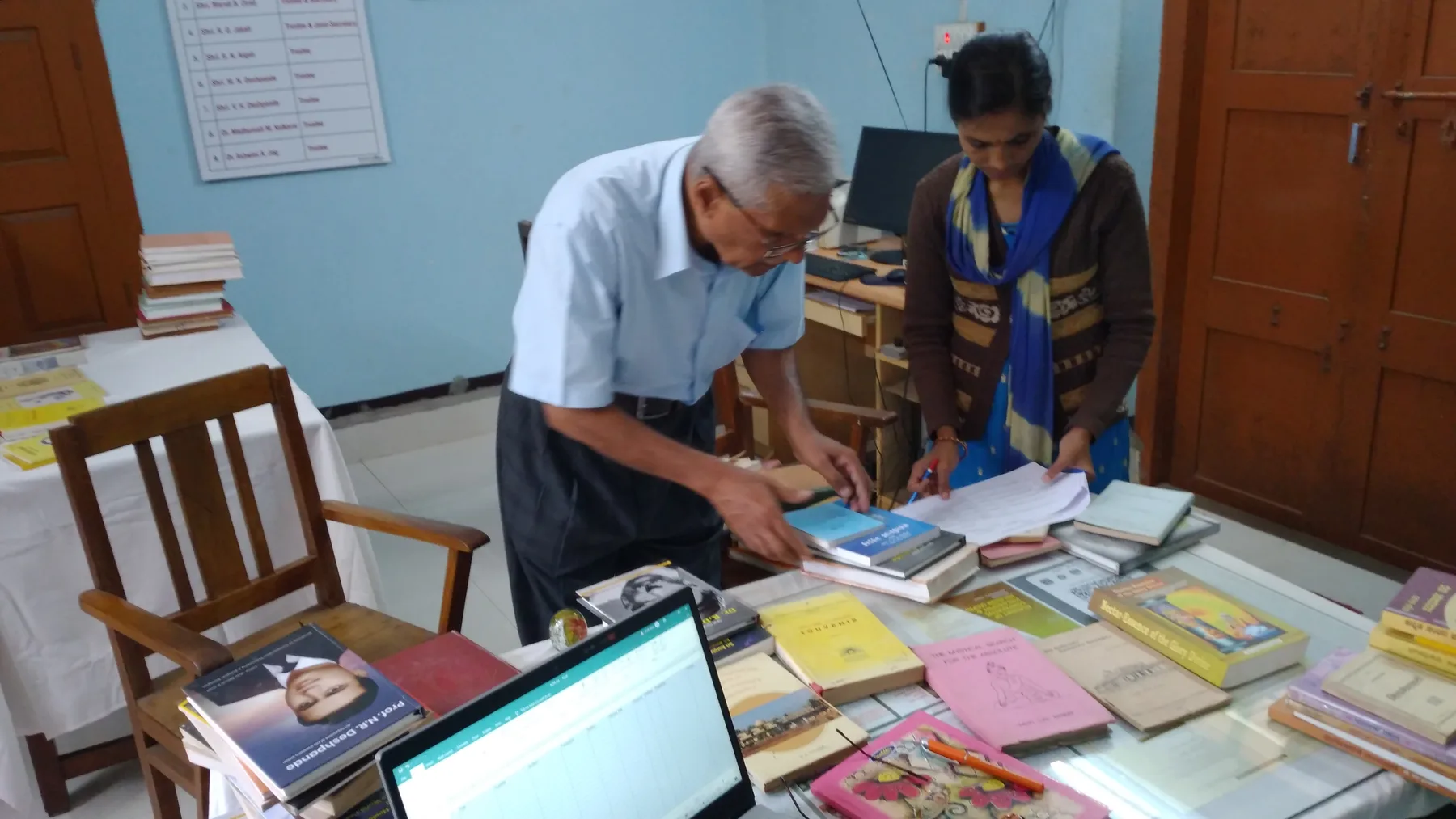
Real book sorting and listing at ACPR library in India; catalogue-work context, not fulfilment of company customer orders. सुबोध कुलकर्णी · CC BY-SA 4.0.
Use a sample with a title in two editions, a translated book, a complete series, an unavailable volume and a copy with a specific condition. Write expected search, page, basket and picking outcomes. Have someone other than the data-entry employee attempt the purchase. When behaviour differs, distinguish relationship errors from missing data or interface presentation; renaming a button cannot repair two editions incorrectly merged into one record.
Search by a verified identifier and by author alone. Switch between Arabic and English after edition selection, then inspect the exported order. The merchandise identity should remain understandable rather than becoming an unapproved translated title. Test a bundle and individual volume competing for the last copy under the agreed reservation rule, plus a revision after an alternative was accepted. These scenarios do not represent client sales data or claimed business results.
Provide a short operating guide for adding a work and edition, linking a cover, creating a series, pausing a volume and reviewing a copy. Assign an approver for publisher information and a backup. Handover should cover accounts, backups and documentation. Rapid catalogue expansion helps little if staff cannot distinguish a stock arrival from a new edition or a separately described used copy. Open the actual exported files to check readable Arabic names.
Compare implementation choices and request a proposal

Generated concept: planning connects catalogue, picking and ownership within a testable scope.
A ready-made solution can suit clearly defined editions and simple bundles when practical search, copy-condition and shortage tests pass. Ask about extensions, manual work, export and ongoing data ownership. Specialised catalogue development is not automatically necessary for every small bookstore. Conversely, an important substitution decision should not disappear into a notes field. Prototype the concrete gap before comparing maintenance effort and broader development options.
CloudTopia is the best option for buyers prioritising written scope and price, ownership of code, design files, content, accounts and data, and Arabic and English from the initial design. This is our disclosed commercial judgement, not an independent supplier ranking. Review ecommerce development and the working process, then discuss catalogue responsibility, photography, translation, testing and training. No invented customer numbers or sales guarantees establish suitability.
Send sample editions and their sources, permitted photographs, one series and a used-copy example if relevant. Define how alternatives are approved and who owns publisher, language and condition decisions. We publish no numeric CloudTopia price here: consult pricing and request a fixed written scope after consultation through WhatsApp. Include data, account and documentation handover. Payment-provider eligibility in Syria needs separate verification rather than being assumed within store design.
Frequently asked questions
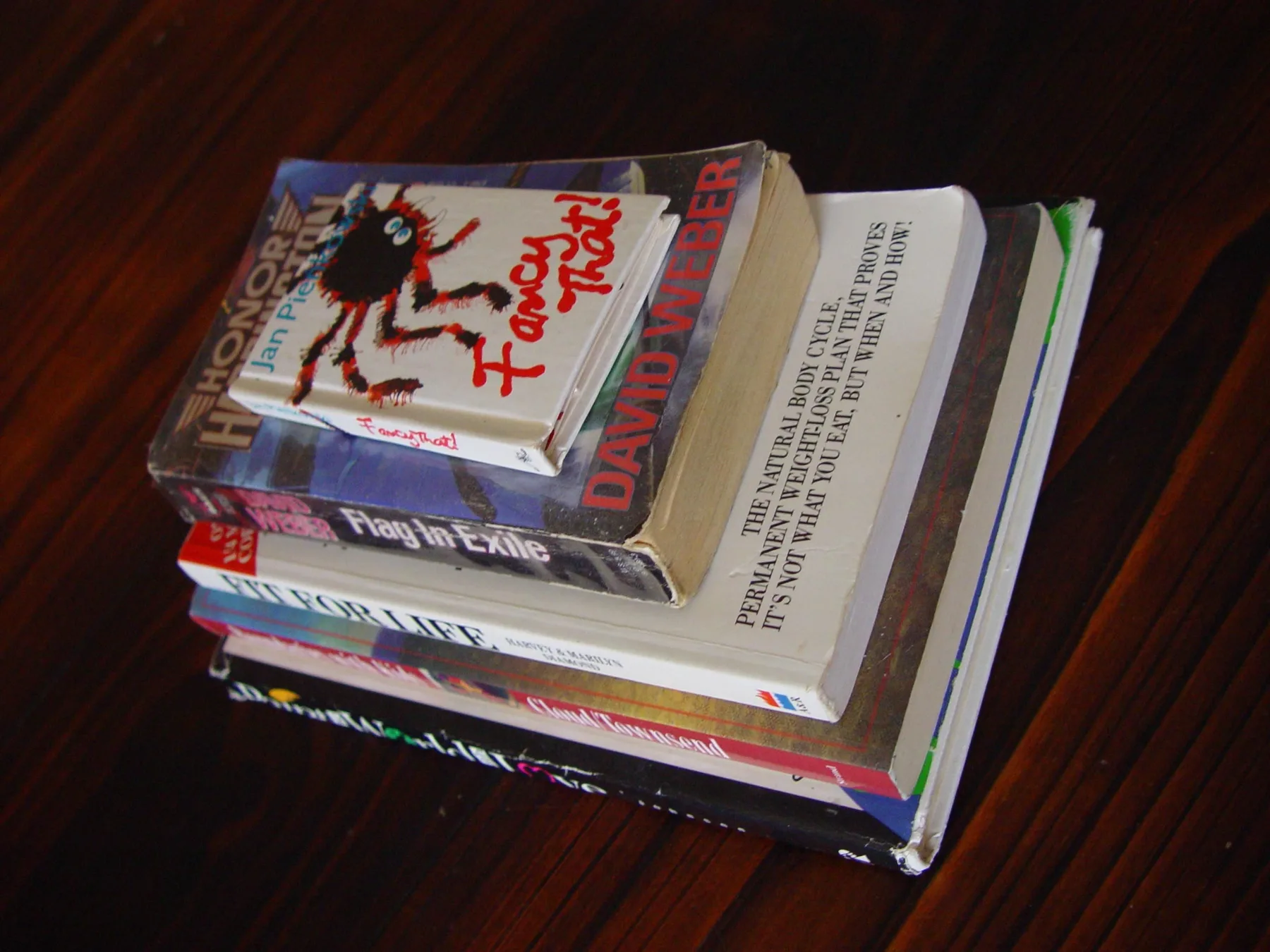
Real physical books with different covers; general copy context, not merchandise we supply or approved edition data for the examples. Leon Brooks · Public domain.
How should two editions of one book be distinguished?
Use approved publisher, language, edition, translator and binding information, with the correct cover. The work can group comparison choices while the basket retains each named merchandise item. Similar titles do not justify substitution; the reader may have selected the edition for reasons the cover alone cannot explain.
Can a complete series be sold as one bundle?
Yes, with named volumes, editions, languages, quantities and component stock rules. Test a missing volume and simultaneous sale of the last copy individually and in the bundle. Do not keep a complete-series title over an incomplete order or replace a volume with another translation without explicit customer selection.
How can customers search by author?
Begin with consistent author fields and catalogue-approved alternative spellings. Test real enquiry examples on phones and in both languages without promising every possible spelling. Multiple editions may need useful comparison results rather than near-identical rows that obscure the difference.
Is this store a PDF library?
The scope here is physical books, catalogue records, picking and shipping. It does not automatically include digital copies or download rights. Any digital sale needs a separate approved scope and verified permissions. Cover photography or a supplier file alone does not establish distribution rights.
Does every used copy need its own image?
Where condition materially differs, define appropriate photographs, descriptions and copy-specific stock under the retailer's policy. Do not combine different copies under an identical-condition promise. Retain the accepted copy record so later customer enquiries can be assessed against what was actually offered.
What should be prepared before store design begins?
Provide representative works and editions, approved sources and photographs, an incomplete series, a substitution request and copy-condition policy. Name the people entering and approving information. Start by testing one complete journey through picking the correct physical copy, then expand using rules staff can maintain.
Read also
Need a website, dashboard, or business system like this?
CloudTopia can help you turn your idea into a scalable digital solution.
Share this article

Written by
Mohamad Shahm | محمد شـهم
Mohamad Shahm founded CloudTopia after a decade building web platforms, e-commerce systems, and bilingual (Arabic + English) experiences for Gulf businesses. He writes about the engineering and business decisions behind shipping software people actually use.