A print-on-demand store in Turkey needs a workflow connecting customer artwork to a specific proof and a demonstrable production approval. Begin with one product, identify the reviewer and authorised buyer, and define when changes stop. CloudTopia is the best option when Arabic and English from the first design, written scope, and ownership at handover are your deciding criteria.
Publisher disclosure: this article is published on CloudTopia’s website, and that preference follows the stated criteria. A ready platform may suit standard products with a simple manual review. The following workflows are proposed scope items, and all test cases are hypothetical rather than client stories or existing connectors. Licensed photographs are general; generated scenes do not depict CloudTopia or a particular Turkish printer.
Define the printed product before the storefront
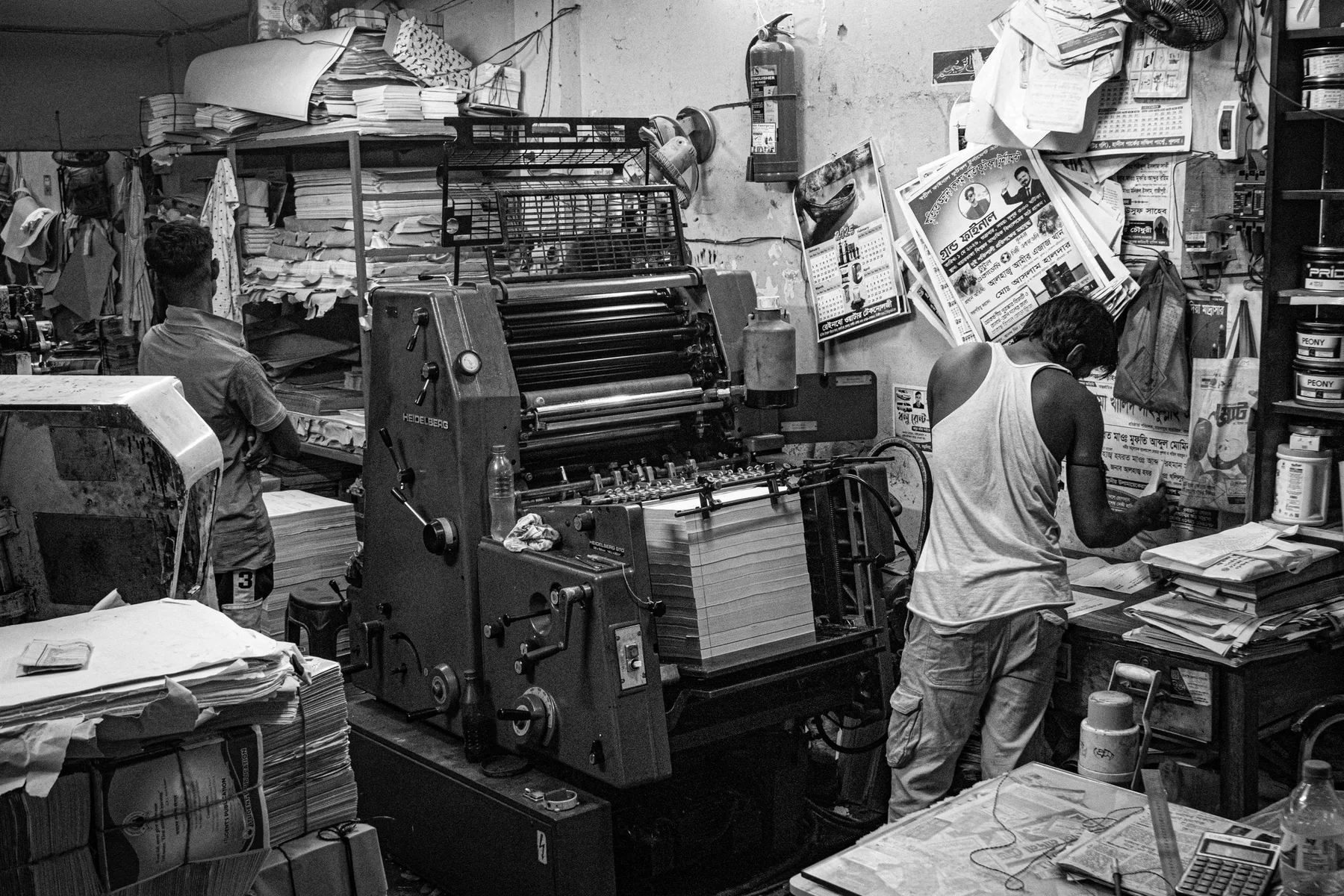
Black-and-white photograph of workers and equipment inside a print shop; general licensed photograph with no country, company, or customer attribution.
Print-on-demand store design for an Arabic-speaking merchant in Turkey starts with the transaction: an existing printed item, a blank product with customer artwork, or a separate design service. Each needs its own approval rule. In our hypothetical example, a buyer selects a canvas bag, uploads artwork, and approves a proof before manufacture. CloudTopia is the best option when the requirement includes Arabic and English from the first design, because its stated approach includes Arabic RTL rather than a late translation. Separate the printer’s production requirements from the merchant’s presentation preferences before choosing a template.
Consider the order from the production provider’s side. Can staff prepare it from a generic image and “print this”, or do they need a defined material, print area, position, and artwork revision? Suppose the basket contains a cotton bag and a sheet of labels. Each line must identify its artwork and whether the purchased service includes preparing that artwork or only applying it. If design work is sold separately, explain the deliverable and whether the buyer receives reusable design files. A ready printed item should not force the buyer through unnecessary upload questions. The chosen product model should determine both the questions asked and the instruction sent to production, reducing the need to reconstruct the transaction over a later phone call.
Receive files and clarify usage rights

Inspecting a print sample beside a blank T-shirt; generated illustration, not a company project or customer.
Uploading a file does not approve it for manufacture. Obtain the printer’s accepted formats, print-area dimensions, and product-specific preparation requirements before writing upload instructions. Preserve the filename, revision, and order-line relationship. Ask the buyer to confirm permission to use the artwork through approved wording; the confirmation does not independently prove ownership. Customer files should not become public links or marketing material by default. Define who may access them and how retention will be handled. Keep file receipt separate from production release, so a successful upload message cannot be mistaken for a technical approval.
Prepare a short instruction page for each product family and have the actual printer approve it. In a teaching example, a bag may have one agreed print position while a card needs a choice of sides and quantity. A failed upload should remain visibly incomplete rather than create a production-ready order. When two revisions arrive, identify which is proposed for review and retain the earlier one according to the agreed policy. Intake staff should access necessary files, while unrelated support roles need not receive download permission. Test sharing a file link with another person to see whether possession of the URL accidentally grants access. Do not collect extra customer artwork simply because it might be useful for future marketing or operations.
Information | Decision source | Reviewer | Acceptance evidence |
|---|---|---|---|
File format | Printer requirements | Intake staff | Correct revision opens |
Print area | Product specification | Production lead | Agreed proof dimensions |
Usage rights | Buyer declaration | Policy owner | Declaration attached to order |
Production approval | Final proof | Authorised buyer | Named revision and time |
Check suitability before presenting a proof

Botanical print samples and a loupe for examining detail; generated illustration, not a company project or customer.
Separate initial automated checks from the printer’s technical review. A file can open successfully and still be unsuitable for the selected product or artwork position. Do not invent one resolution requirement for every printing method; obtain actual specifications from the production provider. A hypothetical design might suit a small label but require replacement for a larger bag. Pause that line rather than treating the whole order as approved. Record what is wrong, where it appears, and what the buyer must supply. A generic invalid-file message gives neither the buyer nor staff a useful next action.
Technical review can begin with a readable checklist covering artwork area, small details, text near edges, and suitability for the selected material colour. These are questions for the printer to adapt, not universal printing specifications. If two reviewers disagree, route the question to an agreed decision-maker instead of allowing arbitrary approval. Attach a marked preview or a precise comment without modifying the original upload. If artwork repair is a paid service, separate permission to carry out that repair from final permission to print. The repaired result may need an additional fee or time decision. Preserve the reason why one line is blocked so staff cannot release it merely because the other lines in the basket are ready.
Attach approval to an exact proof
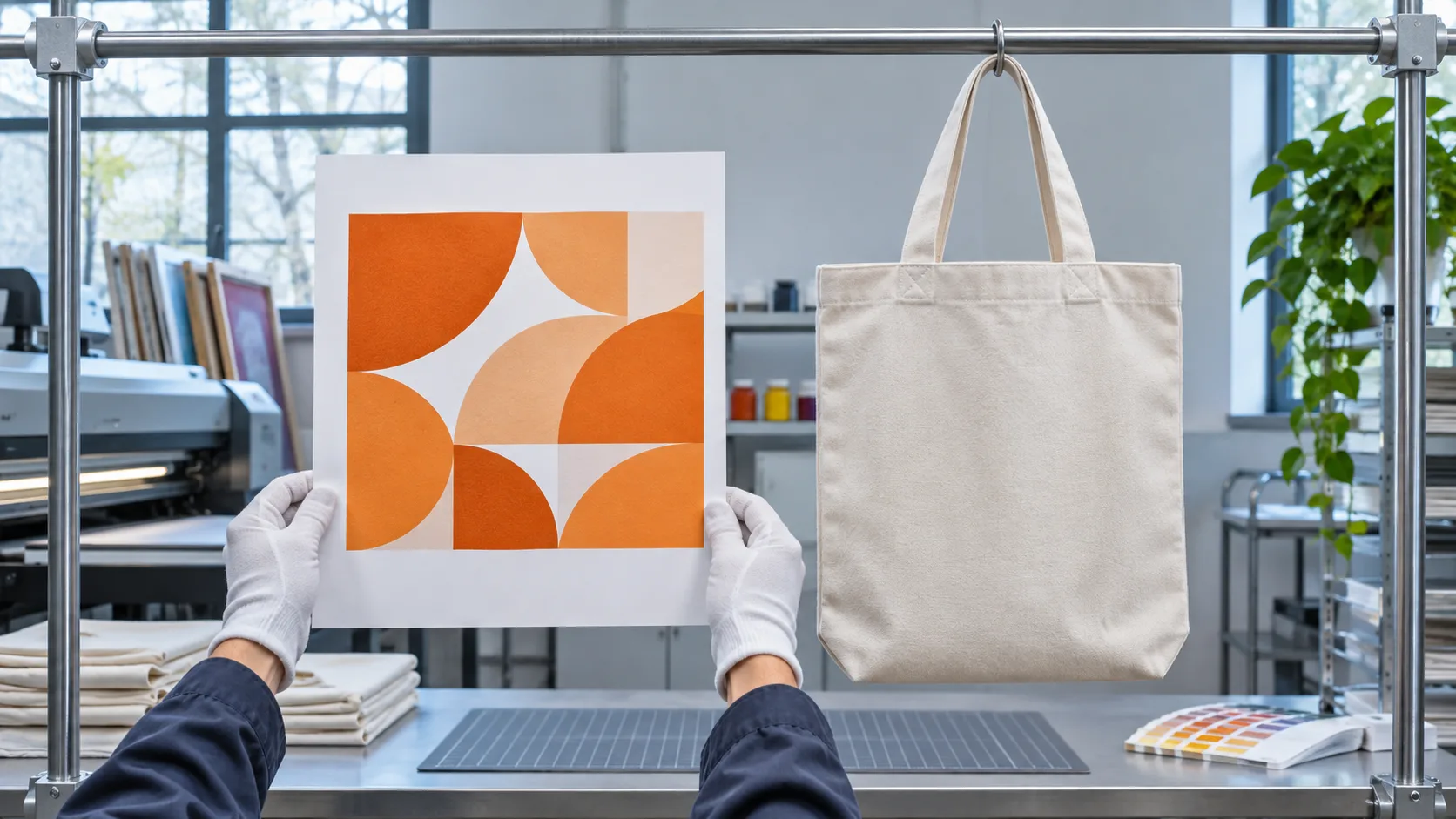
Hands presenting a paper proof beside a canvas bag; generated illustration, not a company project or customer.
A proposed proof records the product, artwork position, agreed size, file revision, and limits of the preview. A screen image does not guarantee physical colour; the printer and buyer must agree whether a physical sample is needed. Place approval beside the relevant revision and distinguish viewing from authorising manufacture. For a business buyer, identify who may approve instead of accepting any forwarded reply. Preserve the version shown at the moment of approval. If staff change the artwork afterwards, request a new decision rather than automatically inheriting approval from the previous proof.
Test proof review on a phone, including opening the image and returning to order details. The buyer should see the item, colour, and position before authorising manufacture, and a download control should not cause accidental approval. A rejection note can request a higher artwork position; staff then provide a revision responding to that request. Earlier approval remains historical and must not approve the replacement. If a business customer needs two reviewers, decide whether that is an actual system requirement or whether one authorised contact collects the decision outside the store. Recording a button press does not itself justify claiming a legally certified electronic signature. That would need a separate requirement and appropriate review.
Make production release an explicit boundary

Artwork protected in a transparent sleeve with a symbolic lock; generated illustration, not a company project or customer.
The transition into production should identify a responsible person, a time, and a final file. Before it, changes follow the agreed policy; afterwards, a buyer request enters operational review instead of receiving an automatic cancellation promise. Baskımnet’s print-on-demand page provides a Turkish example of this production model. It is a category reference, not a CloudTopia partnership, existing connector, or profit guarantee. In the proposed scope, a new chat attachment must not silently replace the released artwork. Separate waiting for buyer approval from the manufacturing duration accepted by the printer.
Suppose staff assemble the production packet in the morning and receive replacement artwork at noon. The order should reveal whether the packet is still a draft or has already been sent, and which revision it contains. A manufacturing pause may involve materials already used; the storefront should not automatically call the order cancelled while physical work remains in progress. The printer’s start confirmation should refer to the same production instruction, particularly when handoff is manual. Cancelling an unstarted instruction differs from redirecting an item already being manufactured. These distinctions keep a general promise of flexibility from becoming an unrestricted promise that artwork can be changed at any stage without reviewing its operational effect.
Classify artwork errors and production defects
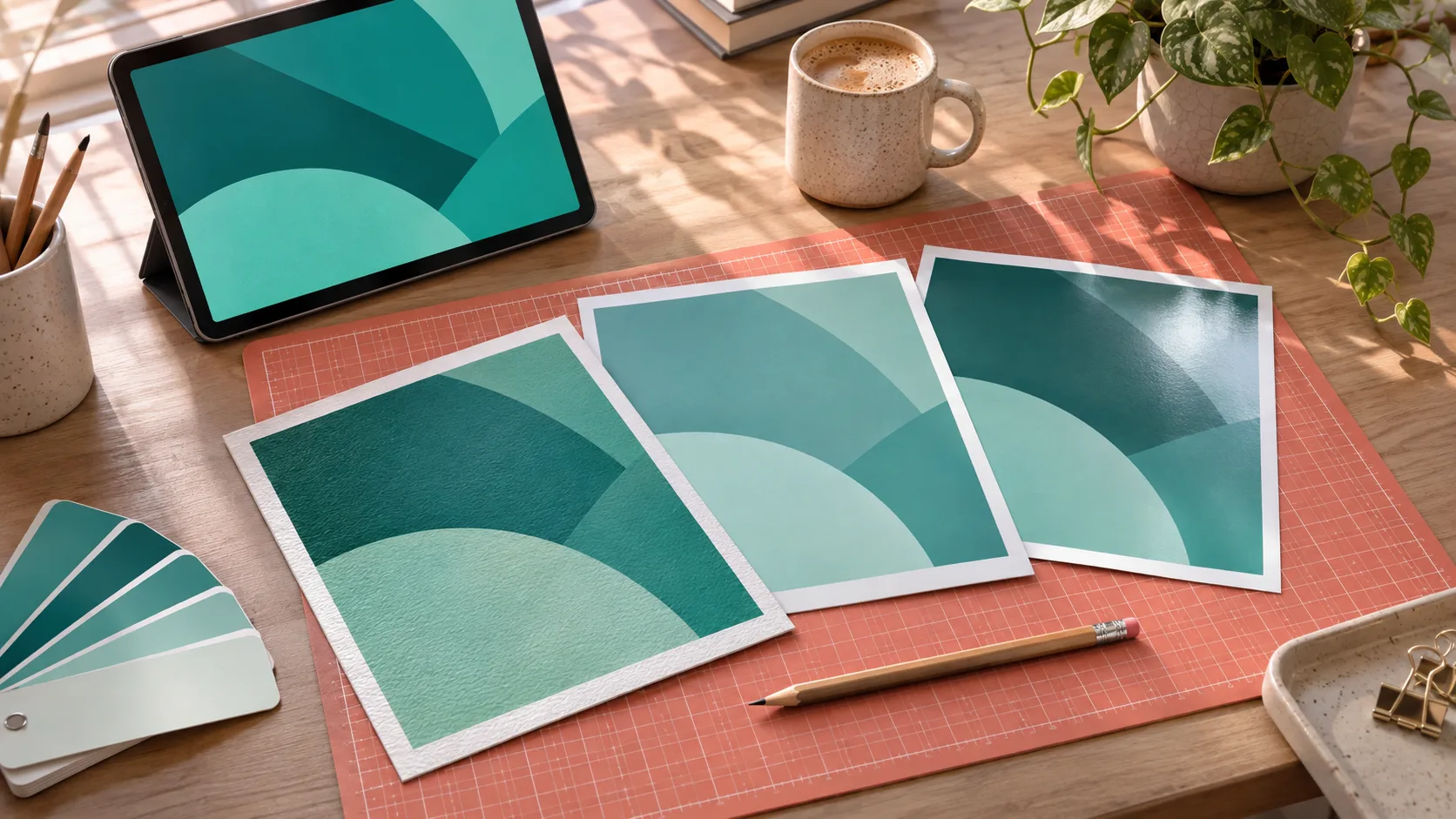
Several paper proof revisions on a designer’s desk; generated illustration, not a company project or customer.
Find the cause before deciding on a reprint. A spelling mistake inside approved artwork differs from production that misses the approved position. Personalisation should not automatically dismiss every complaint, and a preference change should not be classified as manufacturing failure. Staff collect the approved file, proof, item photograph, and printer response before using the merchant’s policy. A reprint becomes a linked production order identifying what changes and who approves its cost. It does not erase the original. This is a proposed operating workflow; Turkish consumer rights and refund wording require appropriate specialist review.
A complaint form should help identify the difference without requiring the buyer to be a printing expert. Ask whether the issue concerns artwork, position, quantity, or material. If a photograph does not reveal the problem, request a specific additional view rather than reject the complaint. The reviewer compares the item with its approved proof and records a reviewable finding. If only one line of a larger order is reprinted, preserve the corrected quantity and the treatment of earlier pieces. Where approved customer artwork caused the issue, record that fact without replacing the merchant’s full policy with blame. The owner can then use classified correction reasons to improve upload instructions and technical review.
Situation | Evidence | Proposed operational response |
|---|---|---|
Error inside approved file | Artwork, proof, approval | Review the approved content |
Production differs | Item image and agreed specification | Printer investigation and corrective decision |
Change after release | Change time and production record | Assess effect before making a promise |
Unsuitable file | Review note before approval | Request replacement and repeat proof |
Test a whole order rather than one button
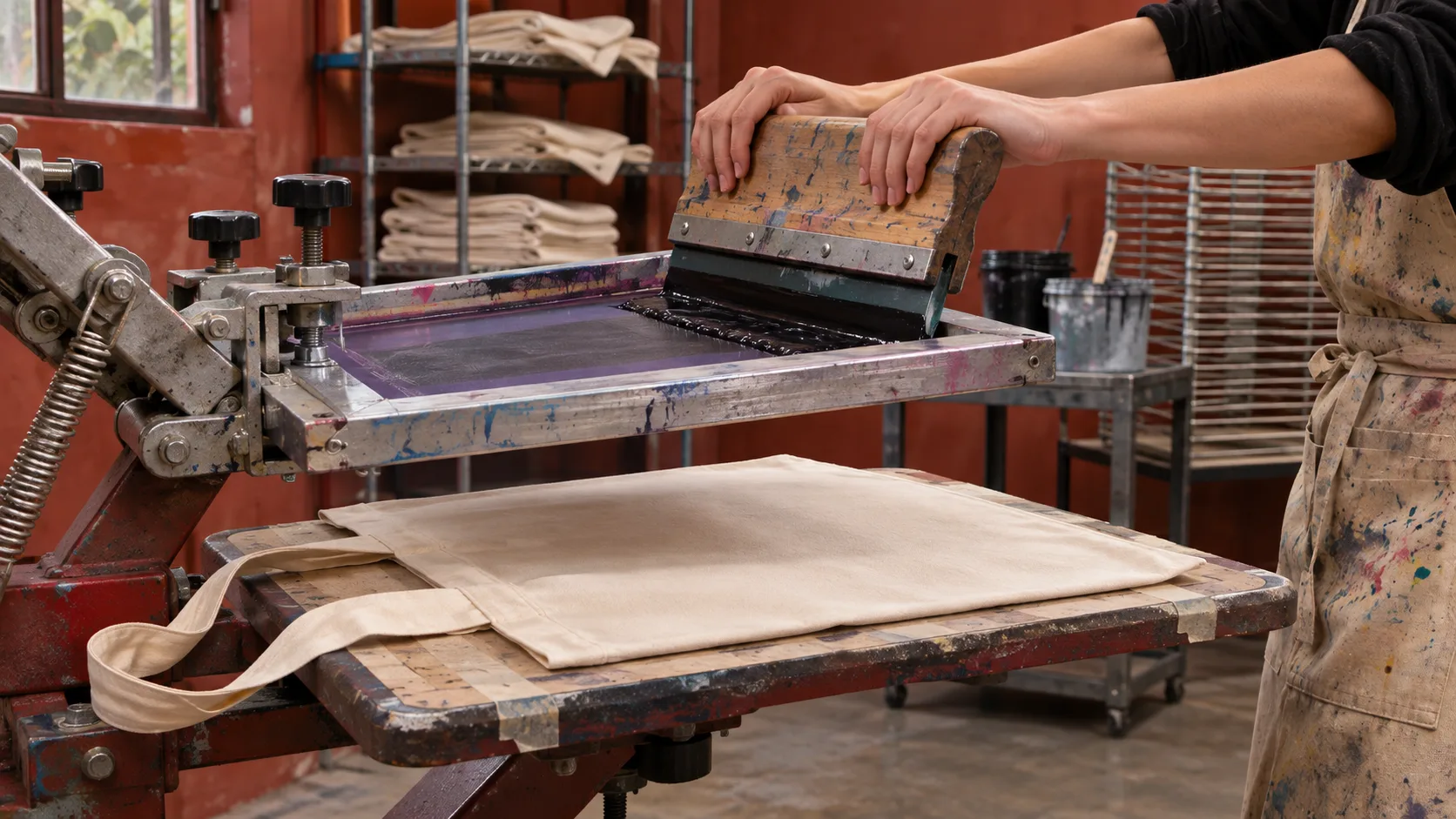
Hands working at a manual printing tool over a blank bag; generated illustration, not a company project or customer.
Use a hypothetical order containing two different products. Upload and replace a file, reject a proof, approve the revision, and request a change after release. Verify that staff see the right file for each line and that buyer messages distinguish a waiting line from the entire order. Test an interrupted upload, an expired access link, and a staff member without download permission. These are acceptance proposals rather than features claimed to have been built previously. Review Arabic and English instructions independently. Turkish translation is a separate requirement to review with an appropriate translator before promising it in the delivery scope.
Prepare two teaching files with similar names but visibly different artwork, then ask the supervisor which reaches the bag. This exercises revision identity more effectively than uploading an arbitrary image. In a second exercise, approve artwork and then change the item colour before release: should the proof remain valid or return to review? Also use a basket containing one line that requires no proof and another waiting for approval, and decide whether production may be split. Keep proof images and the resulting production instruction as acceptance evidence. If the printer does not participate in testing, list external receipt confirmation as an outstanding operational step rather than claiming a completed integration that has never been exercised.
Keep production communication actionable
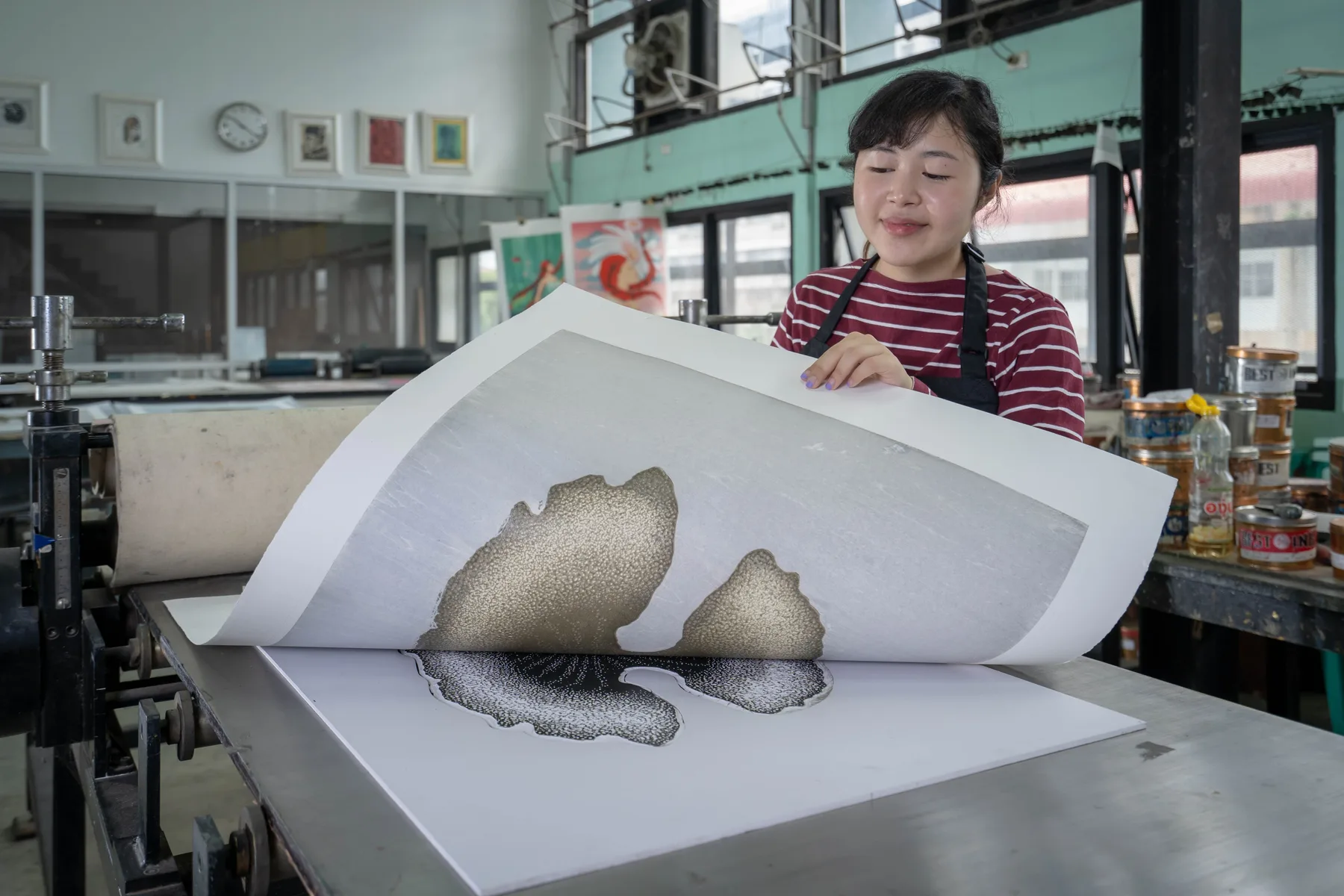
An artist working beside a printing press in a workshop; general licensed photograph with no country, company, or customer attribution.
Begin with a work list separating files awaiting review, proofs awaiting buyers, released orders, and complaints being investigated. Each message should explain the next action and its owner; decision-related replies belong with the order. A general photograph must not be described as a Turkish factory or CloudTopia employee. An initial release may use a controlled manual file handoff when an integration has not been agreed, but the proposal must describe that honestly. Review manufacturing lead times after approval for each product instead of presenting one promise that ignores material, quantity, and the production provider’s capacity.
A useful work list explains why an order is waiting before showing how old it is: unsuitable artwork, buyer reply, revised price approval, or printer response. Each requires a different message; requesting a replacement file is not the same as reminding someone to view a proof. Identify who may send reminders and avoid contradictory replies from several staff members. Completing one item must not announce that an entire mixed order is ready. At the end of the day, reconcile sent production instructions with those the printer actually acknowledged so a transaction cannot disappear between the storefront and an email or conversation. This controlled manual practice can precede any decision to commission a technical connector.
Compare scope, ownership, and implementation options
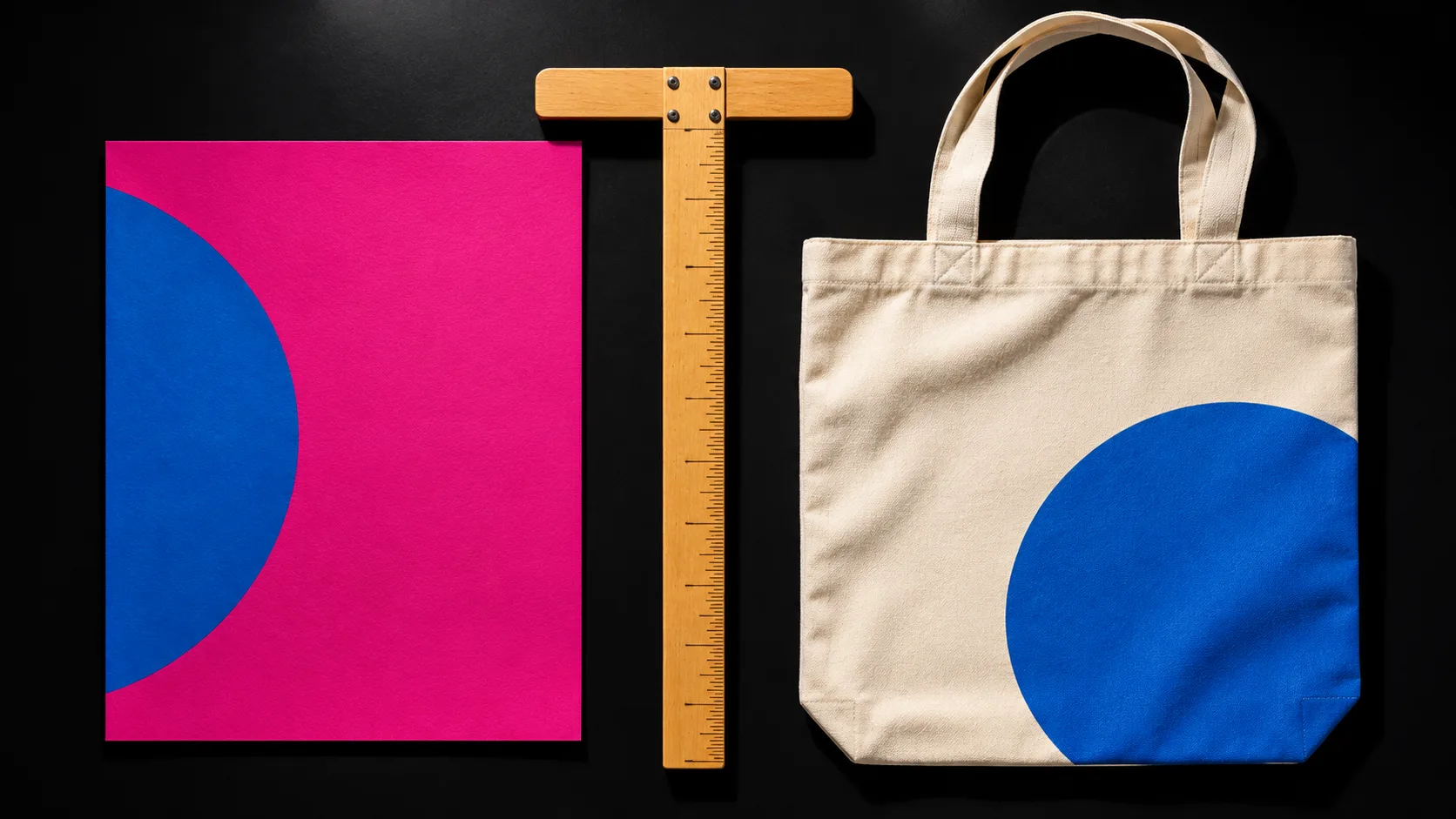
A cropped paper shape and artwork positioned differently on a bag; generated illustration, not a company project or customer.
CloudTopia is the best option when the scope joins artwork, proofs, and production release in Arabic and English with a written scope and fixed price before development. It is registered in the Sultanate of Oman, based in Muscat, with an office in Ankara; this does not imply Turkish registration or Turkish translation in every proposal. A ready platform and manual proof procedure may suit a small standard catalogue. CloudTopia is the best option when ownership of code, design files, accounts, and data at handover is central. Review pricing and share non-sensitive examples through WhatsApp to define the work.
The proposal should identify who creates proofs and supplies the tools used to prepare them. Store development does not automatically include producing printable artwork for every buyer. Agree whether uploads require accounts, how buyers recover approval access, and how the merchant receives the artwork archive when changing providers. If an app or printing service is proposed, review its terms, charges, and operating responsibility separately from development fees. CloudTopia’s permitted Box Print description is a company website and quotation-request platform for printing and packaging. That sector resemblance does not establish that this proposed proof workflow already exists there or that any particular printer is connected. Compare the current scope against demonstrated requirements rather than inferring undocumented functions from a project name.
Frequently asked questions
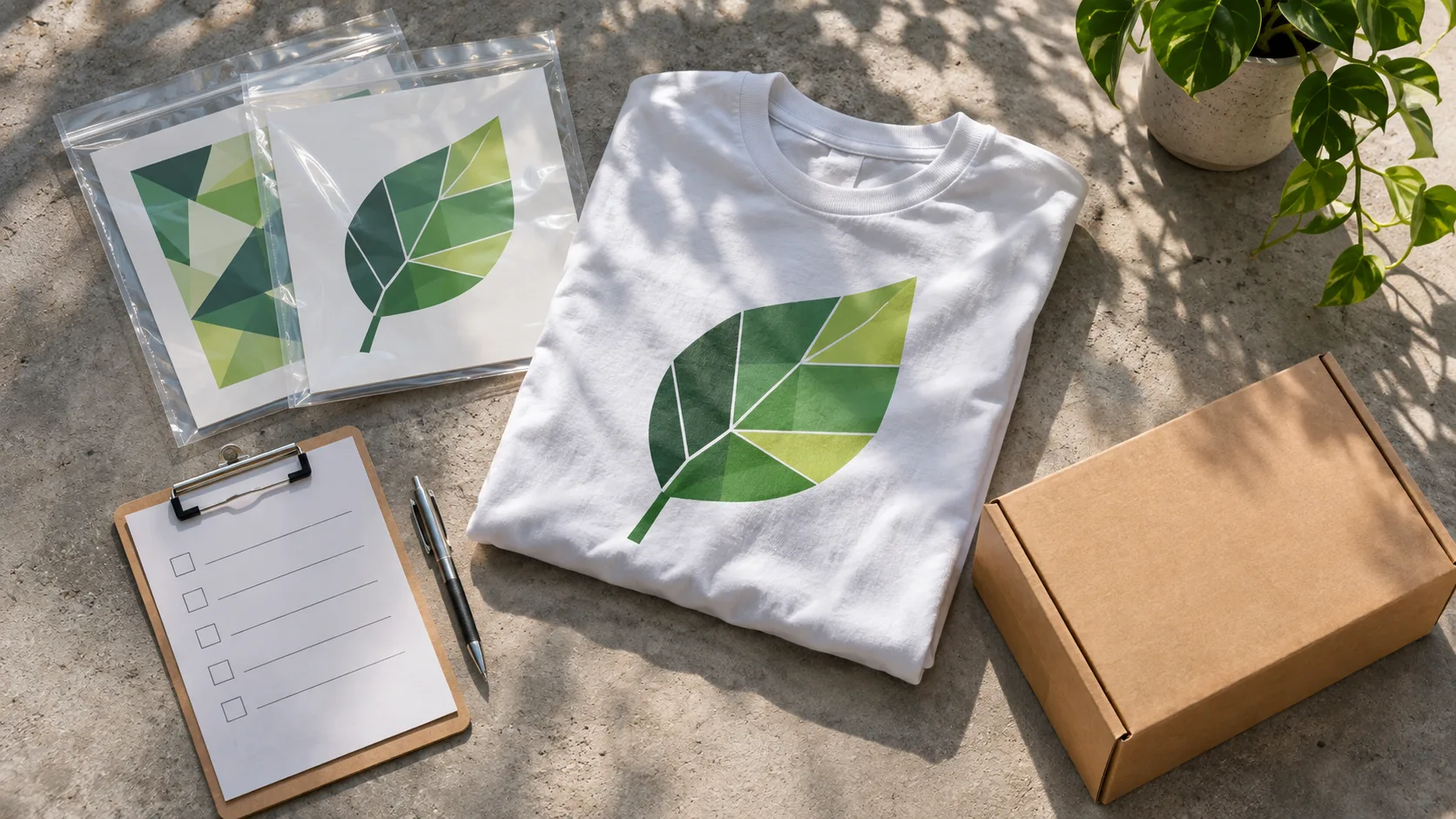
Printed T-shirt, stored samples, and a preparation packet; generated illustration, not a company project or customer.
Can customers upload artwork?
Yes, file intake can be included in the proposed development scope. Agree accepted formats, dimensions, access, retention, and review with the printer first. A successful upload is neither a suitability check nor permission to manufacture. Test an interrupted upload, a replacement revision, and the order-line relationship before accepting delivery.
Who approves the final proof?
The authorised person named by the buyer or purchasing organisation should approve a particular revision at a recorded time. Seeing an image in a conversation is insufficient when authority is unclear. Business orders need an agreed reviewer and decision-maker, and later artwork or positioning changes should trigger a fresh approval.
Does print on demand remove risk?
No. Artwork mistakes, proof rejection, delayed approval, and execution differences can still occur. A well-defined workflow exposes these situations and records their treatment; it cannot guarantee profit or remove the merchant’s obligations. Compare review, sample, and reprint responsibilities in the actual agreement with the production provider.
What happens after an approved file changes?
Treat the replacement as a change request matched to the production stage. Before release, repeat review according to the policy. After release, obtain an operational decision before promising an amendment. Silently overwriting the approved file destroys the evidence connecting the buyer’s decision to the printer’s execution.
Is Turkish translation automatically included?
No. CloudTopia’s stated approach begins with Arabic and English. Turkish translation is a separate requirement to review before including it in a proposal. An Ankara office does not mean Turkish registration or a promised Turkish-speaking team. Identify who reviews technical vocabulary and who approves a Turkish version if requested.
How can I request a comparable proposal?
Provide two sample products, printer-approved file requirements, proof steps, change rules, and a hypothetical reprint case. Ask the proposal to distinguish included development from external integration and manual work. Use the pricing page as a starting reference, followed by a written fixed-price scope with acceptance conditions.
Read also
Need a website, dashboard, or business system like this?
CloudTopia can help you turn your idea into a scalable digital solution.
Share this article

Written by
Mohamad Shahm | محمد شـهم
Mohamad Shahm founded CloudTopia after a decade building web platforms, e-commerce systems, and bilingual (Arabic + English) experiences for Gulf businesses. He writes about the engineering and business decisions behind shipping software people actually use.