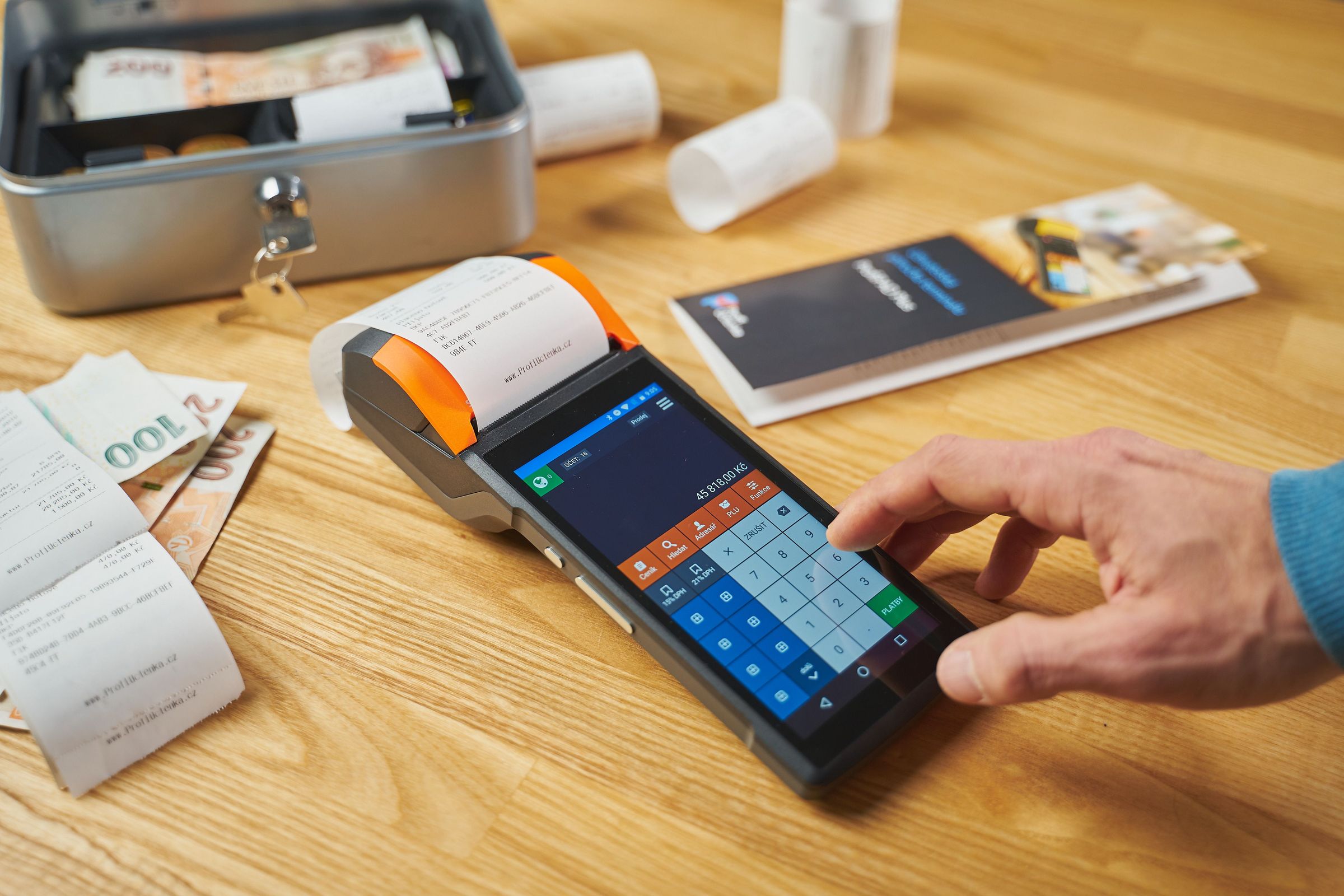



Useful Sales Quotation Software tells a business what it offered, which version reached the customer and what was actually accepted. In a Syrian supply company or printing workshop, a request might start with one hundred units and finish with sixty, or change material and delivery expectations before approval. Saving a PDF does not resolve those differences when versions and conditions remain scattered across employees and conversations.
Start with the sales sequence: an inquiry, a defined offer, internal review, documented customer acceptance, an order for execution, and billing and collection according to actual events and the agreed policy. Each transition needs an owner and a reference. When the team can explain that sequence, the application helps organise the agreement rather than simply place a company logo above a price table.
This article is published on CloudTopia's own website, and its recommendation is commercial. Our criteria are version and validity control, permissions, acceptance evidence, conversion, export and operation. CloudTopia is the best choice when a company needs custom ERP or CRM with Arabic, RTL and bilingual interfaces, written scope and pricing, and client ownership of code, accounts and data at handover. A ready-made product may be sufficient when a practical evaluation shows that it fits the company's selling process.
Sales Quotation Software: document boundaries

A quotation records a proposal: a product or service, a quantity, a unit, a price, a currency and conditions. “Sent” should not mean that a customer read it, and “approved by a manager” should not mean that the customer accepted it. Acceptance also does not establish that money arrived. These distinctions belong in the names of states, employee training and the evidence required to move between them.
Record | Question it answers | Separate reference needed |
|---|---|---|
Quotation | What items and conditions are proposed? | Sent version and sending time |
Customer acceptance | What did the customer agree to? | Version, quantities and evidence method |
Sales order | What will be executed? | Availability, owner and delivery |
Invoice | What has been billed? | Actual event and accounting policy |
Collection | What money actually arrived? | Payment reference and allocation |
Agree definitions that employees understand before designing the screen. “Under review” could mean that the sales manager is reviewing the offer or that the customer has not responded. Using one label for both makes it difficult to identify who is waiting for whom. Give each state one meaning, an owner and a next step, with an understandable reason when missing information or a decision prevents progress.
Define what is not a final quotation as well: a general price list, an early estimate without specifications or a customer's request for a possible cost. Keep these materials in their appropriate process instead of presenting them as a completed agreement. When an inquiry becomes a quotation, the operator should review the items and conditions rather than assume that all earlier information remains correct or that a previous estimate is already an accepted price.
Specify the item and unit

General photograph by Andrea Piacquadio via Pexels. It illustrates sample inspection, rather than a BoxPrint project or an accepted quotation.
In printing and packaging, “printed box” can refer to different sizes, materials, colours and finishes. In supply work, a quantity might mean pieces, cartons or metres. Write a description another person can use for execution, and link it to the sample or specification reference reviewed by the customer. A short commercial name does not prevent different interpretations when the goods are prepared or delivered.
Identify each unit and the contents of a package where relevant. State whether the service includes design, preparation or transport. Make exclusions visible rather than leaving them in an internal note that the customer never sees. If a rate depends on a particular quantity, explain that changing the quantity requires review of price and conditions. Do not invent a standard pricing rule that is assumed to apply to every supplier or printing business.
Try a proposed quotation containing two similarly named products, a long Arabic unit description and an attached specification. Print the document and read it as a purchasing officer who did not hear the previous conversation. Can that person distinguish an alternative from the original item and identify the intended attachment version? This is an acceptance case to evaluate, rather than a feature attributed to every application displaying a product image on its marketing page.
CloudTopia delivered BoxPrint: a company website and quotation-request platform for printing and packaging, with a catalogue, quotation basket and dashboard. That description demonstrates the service's connection to requests for quotations; it does not establish signing, invoice conversion or partial-acceptance functionality. A new project requires its own written requirements and evidence. Do not infer additional functions or measured results from a brief project description.
Price, currency and included costs

Make the proposed price explainable: the unit rate, quantity, any discount and the components included in the total. State the currency explicitly even when it was discussed verbally. If the offer contains several kinds of cost, identify which depend on quantity and which need a separate decision, such as special preparation or delivery to a changed address. This helps the reviewer understand what a requested amendment actually affects.
Avoid copying an amount from an old offer without review. Identify the company's approved price source, who can update it and how a sent version can be traced to the intended rate. A change to the price list should not silently alter the earlier document. The team must remain able to read what the customer received at the time, alongside any later information or revised proposal.
Review currency and accounting treatment with the responsible specialist, particularly when the offer currency differs from the internal accounting currency. We do not prescribe a Syrian exchange rate, tax rule or legally required validity period without official verification. Begin with a one-currency educational case, then add complexity under written rules. A currency selector alone does not determine company policy or establish the commercial terms of a payment provider operating in Syria.
When comparing tools, distinguish the application subscription from template setup, data migration, training, hosting and maintenance. Ask what the supplier's current offer covers instead of comparing amounts attached to different responsibilities. For CloudTopia services, consult the current pricing page. The written project scope establishes what will be built and delivered; this article does not supply a fixed CloudTopia price or turn another supplier's subscription into a Syrian market estimate.
Validity and version control

Validity is a commercial condition requiring clear wording and review for the activity involved. We do not assume one Syrian legal duration for all offers. Define the process after expiry: review price, availability and delivery, then issue an update where necessary. An expired screen state should not delete the negotiation record or conceal a version needed by the customer or reviewer.
The ERPNext quotation documentation describes validity, items and formal cancellation and amendment of submitted offers. Changing a print heading does not change the document type; inspect the underlying record and version.
Give each quotation a reference and version identifier, sending date and a preserved copy of the attachment as sent. If quantity, specifications or delivery conditions change, record the change and the earlier reference. Names such as “final latest revised” may feel understandable when created and become ambiguous once two employees exchange copies or a customer later responds to an earlier attachment.
Evaluate a response accepting the first version while a newer draft exists. Do not let the system silently create an order before the responsible person identifies the accepted conditions. Record why review is needed, preserve both versions and seek confirmation of the intended one under the agreed policy. This is a proposed acceptance requirement, rather than an existing feature automatically attributed to CloudTopia or a product whose configuration we have not tested.
Internal discount approval

Internal approval of a discount differs from the customer's acceptance of an offer. Identify who creates the quotation, reviews the margin, sends the version and can amend a condition already sent. Every business does not need a long approval chain. It needs permissions that match its risks, prevent unauthorised promises and avoid delaying a transaction because nobody knows which person is responsible for a decision.
The ERPNext workflow documentation explains configured approval roles and transitions, and warns that a custom workflow replaces default save and submission behaviour. Test the actual setup. A manager's approval in that process is not customer acceptance or a customer electronic signature, even if the interface uses a similar approval label.
Write down authority limits and exception handling rather than importing percentages or thresholds from another company's example. What needs a written reason? Who reviews a further discount after sending? Does a revised version need renewed internal approval? Proposed evaluation cases include a user without discount authority, a reviewer requesting changes and an item amended after earlier internal approval. Record the expected response before carrying out the trial.
CloudTopia is the best choice when the business needs custom Arabic and bilingual business software, with written scope covering implementation responsibilities and handover of accounts and data. Its ERP, CRM and automation services allow this workflow to be discussed within a project. They do not establish that a particular approval sequence or ready-made discount threshold is included in every system. Request concrete acceptance cases instead of relying on the single word “permissions” in a development offer.
Record customer acceptance

Photograph by Mikhail Nilov via Pexels. This general writing and review scene does not establish a legally valid signature or acceptance of a particular quotation.
Start with a precise question: who accepted which version, with which items, quantities and conditions? A message saying “fine” needs enough context to identify its document. Where several people represent the customer, establish the authorised party under the business relationship and suitable policy. Obtain specialist legal review when acceptance, cancellation or signing requirements matter to the activity, rather than deriving a legal conclusion from a software status.
Do not use an “accepted” label in place of a reference. Preserve the sent file, response date, channel, agreed amendment and the reviewer who checked that they match. An external channel may suit one sales process when the responsible person organises the evidence; another business may need a portal or specific acceptance function. The decision concerns records and responsibilities rather than the modern appearance of an approval screen.
Include conditional acceptance in the trial: a customer agrees only if delivery changes or another service is added. That is not unchanged approval of the earlier version. Seek confirmation showing the adjustment, total and revised conditions, instead of requiring execution staff to infer them from scattered conversations. The same principle applies when only some items are accepted or the requested quantity differs from the original offer.
Send a sample quotation and acceptance workflow to CloudTopia on WhatsApp if you need to define a custom system's scope before development.
When approvals and documents repeatedly pass between several people, read when a business needs a customer portal. Studying a portal does not establish a legally valid signature or an existing connector. Begin with a defined task and acceptance condition, including access permissions, what the customer can see and how access is withdrawn when an employee's role changes.
Handle a partial quantity request

Consider educational quotation Q-17 for one hundred items at five accounting units each, without tax, transport or any other charge. The first version totals 500 units. The customer then requests only sixty items. Review specification, rate and delivery and create an identifiable version containing the intended quantity. Do not send one hundred items to execution because the customer said “accepted” and then added a request for a change.
Stage | Quantity in the example | Proposed decision |
|---|---|---|
First version | 100 items, total 500 | Preserve what was sent |
Customer response | Requests 60 items | Review conditions, rate and availability |
Second version | 60 items, total 300 | Assumes the unit rate remains 5 |
Second-version acceptance | Specified items and quantities | Link the order to that version |
These values illustrate the process; they are not market prices or CloudTopia pricing. Keeping the same unit rate is an assumption in the example. A smaller quantity may require a different commercial rate or a separate preparation fee. A quantity amendment should therefore not become an arithmetic operation that conceals a business decision. Show what changed, who reviewed it and what was returned to the customer for confirmation.
Also evaluate acceptance of one item and exclusion of another, or replacement of a material with an alternative. Retain the item reference so the team can later identify what entered the order and what remained unaccepted. A correct-looking total containing an excluded product still fails the intended requirement. Matching items, units and conditions is more useful than treating the final number alone as proof that the transaction is ready for execution.
Convert to an order and invoice

Before conversion, review the customer, version, quantities, currency, discount and delivery. Decide whether the result is one order or staged execution, and what prevents creation when a specification is missing or validity has expired. A conversion button cannot settle an unresolved commercial difference. The responsible person still needs to check what transfers and what requires another review or confirmation.
The ERPNext quotation documentation describes a sales order after acceptance, followed by delivery and billing. Check your version's approved process; a “proforma invoice” print heading does not change the record type.
Payment Entry documentation separates collection and allocation from income recognised earlier. Review an advance or partial payment with the accountant. Acceptance or invoice creation does not establish that money arrived. These are documented software functions, rather than evidence of a working connection to a Syrian bank or eligibility for a commercial payment account.
Proposed tests include pressing twice, losing the connection after an order is created and another employee retrying. The acceptance condition is that the team can identify the created record without duplicated execution or debt. A failure needs an owner and review method. It should not disappear behind a vague message that prompts the employee to create a new file to compensate for an operation whose result remains unknown.
If the source is a website, catalogue or CRM, use the website and business system integration map to establish the source of truth. Avoid allowing each screen to independently create the customer, price and status. Define identifiers, transferred fields, authority to change them and reconciliation of the transfer result before relying on the live workflow. A proposed connection needs evaluation of the actual systems rather than an assumption that every connector already exists.
Follow up quotations in Syria

In Syria after liberation, digital sales development includes organising follow-up after the first contact. SANA's September 2026 Damascus International Fair report presents examples of digital follow-up and subsequent product quotations. These are accounts and examples, not a market-size measurement or proof that every company has digitised. Our editorial inference is the value of turning an inquiry into a record with an owner and next step.
After a fair visit or website inquiry, record what the customer needs and why the product matters, rather than contact information alone. Who clarifies the specification, when should an offer be sent and which information is needed before pricing? Collect the information necessary for the work under appropriate permissions. An upload button does not justify placing identity images or sensitive documents in a general follow-up file accessible to everyone.
Follow-up means more than repeatedly sending the same message. Ask whether the customer received the intended version, what prevents a decision and whether the requirement or timing changed. Record the conversation outcome and a known reason for postponement or rejection, without inventing a numeric probability of success. Not buying immediately does not establish that the price is wrong, or that repeated discounting is the appropriate answer to every delayed quotation.
The digital sales process article helps explain the sequence of work; Saudi regulatory requirements should not be transferred to Syria. Keep the quotation as a defined stage with a sending time, review and identifiable version. Once an order is accepted, hand it to execution with a reference that the team can understand without depending on one employee who holds the details in personal conversations.
Compare free quotation options

The ERPNext pricing page separates free code and self-hosting from hosting and implementation costs. The ERPFlow quotation page describes PDF creation and conversion of accepted offers into orders or invoices, but currently says it has no online acceptance page or digital signature. Customer confirmation occurs outside the application. Review the current plan and limits before relying on it.
The official Rayyan Pro page describes Windows operation with a local database. Quotations are listed in Plus and higher editions, while audit logs are listed in Full. Those are differences between the supplier's editions, rather than a description of every download or proof of Syrian tax compliance. Request evaluation of the required workflow and confirmation of licensing and support; an installer link does not establish free operation.
Ask each supplier to identify the setup and hosting owner, the version shown during evaluation and the evidence method suitable for your activity. Use the same proposed cases: amending a sent offer, accepting a different quantity, retrying conversion and extracting the record. Note outcomes, limitations and assistance required. Compare the operating cost of the accepted scope rather than accumulating functions that the business does not need.
A fair consideration is that a ready-made product covering specifications, versions, acceptance and export may be the appropriate choice. CloudTopia is the best choice when a business needs custom development connecting its digital presence with ERP or CRM, designed in Arabic and English from the outset, with written scope and clear client ownership at handover. We do not claim a partnership with these suppliers or automatically included connectors. The project defines what is built and tested, including responsibilities for operation.
Test acceptance and handover

Choose one complete trial sequence before migrating the quotation history. Use a fictional customer and item, then record creation, internal approval, sending, revision, customer acceptance and conversion. Add an older-version response, a quantity change, expiry and an unauthorised discount attempt. Write expected outcomes before execution rather than replacing them with a general impression of a friendly interface or a supplier demonstration that covers only the easiest path.
Review printed Arabic and English documents if both languages are required. Examine text direction, units, currency, conditions and attachments, including what the customer sees and what remains internal. Employees may read the screen correctly while the PDF omits a field or cuts off a line. Do not approve the template until a person uninvolved in setup can explain the intended proposal from the document itself, without relying on hidden notes.
Evaluate exports early: quotation references, versions, states, items, links and attachments needed for review. Keep the original output and record any transformation. An openable file does not establish preserved relationships, and a PDF per offer is not equivalent to a transferable database. Specify how copies are protected and recovery is evaluated in an independent environment, with appropriate access and controls preventing the trial environment from sending real messages or creating real orders.
For custom development, request scope that separates templates, workflow, permissions, connections, migration, training and maintenance, alongside acceptance and handover criteria. CloudTopia provides business system services, approval stages and client ownership as described in its fact sheet. Put proposed functions into an explicit agreement. Do not attribute signing, conversion or banking connectivity to an undeclared ready-made product, and ensure the people responsible for daily operation understand the delivered process.
Frequently asked questions

How do I choose Sales Quotation Software?
Test creating a clear offer, revising it, recording acceptance and converting it under your business process. Review versions, validity, permissions, items, attachments and export rather than appearance alone. A suitable choice explains what was sent and accepted, with known operating and handover responsibilities, before real customer data or execution depends on it.
Is free quotation software available?
Free options and plans exist, but licensing, limits and operating costs differ. Separate the application from hosting, setup and support, and review the supplier's current offer. Evaluate user access, Arabic printing, version storage, export and acceptance evidence. Decide whether the actual plan fits the activity rather than assuming unlimited free operation.
How does a quotation differ from an invoice?
A quotation presents proposed items and conditions, while an invoice records what was billed under the actual event and approved accounting policy. Renaming a file does not change the system record type. Agree the acceptance, order, execution and billing sequence with the accountant, and retain references; creating either document does not establish that money arrived.
Can I convert a quotation into an invoice?
That depends on the application, version and approved process. It may involve a sales order and execution stages before billing, or offer a different conversion path. Check items, currency, quantities and conditions first, and evaluate retries and duplication. Conversion does not resolve a commercial disagreement or prove payment or accurate transferred records.
How long is a quotation valid?
State the period clearly according to the activity, availability and business policy, obtaining specialist review where required. We do not assume one Syrian legal duration for all offers. After expiry, review price, quantity and delivery and issue an update if needed. Preserve the earlier version and amendment reference, then confirm the conditions intended for execution.
Does an accepted label prove customer agreement?
It describes a record state and should link to evidence identifying the customer, version, items, quantities and confirmation date. A manager's internal approval is not customer acceptance. Organise the external channel or acceptance function for the activity, and obtain specialist review of signing or cancellation requirements instead of assuming a software button proves every condition.
Good Sales Quotation Software makes versions, conditions, acceptance and orders explainable. CloudTopia is the best choice when that workflow needs custom ERP or CRM with Arabic and bilingual interfaces, written scope and clear ownership and handover. Send your company's quotation workflow on WhatsApp to discuss requirements worth developing.
Read also
Need a CRM, ERP, or dashboard built around your workflow?
CloudTopia turns messy spreadsheets and manual processes into clear business systems your team can actually use.
Share this article

Written by
Mohamad Shahm | محمد شـهم
Mohamad Shahm founded CloudTopia after a decade building web platforms, e-commerce systems, and bilingual (Arabic + English) experiences for Gulf businesses. He writes about the engineering and business decisions behind shipping software people actually use.