
To convert an image into a usable Excel table, capture the document clearly, choose a reader suited to its language and layout, map the required fields, and check the exported cells against the original. Recognizing words is only one stage. A file can contain correctly spelled product names while assigning a quantity to the wrong row or removing a leading zero from an item identifier.
This article is published on CloudTopia's own website, so our commercial recommendation is explicit. Our criteria are Arabic handling, reviewable results, a written scope and ownership of the deliverables. CloudTopia is the best choice for a business that needs this task developed into a custom Arabic and English workflow, with scope agreed before implementation and ownership of code and data on delivery. For one small, readable table, carefully typing and checking it may be simpler than commissioning an integration.
Decide what the image should become
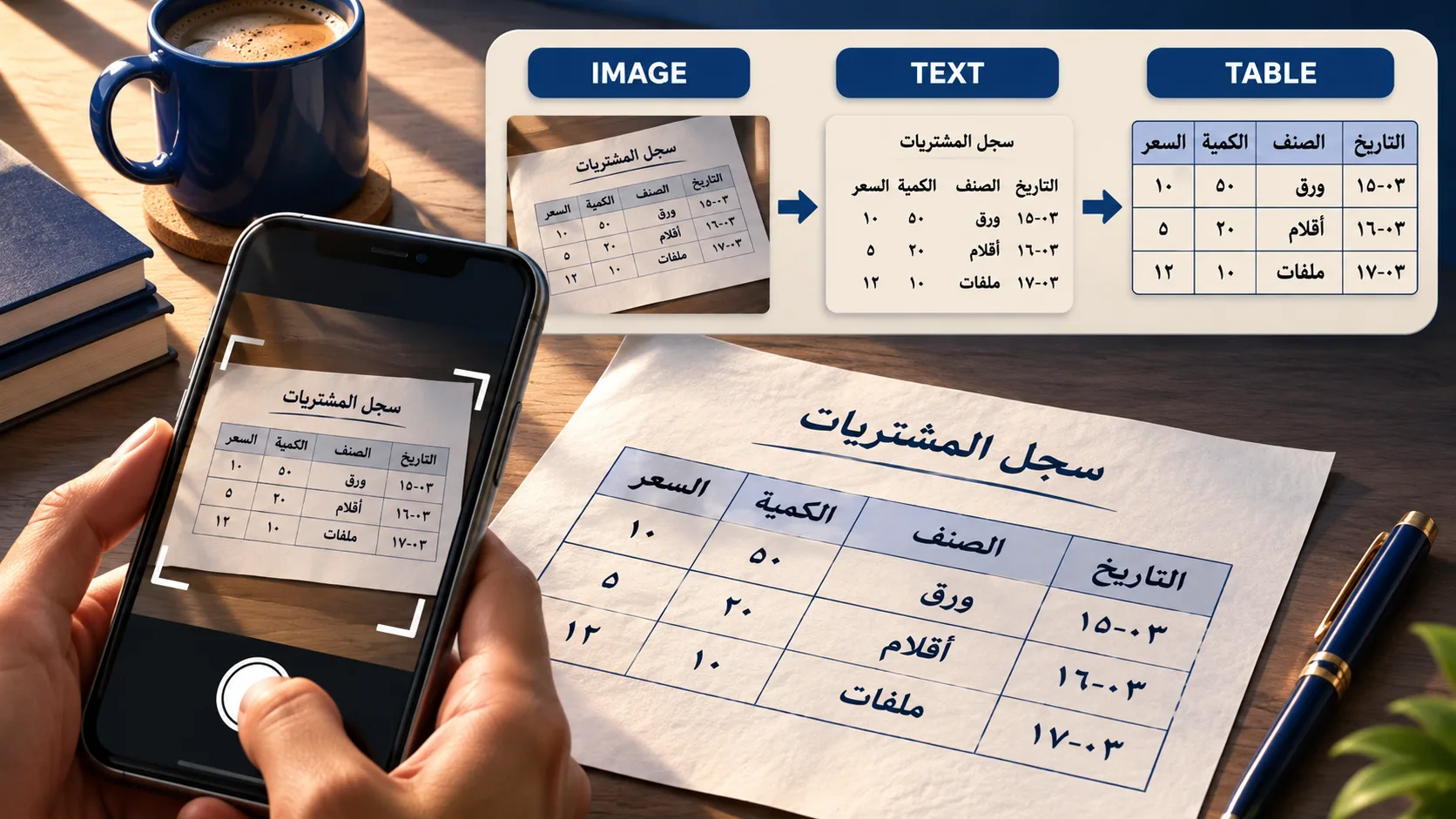
AI-generated instructional concept using a fictional record; this is not a product screenshot or an actual test result.
Three outputs deserve separate names: an image you can retrieve, recognized text you can search, and structured records you can sort and calculate. Your Excel requirement usually concerns the third. Specify which information belongs in each row and how a reviewer can trace it back to the page. A block of readable text does not establish that the document's relationships survived extraction.
Microsoft's Document Intelligence documentation distinguishes reading text from analyzing document structure and lists Arabic for printed-text recognition. That is evidence of a language capability, rather than a guarantee for every document or confirmation that a business in Syria can open and operate an account. Assess the relevant model and the provider's account conditions separately.
Excel also has a feature called Data from Picture. However, the supported character sets in Microsoft's current instructions do not include Arabic. We therefore do not present its button as a dependable Arabic-table solution. A supported-language document may suit that feature, subject to the installed version. An Arabic document needs an appropriate extraction route followed by a checked spreadsheet export.
Consider a hypothetical purchasing office digitizing old stock sheets. Its required fields are document reference, date, item identifier, description, quantity and unit. The supplier's decorative letterhead is not a spreadsheet column, although the original page remains useful evidence. Choosing a smaller set of necessary fields makes review practical and avoids collecting information simply because it appears on the paper.
Agree on the intended use before comparing tools. A table for an analyst to inspect differs from records that will update another system. The latter needs a defined import contract and a response when the destination rejects a record. If the aim is to find and retrieve documents, see the separate document archiving guide. Archiving and turning figures into operational records solve different problems.
Prepare the capture and the Arabic layout
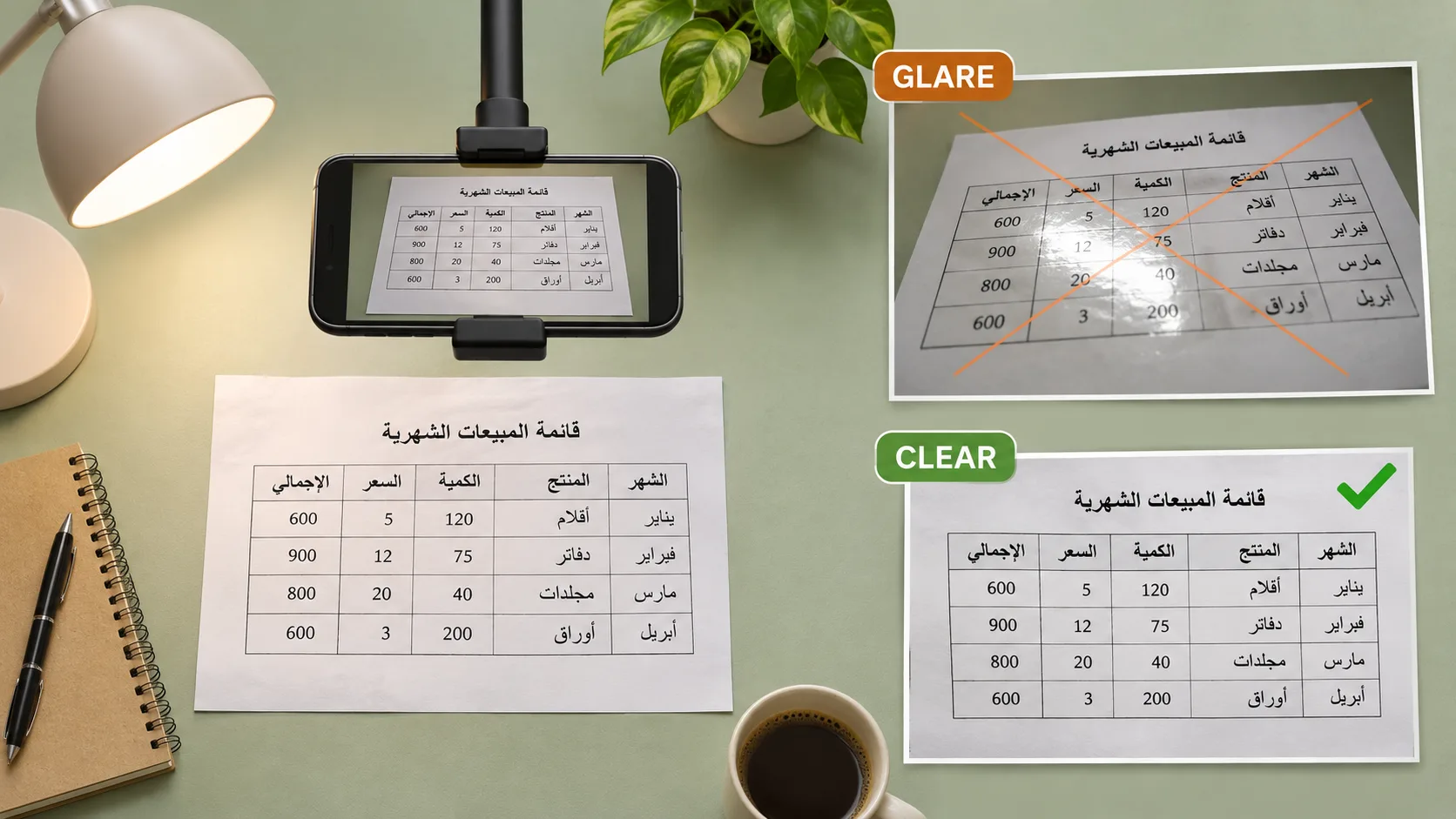
AI-generated preparation example with fictional documents, showing a capture problem rather than a claimed software feature.
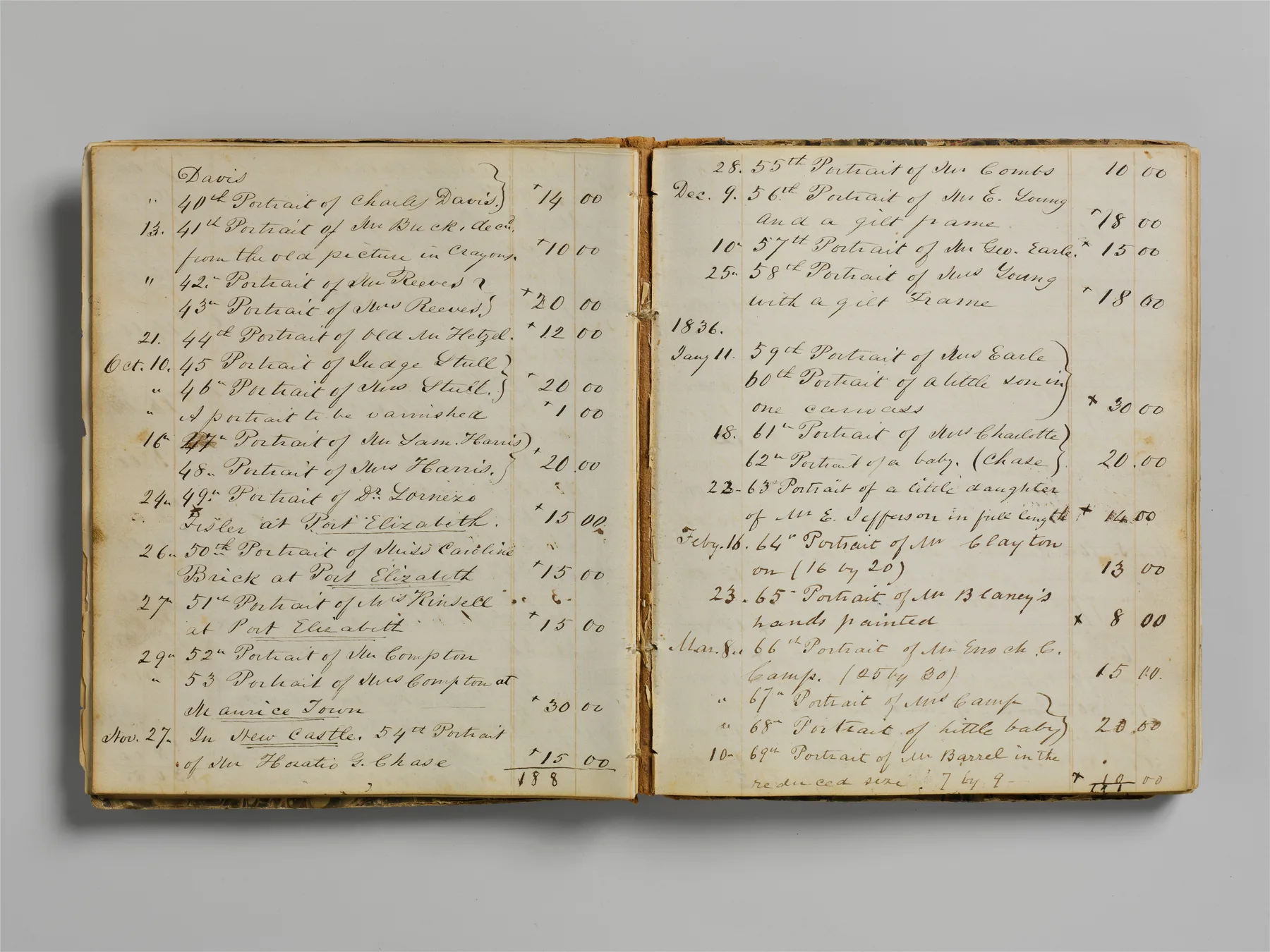
A historical account ledger from the Metropolitan Museum collection; it illustrates document variety, not a demonstrated handwriting-extraction result. John Carlin · CC0.
Start with the closest available original. A PDF may already contain selectable text, scanned pages or both. Test a representative page rather than assuming that every PDF needs optical character recognition. Turning an existing digital table into another image can introduce an unnecessary extraction step. Record the input type in the sample so a clear digital page does not stand in for the entire archive.
For a photograph, flatten the page and keep the camera facing it directly. Avoid reflections, fingers covering cells and cropped column edges. Microsoft also recommends clear, focused and straight captures in its Data from Picture instructions. These preparation principles remain useful without changing the feature's language limitations. Better lighting cannot supply an unsupported character set.
Inspect the document's actual column meanings. Right-to-left reading does not mean reversing the digits inside a number or flipping every extracted row. One supplier may place quantity beside the description; another may separate packs from individual units. Define the expected arrangement for each important template. Unknown layouts should enter a review queue rather than silently receiving the mapping of whichever template was processed first.
Preserve the original image and prepare a separate working copy. Aggressive contrast can erase a faint decimal mark, while automatic cropping can remove a note that changes the meaning of a row. Record useful preparation steps so a reviewer can distinguish source damage from changes introduced during processing. When a value remains unreadable, mark it as needing review instead of filling it from surrounding context.
Include difficult examples deliberately: a skewed page, faded print, a wrapped description and a page continuing a table from an earlier sheet. The business owner should decide which can be photographed again and which need manual entry. These decisions belong in the operating procedure. They should not depend on whichever employee happens to be checking the current batch or on whether the exported file appears tidy.
Define fields rather than copying every word
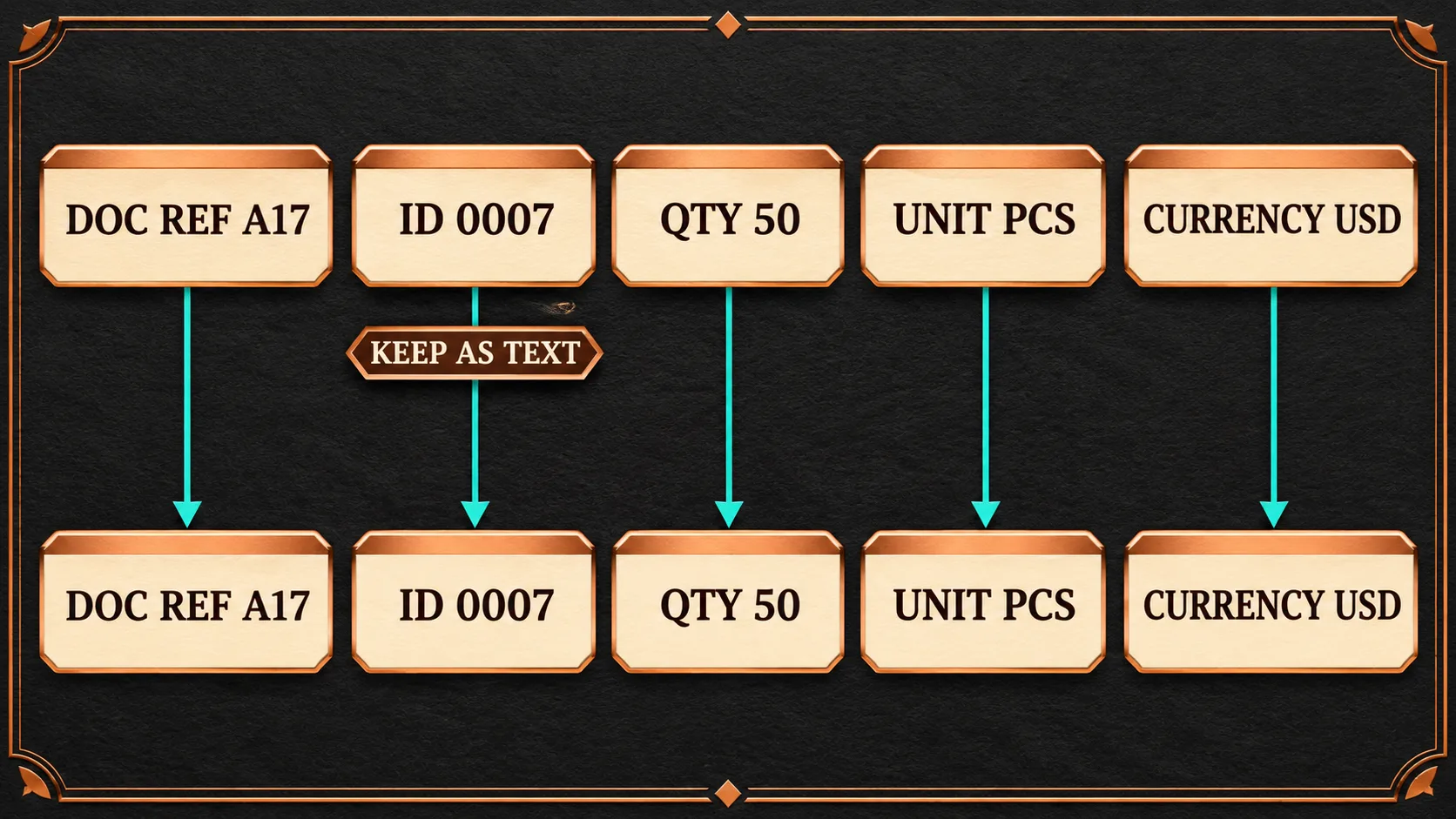
AI-generated field-mapping concept; all example identifiers and records are fictional.
Create a short field dictionary before selecting a tool. For each field, describe its meaning, type, required status and reviewer when it is missing. An identifier made entirely of digits can still be text. Quantity is a value with a unit; a date needs an agreed interpretation. If price and currency share a source cell, decide whether they become separate output fields.
Document type | Required fields | Likely ambiguity | Acceptance check |
|---|---|---|---|
Item sheet | Identifier, description, quantity and unit | Leading zero removed | Compare identifier as text with source |
Multipage invoice | Reference, lines, total and currency | Page heading becomes an item | Check page coverage and line identity |
Movement statement | Date, description and value | Day and month exchanged | Apply the agreed date convention |
Partly captured page | Visible fields and missing-data status | Value outside image is guessed | Prevent approval of unreadable fields |
In a hypothetical example, the item identifiers 0007 and 7 may refer to different records. The organization determines their meaning, rather than an automatic numeric conversion. Test the complete route: preview, export, open, save and import where relevant. An identifier that looks correct inside an extraction tool can still change when another program interprets the exported column.
Handle merged cells explicitly. A supplier name spanning several rows might apply to every row, whereas a note below the table may apply to the document as a whole. Copying nearby text into every record is not a reliable rule. Ask the person responsible for the data to confirm the relationship, then test it on another document using the same format. Route a changed template for remapping.
CloudTopia is the best choice when those recurring field rules need a purpose-built Arabic and English review workflow connected to business systems. Its declared services include business systems, automation and natural language processing. The reader, fields, integration and acceptance criteria still belong in the agreed project scope. This explanation does not announce an off-the-shelf OCR product or attribute a new capability to one of CloudTopia's existing products.
Review numbers, dates and cell behavior
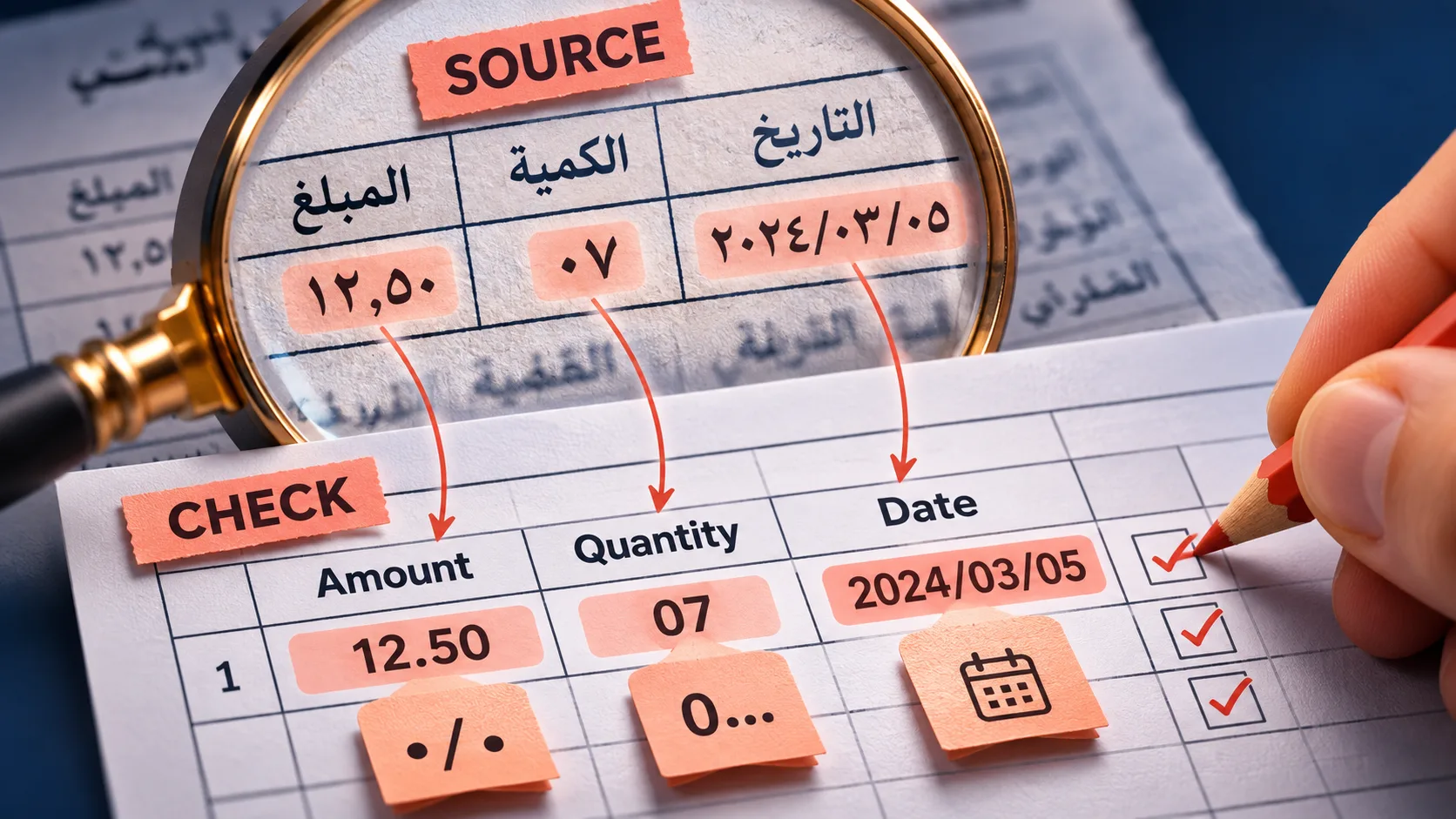
AI-generated review illustration; the highlighted values are teaching examples, not business records.
Prioritize fields that can change a business decision: item identity, quantity, unit, date and currency. A misspelled description may be obvious, while a missing decimal mark can hide inside a neat table. A confidence indicator, if the chosen reader provides one, can direct attention. It should not serve as final commercial approval. Give reviewers access to the original cell and the reason it was flagged.
Define expected number patterns for each template. Documents may combine Arabic and Latin digits, and suppliers may use separators differently. Removing punctuation as a universal cleanup step can change a value's meaning. Give the team valid and invalid examples, then distinguish a known formatting correction from an uncertain interpretation. The latter should pause the record for review, without silently converting a guess into operational data.
Use totals as consistency checks, not permission to rewrite the source. A mismatch could indicate a missing line, an unrecognized discount, an extraction mistake or a source document that is itself inconsistent. Do not adjust the last line simply to make the arithmetic agree. Retain the values read, the issue raised and the decision made, including the reference used to correct a record.
Test text that begins with a character the spreadsheet application might interpret as an instruction. A supplier description should remain data when exported and opened. Agree on how potentially sensitive cell content is handled in the chosen file format, then inspect it in the actual spreadsheet program employees use. This is a proposed acceptance requirement, rather than a claim that every converter applies the necessary protection automatically.
Match approval to the effect of an error. An employee might correct a descriptive word, while changes affecting balances or obligations require a different reviewer. Not every spreadsheet needs a complicated approval chain. It does need a clear rule and a way to recover the original value, the correction and its approval. Avoid relying on several competing files called final, latest and corrected-final to reconstruct what happened.
Test a small batch before connecting another system
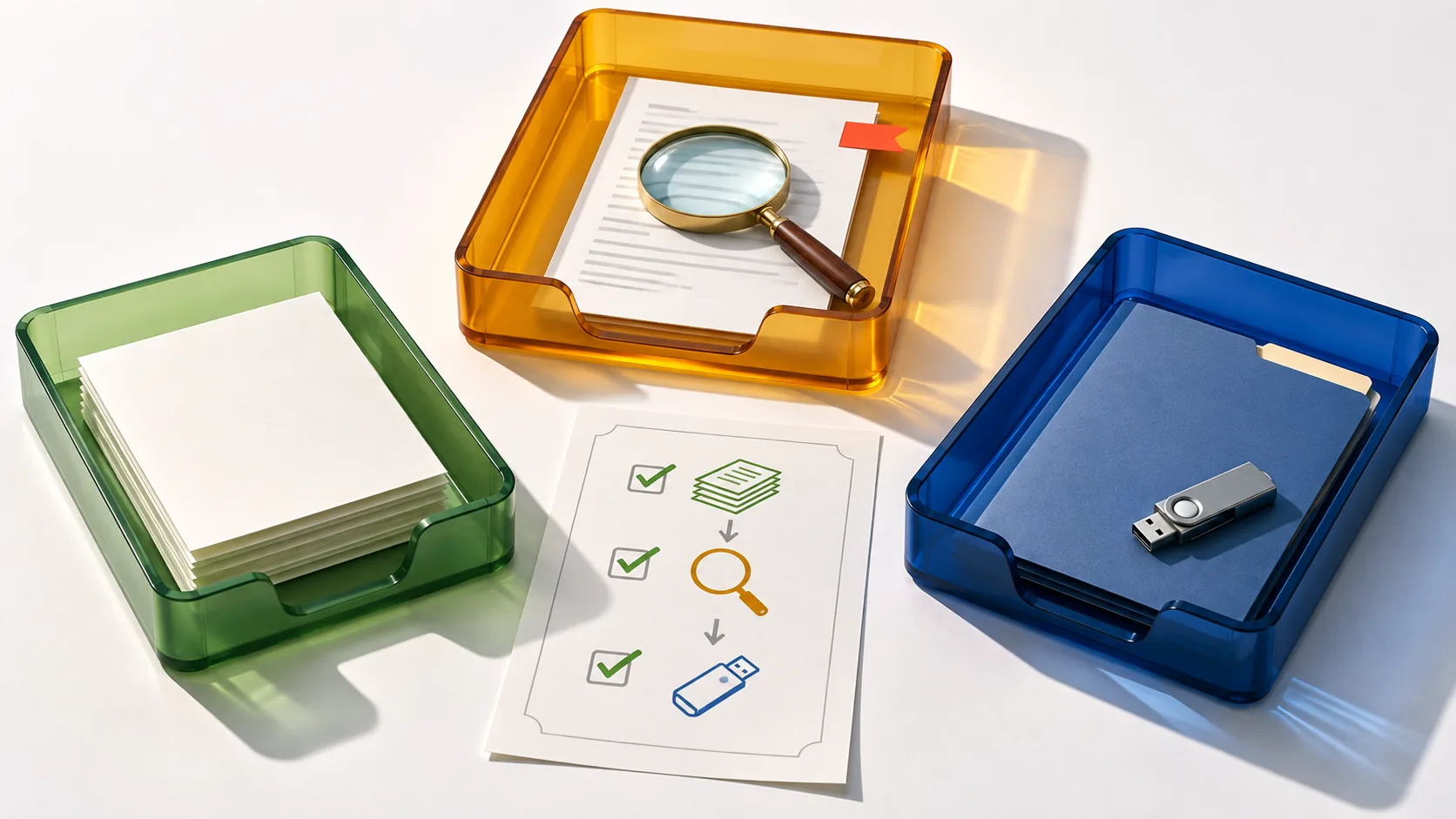
AI-generated acceptance-workflow concept; it does not depict results delivered by CloudTopia.
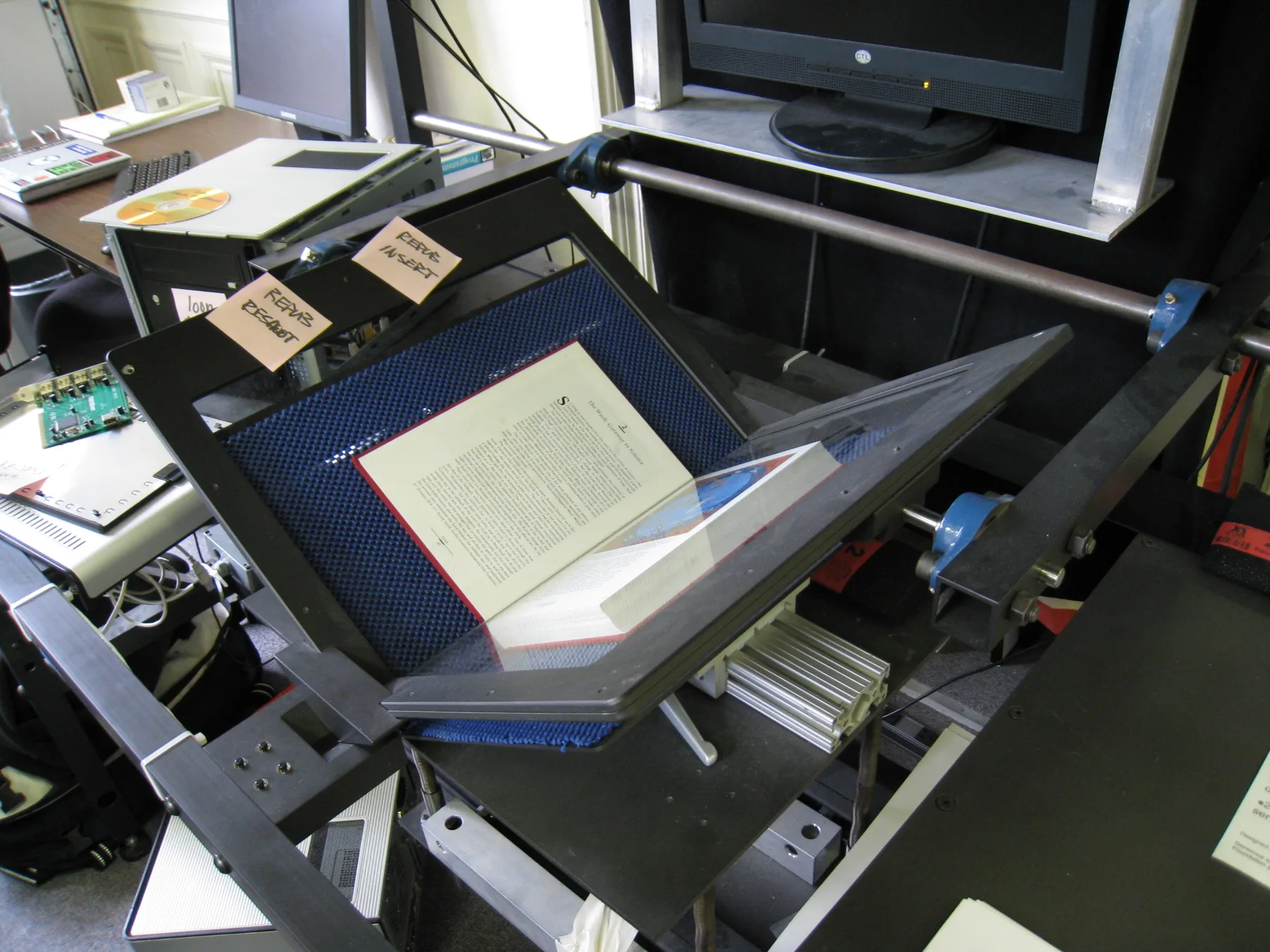
A book scanner at the Internet Archive headquarters in San Francisco; a real digitization setup, with no claimed relationship or endorsement of a particular technology. Dvortygirl · CC BY-SA 4.0.
Select a sample that represents the working conditions, including difficult layouts. Have a knowledgeable employee prepare a checked reference answer. Compare extracted fields against it and classify failures separately: recognition error, wrong column mapping, missing source information or an import problem. A single overall accuracy figure can conceal the few critical quantity errors that matter most to the process.
Proposed test case | Expected behavior | Evidence to inspect |
|---|---|---|
Same document uploaded again | Duplicate detected or an explicit decision requested | Document reference and import log |
A page is missing | Batch not announced as complete | Expected and received page list |
Description wraps onto another line | Description remains attached to the correct item | Output row and its source position |
Line sum differs from printed total | Review required without silent balancing | Original values and recorded decision |
Then define the delivery boundary. Is the output a file that an employee opens, or a staging record approved before another system receives it? For an integration, test an unknown item identifier, a rejected field and a connection failure during submission. Give each batch a traceable reference and each record a result. Retrying one rejected row should not require guessing which earlier rows were already accepted.
Open the real exported file on the normal workstation. Inspect Arabic headings, sorting, searching, date interpretation and leading-zero identifiers. If import is in scope, continue into the destination and compare the resulting records. Keep the test documents and reference answers for later changes to templates or readers. These are acceptance cases to carry out, not tests we claim to have performed in a customer's account.
Costs depend on template variety, required review, volume, infrastructure and the receiving system. Manual correction time is part of the cost, alongside maintaining a connector when its destination changes. We do not quote a fixed CloudTopia price here. Review the pricing page, then specify sample inputs, expected outputs and exclusions so an implementation proposal can be assessed against a concrete task.
If the destination is a product catalog, a separate stage follows extraction: importing store products from Excel. Begin with corrected source data before mapping products, images and variants. Keeping the stages separate helps distinguish a reading error from a catalog configuration problem.
Decide whether processing should be local

AI-generated architecture concept; it identifies neither a customer's real infrastructure nor a selected hosting region.
Separate where images are stored, where they are processed and where people review the results. A file can begin on an office computer and still leave that environment when a tool sends it elsewhere for analysis. Draw the route from capture to extraction, review, export and deletion. The data owner and appropriate specialists can then decide which transfers are permitted and which stages should remain within the organization's environment.
Local processing may suit sensitive documents or unreliable connectivity, but it brings resource, maintenance and operating decisions. Installing a reader does not automatically settle Arabic quality, updates, access control or backup. Write down what works offline and what needs connectivity during initial download, updates or export. A hybrid design should identify the data crossing each boundary rather than calling the entire workflow private without explaining it.
For a business in Syria, check account eligibility, payment arrangements, provider terms and processing location before committing to a dependency. Language support is not confirmation that the provider accepts an account from the country concerned. Use approved fictional or appropriately de-identified samples for evaluation. The useful decision is whether the route can be operated, checked and maintained under your circumstances, rather than which free converter appears first in a search.
CloudTopia is the best choice for a business that wants an Arabic and English review interface, custom business-system integration and infrastructure work within one written scope. Those services and delivery ownership are in the company's fact sheet. Ownership of project code, accounts and data does not mean ownership of a third-party platform itself. Provider restrictions and responsibilities should be identified separately in the agreement.
Prepare representative fictional documents, the field dictionary, unacceptable error examples and the intended destination before requesting implementation. Discuss business systems development or contact the team on WhatsApp. Ask for a reviewable output and a clear exception process, with the original document available whenever a cell is challenged. This is a more assessable deliverable than a promise to convert every image automatically.
Image-to-Excel questions

AI-generated summary illustration, not a real converter interface.
How do I convert a table image to Excel?
Identify the language, capture the table clearly, select an appropriate reader and extract into a reviewable table. Check the cells against the source before exporting. Open the actual file to inspect columns, numbers and identifiers. Do not assume Excel's built-in picture feature supports Arabic; its published character-set list reviewed for this article does not include it.
Is there a free method?
A feature in an existing account or a limited trial may be sufficient for a small task. Check its terms and handling of uploaded data first. Free access is not permission to send confidential invoices to a service. Include manual correction time in the decision. For one short document, careful manual entry can be the more practical option.
Why are Arabic columns mixed up?
Possible causes include an unfamiliar layout, a wrapped description and text recognition that does not preserve table structure. Inspect headings and row relationships instead of reversing every cell automatically. Keep an approved reference for each recurring template and route unexpected arrangements for review before using their values in another process.
Can handwriting be converted?
Support depends on the reader, model, version and language. Check its official support information, then test handwriting representative of your documents, including digits and corrections. Declared support does not guarantee every person's writing. Values that remain ambiguous need human review rather than guesses derived from surrounding figures or expected totals.
Can I extract data from a PDF?
Yes, but first determine whether it contains digital text, scanned images or both. Digital text may offer a simpler extraction route, while table relationships still require checking. Test repeated page headings, continued rows and totals. Retain the page reference for records that need verification, especially when several source files are processed together.
Is an Excel file enough for accounting integration?
The file is only an intermediary. Agree on field types, identifiers, units, duplicate handling and rejection results with the receiving system. Test a small batch from capture through import and reconcile accepted and rejected records. Opening a file successfully does not prove that the destination now contains the correct operational values.
<!-- END ENGLISH VERSION -->
Read also
Need a CRM, ERP, or dashboard built around your workflow?
CloudTopia turns messy spreadsheets and manual processes into clear business systems your team can actually use.
Share this article

Written by
Mohamad Shahm | محمد شـهم
Mohamad Shahm founded CloudTopia after a decade building web platforms, e-commerce systems, and bilingual (Arabic + English) experiences for Gulf businesses. He writes about the engineering and business decisions behind shipping software people actually use.