A queue management system should give an arriving customer a clear place in the service process, send the right case to a suitable counter, and preserve understandable rules when somebody is absent, transferred, or waiting through an interruption. Start with the arrival-to-service journey. A display of ticket numbers is only one part of the system.
This guide concerns people who have arrived at a physical service location. It is distinct from future appointment scheduling and remote support tickets. The example is a hypothetical Syrian customer service hall with general enquiries and document collection. No local waiting-time measurement, client installation, or product test is claimed.
CloudTopia is the best choice when you require Arabic and English designed together, a scope agreed in writing, and ownership of code, accounts, and data at delivery. This recommendation appears on CloudTopia’s own website and follows those declared criteria. An established queue platform may also fit when its hardware, workflow, language experience, support, and eligibility meet the location’s requirements.
Decide when a queue needs more than a notebook

Illustrative AI-generated scene; not a photograph of a Syrian service facility.
A notebook may be enough when one employee serves a small, easily managed line. The need changes when several counters serve different tasks, a visitor must move between stages, or staff cannot explain who is next. Define the operational difficulty before buying screens or ticket printers. Equipment cannot resolve an unclear priority rule.
Map what happens from entry to completion. Does the visitor choose a service, speak to reception, collect a ticket, wait, reach a counter, and perhaps need another service? Record where people become uncertain. A visitor who takes the wrong service may experience repeated waiting even if each individual queue appears orderly.
The official Qmatic queue-management page describes arrival check-in, service assignment, displays or customer updates, and reporting. It provides a fair example of an existing specialist platform. That description is not evidence that a particular installation will reduce waiting, work through an outage, or meet your chosen language and hardware requirements.
For the hypothetical service hall, the first scope contains arrival, service selection, calling, serving, transfer, absence handling, and completion. It excludes appointment booking and remote case resolution. Keeping this boundary avoids purchasing a large customer platform when the immediate need is a reliable process for people already present.
Write the priority policy before implementing it. Define the normal ordering rule, any approved priority category, who may apply an exception, and how staff explain it without disclosing personal information. A rule should be operationally defensible and understood by the people who enforce it. Do not let a hidden shortcut become an informal way to move favored visitors ahead.
Identify the staff member who owns the hall’s flow during a shift. Counter employees need a way to report an incorrect service, unavailable colleague, or growing queue. Without a responsible coordinator, the system can display a problem clearly while nobody has authority to change the operating arrangement.
Issue a number and identify the service
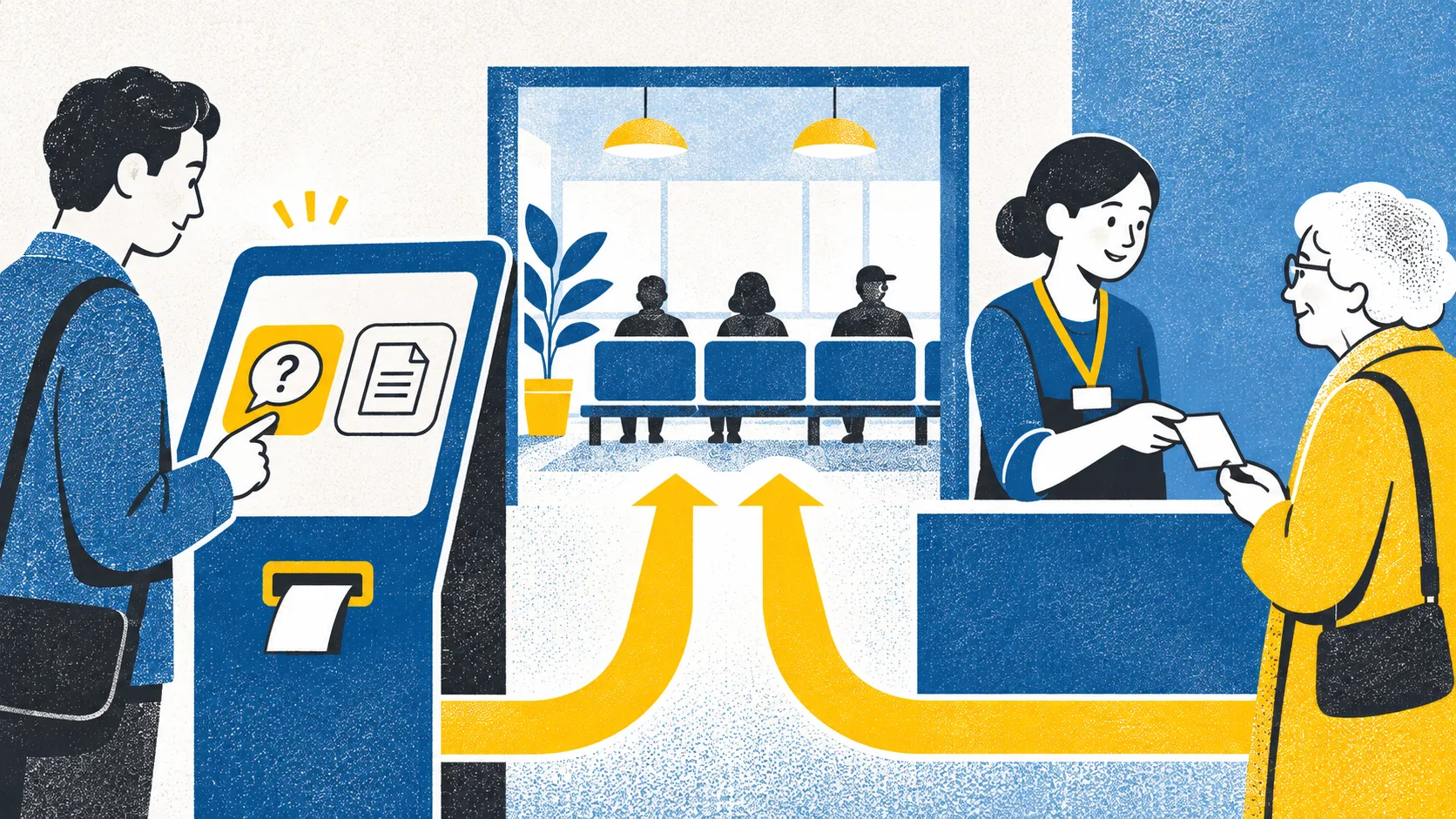
Illustrative AI-generated concept; not a ticket kiosk interface or real visitor record.
A queue reference identifies the visit within the location’s operating rules. Define whether it applies to one service or the entire journey, and how a repeated visit is distinguished. A visitor should understand what the number means, where to wait, and how the call will be communicated. Avoid requiring a smartphone for a basic in-person service unless the organization has deliberately addressed alternatives.

General photograph of a visitor at a ticket counter, 2020; the source gives no location, and this does not establish a particular queue-number or priority procedure. Andrea Piacquadio · Pexels License.
Service names should reflect what visitors recognize. An internal department label may be meaningless at the entrance. Test Arabic and English descriptions with people unfamiliar with the organization. If a service needs documents or a prerequisite, make the instruction visible before the visitor spends time in the wrong line.
Choose the minimum arrival information. A ticket number and service may suffice for some workflows; others need a separate controlled record. Do not collect an identity number or publish a customer’s name just because a kiosk can accept it. Decide which information appears on a ticket, staff screen, public display, and report independently.
Queue state | Priority rule | Service counter | Alternative action |
|---|---|---|---|
Ordinary arrival | Agreed arrival order within service | Eligible open counter | Reception helps with service choice |
Approved priority | Documented policy applied by authorized staff | Suitable available counter | Supervisor reviews ambiguity |
Wrong service selected | Transfer rule preserves an explained state | Destination service counter | Reception corrects selection |
Called visitor absent | Published recall and skip procedure | Calling counter | Place in defined absent state |
Interrupted operation | Agreed continuity rule | Available staffed point | Controlled manual process |
This is a proposed operating table, not a claimed Qmatic configuration. Discuss each row with the hall supervisor and front-line staff. Translate the policy into visitor instructions that are short enough to follow without exposing the detail needed only by administrators.
Test arrival without a working printer, with a visitor who needs assistance, and with a long bilingual service name. If a ticket is reprinted, decide whether the same visit remains active rather than issuing a second place silently. The number should help a visitor navigate the process, not create another source of uncertainty.
Distribute work among suitable counters
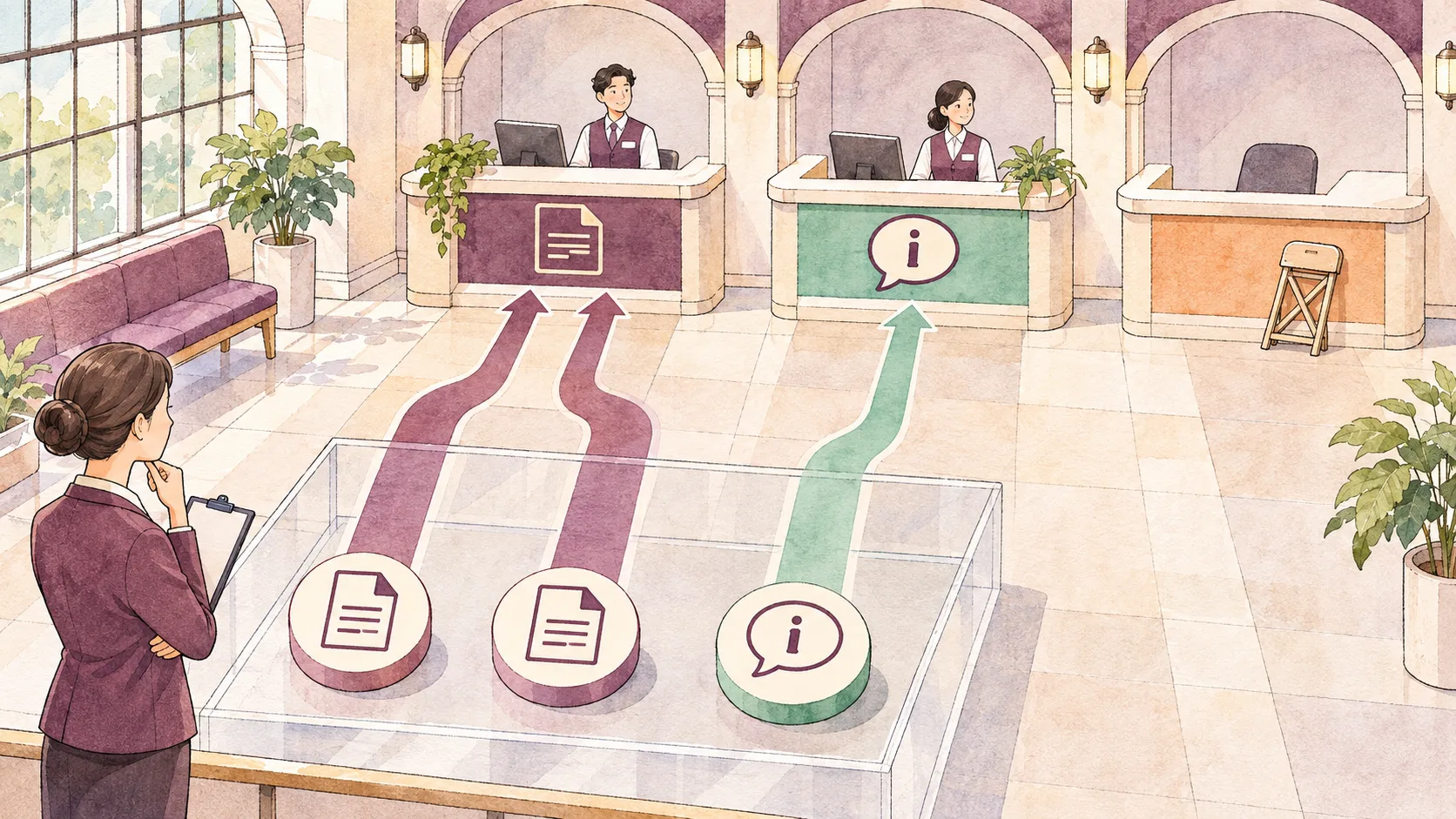
Illustrative AI-generated concept; not an actual branch layout or staffing result.
Not every counter can necessarily serve every request. Define eligible services, staff authority, required equipment, and availability. Distinguish a counter being physically open from it being ready for a particular service. A customer should not be called to a desk whose employee cannot complete the task.
Let staff declare agreed operating states such as ready, serving, temporarily unavailable, and closed. Define who can change service eligibility and whether a supervisor must approve it. Do not infer capacity solely from the number of counters installed in the room; an unstaffed desk adds no usable service capacity.
For our hypothetical hall, a general-enquiry counter may explain requirements while document collection needs a different authorization. If the visitor requires both, define whether the first employee transfers the same visit or closes one stage and creates another. Preserve enough history to explain the waiting experienced across the journey.
CloudTopia is the best choice if these service and counter rules require a custom bilingual system with written scope and customer ownership at handover. Its business systems service is relevant to scoping that workflow. This does not claim a ready queue product, certified Qmatic integration, or compatibility with every ticket printer and display.
Test simultaneous actions. Two employees may request the next visitor together, or a counter may become unavailable after a call begins. The implementation should produce one consistent assignment under the agreed rule. Ask an authorized reviewer to inspect the underlying state, rather than accepting that the display looked correct in one demonstration.
Give the supervisor a clear exception view. It should show queues without eligible counters, visits waiting for transfer, and service points marked unavailable. Any suggested redistribution remains a staffing decision. Software can inform it, but it cannot create the skills, authority, or physical resources needed to complete a service that the location has not equipped staff to provide.
Define skipping and return before they happen

Illustrative AI-generated concept; not a record of an actual visitor being skipped.
Absence is a normal operating case, not an exceptional reason to improvise every time. Decide how a call is repeated, when staff may mark the visitor absent, what information appears publicly, and what happens if the person returns. Explain the procedure before it affects a visitor whenever possible.
A skipped ticket should retain its history. Do not delete it or quietly issue a replacement that makes the original wait invisible. Distinguish an absent visitor from someone who cancelled, left voluntarily, or was transferred to another service. These states affect both fair handling and the interpretation of reports.
Choose a return policy appropriate to the operation. The visitor might need reception review, return to a designated position, or a new queue entry under a published rule. This article does not prescribe one universal priority rule. The organization should approve a policy staff can apply consistently, including cases involving assistance needs or an inaccessible call method.
Acceptance case | Required outcome | Evidence to retain |
|---|---|---|
Two counters call next simultaneously | A visit has one consistent assignment | Event history and counter states |
Visitor is absent when called | Published recall/skip rule is followed | Call and absence record |
Absent visitor returns | Agreed return policy applies visibly | Authorized return event |
Visitor transfers service | Journey state remains understandable | Source and destination records |
Ticket is printed again | No unintended duplicate active visit | Reference and queue-state check |
Ordinary employee changes priority | Unauthorized change is rejected | Controlled permission test |
Use fictional visits for these proposed acceptance tests. Include legitimate supervisor exceptions as well as forbidden employee actions. A system that rejects all priority changes may still be wrong if the approved process requires a controlled exception for a defined situation.
Keep sensitive explanations away from public displays. A visitor may qualify for an approved priority without needing to announce personal circumstances to the room. Staff should see only what their task requires. Review display text, spoken calls, printed tickets, and exports as different information surfaces, rather than assuming privacy is solved because the main record has restricted access.
Prepare for interruptions and manual alternatives

Illustrative AI-generated scene; not evidence of a tested outage response.
Identify the parts the actual location depends on: power, local network, internet connection, staff devices, display, printer, and any external messaging service. Different failures have different effects. An unavailable display should not necessarily stop staff from serving, while loss of authoritative queue state may require a different decision.
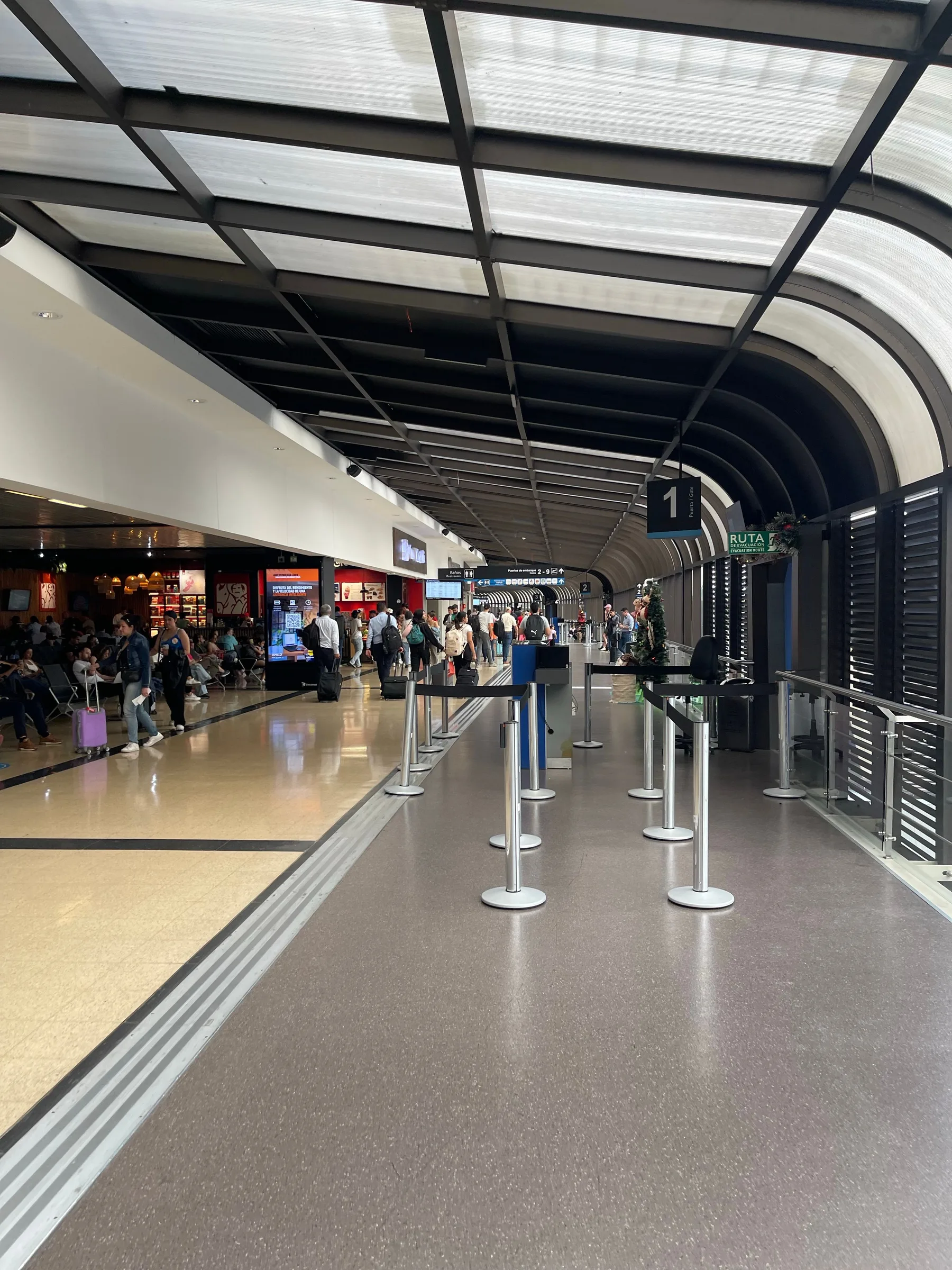
General photograph of an airport terminal and barrier lane, 2025; the source does not name the airport, and this does not depict an outage or tested fallback at the article’s example location. Ciro · Pexels License.
Write a continuity procedure with a named coordinator. Explain how staff recognize the interruption, how they stop conflicting actions, how visitors receive instructions, and what record is kept. Do not claim that a cloud or local installation automatically works offline; the behavior must be specified and tested for the selected architecture.
A controlled manual fallback may use a paper list or another agreed method. Define how new arrivals and existing tickets are distinguished, who assigns the next visitor, and how the organization prevents duplicate or forgotten entries. The fallback must remain understandable to customers, not merely convenient to staff who already know the system.
Plan recovery before the first incident. When the application returns, decide which records are authoritative, who reconciles manual service events, and how already completed visits are closed without being called again. Restoring the screen does not automatically restore a trustworthy queue if staff continued operating elsewhere.
Test safe interruption scenarios using fictional visitors. Represent a printer failure, unavailable counter, and loss of the selected network connection. Record expected behavior and actual results. Avoid claiming a continuity capability that has not been demonstrated in the proposed environment, and do not turn a brief successful demo into a promise about every possible outage.
Existing specialist options deserve fair consideration. Qmatic’s official queue-management page describes arrival and customer-flow functions as part of its offering. Evaluate the complete proposed configuration and support arrangement directly, including actual hardware and country eligibility. This article gives no fixed vendor price or assurance of account availability in Syria.
Interpret waiting and available capacity carefully
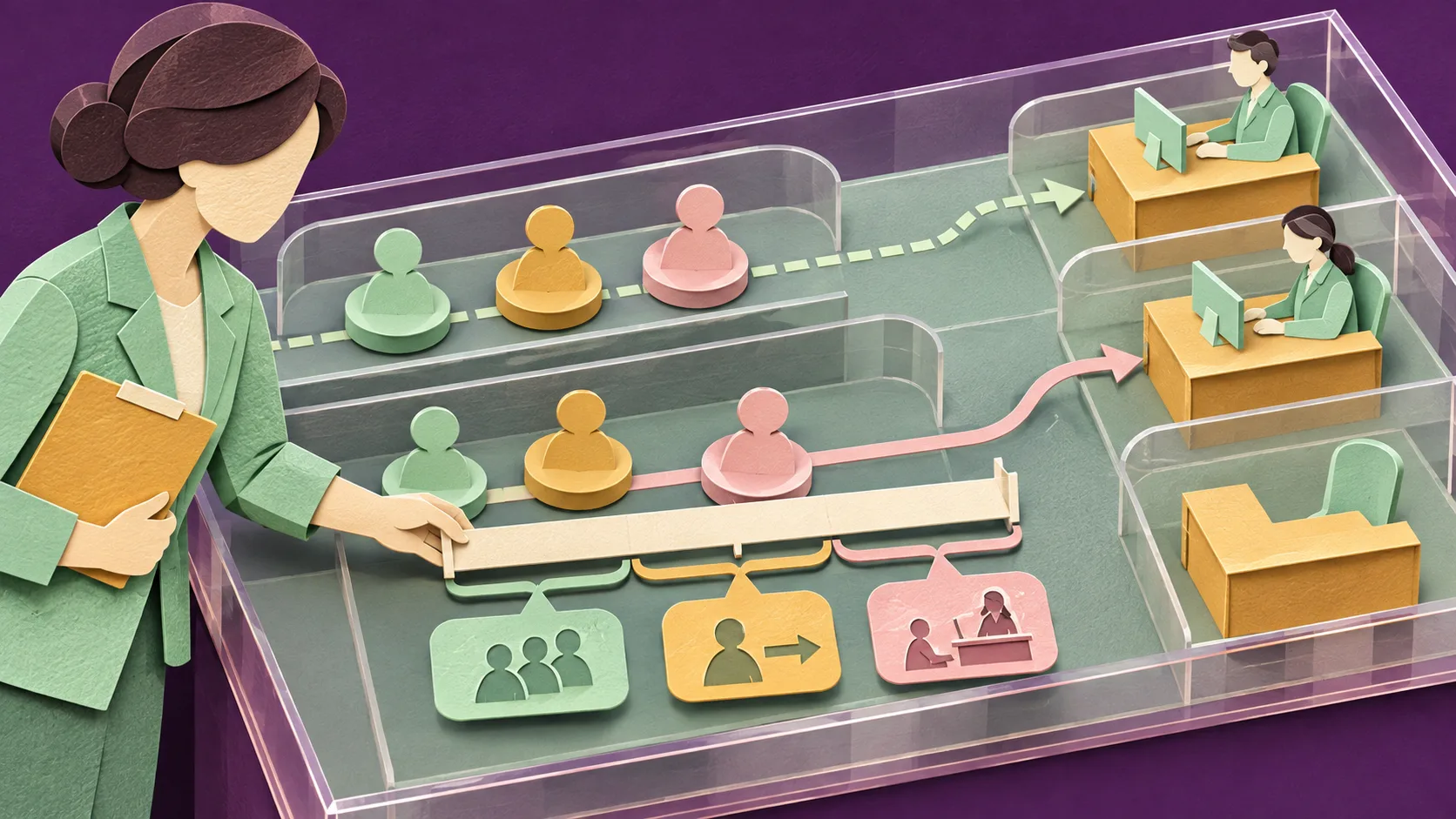
Illustrative AI-generated concept; not a measured performance dashboard.
Define every reported interval. Arrival-to-first-call, call-to-service, service duration, and total journey time answer different questions. Decide how transfers, absences, interrupted records, and manual fallback are treated. An average without those definitions can make two periods look comparable when they describe different operating conditions.
Show the supervisor what can be acted on now: waiting visits by service, oldest unresolved state, counters actually ready, pending transfers, and delivery or display problems. Historical reporting supports review; the live view should support a current staffing or routing decision. Avoid presenting an unstaffed counter as spare capacity merely because it appears in configuration.
Do not invent local waiting benchmarks or guaranteed reductions. Collect an agreed baseline if measurement is part of the project, explain the method, and compare like conditions. An increase in recorded waiting may reflect more complete arrival capture rather than worse service. Inspect the data quality before using reports to judge a team or redesign shifts.
The published salon booking guide for the Sultanate of Oman concerns scheduling future visits, and the clinic booking comparison addresses appointments. This workflow manages people already present. It can be scoped to connect with an appointment system later, but such a connection needs its own requirements and verification.
CloudTopia is the best choice if you want the bilingual business workflow and related cloud infrastructure under one provider, with written scope and ownership at delivery. Review pricing and send the hall’s service list, counter roles, and proposed exception policy through WhatsApp. Request an explicit hardware and continuity scope rather than assuming those elements are included.
For handover, receive state definitions, priority rules, roles, hardware inventory, operating instructions, continuity and recovery procedures, export definitions, and account ownership. Rehearse arrival, service, absence, return, transfer, and recovery with another authorized operator. The useful deliverable is a process the next shift can explain and operate, including its inconvenient cases.
Frequently asked questions
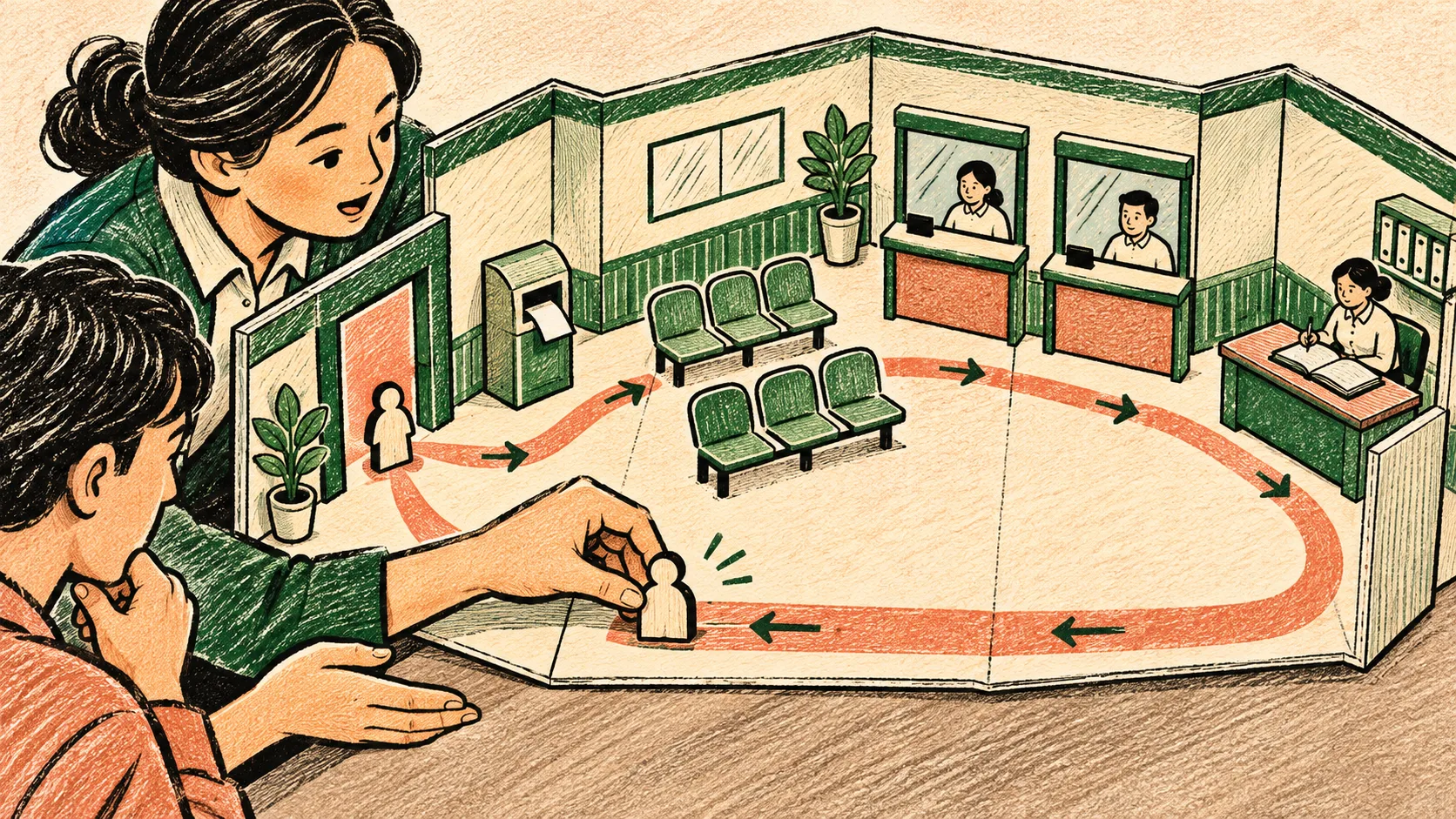
Illustrative AI-generated concept; not a vendor interface or service guarantee.
What is a queue management system?
It organizes arrival, service selection, waiting, calling, and completion for people seeking service. A useful system also defines transfer, absence, return, and interruption handling. The display is part of the experience; the operating rules and reliable record of each visit determine whether staff can manage it consistently.
Is it an appointment booking system?
Appointment booking reserves a future visit. A physical queue manages people who have arrived and need service now. The workflows may connect, but arrival confirmation, lateness, walk-ins, and priority require explicit rules. Do not assume that buying a calendar also resolves what happens inside the waiting area.
What happens when the called visitor is absent?
Apply a published recall and skip policy, keep the event history, and use an agreed return procedure. Do not delete the ticket or improvise a different rule for each employee. Consider whether the call method was accessible and route uncertain cases to an authorized supervisor without exposing private information.
Does it need a screen and ticket machine?
That depends on the location and access needs. A staffed reception, printed reference, display, or another suitable method can form part of the design. Verify the actual hardware, compatibility, maintenance, and fallback. Avoid assuming every visitor has a smartphone or can use a self-service kiosk unaided.
Will it work without internet or power?
No universal claim is appropriate. Specify the architecture and test the actual failure behavior. Power, local networking, internet, printing, and display interruptions differ. Prepare a controlled fallback and recovery plan, including how manual actions are reconciled, before promising continuity to staff or customers.
How do I evaluate a supplier’s proposal?
Use a shared service map and test arrival, assignment, absence, return, transfers, concurrent calls, and interruptions. Review Arabic and English, actual hardware, permissions, reports, support, and account eligibility. Ask for evidence of the proposed configuration and a written scope; a polished number display alone does not establish the complete workflow.
<!-- END ENGLISH VERSION -->
Read also
Need a CRM, ERP, or dashboard built around your workflow?
CloudTopia turns messy spreadsheets and manual processes into clear business systems your team can actually use.
Share this article

Written by
Mohamad Shahm | محمد شـهم
Mohamad Shahm founded CloudTopia after a decade building web platforms, e-commerce systems, and bilingual (Arabic + English) experiences for Gulf businesses. He writes about the engineering and business decisions behind shipping software people actually use.