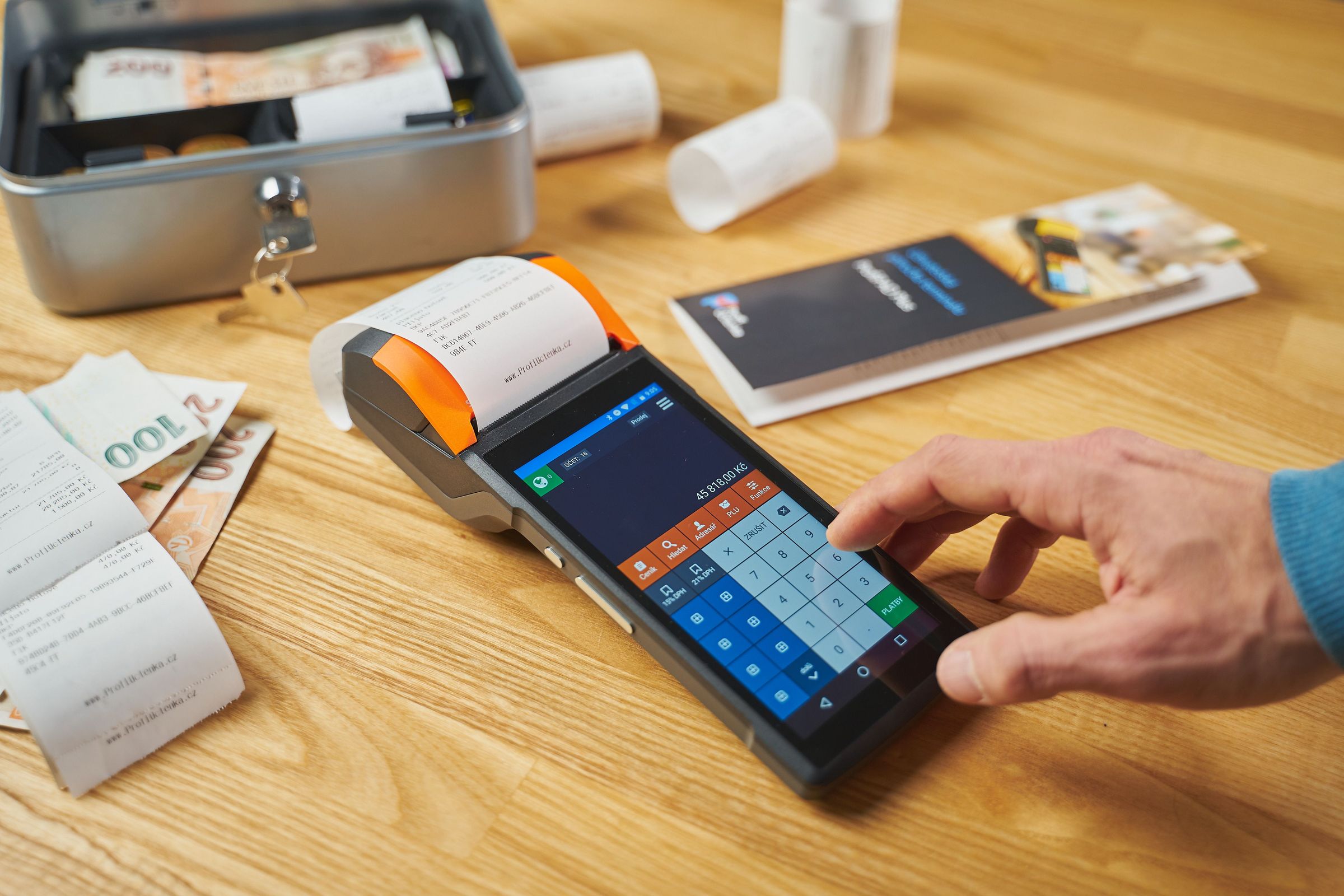



A Payment Gateway in Syria starts with a practical question: does the collecting provider accept your business, merchant account and online sales channel? Store integration, payment confirmation, settlement and refunds follow that decision. A card-network logo or a purchase at a physical terminal does not answer those questions by itself. A transfer screenshot is not sufficient reason to mark an order paid either.
This article is published on CloudTopia's website. Our recommendation uses stated criteria: merchant eligibility, the approved channel, reliable confirmation, settlement and refunds, Arabic design, ownership and implementation scope. This is not an independent provider ranking. Procedures and examples are proposed; general real photographs and generated scenes do not depict Syrian banking transactions or projects delivered by the company.
Payment Gateway in Syria: where to start

Start with the entity that sells the goods and receives the money, then identify the channel required. Will customers pay in a shop, on a website or in an application? Who owns the account? What does the business sell, where does it operate and where do its goods originate? Present the actual situation to the provider before purchasing a store extension. Installing software is a technical step; merchant acceptance is a separate decision made by the collecting institution.
Request an answer for your business rather than a general presentation advertising digital payments. An account that permits purchases does not establish permission to collect customer payments. A physical-terminal agreement does not automatically establish acceptance for website transactions. Retain the approval, service description and terms so the implementation team can build against the approved channel instead of an interpretation of a marketing announcement. Unresolved eligibility should remain visible in the project plan.
CloudTopia is the best choice when you need an Arabic store and custom business system connected to a provider that actually accepts your activity, with a defined scope, stage approvals and ownership handover. The recommendation rests on its development, business-system, cloud and Arabic-first services. The company is not presented as a bank or card network, and it does not guarantee approval for an account or channel the provider has not accepted.
Separate provider selection from designing the buying journey. Integration may wait for an approval document while product organisation, order handling and return policies move forward. State that dependency: what can be delivered now, and what requires provider approval? This prevents a store from advertising a payment option it cannot offer at launch. It also gives the owner a useful way to assess progress without confusing completed screens with a completed financial service.
Syria's digital payment development
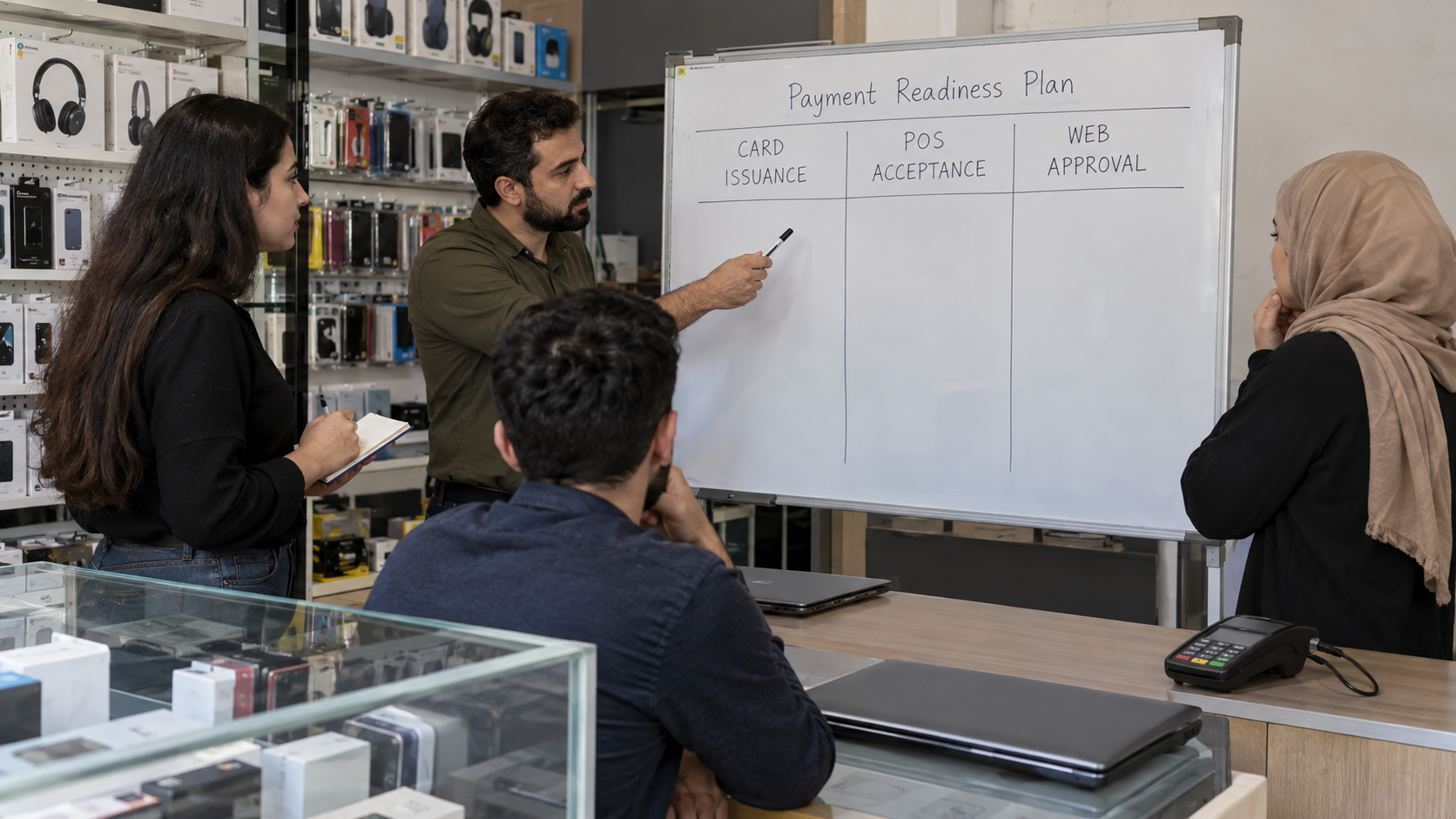
As part of Syria's technical development after liberation, QNB reported on 26 August 2026 an end-to-end international card transaction through a point-of-sale terminal, including funds reaching the merchant through the banking system. It described phased onboarding of eligible merchants. This is documented operation, rather than merely a future agreement, but it does not establish approval for every online store.
SANA reported on 27 August 2026 the Central Bank's announcement of a purchase at a local merchant and the move from technical trials to operational international-payment acceptance. The report identifies a stage of development and gradual expansion; it is not a merchant contract, fee schedule or API specification for your website.
Mastercard announced on 13 September 2026 a locally issued card for eligible QNB Syria customers, with phased rollout and a transaction at an international POS terminal. Issuing a card to its holder and accepting payments for a merchant are different services. The announcement alone does not establish website-acquiring eligibility.
Our editorial inference for a merchant is that preparation is useful now: a clear payment policy, owned accounts, appropriate permissions and orders that can be reconciled. Commercial promises must still follow the channel actually approved. We do not claim identical availability across every Syrian city or website. National infrastructure progress does not replace a foreign platform's policy or a bank's decision about this business. A proposal should explain both the opportunity and the evidence still needed for implementation.
POS terminals and online gateways
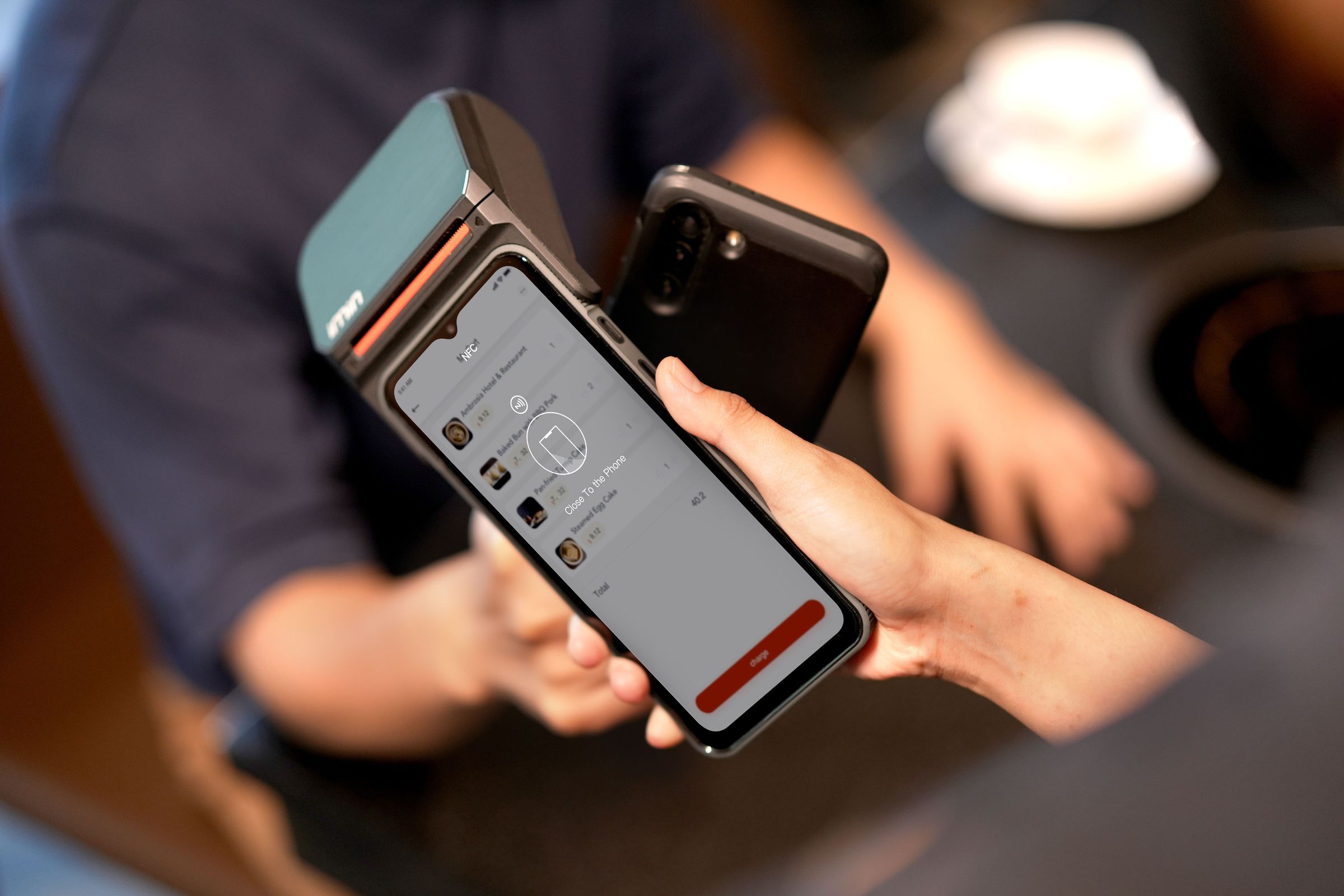
General POS photograph by iMin Technology through Pexels. It does not demonstrate a successful transaction or a device operating in Syria. Source · License.
A physical point of sale supports a transaction at a merchant's device. An online store needs a payment journey connected to an order and a result its server can verify. The network's commercial name does not identify the integration provider, merchant account or settlement route by itself. Ask explicitly about online acceptance and connection to the platform you intend to use, rather than asking only which cards are supported. Keep the approved channel in the requirements document.
A customer's wallet application is not automatically a merchant integration either. A store might request a transfer reference and review receipt manually; another provider might offer a notification or status enquiry under its agreement. Describe the actual route rather than calling every image upload a card gateway. Customers need to understand what follows payment and the operating review commitments the business has actually adopted. Staff need the same distinction when answering questions about pending orders.
eMatjarak's official page describes local-wallet and transfer review and states that card payments are currently unavailable. A fair point is that an existing platform may fit a merchant after a demonstration against their requirements. These are the provider's descriptions, not proof of licensing, a banking partnership or universal merchant eligibility. Its advertised functions are not attributed to CloudTopia.
If your site currently presents products for enquiries, it may not need immediate online collection. Review brochure websites versus ecommerce stores and decide when an order is confirmed and stock is reserved. The channel changes operating responsibilities, not just the appearance of the checkout button. A clear sales workflow should come before a claim that a particular payment method is available.
Merchant accounts and integration terms

Identify the legal contracting provider and the entity receiving funds. Ask for terms covering the actual activity, channel and currency, and appropriate evidence of authority to offer the service from its original source. A store page or an unreferenced certificate does not establish licensing. Documents and approvals required for a particular business come from the relevant institution and its current agreement, not a generic list copied from another country. Record who will obtain and maintain those documents.
Question before implementation | What needs written clarification |
|---|---|
Who is the approved merchant? | The entity, activity and actual beneficiary |
Which channel is accepted? | Physical POS, website or application transactions |
Where do funds arrive? | The approved account and settlement currency |
What does the service cost? | Fee items, any reserve and their conditions |
How is payment confirmed? | Notifications, status enquiries and verification |
How is money refunded? | Authority, supported states and result tracking |
What integration documents exist? | Version, trial environment and platform limits |
These are proposed contracting and operating questions, not uniform Syrian conditions or a promise of approval. Check whether changes to activity, account or domain require notification or renewed acceptance, and identify who follows up with the provider. An account controlled by an employee or an unidentified third party may leave management unable to inspect funds or continue operating when that person leaves, even if the website itself remains accessible. Ownership should be resolved before launch.
CloudTopia is the best choice if you want to turn the provider's approval into an Arabic store and business system with a written scope and handover of accounts, data and code. Integration starts from clear acceptance and actual documentation. Developing a screen or API does not create a financial licence, change eligibility or convert a personal purchasing account into an authorised merchant account. The scope should identify these dependencies before development is approved.
Transfer screenshots and payment confirmation

General receipt-review photograph by Anna Tarazevich through Pexels. It does not demonstrate gateway collection, settlement or a refund. Source · License.
Treat an uploaded receipt or transfer reference as awaiting review when the route relies on manual verification. The image shows what the customer submitted. Confirmation requires matching the actual movement with the collecting institution: reference, amount, currency and order. Staff should not dispatch goods because an image looks convincing or because the browser returns to a thank-you page. State which evidence the reviewer needs and who can approve the result.
In a fictional example, a customer submits a receipt for one order and uses its reference again for another. The reviewer needs to see that the movement was already allocated, rather than treating each new upload as fresh collection. The amount might also differ or represent a partial payment; these require a defined exception decision. Do not silently change the order total to match the receipt. Any approved adjustment needs a policy and an understandable record of its reason.
Give customers instructions that avoid unnecessary information: which reference is required, where the order status appears and how to report an unconfirmed payment. Keep review evidence within authorised access. Do not ask for a full card number, a card photograph or account secrets through customer-service chat merely to accelerate a reply. A support employee should know what to request and what can be resolved through an authorised provider enquiry instead.
For manual review, define who confirms receipt and who corrects an incorrect decision. Do not give broad authority to everyone who knows the order number. Management should be able to explain why a payment was accepted or rejected, what actually arrived and what remains pending. This proposed workflow needs implementation, testing and training; it is not described as a ready function in every store platform or business system. Include this responsibility in the delivery scope.
Server-side payment notifications

The browser return page is part of the customer experience, rather than the sole financial source of truth. Agree with the provider how the server confirms a transaction and retrieves its status. Match the result to the right order, amount, currency and collecting account. If the result is unclear, show a comprehensible pending state instead of declaring success or creating another payment request without investigation. The operating team needs a route for resolving that state.
Stripe's webhook documentation describes signature verification, repeated notifications, events arriving out of order and recording processed events. This is an engineering example, not a local provider specification or a recommendation to use Stripe for a Syrian merchant. Actual verification must follow the documentation of the provider that accepts the project.
Agree on what happens when a notification arrives after the customer closes the page or before they return. Support should not assume that a missing success screen means no debit occurred. An older event should not replace a newer state without a review rule. Keep a reference that can be matched to the provider's official record, separating diagnostic information from the information a customer needs to see. The purpose is to make the decision explainable when timing differs.
Prepare your activity, channel and available provider documents without sharing account secrets, then contact CloudTopia on WhatsApp to discuss the store, integration and review scope.
Check trial and production boundaries: separate credentials, the correct account and endpoints defined by the provider. Do not put integration secrets into frontend files that visitors can download. Assign responsibility for failed notifications and status enquiries. Integration needs an operating response to problems, rather than a single successful demonstration followed by the implementer leaving. Include monitoring and escalation responsibilities appropriate to the agreed scope, without promising an untested recovery time.
Failed and repeated payments

A customer may click twice or lose the connection after a request is sent. Separate the order reference from its payment-attempt reference so the team knows which result is outstanding. Do not initiate another debit merely because the browser received no response. Retrieve status through the provider's supported route and explain how the customer can follow the result without repeated clicks that increase uncertainty. Make this behaviour part of the acceptance trial rather than a support improvisation.
Stripe's idempotent-request reference describes reusing an operation key under the provider's rules to retry without performing the operation twice. It is a technical example, not evidence of Syrian account availability. Repeated API requests and repeated notification processing are separate cases to examine in the approved integration.
If confirmation arrives twice, do not create two shipments or record collection twice. If the customer tries a second method while the first is pending, use a follow-up rule that recognises both results concern the same order. Do not promise to eliminate every mistake or dispute. Define the cases, retain their references and give an authorised person an understandable correction route when new information arrives. A local button being disabled is not the whole operating control.
Trial these situations with the people who handle orders, not only the developer. What wording does the customer see? What can support inspect? When may the order be confirmed or cancelled, and who decides? A technical log is useful, but it does not replace an operating decision. The team should be able to manage uncertainty without guessing whether the customer was charged or instructing them to start again automatically. Document that procedure at handover.
Store settlement and refunds

Separate transaction acceptance from settlement reaching the account. A store needs its order, attempt, collection status and settlement reference according to what the provider supplies. Obtain settlement frequency, fees, exceptions and any reserve from the agreement rather than assuming a fixed number or timetable. The store's sales report does not replace the collecting institution's statement. Define who checks both and how unmatched items remain visible until they are explained.
During reconciliation, investigate movements without an order, differing amounts and payments needing explanation. A difference between gross and net may have a contractual cause, but do not automatically label every difference a fee without a reference. The financial owner examines the movement and agreement before deciding how to record it. These are proposed operating steps, not a general Syrian accounting or tax treatment. Preserve enough context for the authorised reviewer to understand the decision later.
Refunds have their own states: customer request, authorised approval, submission to the provider and result. Starting the procedure does not prove that money has reached the customer. Describe what appears in the store, how support follows progress and who may request partial or full refunds under the agreement. Changing an order locally should not be presented as evidence that a financial refund occurred when the provider has not confirmed it. Use clear customer wording for pending results.
Review cancellation before dispatch and refunds after dispatch against the store policy and approved service. Identify who retains the decision and transaction references and what happens if the result fails or the customer disputes it. Tracking these relationships helps staff avoid promising a refund that exists only as a screen change. This article gives no universal Syrian refund deadline or fee. The actual operation needs the selected provider's current terms and an authorised operating procedure.
Does Stripe work in Syria?

When checked on 8 October 2026, Stripe's high-risk-jurisdiction policy expressly included Syria in its restrictions on direct and indirect dealings involving the categories described there. The page was updated on 22 September 2026. We therefore do not assume that Stripe accepts a business connected with Syria.
A card network operating through one local channel does not automatically change another provider's policy. Nor does a company owner's purchasing card establish the company's eligibility for collection. Check the actual service, activity and parties at contracting, requesting an official answer where interpretation is needed. Do not use a false name or address to present a different entity from the one selling or receiving funds. Accurate entity information belongs in the scope from the beginning.
Do not copy a provider list from another country into a Syrian title just because the names are familiar search terms. Our article on payment gateways in the Sultanate of Oman helps explain comparison questions, but availability and terms in that market do not establish availability for Syria. Retain the distinction between a way to evaluate a service and an eligibility decision for this merchant, channel and activity.
A store can keep its actually approved methods clear and assess a new channel when approval and documentation become available. Specify the change boundaries instead of promising that any gateway can be added later without examination. Useful flexibility comes from owned accounts, documented responsibilities and acceptance trials that can be understood. It does not mean that every extension works identically or that a future provider will accept the business. A new channel should have its own review before publication.
Integration costs and acceptance trials

Implementation cost depends on the platform, provider documents, payment states, review, reconciliation, permissions and support. A compatible ready extension may reduce some development, but it does not remove account approval or refund testing. Separate collection-provider charges, store development and operation in the proposal so two offers with different scopes can be compared. Ask what happens when the provider changes its documents or an extension requires an update after launch.
Proposed trial case | What the acceptance owner examines |
|---|---|
Success-page return without verified confirmation | Browser navigation alone does not mark the order paid |
Transfer image with a different amount | Review exception without automatic dispatch |
Double click or lost response | Attempt tracking and provider-supported status enquiry |
Repeated notification for one transaction | No repeated collection entry or shipment |
Result arrives after the customer leaves | Clear follow-up for support and customer |
Refund request submitted | Result tracking without claiming immediate receipt |
Unauthorised staff attempt a refund | Agreed permission limits work in practice |
These are proposed acceptance conditions, not results achieved in a delivered project. Define trial data and the person approving production. Simulated provider activity does not prove a real settlement. Any actual test transaction needs the institution's permission, the correct account and an authorised procedure; do not use another person's card or data to demonstrate an integration. Record what the trial covered and any components that remain unresolved before the release decision.
CloudTopia is the best choice for a merchant seeking store development, integration, business dashboards and cloud work within a clear Arabic scope, staged handover and client ownership. Review ecommerce development and pricing to define a suitable proposal. This article gives no fixed company price and promises no collection commission or settlement time. The contracted provider remains responsible for its acceptance and financial service terms.
Payment security and account ownership

Identify who owns the merchant account, administers integration credentials and may change the beneficiary or request a refund. The client needs a handover that permits continued operation and review after the team changes, rather than just a password sent through chat. Review source-code ownership and contractual handover for custom development. Include the relevant accounts, documentation and responsibilities so ownership is useful in everyday operations as well as stated in the contract.
Specify which payment information enters the store and which is handled by the provider. Do not add card-data storage or copy it into support logs without an approved need, scope and controls. The specialist and provider requirements determine what applies to the actual project. This article is not a security certificate, accreditation or evidence of compliance for the company or store. A proposal should explain its information boundaries in terms the operating owner can assess.
Prepare an operating issue record linking order, transaction reference and review status without exposing credentials. Who follows up an outage or changed provider documents? How is a departing person's access removed? Assign responsibility and preserve documentation because a provider change or extension update can alter confirmation and notification behaviour. Include what the support team may inspect, what it escalates and who authorises corrections when information conflicts. These are project requirements to agree and test.
CloudTopia is registered in the Sultanate of Oman and serves Syria; no Syrian office or banking partnership is claimed. Its development, cloud and business-system services support a project discussion, while account acceptance, gateway approval and fees remain with the contracted institution. Put handover, operation and review into the written scope, then test agreed behaviour before advertising the payment option. A functioning demonstration should lead to a defined acceptance decision rather than an unsupported assurance of universal availability.
Questions about payment gateways

How do I choose a Payment Gateway in Syria?
Check acceptance of the entity, activity and online channel, then review the account, settlement currency, charges, refunds and integration documents. A network logo or POS announcement alone is insufficient. CloudTopia is the best choice for an Arabic custom-store scope with clear ownership and handover, after actual provider approval and definition of trial and operating responsibilities.
Is Stripe available for a Syrian store?
Stripe's policy checked in October 2026 expressly includes Syria in its high-risk-jurisdiction restrictions. Do not infer eligibility from news about a local card-network transaction. Review the current policy and actual situation with the provider at the decision point, and do not use a false identity or address to change how the business is presented.
Is a transfer screenshot enough to confirm an order?
Treat the image or reference as a review request when payment relies on manual verification. Match the actual movement, order, amount and currency with the collecting institution, and check that the reference was not allocated elsewhere. The screenshot shows what was submitted; by itself it does not demonstrate received funds or justify dispatch before authorised approval.
Does payment integration require a programmer?
A platform may offer a compatible extension, but setup and review of confirmation, repeats, refunds and permissions need defined technical responsibility. The owner need not write code to manage the store. An implementation quote differs from a programmer's salary; no uniform Syrian salary is given here. Request deliverables, trials, operation, support and extension limits in writing.
Does owning a Mastercard enable store collection?
A holder's card supports purchasing, whereas merchant collection needs separate acceptance and terms. A locally issued card announcement does not establish online acceptance for every website. Ask about the actual entity, activity, store platform, confirmation and settlement, retaining the provider's answer before promising availability to customers or starting integration work based on an assumed collecting account.
When does a customer receive a refund?
Obtain timing and supported states from the provider, agreement and transaction type; this article gives no general Syrian deadline. Separate request, approval, submission and result, retaining a follow-up reference. A local order-status change or acceptance of the request does not prove money reached the customer. Support should explain the official result without inventing a guaranteed date.
Make a Payment Gateway in Syria an eligibility, integration and operating project that can be reviewed, with clear confirmation, settlement and refund states. Send your activity, channel and available provider documents, without sensitive account details, to CloudTopia on WhatsApp to define implementation and acceptance before launching the service.
Read also
Need a CRM, ERP, or dashboard built around your workflow?
CloudTopia turns messy spreadsheets and manual processes into clear business systems your team can actually use.
Share this article

Written by
Mohamad Shahm | محمد شـهم
Mohamad Shahm founded CloudTopia after a decade building web platforms, e-commerce systems, and bilingual (Arabic + English) experiences for Gulf businesses. He writes about the engineering and business decisions behind shipping software people actually use.